



What is a privacy statement and do you need one? Find out in this short guide!
Jump to
- What is a privacy statement?
- Is a privacy statement the same as a privacy notice?
- What is the basic privacy policy statement?
- How do you write a privacy statement?
- Privacy Statement Example

What is a privacy statement?
A privacy statement is a document that defines an organization’s practices about the collection, use, and safeguarding of personal data. It allows you to be transparent with your users and explain to them what are their rights regarding their data, as requested by international privacy laws such as the EU GDPR, Brazil’s LGPD, or the US Privacy State Laws. You need a data privacy statement if your website collects and processes the user’s personal information, such as names, emails, payment data, IP addresses, and more.
Is a privacy statement the same as a privacy notice?
Yes, the meaning of privacy statement, privacy notice and privacy policy is the same and the terms can be used interchangeably.
What is the basic privacy policy statement?
A basic privacy policy outlines the main principles that an organization follows when processing personal data. It usually includes:
- Data collection: what information is collected, including both voluntarily provided data (like names and emails) and automatically collected information (like cookies).
- Use of data: how the collected information is used, such as for service provision, customer support, or marketing.
- Data sharing: conditions under which data might be shared with third parties.
- Data protection: Measures taken to secure data against unauthorized access or breaches.
- User rights: Users’ rights regarding their data, including access, correction, and deletion rights.
How do you write a privacy statement?
Writing a document like this is not an easy task, especially if you don’t have legal expertise. However, these are the steps to follow when writing a data privacy statement for your website:
- Understand the legal requirements: research the legal obligations that apply to you, such as GDPR in the EU or CPRA in California. Your privacy notice should include all the sections specified in the legislation(s).
- Identify your data processing activities: clearly outline what information you collect, how you use it, who you share it with, and how you protect it. Be transparent and honest.
- Use clear language: avoid too much legal jargon, that is difficult to understand. Write in a way to ensure that all users, regardless of their expertise, can understand your policies.
- Highlight user rights: inform your users about their rights concerning their data, including how they can access, correct, or delete their information.
- Update the document regularly: laws and business practices evolve, so regularly review and update your privacy statement to reflect current practices.
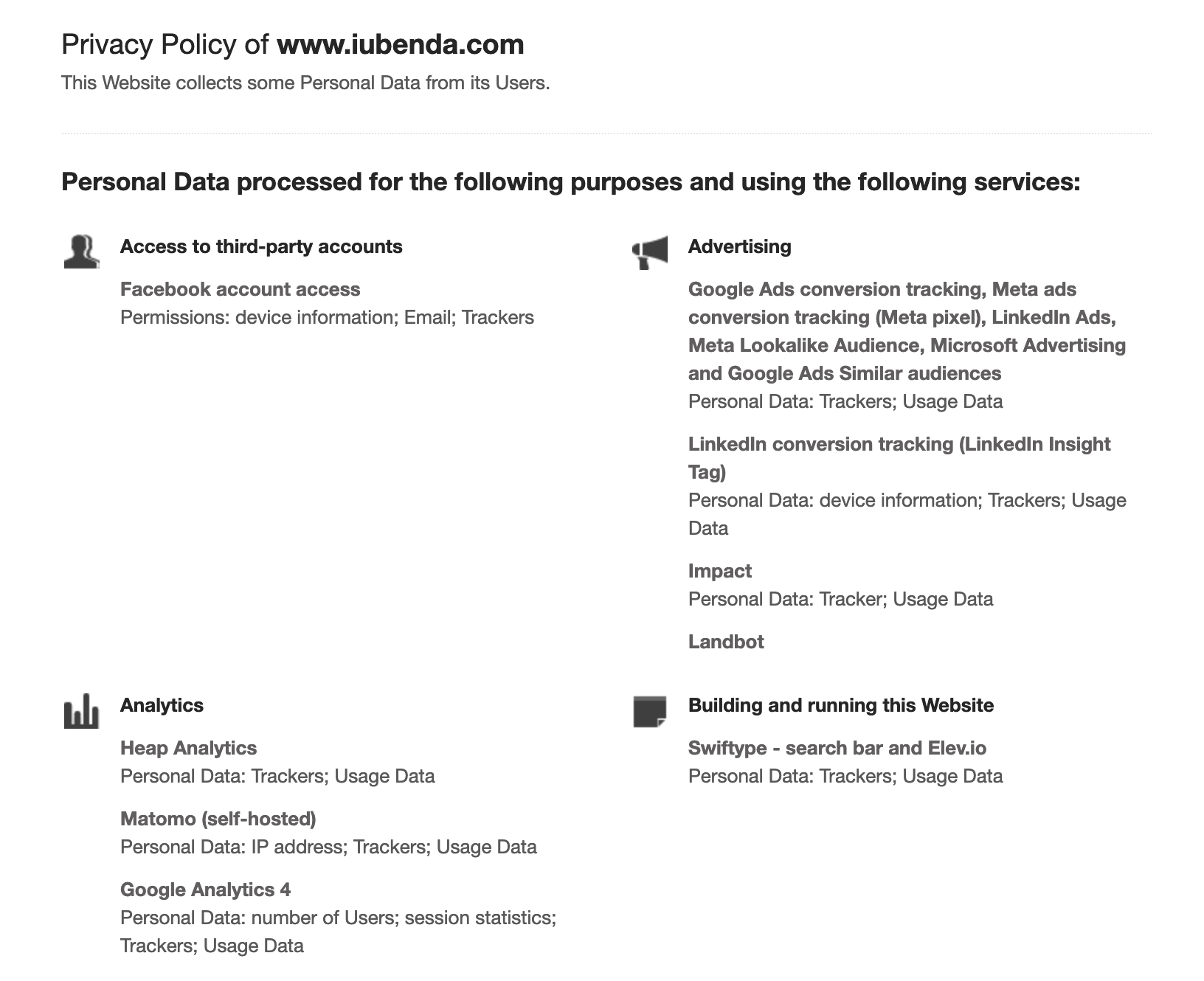
Privacy Statement Example
To give you a little context, here’s how all the elements above come together in a short data privacy statement sample:
“At [Company Name], we value your privacy and are committed to protecting your personal information. We collect personal information such as your name, email address, and browsing behavior to enhance our services and provide you with personalized experiences. Your data is never shared with third parties without your consent, and we employ robust security measures to protect it. You have the right to access, correct, or delete your information at any time.”
Note ⚠️
This is a general and basic example and does not contain all the section that a privacy notice usually contains. Moreover, it must be customized to fit your specific needs and requirements. Since privacy notices are legally binding documents, we highly recommend consulting with legal professionals or using a generator created by legal professionals to ensure compliance with applicable laws and regulations.
iubenda’s Privacy Policy Generator
Instead of writing a privacy policy yourself – which could expose you to non-compliance risks – why not rely on a professional tool like iubenda’s Privacy Policy Generator?
✅ Our legal team has already done most of the work, handling all the legal documents and texts. We have pre-written all of 2400+ clauses for various services and you can select all those that apply to you.
✅ You don’t need any legal skills. Our Generator guides you through the creation of your document and it only takes a few minutes.
✅ We host your privacy policy, so we keep it legally relevant and change it whenever necessary.
Create your privacy statement now
Read also
- Which laws actually apply to you and your business? (Quiz)
- Privacy Policy Template
- How to Create a Privacy Policy with iubenda
About us

The solution to generate your Privacy Policy. Customizable from 1700+ clauses, available in 9 languages and self-updating