





A Shipping Policy Template for Your E-Commerce
In short
A shipping policy can be one of the most read documents on an eCommerce website, and for good reason. They’re pretty important! So what should a shipping policy include and how do you get one?
In this post, we’ll look at a shipping policy template and how to create one.
Jump to…
- What is a shipping policy?
- Who needs a shipping policy?
- How do you write a delivery policy?
- Shipping policy example: what to include
- Where to add your shipping policy
- Shipping policy template
- Is a shipping policy enough?
💡 Download our free Shipping Policy template
Download our free shipping policy template right away, customize it and use it on your website!
⚠️ Important: Please Read First
These professionally drafted templates include a small backlink to our website. We’d really appreciate it if you could keep it there! Our legal experts have created these resources and we’re sharing them completely free of charge. The backlink doesn’t cost you anything, but it helps us continue providing valuable free resources to the community. Thank you for your support! 🙏
What is a Shipping Policy?
A shipping policy is a document that allows you to define your terms in regard to shipping products to customers.
Shipping policies usually include information about delivery times, cost of shipping, or any restrictions or limitations on shipping to certain locations.
So basically, a shipping policy can help you address any issues that may arise with the shipment of your products.
Who Needs a Shipping Policy?
A shipping policy is essential for any business that sells products online and ships them to customers. This includes a wide range of businesses, from small businesses and e-commerce stores to large retail brands.
How Do You Write a Delivery Policy?
A delivery policy should clearly outline how products are shipped to customers, including processing times, available shipping methods, and associated costs. Start by explaining how long it takes to process orders, then go over the shipping options and any related fees. Mention the regions or countries you ship to, and if you ship internationally, let customers know about potential customs fees or delays. Give estimated delivery times for each method and mention any exceptions, like holidays or weather disruptions. Include tracking info and guidance on handling delivery issues like missed packages or damaged goods. Shipping policies should be easy to understand so that customers know how to contact you if they have a problem.
Shipping Policy Example: What To Include
A shipping policy should be tailored to the store’s specific needs. However, there are a few elements that you can find in every policy:
⏰ Shipment processing times
Make sure to explain that processing times and shipping times are different. Processing time refers to how long it takes you to prepare and pack the order before it’s handed off to the carrier. This usually takes anywhere from 1 to 3 business days, but during busy times (like holidays or Black Friday sales), it might take a little longer.
🚚 Methods of shipping
It’s a good idea to list all the different shipping options you offer. Whether it’s standard shipping, expedited shipping, or even overnight delivery, this gives your customers a clear idea of how fast they can get their orders. If you work with certain carriers like FedEx or UPS, be sure to mention that too. Giving customers options for how they want their items shipped makes the shopping experience smoother.
💵 Costs
Be upfront about shipping costs. Make it clear whether shipping is included in the product price or if it’s an additional cost at checkout. If you offer free shipping, highlight it, especially if there’s a minimum order amount. And if shipping costs vary based on location or package size, let your customers know about that too. Transparency here helps avoid any confusion later on.
📦 Delivery time
Give your customers a good idea of when they can expect their orders to arrive. For example, if standard shipping takes 5-7 business days, say that. Make sure to add a disclaimer that delivery times are just estimates and that things like weather or holidays might cause a delay. This way, customers know what to expect, but aren’t left wondering if their order got lost.
🔍 Tracking orders
Everyone loves being able to track their packages! Let customers know how they can track their orders once they’re shipped. Whether it’s through email updates or by logging into their account, make sure they know where to find their tracking number and which website to visit to check on their shipment. Providing easy access to tracking information reduces a lot of stress for customers and cuts down on customer service requests.
🚫 Shipping restrictions
Some stores have certain locations they can’t ship to, so it’s important to mention that in your policy. This could be due to international shipping restrictions, high delivery costs, or the type of products you’re selling. If there are areas you don’t ship to, make sure to clearly list them.
⚠️ Damaged or lost items
Sometimes items get damaged or go missing in transit: these things happen! Be sure to explain what customers should do in these situations. If their order arrives damaged, let them know they should reach out to you right away and, if needed, send photos of the damage. If their package is lost, explain how they can track it or what steps to take next. By outlining this process clearly, you’re showing customers that you’ve got their back if something goes wrong.
💰 Customs and import taxes
If you ship internationally, customers may have to pay customs duties or import taxes when their order arrives. These fees are usually the customer’s responsibility, so be sure to mention this in your shipping policy. Let them know that the shipping cost you charge doesn’t include these fees, and they may be required to pay additional charges when the package reaches their country. In certain legislations, such as the EU, UK, and Switzerland, prices should always be displayed inclusive of applicable fees, taxes, and costs. In general, it’s always better to be upfront about these costs so there are no surprises when the package arrives.
📌 Remember
If you run an e-commerce, it’s also useful to have a return and refund policy to help you manage returns and related shipping costs. So don’t forget to link to your refund policy within your shipping policy!
Where to Add Your Shipping Policy
It’s a good practice to add shipping information in a place that’s easily accessible.
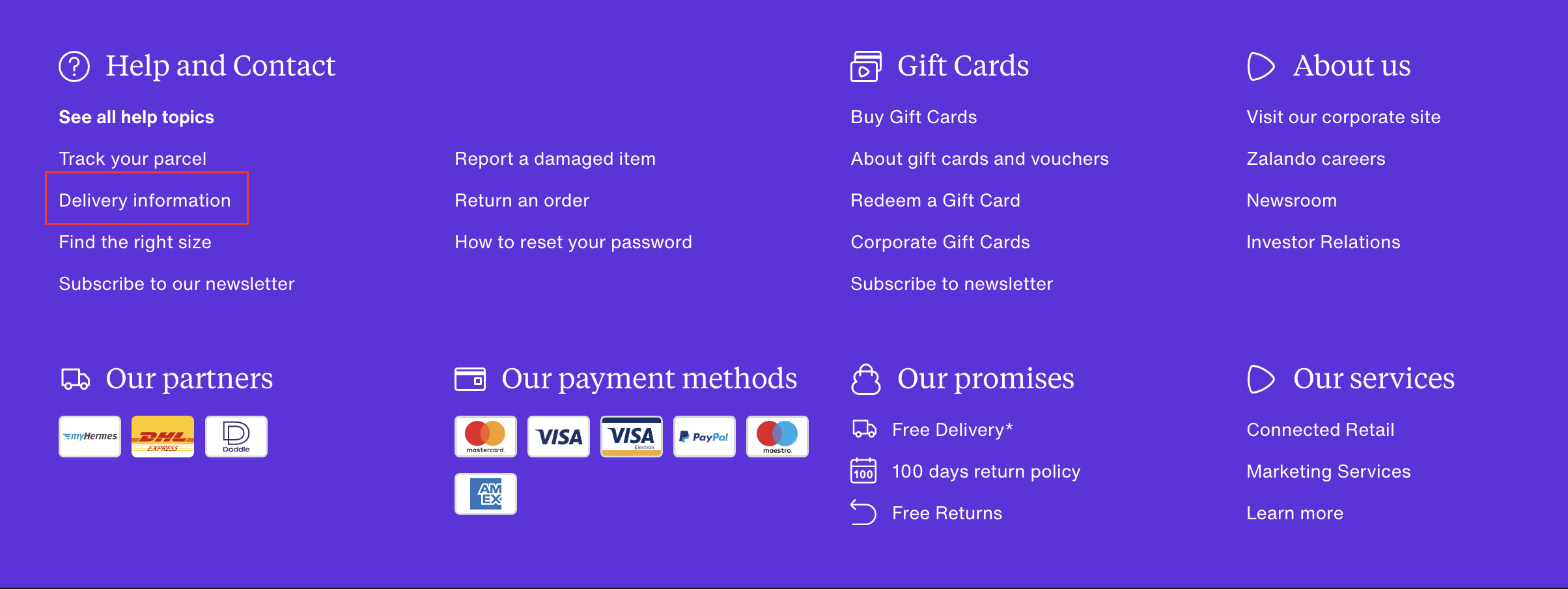
Website footer
E-commerces usually have a specific page for their shipping policy, linked to the website’s footer. For example, here’s Zalando UK.
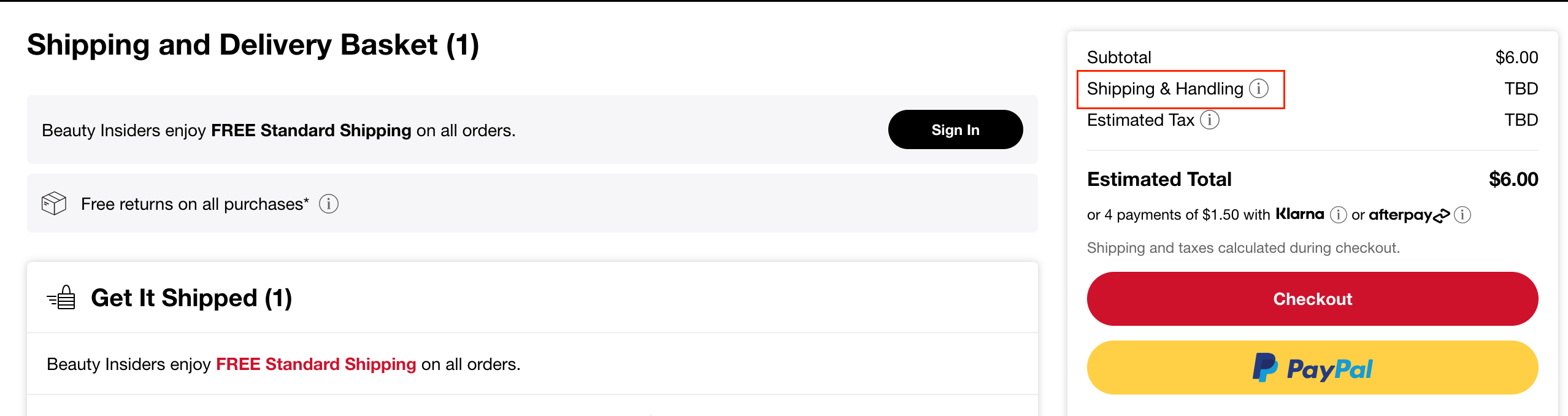
Checkout page
Another place you can add your shipping policy is at checkout, so your customers can see it before they buy. Here’s a sample of the shipping policy added at checkout, from Sephora’s website.
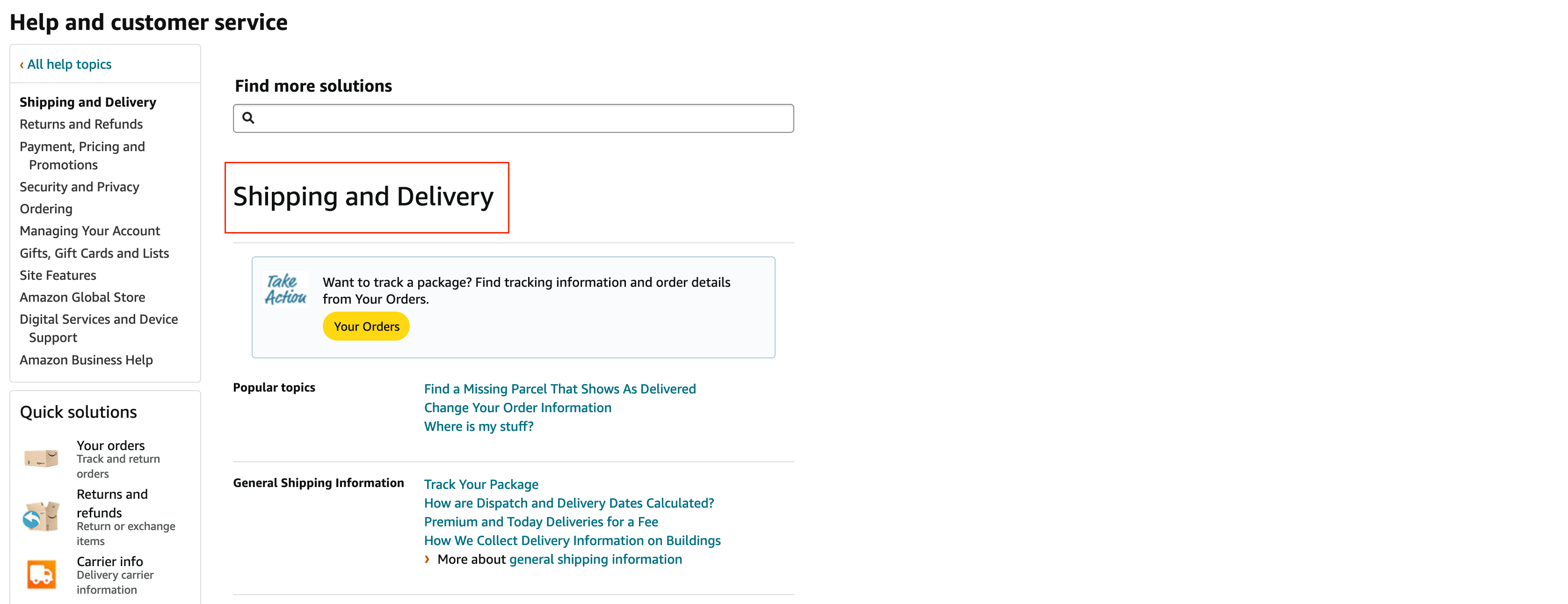
Terms and Conditions
It’s also a good practice to add all the main details regarding the delivery time and shipping costs in your Terms and Conditions document. Terms and Conditions usually contain all the necessary information regarding the conditions of sale, including shipping information. For example, Amazon has divided its Terms into sections and has one specific for Shipping and Delivery.
Shipping Policy Template
Here’s a shipping policy template that you can follow to write your own policy.
How to Use the Template
- Fill in Business and Contact Details: Before you publish it, fill in all the [brackets] with your business info and contact details.
- What this Template covers:The template covers selling physical goods. Make sure these sections match what your business offers.
- Tailor to Legal Jurisdictions:The template may cover various countries and territories (such as the EU, UK, and US). However, make sure its provisions comply with the laws where your customers are.
Shipping Policy Template (HTML Text)
Copy and paste the Shipping Policy Template HTML directly into your website.
<h1>Shipping Policy of [website name]</h1>

<p>Our website is provided by:</p>
<p>[name/company and full address]</p>

<p>Contact email: [email address]</p>

<p>You must read this document carefully.</p>

<p>This document was generated with the use of the <a href="https://www.iubenda.com/en/help/110913/-shipping-policy-template">Shipping Policy template</a>.</p>

<h2>Shipment processing times</h2>
<p>[Mention that processing times and shipping times are different, so that your customers have a clearer idea of the wait.
Example → All orders are processed within X-X business days (excluding weekends and holidays) after the order is placed. Please note that during high-volume periods, processing time may take longer than usual.]</p>

<h2>Delivery</h2>
<p>Products are delivered to the address provided by you and in the manner outlined in the order summary.</p>

<p>Upon delivery, please check the content and report any issues promptly using the contact details provided in this document or as outlined in the delivery note. If the parcel appears visibly damaged, you may refuse to accept it.</p>

<p>Goods are delivered to the following countries: [country name]</p>

<p>Delivery times are outlined on our website or during the purchasing process.</p>

<p>[add more details about delivery, such as methods of shipping, costs, shipping restrictions, etc.]</p>

<h2>Information about this document</h2>
<p>This document was generated with the use of the <a href="https://www.iubenda.com/en/help/110913/-shipping-policy-template">Shipping Policy template</a>.</p>

<h2>Failed delivery</h2>
<p>We are not liable for delivery errors due to incorrect or incomplete information provided by you during the purchasing process nor for any damage or delays after delivery to a carrier organized by you and not offered or recommended by us.</p>

<p>If the goods are not received or collected at the time or within the period specified, they will be returned to us. We will contact you to schedule a second delivery attempt or to agree on a future course of action.</p>

<p>Unless otherwise agreed, each delivery attempt after the second one will be at your expense.</p>

<h2>Tracking orders</h2>
<p>[Include the details about the tracking of the order.
Example → Once your order has been shipped, you will receive an email with a tracking number. You can track your order using the tracking number on the carrier’s website.]</p>

<h2>Contact</h2>
<p>All communications must be sent using the contact information provided in this document.</p>

<h2>INFORMATION ABOUT THIS DOCUMENT</h2>
<p>This document was generated with the use of the <a href="https://www.iubenda.com/en/help/110913/-shipping-policy-template">Shipping Policy template</a>.</p>
Shipping Policy Template (WordPress)
Copy and paste the Shipping Policy Template WordPress directly into your website.
<h1>Shipping Policy of [website name]</h1>

<p>Our website is provided by:</p>
<p>[name/company and full address]</p>

<p>Contact email: [email address]</p>

<p>You must read this document carefully.</p>

<p>This document was generated with the use of the <a href="https://www.iubenda.com/en/help/110913/-shipping-policy-template">Shipping Policy template</a>.</p>

<h2>Shipment processing times</h2>
<p>[Mention that processing times and shipping times are different, so that your customers have a clearer idea of the wait.
Example → All orders are processed within X-X business days (excluding weekends and holidays) after the order is placed. Please note that during high-volume periods, processing time may take longer than usual.]</p>

<h2>Delivery</h2>
<p>Products are delivered to the address provided by you and in the manner outlined in the order summary.</p>

<p>Upon delivery, please check the content and report any issues promptly using the contact details provided in this document or as outlined in the delivery note. If the parcel appears visibly damaged, you may refuse to accept it.</p>

<p>Goods are delivered to the following countries: [country name]</p>

<p>Delivery times are outlined on our website or during the purchasing process.</p>

<p>[add more details about delivery, such as methods of shipping, costs, shipping restrictions, etc.]</p>

<h2>Information about this document</h2>
<p>This document was generated with the use of the <a href="https://www.iubenda.com/en/help/110913/-shipping-policy-template">Shipping Policy template</a>.</p>

<h2>Failed delivery</h2>
<p>We are not liable for delivery errors due to incorrect or incomplete information provided by you during the purchasing process nor for any damage or delays after delivery to a carrier organized by you and not offered or recommended by us.</p>

<p>If the goods are not received or collected at the time or within the period specified, they will be returned to us. We will contact you to schedule a second delivery attempt or to agree on a future course of action.</p>

<p>Unless otherwise agreed, each delivery attempt after the second one will be at your expense.</p>

<h2>Tracking orders</h2>
<p>[Include the details about the tracking of the order.
Example → Once your order has been shipped, you will receive an email with a tracking number. You can track your order using the tracking number on the carrier’s website.]</p>

<h2>Contact</h2>
<p>All communications must be sent using the contact information provided in this document.</p>

<h2>INFORMATION ABOUT THIS DOCUMENT</h2>
<p>This document was generated with the use of the <a href="https://www.iubenda.com/en/help/110913/-shipping-policy-template">Shipping Policy template</a>.</p>
Shipping Policy Template (Word DOCX)
Is it safe to copy and paste from a shipping policy template?
While a shipping policy example can be really helpful in drafting your policy, you should always be careful with mindless copy and paste. Each e-commerce has its specific needs, and you have to be sure you’re addressing your major concerns.
Is a Shipping Policy Enough?
No. If you run an e-commerce, you also need a proper Terms and Conditions document.
Terms and Conditions are strongly recommended for online stores because they contain all the information about the conditions of sale and disclosures on methods of payment, shipping, delivery, withdrawals, cancellation conditions, etc. – as commonly required by consumer protection regulations.

How iubenda can help
iubenda’s Terms and Conditions Generator helps you to create a Terms and Conditions document for your e-commerce in just a few minutes. You can also add all the details related to shipping, such as delivery limitations, guarantees, payments, etc. Plus, you can translate it into +15 languages in one click.
Protect your e-commerce with Terms and Conditions

About Us

The solution to draft, update and maintain your Terms and Conditions. Optimized for eCommerce, marketplace, SaaS, apps & more.
We do our best to keep these purely informative documentation up to date. However, if you notice that any of these guides need a little touch-up, let us know!