惯性聚合 高效追踪和阅读你感兴趣的博客、新闻、科技资讯
阅读原文 在惯性聚合中打开

推荐订阅源

WordPress大学
WordPress大学
让小产品的独立变现更简单 - ezindie.com
博客园 - 三生石上(FineUI控件)
雷峰网
雷峰网
爱范儿
爱范儿
P
Proofpoint News Feed
Security Archives - TechRepublic
Latest news
Latest news
The Hacker News
The Hacker News
Cyberwarzone
Cyberwarzone
博客园 - 【当耐特】
Project Zero
Project Zero
小众软件
小众软件
T
Tailwind CSS Blog
量子位
博客园 - 聂微东
I
Intezer
美团技术团队
S
SegmentFault 最新的问题
T
Tor Project blog
Spread Privacy
Spread Privacy
V
Vulnerabilities – Threatpost
Exploit-DB.com RSS Feed
Jina AI
Jina AI
罗磊的独立博客
B
Blog RSS Feed
K
KPMG report finds enterprise disconnect between AI and its ROI | CIO
T
Troy Hunt's Blog
有赞技术团队
有赞技术团队
Google DeepMind News
宝玉的分享
宝玉的分享
C
Cisco Blogs
L
LINUX DO - 热门话题
Last Week in AI
Last Week in AI
cs.AI updates on arXiv.org
AI
AI
钛媒体:引领未来商业与生活新知
钛媒体:引领未来商业与生活新知
Microsoft Azure Blog
L
LINUX DO - 最新话题
Know Your Adversary
Know Your Adversary
GbyAI
GbyAI
Engineering at Meta
Engineering at Meta
freeCodeCamp Programming Tutorials: Python, JavaScript, Git & More
Recent Commits to openclaw:main
L
Lohrmann on Cybersecurity
The Register - Security
L
LangChain Blog
博客园 - 叶小钗
T
Tenable Blog
Cyber Security Advisories - MS-ISAC

Compliance Solutions for Websites, Apps and Organizations | iubenda

AI can build your website. It can't manage your consent. | iubenda Browser signals and machine-readable consent: what they are and what the EU’s Digital Omnibus could change California Consumer Privacy Act (CCPA): Complete Guide How to increase your cookie banner opt-in rates: 5 mistakes to fix today | iubenda DPO Newsletter: Global Data Protection & Privacy News (issue #153) Why your consent management setup is a marketing performance question Everything you need to know about GDPR The redesigned cookie banner and configurator What nobody tells you about handing over the company you built European marketers are betting on retention. Privacy could be the edge they’re not using yet. The 5 best alternatives to Didomi in 2026: Pros, cons, pricing, and comparison Looking back on 15 years: what iubenda's founder would tell his 2011 self | iubenda The best cookie policy generator in 2026 DPO Newsletter: Global Data Protection & Privacy News (issue #152) | iubenda What publishers should expect from the EU’s Digital Omnibus proposal Uncertainty is the biggest blocker to AI adoption in marketing | iubenda Everything AI app builders need to know about vibecoding and privacy compliance | iubenda Introducing 1-Click Embedding for Google Tag Manager The Essential Small Business Terms and Conditions Template: What You Need to Know Terms of Use Template | iubenda IAB Europe Raises Concerns Over GDPR Procedural Regulation Draft Report | iubenda Learn from HelloFresh's Costly Mistake: Ensure Compliance with iubenda | iubenda Understanding the Spanish DPA Guide on Audience Measurement Cookies | iubenda The Austrian Data Protection Authority's FAQs on Cookies and Privacy | iubenda DPO Newsletter: Global Data Protection & Privacy News (issue #127) | iubenda Microsoft Ensuring European Data Stays Within the EU Cloud Boundary | iubenda Businesses Beware: ICO’s Record £14.3m in Fines for Data Misuse in 2023 Understanding the Risks and Responsibilities of Model-as-a-Service Companies in AI Development Facebook's New “Link History” Feature: A Blend of Convenience and Surveillance? | iubenda OpenAI’s Strategic Move in the EU: Aligning with Data Privacy Regulations TikTok Faces Lawsuit Over Tracking Non-Users What’s the Digital Markets Act (DMA) and how will it affect you? | iubenda Simplifying Cookie Consent: The European Commission's Approach | iubenda Google Settles Landmark Privacy Lawsuit for $5 Billion | iubenda Navigate GDPR Compliance with Confidence: Lessons from Recent Fines in Italy Simplifying the Commission's New Reporting Template for Digital Market Gatekeepers | iubenda Understanding the GDPR Complaint Against X (Twitter) for Illegal MicroTargeting | iubenda Spanish Media Giants Take On Meta in a Groundbreaking $600 Million Lawsuit | iubenda DPO Newsletter: Data Protection & Privacy News (issue #126) | iubenda Belgian DPA Mandates Cookie Banner Changes for Major Media Websites | iubenda UK's Top Websites Warned by ICO to Revise Cookie Practices | iubenda Understanding the European Union's Data Act | iubenda Google Announces Consent Mode v2 – here’s what it means for your business and advertising Noyb Challenges EU Commission Over Controversial Ad Campaign | iubenda OECD Updates AI Definition: A Step Forward in Shaping EU’s AI Law Firefox To Introduce Simplified Global Privacy Control Berlin Court Cracks Down on LinkedIn’s Privacy Violations The YouTube Ad Blocker Controversy: A Test of the ePrivacy Directive? | iubenda DPO Newsletter: Data Protection & Privacy News (issue #125) Facebook and Instagram Subscription: Meta adds a paywall | iubenda GDPR Violation: Lack of Transparency in Data Processing via Google Fonts Amazon Introduces AWS European Sovereign Cloud to Address EU Regulations | iubenda Texas New Data Privacy Law TDPSA: Everything you need to know How to Make Money with a Website Without Selling Anything Oregon Consumer Privacy Act: Overview | iubenda Google’s Move to Disable Third-Party Cookies: What Advertisers Need to Know IMY Fines H&M for GDPR Violations: A Closer Look EU Commission Requests Information from X Under Digital Services Act: What You Need to Know | iubenda Understanding California’s “Delete Act” and Data Broker Regulations TCF v 2.2 Initial Layer (Banner) Requirements | iubenda Grindr Faces €5.8 Million Fine: A Reminder on the Importance of GDPR Compliance | iubenda Newly Enacted Iowa Consumer Data Protection Act (ICDPA) | iubenda The Witch’s Brew of Privacy: A Halloween Tale of Compliance and Consequences IAB TCF 2.2 – What you need to do DPO Newsletter: Data Protection & Privacy News (issue #124) Blog Ideas That Make Money: How To Make Money From Your Blog + Examples | iubenda Maximize your Growth with Online Presence Management | iubenda Meta's New Pivot in Europe: To Pay or Not to Pay for an Ad-Free Experience? | iubenda Consumer Reports Launches Free ‘Permission Slip’ App to Protect Your Data | iubenda DAZN’s Access Request Saga Personal Brand Logo: How to Stand Out in a Crowded Marketplace UK-US Data Bridge: A New Era for Secure Data Transfers 7 Ways How to Promote Affiliate Links Effectively (And Boost Commissions) | iubenda Mastering LinkedIn Personal Branding: A Guide to More Opportunities Meta's New Approach: Pay for Your Privacy? | iubenda No Return, No Refund Policy Template & Guide GDPR in the US: a GDPR Checklist for US Companies Crafting a Niche with Branding and Identity Design | iubenda The Online Safety Bill: A Leap Towards a Safer Digital United Kingdom Understanding Google's $93m Settlement over Consumer Location Data Accusations | iubenda CCPA vs CPRA: Key Differences You Need to Know | iubenda How To Use Ecommerce Retargeting to Grow Your Business | iubenda PECR: Everything you need to know | iubenda How Mobile Apps Illegally Share Your Personal Data: A Deep Dive | iubenda Legal Spotlight: Privacy Concerns Surrounding OpenAI’s ChatGPT and Microsoft’s Involvement Legal Scrutiny Looms Over Transatlantic Data Deal: French MEP Takes Action Understanding the Digital Markets Act: A Comprehensive Guide Block AI Crawlers: Here’s How To Stop Your Site From Being Used for AI Training (OpenAI and Google Bard Irish Regulator Slaps $368M Fine on TikTok DPO Newsletter: Data Protection & Privacy News (issue #123) | iubenda The Privacy Pitfalls of Vehicle Data Collection: What You Need to Know | iubenda Twitter customer’s data on the menu for xAI models Update: Revised Swiss Privacy Law Takes Effect Fitbit and the GDPR Hurdle: What You Need to Know About Your Data Privacy | iubenda Terms of Service Template for your site | iubenda Senators Urge FTC to Investigate YouTube and Google for Violating Children's Privacy: What You Need to Google AdSense Requirements: Here's What You Need to Know | iubenda Users can’t opt out from marketing emails: FTC fines Experian $650,000 | iubenda DPO Newsletter: Data Protection & Privacy News (issue #122) | iubenda 7 Ways Business Process Automation Can Increase Your Profits
Your website launch checklist: 5 things to check before your website goes live | iubenda
Carla Gonzalez Cidoncha · 2022-11-17 · via Compliance Solutions for Websites, Apps and Organizations | iubenda

Here is our website launch checklist, or the 5 fundamental things you need to check before your website goes live.

Considering that you’ve probably invested quite a bit of effort if you’ve made it to this point – you definitely want to make sure that everything is perfect. Indeed, a website that has been set up correctly can really make a difference for your business!

But what if you missed something that could compromise your traffic and revenues? Don’t worry, we got you covered!

website launch checklist

1. Check that your website is secure with an SSL certificate

Have you ever seen this message? 👇
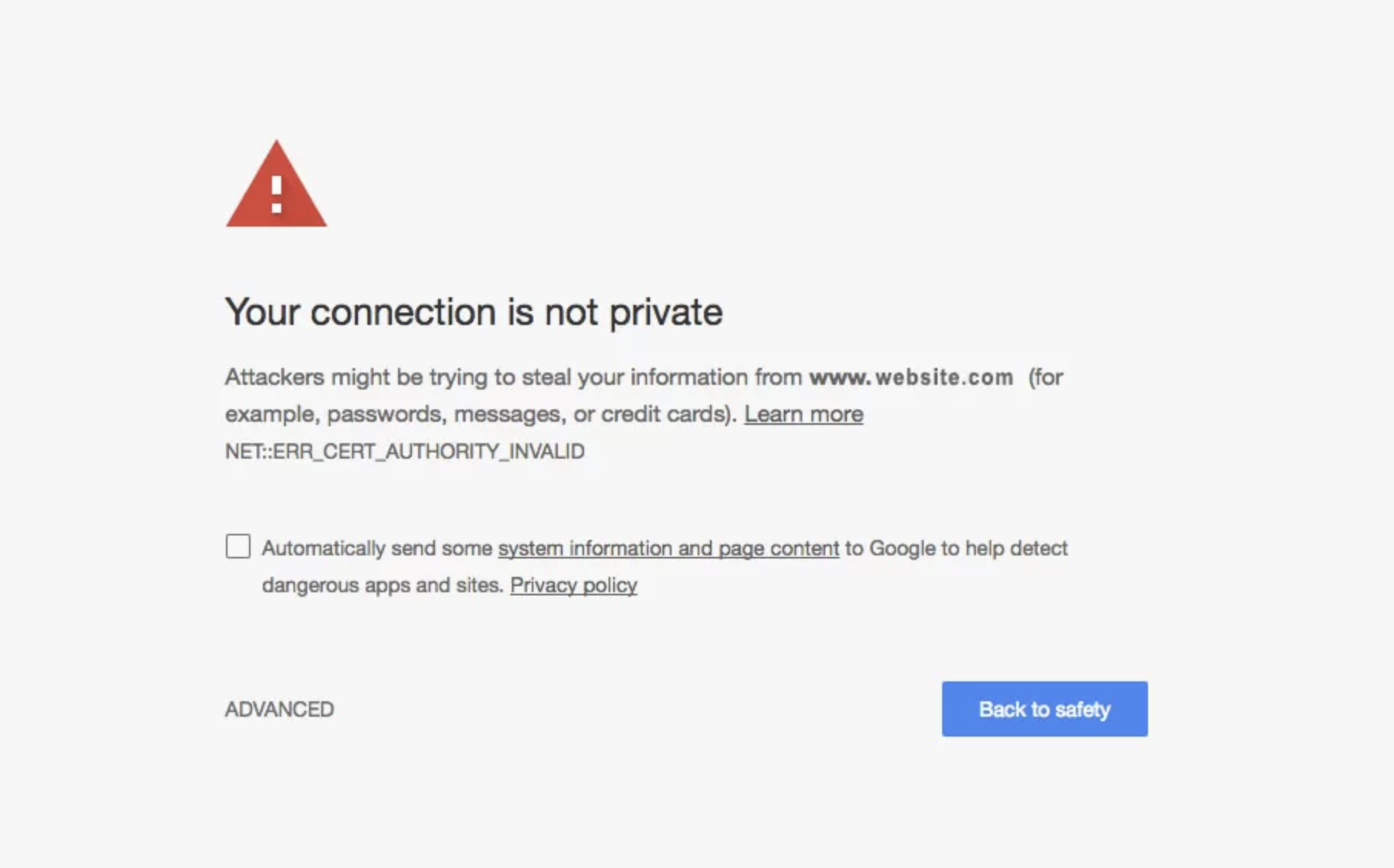
pre launch website checklist, SSL certificate

This is what Google Chrome shows when a website is not secureBrowsers block websites they mark as unsafe for users, because they see them as a threat for their privacy.

As a website owner, you definitely don’t want your reputation be damaged by a message like this. Moreover, almost everyone visiting your website would instantly close it if it were shown as unsafe.

How can you avoid it?

Check that your website has an SSL certificate and is working properly.

What does SSL mean?

SSL stands for Secure Sockets Layer, a protocol that encrypts communication between the browser and web server. An SSL certificate confirms your identity as the website owner and ensures your users’ privacy is protected.

By confirming your SSL certificate, your URL will start with HTTPS and not just HTTP. An HTTP URL would be shown as non-secure and this could highly affect traffic and trust.

If you still don’t have an SSL certificate, you can generate one for free on websites like Let’s Encrypt.

2. Check responsiveness and speed

Did you know that 40% of people abandon a website that takes more than 3 seconds to load? 

That’s why you want to make sure that your website is loading fast. There are 3 things that it’s important to test:

👉 how long it takes to open your website;
👉 how long it takes to see the first piece of content on your home page;
👉 how long it takes for a page to load all the elements.

Speed is crucial for SEO and traffic. A responsive website is also a website with a lower bounce rate. Basically, people will less likely to close your website if it loads fast. 

A few things you can do to improve your website’s speed are:

  • optimize your images;
  • check that the files you’re using are in the right format;
  • if you’re using a CMS and you’ve installed plugins, check that they aren’t slowing down your pages.

3. Check that your website is accessible to everybody

One thing that you should never forget is accessibility. A website that is accessible is a website that everybody can use, regardless of their abilities or disabilities. 

The Web Content Accessibility Guidelines (WCAG) 2.0 provide the standard for accessible websites. Here are a few things that you could do to improve your website’s accessibility:

  • add alt text to all your images;
  • make your website navigable with the keyboard alone;
  • make your text content readable and understandable;
  • make your website compatible with multiple devices, operating systems and browsers.

Following WCAG guidelines doesn’t only allow everyone to use your website fully, but it can also give you a slight SEO advantage.

4. Check that your website is optimized for mobile

It’s a fact: today, most people access websites through their mobile phones. According to the latest stats62.06% of website traffic comes from mobile devices. And this explains also why Google has switched to a mobile-first indexing approach, meaning that the mobile version of a website is indexed first.

So having a website that is optimized for mobile view is key.

As a rule of thumb, the mobile version of your website should have the same content as the desktop version, the images should be optimized for a smaller screen, as well as the overall spacing and elements (you can check here for more best practices on website development and design). 

Last but not least, you shouldn’t forget your legal documents. 

Legal compliance is often overlooked, but it shouldn’t. You surely wouldn’t want your website to be shut down after its launch. 

Now more than ever, people are conscious about privacy and how their data is used. Being transparent with them allows you to build a relationship based on trust, which will likely last longer. 

Moreover, legal compliance is beneficial to you, too, because it prevents liabilities and unpleasant consequences. For example, almost every US privacy law allows users to sue businesses that collect and process personal data unlawfully.

How do you comply with privacy laws?

The first thing to do here is to determine your law (or laws) of reference, that is the law that applies to you. 

Then you should create and add your documents. 

Each website has its specific needs, so the documents you need may vary. However, generally speaking, a website will most likely need:

  • a privacy policy, that is a document that contains all the information about the data you collect through your website and how you’re planning to use it;
  • a cookie consent management solution, that can help you manage every aspect of cookie consent. 
  • if you run an e-commerce, or a more complex website, you may also need a terms and conditions document, which helps you set the rules on how to use your services or content.

Get your legal documents in minutes with iubenda

iubenda offers attorney-level solutions to make your websites compliant with the law across multiple countries and legislations.

Our software tools are currently trusted by more than 90,000 clients worldwide and are designed to help you achieve full compliance and keep focusing on what matters most: your business.

Here’s the full overview 👇

This was our website launch checklist!

Let’s recap:

Speed and accessibility

My website is fast and responsive
My website is accessible for everybody
My website is optimized for mobile

Safety

My website has an SSL certificate and a HTTPS URL

Legal & Trust

I have a valid and up-to-date privacy policy
I have a consent banner and privacy controls for European and US users and a solution to manage cookies
I have a terms and conditions document

We know that some of these things will probably require some effort on your side, but it’s important to set everything up because they will save you a lot of time and money in the future!

However, some things don’t need to take that long. 

💡

For example, there are tools that can help you get compliant in just a few minutes, like iubenda!

iubenda can help you make your website legally compliant, in minutes:

👀 See more:

About us

iubenda

Attorney-level solutions to make your websites and apps compliant with the law across multiple countries and legislations.

www.iubenda.com