





Many website owners worry about GDPR compliance when users visit their sites with ad-blockers enabled. Ad-blockers and browsers like Brave might block iubenda’s Privacy Controls and Cookie Solution, or even other products, preventing the cookie banner from displaying. This raises concerns about compliance with GDPR regulations. This article explains why website owners can still be compliant and what steps they should take to demonstrate their efforts.
Understanding the Issue
Ad-blockers can prevent cookie banners or privacy notices from appearing on your website. This might seem problematic because it could appear that you’re not informing visitors about cookie usage or collecting their consent. However, compliance can still be achieved by understanding a few things, let’s see!
🇪🇺 GDPR Compliance and Accountability
Under the GDPR, website owners (Data Controllers) must follow the accountability principle. This means they need to show they have procedures in place that allow users (Data Subjects) to exercise their privacy rights.
Key Points:
- Accountability Principle: Website owners must prove they have implemented processes to protect user privacy.
- User Consent: If users willingly use ad blockers, they effectively waive certain privacy rights, as stated in the tool’s terms and conditions.
- No Liability: Data Controllers can avoid liability if they show they comply with GDPR and have no control over users’ use of ad blockers. This is supported by Article 82(3) of the GDPR.
🇺🇸 US Perspective on Privacy Compliance
Similar principles apply in the US. Website owners (Controllers) must demonstrate accountability and show they have enabled individuals to exercise their privacy rights. If individuals willingly use tools that block privacy features, they waive some of their rights.
Key Points:
- Accountability: Controllers must show they have implemented privacy procedures.
- User Consent: Conscious use of ad blockers means users waive certain privacy rights.
- No Liability: Controllers are not liable if they comply with legal requirements and cannot control the use of ad blockers.
⚖️ Legal Framework and Liability
Perimeter of Liability of the Controller: The concept of “strict” liability in GDPR means that a controller may be held liable even in the absence of personal fault. This applies particularly to (1) obligations that impose a result-based requirement on the controller and (2) liability for actions taken by processors under the controller’s authority.
- Recital 74; Article 24: The controller is responsible for implementing appropriate technical and organizational measures to ensure and demonstrate that its processing activities are compliant with GDPR requirements. These measures may include adopting a suitable privacy policy.
- Article 82(3): A controller or processor is exempt from liability if they can prove that they are not responsible for the event causing the damage.
- Recital 55 of Directive 95/46: Provides examples of how a controller might demonstrate that they are “not responsible for the event giving rise to the damage.”
Best Practices for Website Owners
✅ Implement Privacy and Cookie Policies: Ensure you have all necessary GDPR measures in place, including a comprehensive Privacy Policy and Cookie Policy. Clearly outline how your site handles data and cookies.
✅ Detecting Ad-Blockers: According to the European Commission, you can detect if a user is using an ad-blocker without needing their prior consent. This detection should be included in your Privacy Policy, explaining that it’s necessary to ensure proper consent management. 👉 You can easily integrate this detection via a custom clause using iubenda’s Privacy and Cookie Policy Generator as detailed here.
✅ Inform Users: If an ad-blocker is detected, inform users that their use of such tools may prevent them from seeing important privacy notices and cookie consent banners. Encourage them to disable the ad-blocker for full functionality.
How You Can Integrate Ad-Blocker Detection into Your Privacy Policy with iubenda
To add a custom service for ad-blocker detection to your iubenda privacy policy, you can follow these steps:
- Log in to your iubenda account and go to the Dashboard.
- Once in the Privacy and Cookie Policy Generator, choose the “Add service” option.
- Click on “Create custom service” This will lead you to the input prompts for creating a custom clause.
- Fill Out Mandatory Fields
- Service Name: Enter a clear and concise title, such as “Ad-Blocker Detection”
- Privacy Policy Description: Detail the types of data collected by the ad-blocker detection service, how this data is used, and if shared with any third parties. Include information about the third party, if applicable, such as their headquarters location and a link to their privacy policy.
- Optional Fields:
- Purpose: Assign a purpose from the provided drop-down list to categorize the data collection activities. For example, you might select “Handling activities related to compliance”
- Show this service on: Specify where this service will appear—either in the privacy policy, the cookie policy, or both.
- By checking the “Specify service translations” box, you can provide translations for different languages, ensuring your policy is accessible and clear to all users.
- Once all fields are completed, save the custom service. It will automatically integrate into your privacy policy text, ensuring that it appears seamlessly alongside other pre-made clauses.
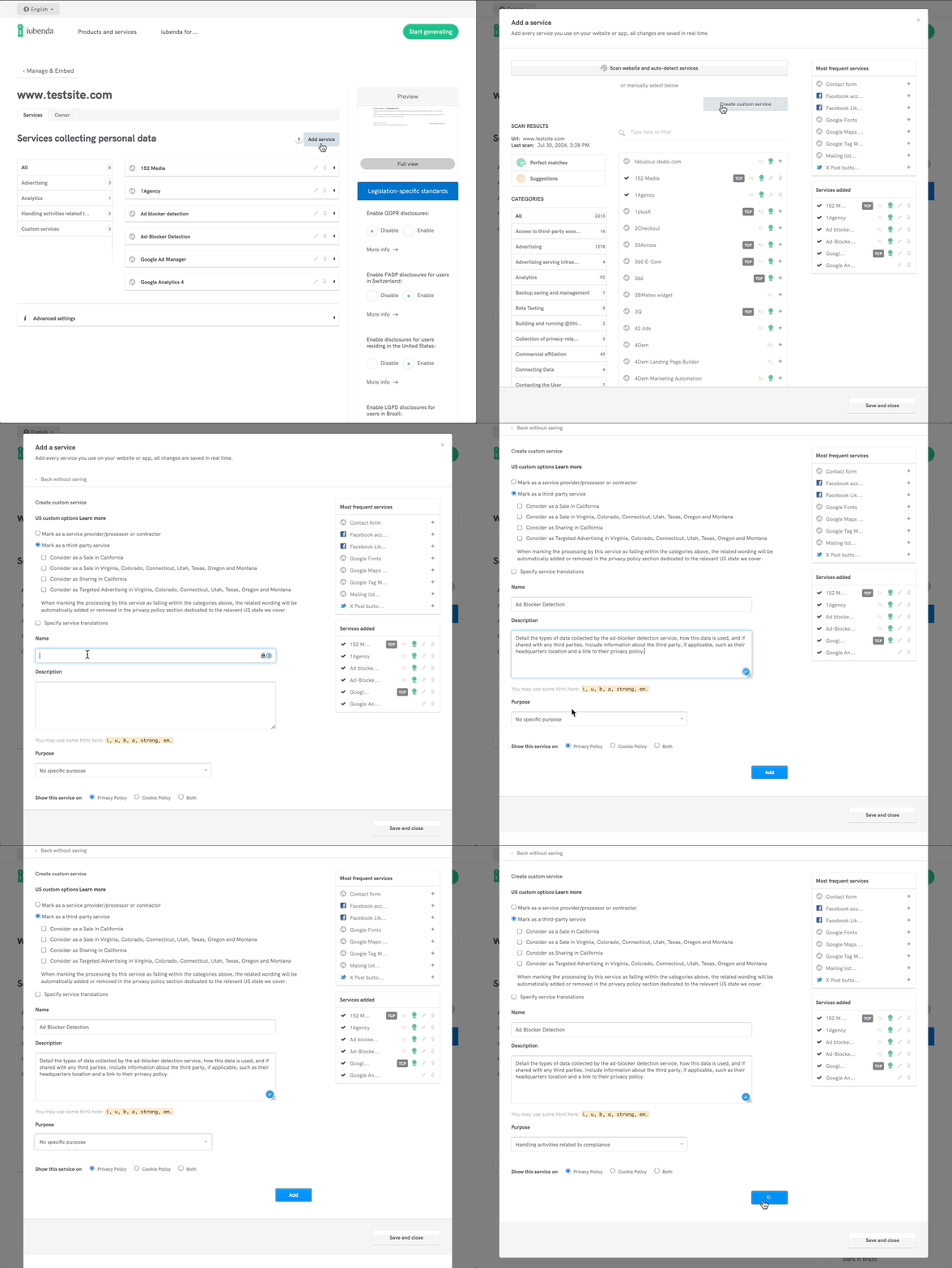
👉 For a detailed step-by-step guide on how to add a custom service and customize it to your specific needs, visit our comprehensive guide here.
By following these steps, you ensure that the ad-blocker detection feature is transparently disclosed in your privacy policy, helping to maintain compliance with GDPR and providing users with clear information about data collection practices.
💡 While ad blockers and certain browsers can pose challenges, demonstrating that your site has the necessary privacy tools installed will keep you compliant with GDPR and other privacy and cookie laws. This proactive approach helps protect your business and ensures that you are fulfilling your legal obligations.
Need a solution for cookie consent management?
Stay compliant, manage consent to cookies and store your users’ preferences with iubenda’s Privacy Controls and Cookie Solution