A Guide to Staying Compliant. As a small business owner, it is essential to stay compliant with privacy regulations to protect your customers’ personal information. One crucial step in this process involves using a privacy policy template for small business to craft a clear and concise privacy policy tailored to your needs.
In this article, we’ll provide a privacy policy template that small businesses can use to create their own privacy policy.
- What is a Privacy Policy?
- Does my Small Business Website Need a Privacy Policy?
- How Do I Create a Privacy Policy for my Business?
- What are some examples of privacy policies for small businesses?
- Key Privacy Laws Impacting Small Business Privacy Policies
- Can I write my own business privacy policy?
- Privacy Policy Template for Small Business
- 🎉 See how this all comes together and easily create your privacy policy for your small business!
- 💡 How to Write a Privacy Policy for a Small Business

What is a Privacy Policy?
A privacy policy is a legal document that outlines how your business collects, uses, and protects personal information from your customers. It should be readily available on your website, and customers should be able to easily access and understand it.
Privacy policies are legally required under most global privacy legislations, so they’re pretty critical for any business that has an online presence. Keep reading to learn more on privacy policy template for small business.
Does my Small Business Website Need a Privacy Policy?
Yes, your small business website or even an e-commerce store definitely needs a privacy policy. This policy informs your website visitors how you collect, use, and handle their personal information. It’s important because laws, like the GDPR in Europe, the CCPA in California, and the LGPD in Brazil require you to have a privacy policy if you collect personal information from their residents. A privacy policy also shows your customers or users that you care about their privacy.
How Do I Create a Privacy Policy for my Business?
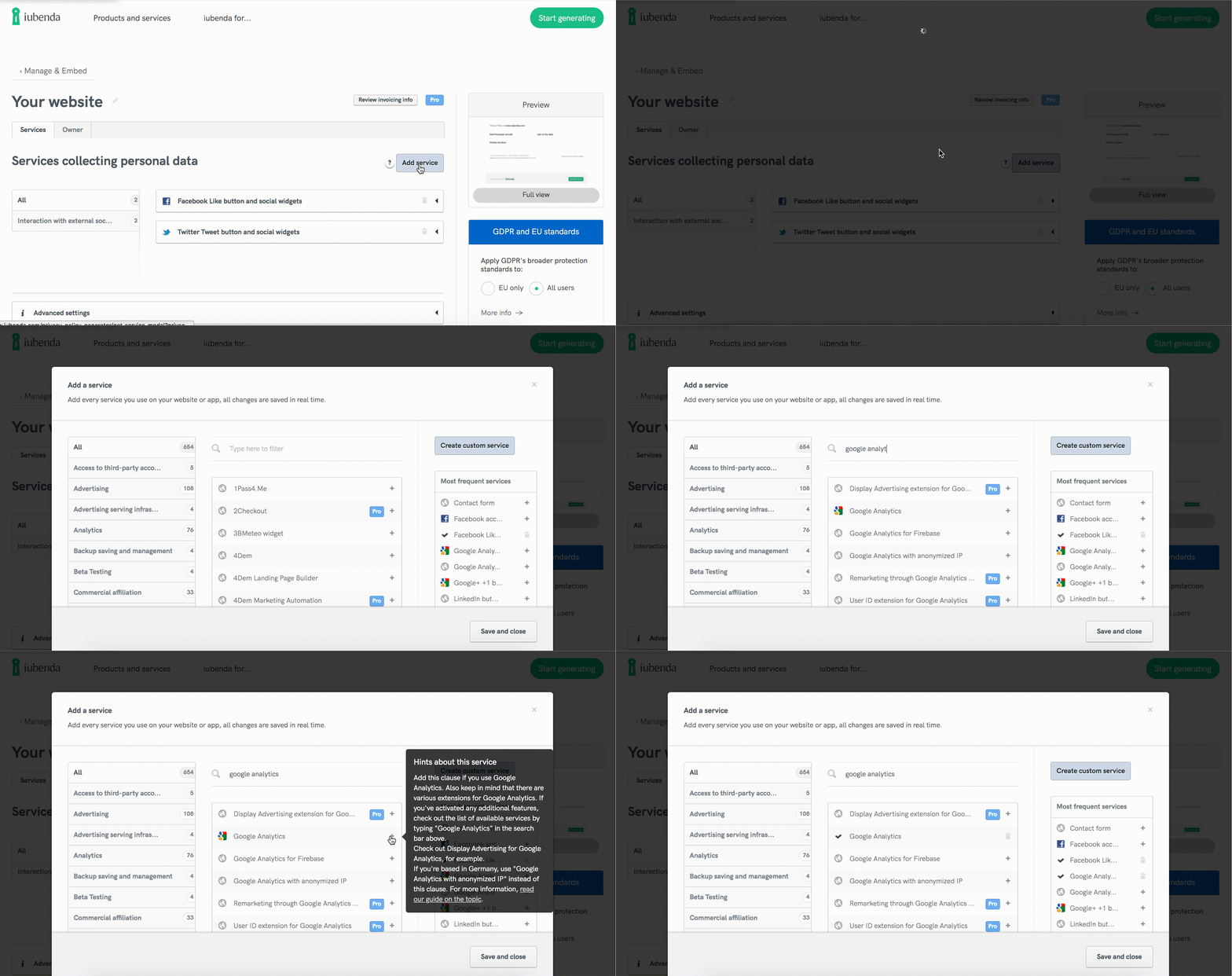
To create a privacy policy for your business, the most cost-effective way is to use a high-quality privacy policy generator. This tool lets you customize your policy to reflect your specific data collection and processing practices. Here’s how you do it:
- Choose a generator that allows customization and complies with key privacy laws like the GDPR, CCPA, LGPD.
- Enter details about how your business collects, uses, and shares personal information.
- Review the generated policy draft thoroughly to ensure it accurately matches your practices and complies with relevant laws.
- Make the necessary adjustments to fine-tune the policy to your business’s unique operations.
What are some examples of privacy policies for small businesses?
Examples of privacy policies for small businesses typically include clear sections that describe:
- What personal information is collected (e.g., names, email addresses, payment information).
- How this information is collected (e.g., through website forms, online purchases).
- The purpose of data collection (e.g., processing orders, marketing).
- Data sharing and protection measures (e.g., encryption, sharing with third-party services for order fulfillment).
- User rights (e.g., the right to access, delete, or correct their information).
- How to contact the business for privacy concerns.
Remember, each business is different, so your privacy policy should reflect your specific practices and comply with the laws that apply to your business. Regular updates are crucial to reflect changes in your business or in the law.
Key Privacy Laws Impacting Small Business Privacy Policies
Several laws around the world require your small business to have a privacy policy if you collect personal information from their residents, regardless of where your business is based. Consider, these laws are designed to protect the privacy and personal data of individuals, and they apply to all online businesses, including e-commerce sites, blogs, service providers and apps.
Here’s an overview of some major laws that might require a privacy policy for your small business:
1. General Data Protection Regulation (GDPR) 🇪🇺
- Region: European Union (EU)
- Applies to: Any business that processes personal data of EU residents, regardless of the business’s location.
- Requirements: Among other obligations, businesses must provide a detailed privacy policy that includes the purpose of data processing, the legal basis for processing, data subject rights, and information about data transfers outside the EU.
2. California Consumer Privacy Act (CCPA) and California Privacy Rights Act (CPRA) 🇺🇸
- Region: California, United States
- Applies to: Businesses that collect personal information from California residents and meet certain thresholds, such as annual gross revenues exceeding $25 million, buying, receiving, selling, or sharing the personal information of 50,000 or more consumers, households, or devices for commercial purposes, or deriving 50% or more of annual revenues from selling California residents’ personal information.
- Requirements: Businesses must provide a privacy policy that details the categories of collected information, the purposes for which the categories of personal information are used, and consumer rights under the CCPA/CPRA.
3. Personal Information Protection and Electronic Documents Act (PIPEDA) 🇨🇦
- Region: Canada
- Applies to: Private-sector organizations that collect, use, or disclose personal information in the course of commercial activity in Canada, except in provinces that have their own privacy laws deemed substantially similar to PIPEDA.
- Requirements: Organizations are required to obtain consent for the collection, use, and disclosure of personal information and must provide a privacy policy that explains these practices in detail.
4. Brazil’s General Data Protection Law (LGPD) 🇧🇷
- Region: Brazil
- Applies to: Any business or organization that processes personal data of individuals in Brazil, regardless of the company’s location.
- Requirements: Similar to the GDPR in Europe, businesses must provide transparent information about the use of personal data, including a privacy policy detailing the categories of collected data, the purposes of processing, and the rights of data subjects.
💡 Compliance Tips:
- Review Applicable Laws: Determine which laws apply to your business based on where your customers are located, not just where your business operates.
- Customize Your Privacy Policy: Use a high-quality privacy policy generator to create a policy that meets the specific requirements of these laws.
- Stay Updated: Privacy laws are subject to change, so it’s important to regularly review and update your privacy policy to ensure ongoing compliance.
These are just a few examples, and there are many more privacy laws globally. Consider that it’s crucial to research and understand the privacy laws that apply to your specific business activities and customer base to be compliant.
Can I write my own business privacy policy?
Yes, you can write your own business privacy policy. However, it is important to ensure that your business privacy policy is accurate, clear, and compliant with applicable laws and regulations. Writing a privacy policy can be a complex and technical process, so it is important to have a good understanding of the legal requirements and best practices.
Privacy Policy Template for Small Business
To help small business owners create a privacy policy, we have created a privacy policy template for small business’s that can be customized to fit your specific needs.
I. Introduction
[Start your privacy policy with an introduction that explains what personal information your business collects, how it is collected, and why it is necessary. Be sure to include the purpose of your privacy policy and how it complies with privacy laws and regulations.]
II. Personal Information
[List the types of personal information that your business collects from customers, such as names, addresses, email addresses, phone numbers, and payment information. Explain how this information is collected, such as through website forms, email communications, or in-person transactions.]
III. Use of Personal Information
[Explain how your business uses the personal information that you collect. Be sure to include all uses, such as processing orders, delivering products or services, and marketing purposes. If you share personal information with third parties, such as vendors or service providers, be sure to disclose this information and explain the purpose.]
IV. Protection of Personal Information
[Detail the measures your business takes to protect personal information from unauthorized access, disclosure, or theft. Be specific about the technical and organizational measures you have in place, such as encryption, access controls, and employee training.]
V. Cookies and Other Technologies
[Explain how you use cookies and other tracking technologies on your website. You should explain what information these technologies collect and how you use this information.]
VI. Opt-Out Options
[Explain how customers can opt out of receiving promotional emails or newsletters. You should provide clear instructions on how customers can unsubscribe from these communications.]
VII. Data Retention
[Outline how long you retain your customers’ personal information. You should explain why you retain this information and how you securely dispose of it when it is no longer needed.]
VIII. Privacy Policy Updates
[Explain how you will update your policy if necessary. You should outline how you will notify your customers of any changes to the policy.]
A privacy policy is a critical document for small businesses. It outlines how you collect, use, and protect your customers’ personal information. By having a clear and comprehensive privacy policy in place, you can help protect your customers’ data and build trust in your business.
To see how this all comes together, check out the small business privacy policy template below:
Composing a privacy policy on your own is a challenging task, as it involves extensive legal knowledge, and any mistakes in the privacy document could potentially result in legal action and penalties in various regions, especially in the US and Europe.
To avoid such issues, we recommend using a reliable privacy policy generator like ours. Our generator is designed by legal experts and provides comprehensive coverage of laws from multiple countries. Additionally, you can begin using our generator for free, making it an accessible and cost-effective solution.
💡 How to Write a Privacy Policy for a Small Business
Easily create a privacy policy for your small business with iubenda
- Scan your site with our Site Scanner.
- Add all the relevant clauses with one click.
- Copy and paste to add your privacy policy to your site!
- 🎉 Now your privacy policy for small business is ready and visible on your website!