


惯性聚合 高效追踪和阅读你感兴趣的博客、新闻、科技资讯
阅读原文 在惯性聚合中打开

推荐订阅源

D
DataBreaches.Net
Engineering at Meta
Engineering at Meta
C
Cisco Blogs
H
Heimdal Security Blog
freeCodeCamp Programming Tutorials: Python, JavaScript, Git & More
S
Securelist
N
Netflix TechBlog - Medium
雷峰网
雷峰网
D
Darknet – Hacking Tools, Hacker News & Cyber Security
T
The Exploit Database - CXSecurity.com
I
InfoQ
钛媒体:引领未来商业与生活新知
钛媒体:引领未来商业与生活新知
Project Zero
Project Zero
Spread Privacy
Spread Privacy
Stack Overflow Blog
Stack Overflow Blog
The GitHub Blog
The GitHub Blog
T
Threatpost
The Hacker News
The Hacker News
WordPress大学
WordPress大学
AWS News Blog
AWS News Blog
Latest news
Latest news
P
Privacy International News Feed
T
Tenable Blog
Google DeepMind News
aimingoo的专栏
aimingoo的专栏
NISL@THU
NISL@THU
酷 壳 – CoolShell
酷 壳 – CoolShell
GbyAI
GbyAI
The Cloudflare Blog
cs.CL updates on arXiv.org
Blog — PlanetScale
Blog — PlanetScale
K
Kaspersky official blog
小众软件
小众软件
C
Cyber Attacks, Cyber Crime and Cyber Security
G
GRAHAM CLULEY
MongoDB | Blog
MongoDB | Blog
博客园 - 聂微东
Recent Commits to openclaw:main
H
Hackread – Cybersecurity News, Data Breaches, AI and More
Know Your Adversary
Know Your Adversary
B
Blog RSS Feed
N
News and Events Feed by Topic
人人都是产品经理
人人都是产品经理
N
News | PayPal Newsroom
K
KPMG report finds enterprise disconnect between AI and its ROI | CIO
TaoSecurity Blog
TaoSecurity Blog
P
Proofpoint News Feed
Threat Intelligence Blog | Flashpoint
A
About on SuperTechFans
V
Visual Studio Blog

Redis

Real-Time Fraud Detection: Latency, Features & Scale Context window in AI: why every token is a budget decision Connecting to Redis Cloud with AWS PrivateLink vs. VPC peering | Redis Redis Data Integration in Redis Cloud is now GA in AWS | Redis Why AI Misses Business Context & How Teams Fix It AI Reasoning Explained: Why Context Matters Semantic Layer vs Context Layer: Key Differences Redis array data type: How it works and when to use it Context Graphs vs. Vector Search: When RAG Falls Short What’s new in two – May 2026 edition Redis 8.8 performance improvements: Faster string, hash, streams, SCAN & more Redis 8.8: New array data structure & open source features How Conflict-free Replicated Data Types power active-active database replication Context Orchestration: What It Is & How It Works Context Compaction for AI Agents: A Complete Guide Prompt Bloat: Causes, Costs & Fixes for LLM Apps Agentic Retrieval Techniques: A Complete Guide Single-shot reliable consumers with XREADGROUP CLAIM in Redis 8.4 | Redis Long-Horizon AI Agents: Memory & State Infrastructure What is a context engine? What Is a Context Layer? AI Agent Infrastructure Context Retrieval for AI Agents: What It Is & Why It Matters Context Poisoning: How Bad Data Breaks Agent Reasoning Context is all you need: Introducing Redis Iris | Redis Context Engineering for AI: What It Is & How to Build It Dynamic endpoints: Migrate databases without changing your endpoint | Redis AI Shopping Assistants: How They Work & What to Build Endless Aisle Retail: Infrastructure & Real-Time Data LLM Speed Benchmarks: Metrics & Infrastructure Guide Context Pruning: Cut LLM Tokens Without Losing Quality What’s new in two – April 2026 edition Agentic AI Architecture: 5 Patterns Explained AI Agent vs Chatbot: Key Differences Explained Advantages of Building a Vector Search Solution API Latency in LLM Apps: Causes & How to Fix It Security advisory: [CVE‑2026‑23479] [CVE‑2026‑25243] [CVE-2026-25588] [CVE‑2026‑25589] [CVE-2026-23631] | Redis Edge Computing Latency: Causes & How to Reduce It AI Agents vs Workflows: When to Use Each Streaming LLM Responses: Make Your AI App Feel Fast Active-Active vs Active-Passive Database Architecture Prefill vs Decode: LLM Inference Phases Explained Long-Term Memory Architectures for AI Agents Time to First Byte Test: Tools, Causes & Fixes Speculative decoding: how it works & when to use it P95 Latency: What It Is & Why It Matters Why Multi-Agent LLM Systems Fail & How to Fix Them AI Human in the Loop: Production Oversight Patterns Native OpenTelemetry metrics for Redis client libraries | Redis Client-side geographic failover for Redis Active-Active | Redis Use Redis with SQL | Redis Introducing Redis Feature Form Build Google ADK Agents with persistent, real-time memory on Redis | Redis Startup Spotlight: Neuron Systems API Throttling: Algorithms, Patterns & Mistakes Agentic AI Examples Across 6 Industries Best Chunking Strategies for RAG Pipelines Agentic AI Guardrails: Controls That Work Redis joins AWS at GDC to support the next generation of gaming | Redis Designing a semantic routing system: From static rules to dynamic intelligence with Redis and Java | Redis Real-Time Dispatch System: A Complete Guide P99 Latency: What It Means & How to Fix It Tokenization in LLMs: What AI App Devs Need to Know TTFT Meaning: What is Time to First Token? Atomic slot migration with Redis 8.4 Hybrid search benefits: Why your RAG system needs both keyword & vector search What’s new in two: March 2026 edition Vector embedding generators: How they work & how to use them Throughput-optimizing Redis for L2 KV Cache Reuse What is a data pipeline? Building AI agent pipelines that don't forget, fail, or fall apart Redis achieves Google Cloud Ready, Distributed Cloud status ahead of Google Cloud Next ‘26 | Redis Real-time network monitoring: what your data platform needs to keep up AI agent API: How agents connect to the real world What is multicloud infrastructure? A guide for 2026 What is a transaction monitoring system & how does it work? Why your AI agent fails in production & how tracing helps AI agent benchmarks: Where they fall short & why your infrastructure matters What is a JSON database (and when should you use one)? Introducing the Redis Partner Network: A new foundation for real-time innovation How real-time customer segmentation works in retail Payment orchestration & vault architecture in retail Agentic systems vs. GenAI: when generation isn't enough What is fuzzy matching? Semantic caching & routing: two powerful patterns for vector classification Redis alternatives: Why there are no exact substitutes Connect to Azure Managed Redis with Redis Insight 3.2.0 How to tame the thundering herd problem Redis to Manage Storage Replication | Redis How hierarchical navigable small world (HNSW) algorithms can improve search | Redis What’s new in two: May 2025 | Redis Introducing Model Context Protocol (MCP) for Redis | Redis Redis vs. Elasticsearch: What’s faster for GenAI & vector search? | Redis Build fast, production-worthy AI apps with Spring AI and Redis | Redis Azure Managed Redis is GA today | Redis Redis then & now: Adapting with developers through every era | Redis Supercharge Your AI with OpenShift AI and Redis: Unleash speed and scalability | Redis What’s new in two: April 2025 | Redis Redis 8 is now GA, loaded with new features and more than 30 performance improvements | Redis What is a data strategy? 6 key components explained Data replication explained: types, examples & use cases
How leading financial institutions use Redis to drive growth | Redis
Redis · 2025-06-10 · via Redis

Financial institutions are under ever-increasing pressure to modernize in the face of rising customer expectations, evolving threats, and growing data volumes. In fact, over 60% of senior banking decision-makers admit that their slow rate of digital transformation has directly resulted in them missing out on winning new customers. Mobile-first users demand real-time app experiences–fraudsters are getting faster and more sophisticated–and AI-driven customer services are becoming table stakes. 

When speed, scalability, and intelligence are non-negotiable, leading banks and fintechs turn to Redis.

So, how do we help?

With Redis, our customers can thrive in an era of digital disruption and:

  • Deliver 76% faster mobile banking experiences, driving customer loyalty
  • Detect and prevent fraud at the scale of 100s of thousands of transactions per second
  • Deploy AI-based customer service chatbots that reduce costs and improve customer service response times by more than 50%

Build responsive, scalable mobile banking apps

Today, a bank’s most important branch is held in the palm of a hand. Mobile banking now accounts for over 62% of banking transactions across the globe—and adoption continues to grow. Customers now turn primarily to mobile apps for everything from checking account balances to transferring funds to depositing physical checks. And there’s good reason. According to a 2023 Deloitte study, the average mobile banking transaction takes under 90 seconds to complete, while the same transaction in a physical branch takes 8+ minutes.

While the rise in mobile banking greatly improves customer experiences, it also can put a significant strain on a bank’s technology stack. Most of these stacks are large and complex, and struggle to meet modern requirements for performance and scalability. Additionally, data silos can make cohesive cross-platform or cross-account insights a major challenge.

To help, banks widely use Redis as a session store or cache alongside existing systems to add speed and scalability without the need for a painful rearchitecture or refactoring. For a deeper dive into how Redis powers responsive, real-time mobile banking experiences, check out our blog on mobile banking architecture.
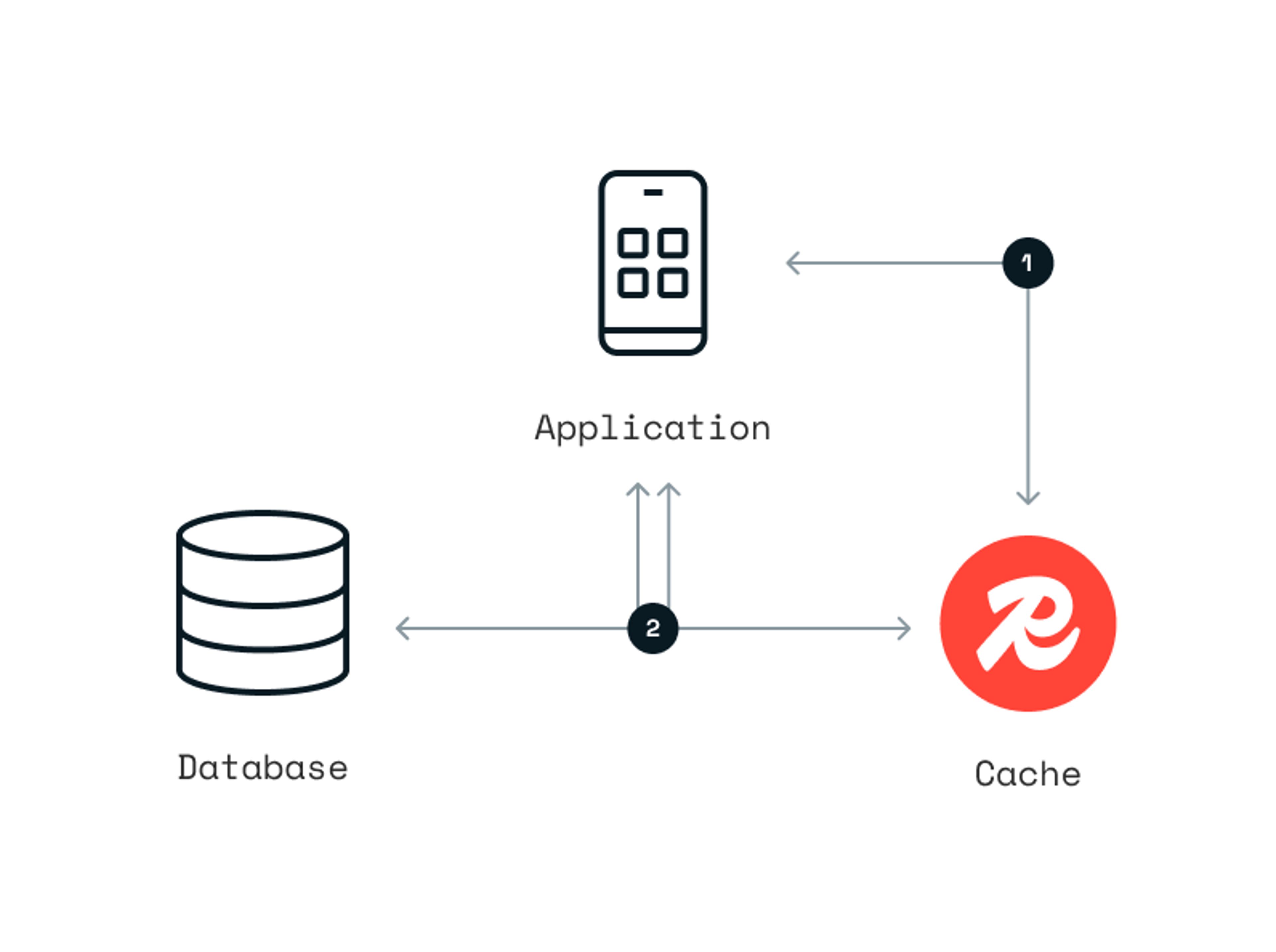
  • As a cache: Redis allows apps to provide account details like balances, market data, and transaction history in real-time at incredibly high volumes to millions of simultaneous customers. 

Redis

How cache-aside works:
1. Mobile finance apps need data (like account balances, or market information) the app first checks to see if data is cached in Redis. If it’s there, the data is delivered to the app from Redis in real-time.

2. If the data isn’t there, it is loaded from the primary database, returned to the user, and then stored in Redis for future requests.

Financial data frequently changes, which means data stored in a cache can quickly become stale. Using Redis Data Integration, customers can make sure that data is always fresh – improving performance and reducing load on backend databases—by continually syncing data from a backend database into a Redis cache. This ensures that as data changes in backend databases, the changes are immediately reflected in Redis. This can also be used to power omnichannel apps where changes made to a backend system via one medium (such as in a branch or via a web app) are immediately reflected in a mobile app that reads from Redis.

  • As a session store: Storing session data in Redis helps our customers build apps that respond instantly to their users. 

Financial institutions often store session data like authentication tokens, user profiles, recent actions, transaction history, securities and market reference data, and form drafts in Redis during user sessions. Redis’s speed ensures instant access to session data while features like built-in time to live (TTL) helps manage session expiration securely without extra overhead.

See how Axis Bank made its mobile app 76% faster with Redis.

Detect fraud in real-time

The shift toward digital that has facilitated better user experiences in mobile banking has also resulted in a heightened threat landscape for financial fraud. Losses from online payment fraud are expected to exceed $350 billion globally between 2023 and 2028. And when fraud occurs it’s typically merchants, banks, and credit card companies that are left holding the bill. 

Detecting fraud has become a cat and mouse game between financial institutions and increasingly sophisticated fraudsters. Fraud must be detected instantly to prevent illicit transactions from going through before a merchant or financial institution is left footing the bill. The sheer scale and complexity of data that must be analyzed makes detecting and preventing fraud a massive challenge.

To help, financial institutions widely use Redis for fraud detection. Specifically for online feature stores that aid in real-time transaction risk scoring.
  • Transaction risk scoring: Redis enables transaction risk scoring at massive scale—analyzing over 700,000 transactions per second for some of the world’s top banking and payment companies. Transaction risk scoring in financial services is a process that uses algorithms to assess the likelihood that a financial transaction is fraudulent. Each transaction is assigned a score based on various factors such as amount, location, customer behavior, and device used. Higher scores indicate greater risk, prompting additional verification or blocking the transaction. Redis helps fraud systems make scoring decisions in milliseconds—reducing false positives while stopping fraud before it happens.
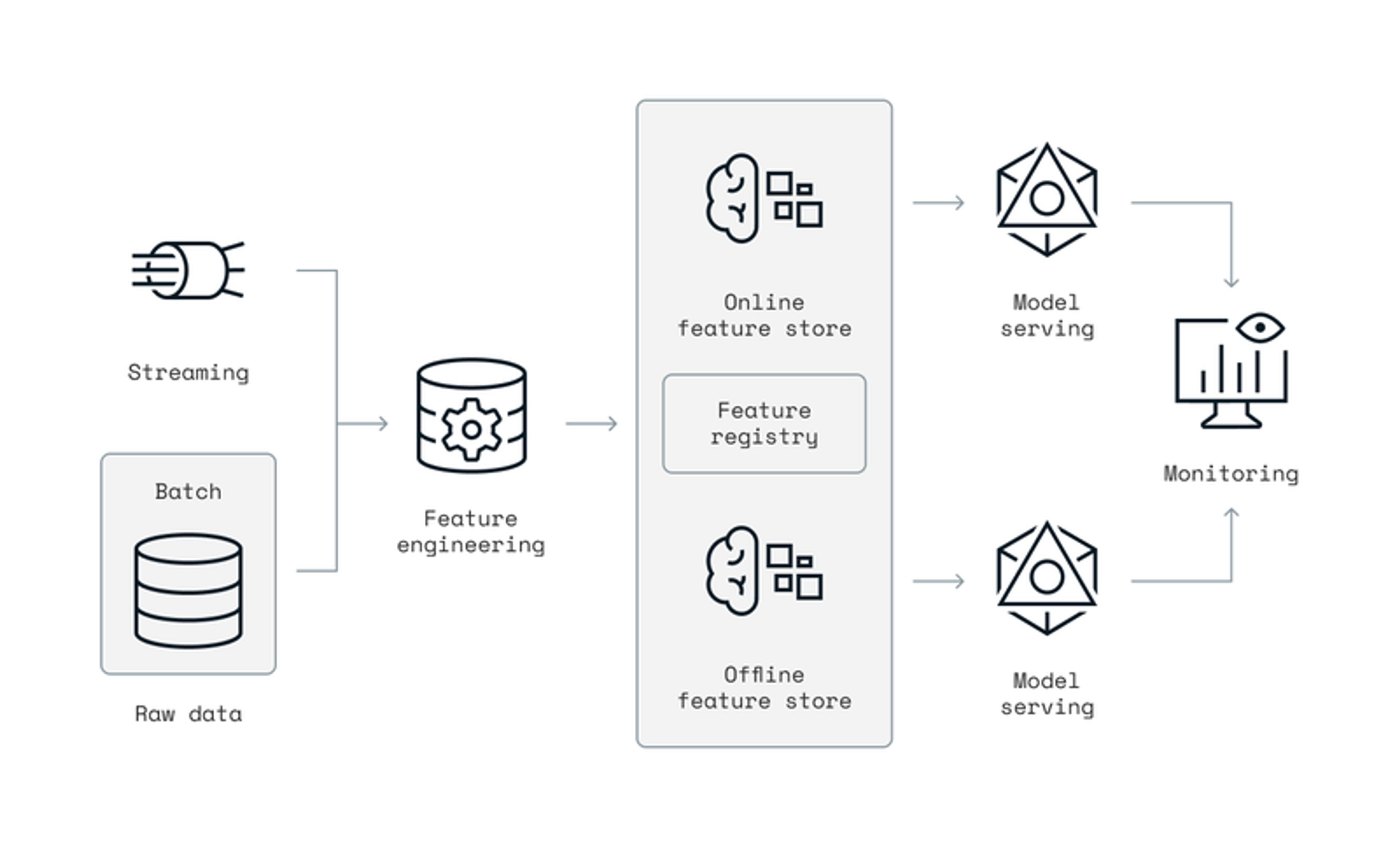
  • Online feature store: This is often done using Redis as an online feature store. A feature store is a system that helps manage and serve data (called features) used by machine learning models to detect potential fraud or anomalies. Feature stores usually have two parts; an offline feature store, which contains large amounts of historical data used for training models to help identify normal vs anomalous behavior, and online feature stores, which contain the real-time data that is fed to models to make live decisions or transaction scores.

Redis

How an online feature store works:
1. Raw data (customer profiles, payment activity, device info, and location) is collected from both batch systems (i.e. databases) and real-time streams (transaction events, login attempts).

2. Feature engineering pipelines transform this raw data into meaningful signals for fraud detection (like average transaction amount, number of failed logins, or unusual location changes). These signals are called features.

3. The resulting features are stored in an online feature store in Redis.

4. During a transaction, the fraud detection model retrieves these real-time features from the feature store to instantly score the transaction’s risk and flag suspicious behavior.

One of the world’s leading credit card companies uses Redis as a real-time feature store to score and analyze over 700,000 transactions per second, catching fraudsters before they can strike. With Redis’s sub-millisecond latency, decisions are made instantly—saving millions in potential losses each year.

Improve efficiency with customer service chatbots

Customer service is as important as ever. A recent FICO survey found that 88% of customers report that customer experiences are as important, or more important, than a bank’s products and services. And in our budding AI age, leading financial institutions are using AI to improve customer experiences and win or retain customers. 

AI-based customer service chatbots can manage over 80% of routine customer queries, allowing human agents to focus on more complex issues. And AI chatbots can also make human employees faster and more efficient, as JPMorgan’s Coach AI tool proves—helping their advisors find information 95% faster and expand their client rosters by an estimated 50% in the next 3-5 years. 

But building AI customer service chatbot’s isn’t easy. Financial institutions face challenges with response accuracy, performance (especially at scale), data integration, and inefficiency with repeatedly calling LLMs or external APIs with requests for the same data.

Redis can help businesses overcome these challenges and build fast, accurate, and cost-effective AI. Redis is commonly used for:

  • A vector database: To store embeddings and enable Retrieval Augmented Generation (RAG), which provides more accurate responses from LLMs. 

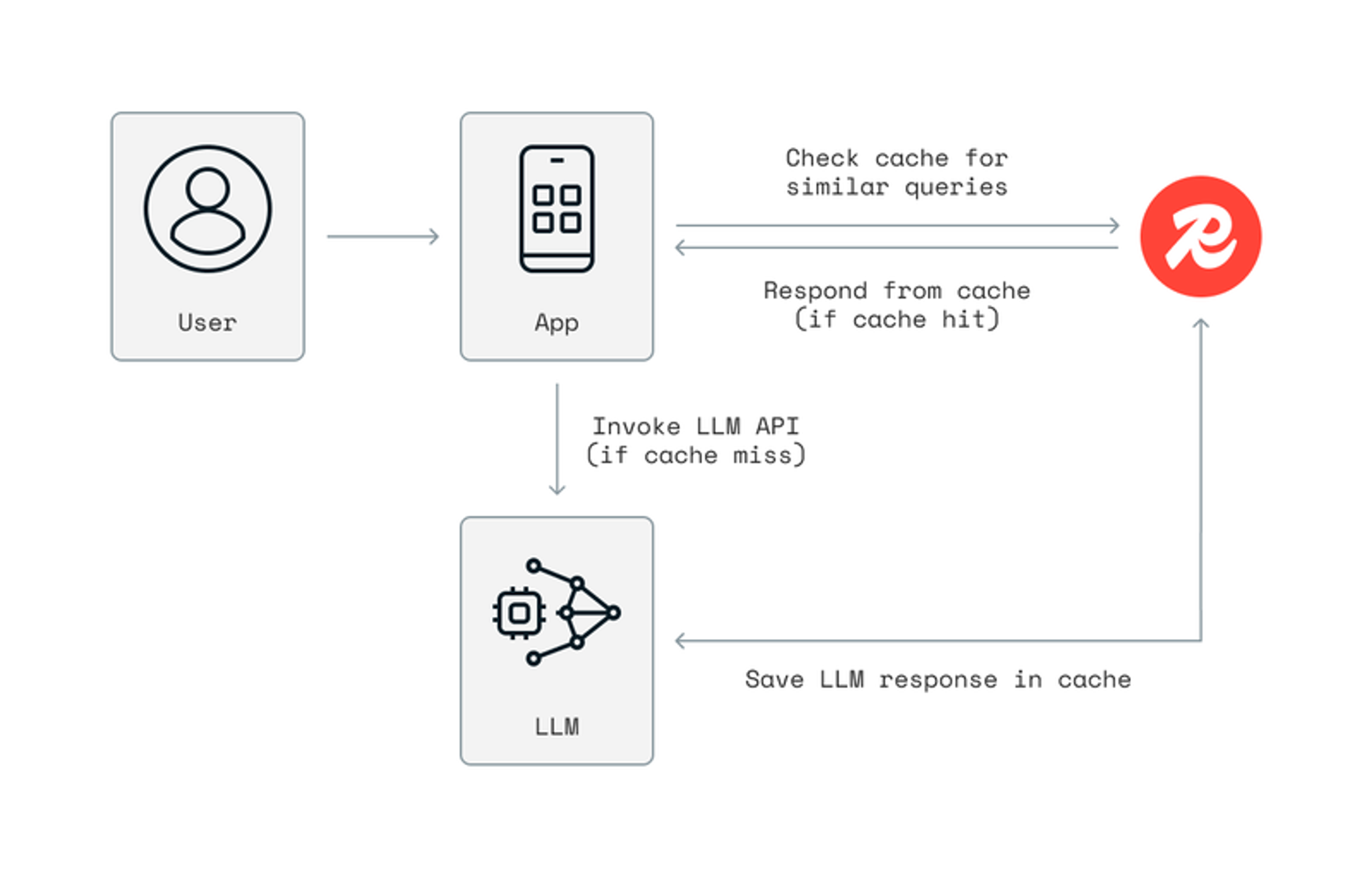
Semantic caching: To store frequent questions and answer pairs so that chatbots can return answers from memory faster and skip costly LLM calls.
Redis

How semantic caching works:
1. A user asks a question—for example: “How can I increase my credit limit?”

2. The app converts it into an embedding – the question is turned into a vector using an AI model.

3. Redis (with vector search capabilities) looks for closely matching past questions in its database.

4. If there’s a hit or if a similar question was answered before, Redis returns the cached answer instantly.

5. If not, the app asks an LLM to generate an answer—the app sends the question to an LLM to get a fresh response.

6. The app returns the response to the user—the answer is shown to the user, either from cache or generated in real-time.

  • Long-term memory: To store customer interactions across sessions and conversations.
  • Short-term memory: Some chatbots use AI agents to plan a path and evaluate while answering user questions—Redis stores those intermittent states for fast retrieval. 
  • Semantic routing: Where users might ask a single chatbot questions best answered by different divisions or tools (like a calendar or pricing app). Routing chooses the best tool based on user intent. 

Using Redis, Asurion improved customer service response times by more than 50% thanks to faster AI-driven insights and better routing.

The bottom line

Financial institutions that thrive in today’s market will be those who can deliver real-time experiences, fight fraud instantly, and scale AI-driven innovations—all without rearchitecting from scratch.

Redis helps the world’s leading banks and financial services institutions do exactly that. And this is just the beginning.

Curious how that plays out in the mobile world? Explore how Redis powers real-time mobile banking apps to deliver lightning-fast experiences on the go.

Stay tuned for our upcoming posts, where we’ll dive deeper into how Redis powers real-time feature stores, chatbot personalization, and mobile banking transformations.

Want to see how Redis can help you? Book a meeting or start building for free.