
The Chips Got Faster. The Stack Didn't.
Explore why faster chips have shifted the bottleneck to AI infrastructure, and what that means for teams running production workloads.
All







TheLastBen recently updated our fast stable diffusion template with the offset noise functionality in dreambooth!
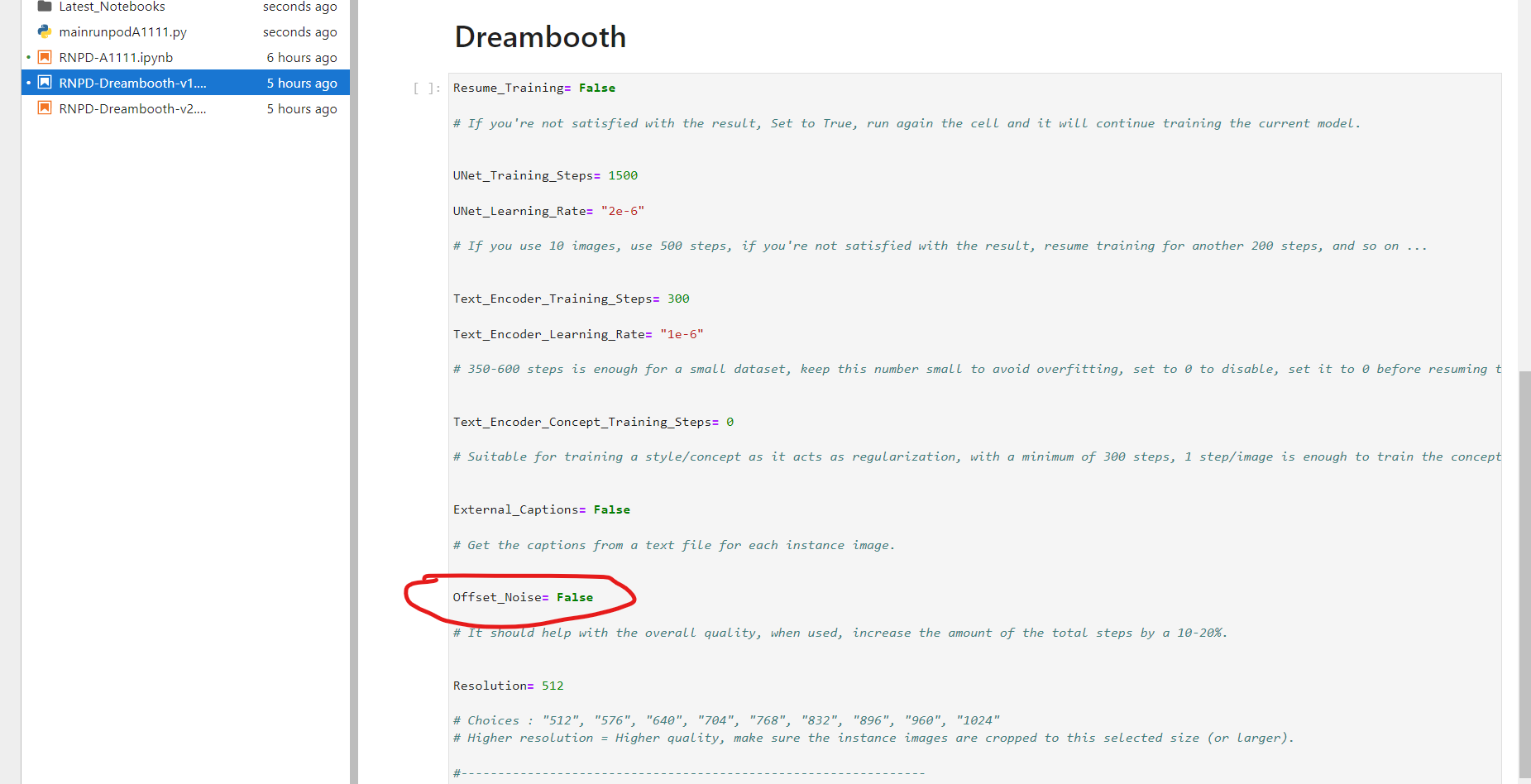
To turn it on, start up the template and connect to the jupyter link. Then just flip the Offset_Noise variable to "True" and increase your total steps by 10-20% - that's it!
Apparently this can get you some really awesome outputs in the realm that SD usually can't touch ( very dark and very light images). For more on the research behind this, you can check out this research blog post
and this YouTube video:
The results look pretty stunning, so go check it out yourself!
Author profile: Zhen Lu
Explore why faster chips have shifted the bottleneck to AI infrastructure, and what that means for teams running production workloads.
All
.jpeg)
With MIG, we can partition RTX 6000 Pro cards into isolated 24 GB instances. Here's when it makes sense for your workloads.
All
.jpeg)
How 1,100 researchers beat OpenAI's own baseline with 16 megabytes and 10 minutes.
All
Build, train, and scale AI workloads on Runpod with cloud GPUs, Serverless, and Clusters.

此内容由惯性聚合(RSS阅读器)自动聚合整理,仅供阅读参考。 原文来自 — 版权归原作者所有。