

The Chips Got Faster. The Stack Didn't.
Explore why faster chips have shifted the bottleneck to AI infrastructure, and what that means for teams running production workloads.
All









The fastest way to get access to a custom pod is to use our basic terminal access feature. This works with any custom container that you want to run on Runpod, whether or not it has a built in SSH daemon or exposed ports. Do be aware that there are limitations to this method of access, including lack of SCP support, which may impede your ability to do stuff. This access type is mostly for if you just want to run some quick terminal commands. If this sounds like your use case, read on!
Note that this gives you a bash shell, but it is not true SSH. If you need true SSH, see this blog post.
I'm not going to bore you with a long intro in this one. Here are the goods.
1. Create a key pair in a terminal window as follows:
Save it wherever you want, but remember the path! If this is your first/only SSH key, feel free to use the default path by pressing Enter without entering a custom path.
2. Get your public key (you can use the following command if you used the defaults)
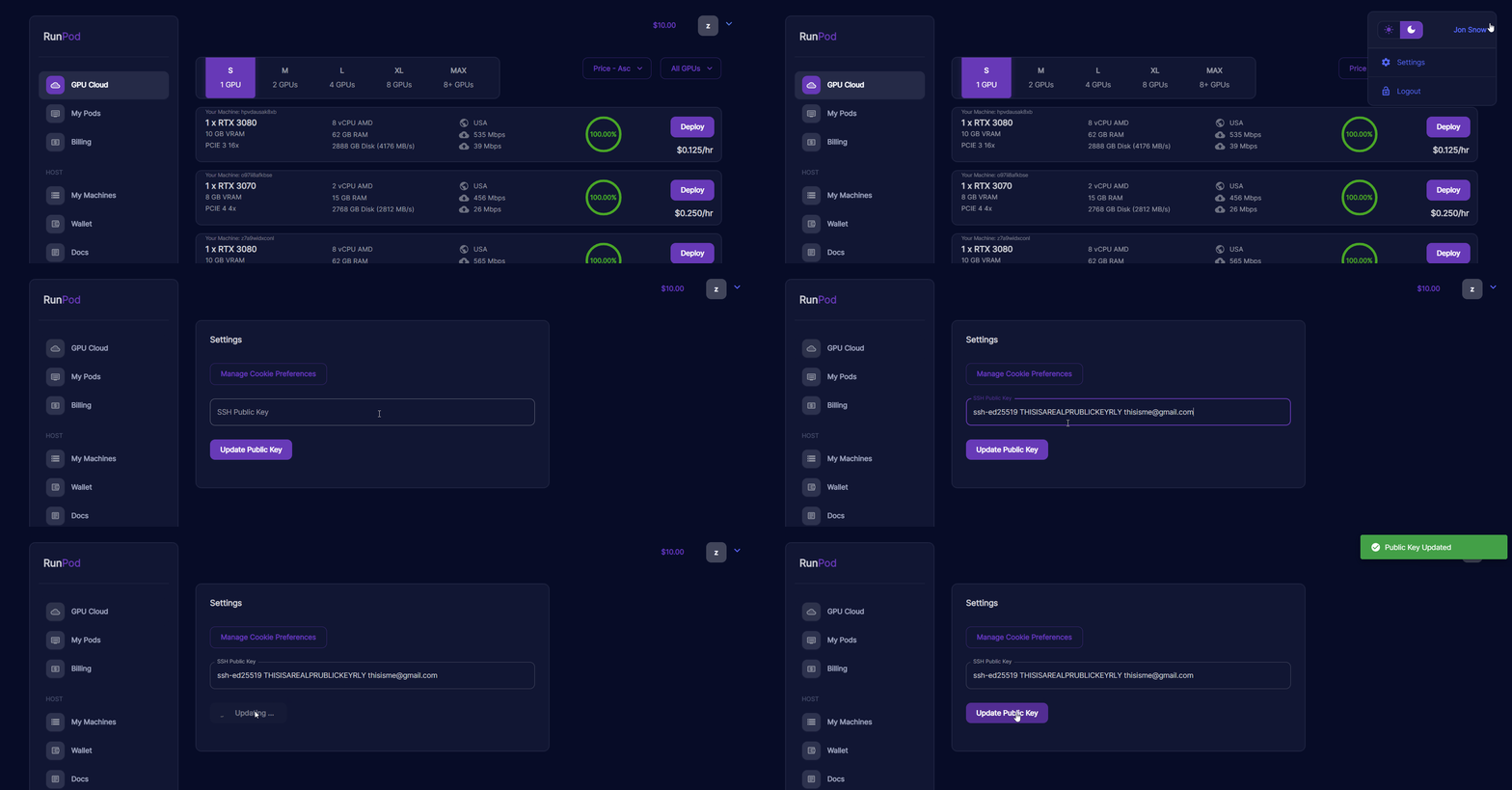
3. Copy your SSH key to the server. For Runpod, you can find the menu in your settings in the top right corner.
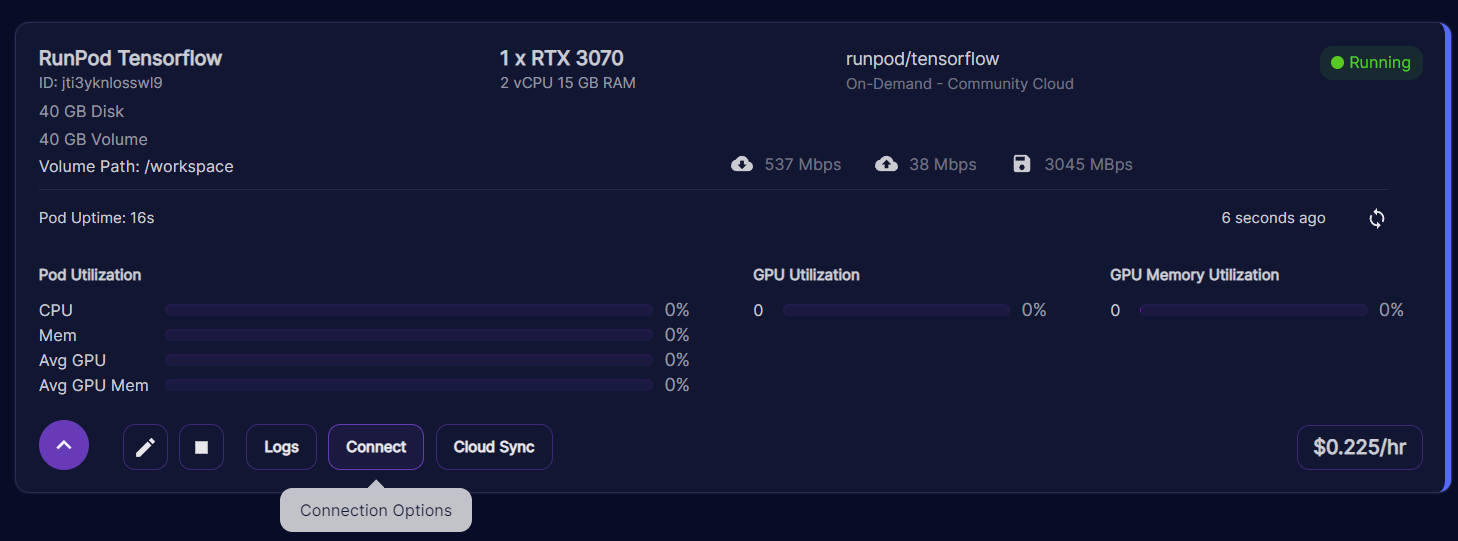
4. Find your server address. You can find it in the "Connect" menu under your "My Pods" dashboard.
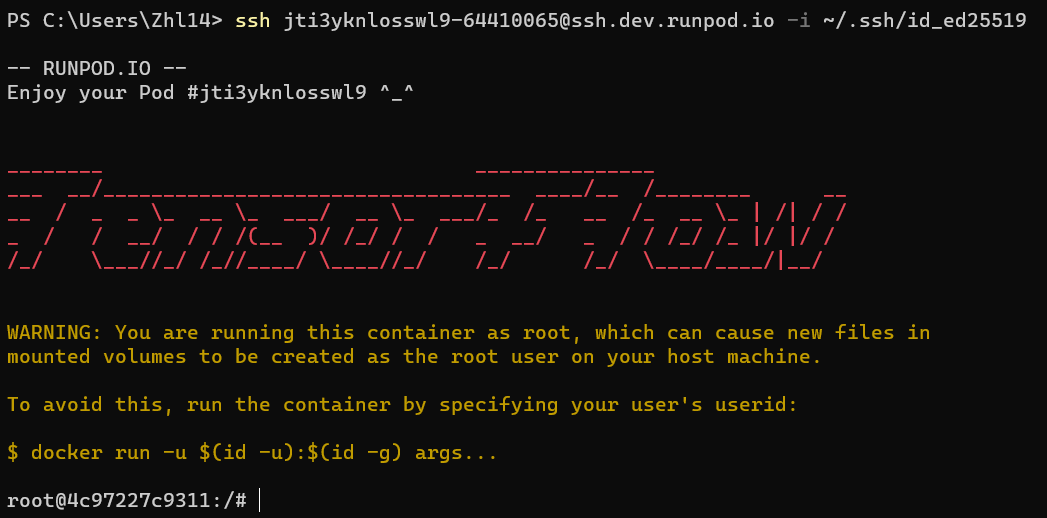
5. Copy the second SSH command (SSH command with private key file) and make sure the path points to the private key you generated in step 1.
6. Open a terminal window and run the command that you copied.
Happy Hacking!
Author profile: Zhen Lu
Explore why faster chips have shifted the bottleneck to AI infrastructure, and what that means for teams running production workloads.
All
.jpeg)
With MIG, we can partition RTX 6000 Pro cards into isolated 24 GB instances. Here's when it makes sense for your workloads.
All
.jpeg)
How 1,100 researchers beat OpenAI's own baseline with 16 megabytes and 10 minutes.
All
Build, train, and scale AI workloads on Runpod with cloud GPUs, Serverless, and Clusters.

此内容由惯性聚合(RSS阅读器)自动聚合整理,仅供阅读参考。 原文来自 — 版权归原作者所有。