






ALTADENA, Calif. — A mother started her son on chelation therapy to remove lead from his blood. A geochemist will not enter his home without a respirator and a full-body suit. A cinematographer spent thousands to get the lot where his home once stood tested for heavy metals and remediated — work the government cleanup program did not do.
Sixteen months after the Eaton Fire, these are the extreme measures Altadena residents are taking to deal with a host of toxic compounds, including arsenic and asbestos, plaguing their families and properties. The contamination is a result of the unprecedented nature of this urban firestorm, in which thousands of houses and cars became the blaze’s fuel, releasing heavy metals into the smoke.
Even after charred debris was cleared from lots where homes burned and after the houses that remained standing were remediated, testing has revealed concentrations of lead high enough to sicken children.
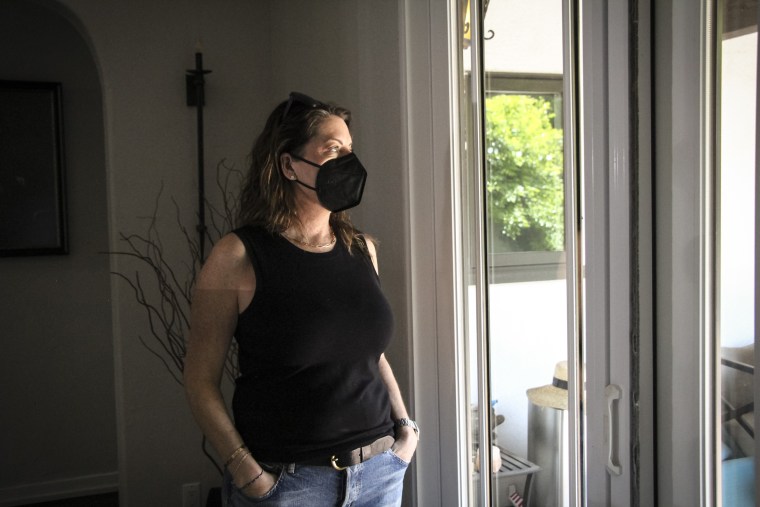
“I went and got one of those Amazon lead tests for $75 and I did a few swipes and found lead everywhere,” said Jennifer Rochlin, a ceramic artist and single mother to two sons. Her insurance company, she said, did not approve lead testing for her Altadena home until she found the metal herself, including in her HVAC system.
Rochlin has twice moved out and twice had to replace absorbent items like mattresses.
Situations like hers are, in large part, why so many residents are still not back in Altadena, a suburb northeast of Los Angeles, regardless of whether or not their homes burned. Thousands of people — nearly two-thirds of residents who lost homes or had smoke damage in the Eaton Fire, according to one report — remain displaced and stuck in temporary housing, often at huge cost to their insurers and to themselves as coverage runs out.
Uncertainty over when it is safe to return or rebuild has propelled a patchwork of academics, independent scientists and grassroots advocacy groups to conduct their own research into the contamination. What follows is the story of those findings and the ensuing conflicts, based on interviews with more than a dozen Altadena residents, six scientists working on the contamination issues, workers involved in the debris clearing, local politicians and insurance industry representatives.
Together, their experiences make it clear that the systems designed to respond to a fire disaster — insurance and remediation companies, local governments and environmental agencies — were not built for one like this.
“This was an urban conflagration, and the contamination we were dealing with was unlike anything you would have normally seen,” said Dawn Fanning, managing director of Eaton Fire Residents United, a nonprofit recovery group.
Outside of lead and asbestos, California has no safety standards for indoor residential contamination with many of the dangerous substances found in Altadena. That makes it difficult for both homeowners and insurance companies to determine when the risk is low enough to move back in. Even the companies testing for contaminants do not use consistent methods. Meanwhile, on properties where homes burned, FEMA and the U.S. Army Corps of Engineers did not require soil testing, leaving residents in the dark about potential dangers.
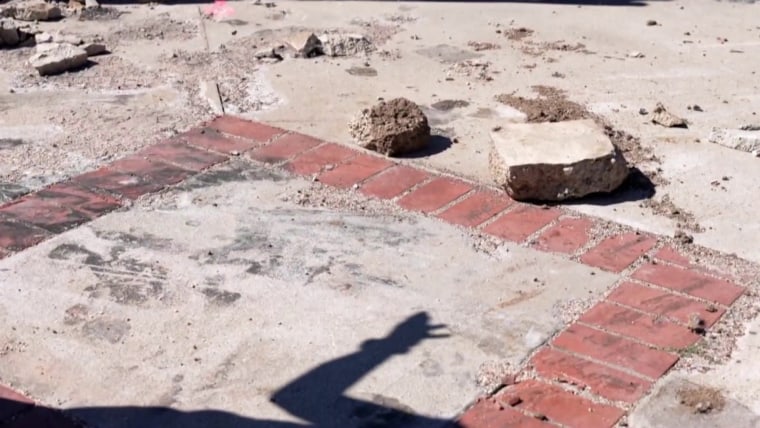
Two whistleblowers who worked on the Army Corps cleanup said they worry the community will deal with soil contamination for a long time.
Both men, who asked that their names not be published for fear of retribution, described the work as rushed and inconsistent. One said he saw more debris left behind than after previous wildfires.
“It’s so incomplete. Other fires, we’re going from fence line to fence line, scraping, taking it all,” he said. But not this time: “There’s still contaminants.”
03:19
An Army Corps spokesperson said the scope of its cleanup efforts — including decisions about what would be removed — was established by FEMA and agreed upon by California and Los Angeles County beforehand.
“The mission as assigned covered the removal of structural ash and debris, and the top six inches of soil in the ash footprint and structural foundations,” the spokesperson said in a statement. “Soil testing was not part of the USACE mission assignment from FEMA.”
Altadena is where wilderness meets the city.
The area is tucked against the San Gabriel Mountains, which glow the color of warm terra cotta at sunset. From here, the silhouette of Los Angeles’ downtown skyscrapers can appear distant and abstract in the haze.
The Eaton Fire destroyed 9,400 homes and structures in Altadena in January 2025, leading the lithium in electric vehicle batteries, arsenic in old lumber and asbestos in attic insulation to become part of the smoke. The swirling winds that spread the flames topped 90 mph.
During the blaze, Alireza Namayandeh, a National Science Foundation postdoctoral fellow at Stanford University, collected samples of the smoke at a Pasadena park within the plume, using a device that filters and separates the particles. His subsequent research, Namayandeh said, shows that the majority of the particles were actually nanoparticles roughly one-1,000th the width of a human hair — a size at which they can easily enter the lungs, the bloodstream and the brain.
此内容由惯性聚合(RSS阅读器)自动聚合整理,仅供阅读参考。 原文来自 — 版权归原作者所有。