







Health and Human Services Secretary Robert F. Kennedy Jr. sparked outrage among disability rights advocates with recent comments alleging widespread fraud in Medicaid programs that pay people to care for elderly or disabled family members — a system millions of Americans rely on to survive.
During testimony before the U.S. House Ways and Means Committee last week, Kennedy criticized Medicaid-funded programs that pay relatives to serve as caregivers, alleging they compensate people for tasks they “used to do as family members for free.” That includes paying them “for balancing the checkbook, for picking up the groceries, for driving somebody to a doctor’s appointment,” he said.
“And this is rife with fraud,” Kennedy said, because the federal government has no way “to determine if they actually performed that duty or not.”
Video of the remarks quickly spread across social media, drawing a wave of angry responses from caregivers and disability rights advocates who said Kennedy trivialized the reality of caring for medically complex loved ones while conflating legitimate caregiving with illegal activity.
“That’s insulting,” said Kim Musheno, senior director of Medicaid policy at The Arc of the United States, a national disability rights organization. “It’s insulting to the families, and it’s insulting to the work that direct support professionals do for people.”
That work, advocates say, is far more complex than shuttling loved ones to doctor appointments.
For many families, it involves constant, hands-on care for relatives who are unable to live independently — from managing medications and medical equipment to providing continuous supervision for those with significant physical or behavioral needs. The work can be physically and emotionally demanding, advocates say.
Do you have a story to share about Medicaid home care? Fill out this form.
Sue Root, a nurse and single mother of three in Colorado who is paid through Medicaid to care for her 25-year-old daughter, said Kennedy’s words bore little resemblance to her daily life. Her daughter, who suffered a catastrophic brain injury as a child, requires around-the-clock care, including a ventilator, feeding tube and seizure monitoring — which Root largely manages at home.
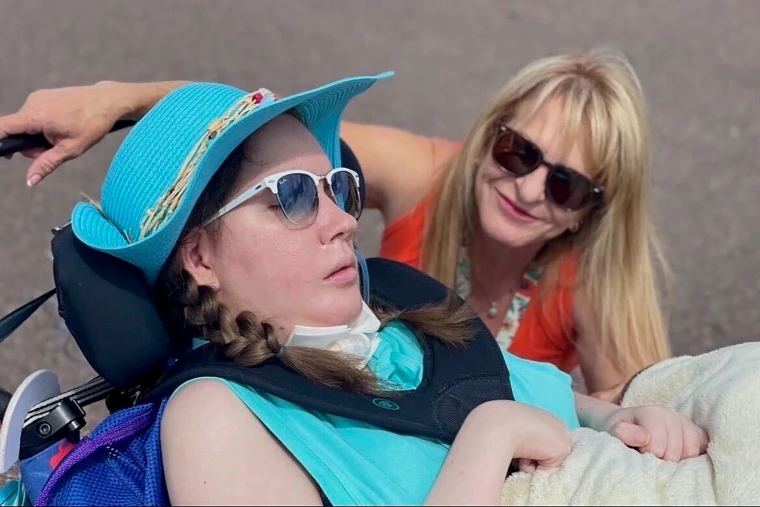
“The suggestion that family caregivers are simply running errands or performing typical normal tasks that should be done for free is not only inaccurate, it is deeply dismissive of the reality of special needs families like mine,” Root said.
More than 11 million Americans are paid through government programs to care for elderly or disabled family members, according to a recent study. Many are reimbursed through a suite of state-administered Medicaid programs known as home- and community-based services, which compensate both family members and professional caregivers to help people live safely at home.
Kennedy’s comments come as Medicaid home-care programs — which have long garnered bipartisan support as a cost-effective alternative to nursing homes and other institutions — face growing scrutiny from conservative policymakers and activists who have framed them as magnets for fraud and waste.
In a statement, Health and Human Services spokesperson Andrew Nixon defended the agency’s scrutiny of home-care programs, saying they play an important role but “have long been vulnerable to misuse.”
White House spokesperson Kush Desai echoed that message, saying in a statement that “pervasive waste, fraud, and abuse in key health programs are not only a drain on taxpayers, but a threat to the long-term viability of these programs for the Americans who rely on them.”
Advocates do not dispute that fraud exists in large government programs and should be rooted out. State and federal prosecutors have secured convictions in recent years against operators who billed Medicaid for home-care services that were never provided or falsified to inflate payments, in some cases totaling tens of millions of dollars.
But caregivers say Kennedy’s comments paint with too broad a brush and risk undermining services that millions depend on. Advocates also dispute the claim that there are no checks to ensure family caregivers are legitimate, noting that states typically require training, documentation of care and other oversight.
Medicaid home-care programs are already under strain. More than 600,000 disabled or elderly people are estimated to be on waitlists for services nationwide, and advocates say low pay and difficult working conditions have led to a chronic shortage of home-care workers.
In response to these pressures, which were amplified during the Covid pandemic, many states have expanded programs allowing family members to be paid caregivers — a shift backed by both Republicans and Democrats. In many parts of the country, especially rural areas, families say they cannot find workers with the skills to care for people with complex medical needs.
In those cases, Musheno said, paying family members can be both a practical and economic solution for people who leave the workforce to care for disabled relatives.
“How can they afford to live if they’re not getting paid to take care of their child?” she said.
The controversy over Kennedy’s remarks comes as states grapple with rising health care costs, inflation-driven budget strains and looming federal Medicaid cuts under the “big, beautiful bill” that President Donald Trump signed into law last year — pressures already prompting some states to consider reducing home-based services.
Barbara Merrill, CEO of ANCOR, a national association representing providers of services for people with intellectual and developmental disabilities, said Kennedy’s comments have left community-based caregivers “gravely concerned” about the future of home care.
“They didn’t just denigrate family caregivers, they denigrated the work of the professionals in our fields by suggesting that all home- and community-based services could just be done by family caregivers, and it should all be done for free,” Merrill said. “It’s just shocking.”
For families already stretched thin, the stakes are deeply personal.

Brandi Coon, an Arizona mother of three who is paid through Medicaid to care for her 11-year-old son with cerebral palsy and epilepsy, said she was alarmed by Kennedy’s remarks. She responded with a Facebook post detailing her family’s experiences.
The post, which has been shared more than a thousand times, pushed back on the idea that Medicaid programs are wasteful, describing how they pulled her family out of financial and emotional crisis while keeping her son at home.
“Families like mine are not the problem,” Coon wrote. “We are part of the solution.”
此内容由惯性聚合(RSS阅读器)自动聚合整理,仅供阅读参考。 原文来自 — 版权归原作者所有。