







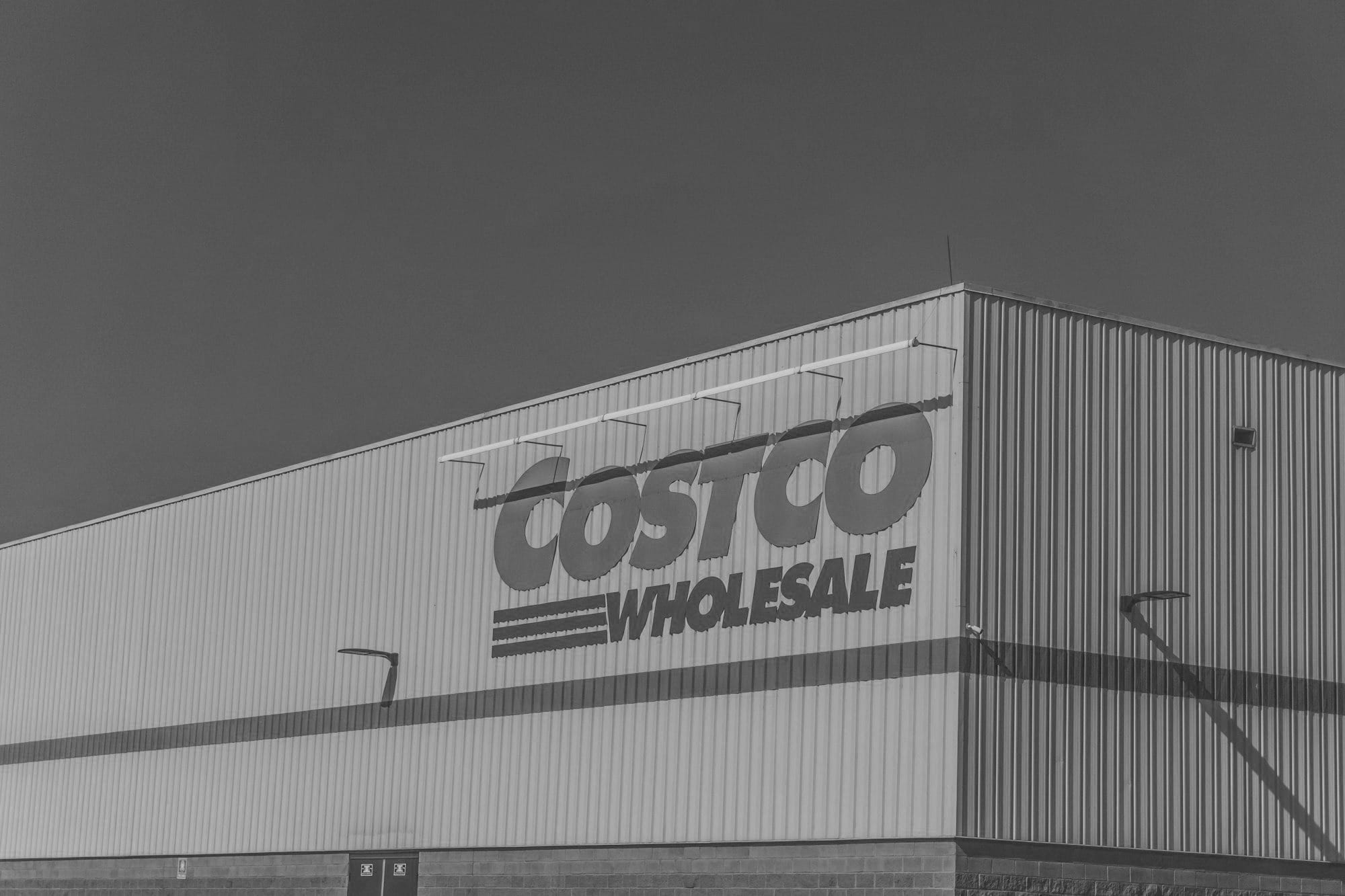
At FedMart, the discount chain Sol Price built in 1950s San Diego, you could buy a can of WD-40 in one size, the big one, and that was the end of the conversation. Anyone who wanted the small can went without. Price called it the intelligent loss of sales: carry one good version of a thing, refuse the other nine, and eat the customers you lose in exchange for the trouble you save everyone else.
Jim Sinegal, his mentee, carried that habit into Costco in 1983. A Costco warehouse stocks around 4,000 items; while a supermarket runs 30,000 or more, and Amazon runs into the millions. A Costco buyer looks after fewer than 200 products and spends the extra time that buys deciding which ones earn the floor space, killing the underperformers, and doubling down on the winners. By the time you push your trolley through the door, someone has already rejected almost everything that could have been there.
Most of the internet runs on the opposite instinct. Pile the shelf higher, add the SKU, take the margin, say yes to everything. And the people using it are worn out.
I'd bet the next decade runs the other way. People don't want infinite choice anymore; they want fewer decisions inside places where someone has already thrown out the worst options.
For 20 years we built the internet around abundance: more products, more creators, more opinions, more newsletters, more podcasts, more apps, more tools, more marketplaces, more feeds. The founding promise was access: anything, from anyone, anywhere, instantly. No gatekeepers, no scarcity, no permission. The shelf went infinite.
For a while that felt like freedom.
And then it turned into drudgery...
Every ordinary decision now comes with a research burden. Buying a toaster means reading reviews, scanning Reddit, distrusting half the reviews, checking YouTube comparisons, searching for "best toaster no affiliate," then wondering whether the person recommending the toaster is paid, deluded, or defending the thing they already bought. Choosing project management software turns into a 6-week intellectual collapse involving Notion, Linear, ClickUp, Basecamp, Airtable, Todoist, Things, a whiteboard, a notebook, and some founder on X insisting that the wrong task app is why your company has no momentum...
The internet gave us access to anything, and then forced us to consume everything, and then made us responsible for sorting all of it.
The modern consumer has become a part-time procurement department. We audit quality, decode incentives, compare vendors, scan reviews, avoid scams, dodge subscriptions, read refund policies, assess creators, inspect screenshots, and attempt, against all odds, to tell actual expertise apart from people who bought a microphone.
This is considered normal behaviour now.
And it's deranged.
The sane response to all this is, I think, a form of bounded trust.
Costco never promised perfect quality or the best product in every category; and it isn't doesn't claim to be a temple of taste. It sells enormous muffins, bulk socks, patio furniture, protein shakes, car tyres, petrol, hearing aids, rotisserie chickens, appliances, and tubs of dip large enough to drown any and all sorrows.
But more than that: Costco sells a higher floor.
Their promise comes down to two things:
you probably won't get ripped off, and
you don't have to inspect 900 versions of the same item.
Costco doesn't necessarily take judgement away from you. But it does absorb enough of the evaluation that shopping feels sane again, limiting the shelf, buying with discipline, backing Kirkland Signature with its own name, keeping prices legible, and standing behind the lot with a return policy that assumes you're honest. You don't wander a marketplace full of fake brands, sponsored clutter, manipulated reviews, counterfeit risk, and algorithmic sewage.
Nobody walks into Costco believing every item is elite. They walk in trusting that the floor is higher than the open market, and they'll pay for that trust.
The internet doesn't need more curation in the precious boutique sense. It needs operators who cut fraud, noise, decision fatigue, and bullshit, and who clear the garbage off the floor before you arrive.
Amazon deploys abundance logic in soul-destroying reverse. It has everything, which by now means it has too much. You can still find good things there (or so I'm told), but you do the sorting, and it's very much a case of buyer beware - seriously, buyer fucking beware: parsing the brand names, the reviews, the images, the delivery dates, the sponsored placements, the counterfeit risk, and the chance that a product with 18,000 5-star reviews still singes off your eyebrows is down to you.
A world drowning in options will pay good money for someone else's refusal. Because refusal has become a premium service.
More results stop helping once the results are polluted. Reviews that are fake, incentivised, or written by people with no standards don't improve by multiplying. Creators performing expertise for an algorithm don't add up to expertise. Tools that keep making the same bullshit claim to replace every other tool cancel each other out. And more options stop being a gift the moment you have to become an amateur fraud analyst to choose between them.
The internet's problem has moved from access to trust.
We can find anything. We can't easily tell what deserves our belief, our money, our time, our attention, or our adoption. The old internet solved scarcity; the new internet has to solve filtration, and filtration and aggregation are vastly different jobs.
Aggregation scales because it dodges responsibility. Open the gates, index the world, invite the vendors, let the users sort, take a cut. That became the dominant model because it suited the economics of software: more supply made more surface area, more surface area made more searching, more searching made more money.
Every open system becomes a target for the people gaming it. SEO gaming, review gaming, marketplace gaming, social gaming, recommendation gaming, affiliate gaming, attention gaming. The larger the platform, the stronger the pull to manipulate it. Eventually the user starts paying the tax, spending more time verifying, comparing, doubting, checking, and defending themselves against the system.
Costco-style trust starts when the operator takes - at least - some of that tax back.
A trusted operator narrows the field first, making the choices in advance and accepting the cost of everything it leaves out. Then it absorbs the complexity, doing the dull part before you get there: testing, comparing, rejecting, negotiating, standardising. Then it holds the floor. It doesn't have to make every item extraordinary, it only has to clear the obvious junk and keep a baseline you can feel the moment you walk in.
Most internet businesses miss this. You build trust by making the customer feel less exposed. Announcing your own excellence does nothing.
A marketplace makes you inspect everything. A trusted operator lets you relax, and in some categories that relaxation is the entire product.
Think about the felt difference between buying from a chaotic marketplace and buying from a retailer you trust. In the first, you're on guard the whole time, because every image might mislead you, every review might be bought, every brand might be a shell, every discount might be bait, every result might have paid its way to the top. You'll probably still get what you need. You'll get it defensively.
In the second, you still choose, but you choose inside a zone of lowered suspicion, because the retailer has put skin in the game. Sell you something bad and its reputation pays. Price something absurdly and the relationship cools. Make the returns hostile and the trust drains out. You might never put any of this into words. You feel all of it.
The internet is starved for that feeling.
And it goes well beyond retail...
A Costco-shaped media company wouldn't publish 200 takes a day. It would publish fewer pieces with a higher floor. Readers would show up because it spares them the feed, and it would earn its keep through what it refuses to run.
A Costco-shaped software company wouldn't sell a platform with 70 use cases, 11 pricing tiers, and a thousand features. It would make a clear promise to a clear user. It would end the internal debate. It would say: for this kind of team, doing this kind of work, this is the system. Use it and // or move on.
A Costco-shaped agency wouldn't offer every service that can technically be billed. It would define its shelf. It would turn down bad-fit clients, weak briefs, vanity deliverables, pointless retainers, and work that makes the operator richer while leaving the client more confused. Its standards would be part of the offer.
A Costco-shaped community wouldn't confuse growth with health. It would moderate hard, keep its standards visible, and guard the useful conversation from people who treat every room as a stage, because the health of a community depends on who it removes as much as who it lets in.
A Costco-shaped creator wouldn't post every half-formed thought chasing reach. They'd become a reliable filter. Their audience would trust their judgement because they show restraint, and in a world of constant output restraint becomes a signal.
The internet trained all of us to fear leaving something out. More pages mean more search traffic, more products mean more revenue, more posts mean more shots at virality, more features mean more markets, more services mean more deal flow.
Saying yes has become cheap. Yes to more inventory, more formats, more creators, more sponsors, more categories, more features, more partnerships, more slop, as long as it performs.
The next premium goes to whoever can say no and survive the revenue they walk away from.
Bullshit pays, at least in the short term. Low-quality suppliers pay, bad-fit clients pay, sponsored placements pay, mediocre content pulls clicks, extra features close deals, fake urgency lifts conversion, confusing pricing pulls more money out of people, dark patterns move the metrics. A growth team can always find a way to monetise confusion - and plenty of internet businesses start to rot the moment they work out that confusion is profitable.
The Costco theory says: sell relief, instead. Make people feel that someone competent is handling the market for them.
This is why the membership model works as well as it does. Costco runs as a relationship with an institution, and the annual fee puts the trust down in a contract, in black and white. You hand over money, habit, attention, and your default preference, and in return Costco has to keep the thing worth renewing every year.
It's a different game from the open web's casual opportunism. The mass internet wants traffic and optimises for clicks. The Costco internet wants repeat belief and optimises for "I'll just get it there."
"I'll just get it there" means the customer has taken you out of the comparison set. You've stopped fighting transaction by transaction. You've become infrastructure in someone's life - AKA, the default answer before the question is even formed.
Every founder says they want loyalty, but (time and time again) they build the machine that kills it. They overcomplicate the product, dilute the brand, chase adjacent customers, bolt on tiers nobody understands, publish filler, wave bad actors into the marketplace, swap human judgement for engagement metrics, and reach for pricing tricks, urgency tricks, retention tricks, interface tricks...
People commit when commitment lowers their anxiety. They pay when the payment buys them standards, accept fewer options when the survivors are safer, tolerate constraint when it comes from competence, and come back when the operator has proven that trust beats another night of searching.
A brand is a pattern of kept promises. Over time, people learn what you allow, what you reject, what you repeat, what you protect, what you punish, and on what and where you refuse to compromise.
Digital brands (and particularly the current era of influencer founded DTC companies) run this backwards, blurring their standards over time. They start with a point of view and end as a marketplace, or they start with taste and end as inventory, or they start with a community and end as a growth channel, or they start with a product and end as a bundle of loosely related monetisation experiments.
At no point do they stop to answer:
What do you let in? Who do you let near it? What do you push? What do you kill? What do you refund? What do you ignore? What earns the no?
AI means we can now produce content, software, images, video, music, analysis, pitch decks, landing pages, sales emails, reports, strategies, and whole micro-products at near-zero marginal cost - and so the shelf expands again, and the flood rises. The average unit of internet output gets cheaper, faster, and less trustworthy at the same time.
When production turns abundant, selection turns scarce. Raw output stops being the scarce thing - because the scarce thing is someone willing to tell you which output deserves your attention, which vendor is real, which product works, which argument holds, which plan makes sense, which tool is worth adopting, which document to read and which to delete before it costs you another minute.
The winners here will be operators with both A) taste and B) the power to enforce it. Taste without enforcement turns into slop. Enforcement without taste turns into bureaucracy.
The shallow version of this will be boutiques, directories, newsletters, AI wrappers, and "handpicked" marketplaces that wrap a tasteful interface around ordinary affiliate arbitrage; and of course, it won't last. People can smell fake standards. They know when a list exists to help them and when it exists to monetise their confusion. They know when the operator has actually turned down good money to protect the shelf.
The better version will be companies and people who make trust operational. They'll publish their criteria, keep the offering narrow, explain the tradeoffs in plain language, cut the items that underperform, and refuse to become a dumping ground, so that every interaction leaves the customer's life a little simpler.
The test: does dealing with you lower the load in someone's head, or add to it? If it adds, you're part of the noise.
A Costco-shaped business sells:
relief from evaluation
the feeling that someone competent has gone ahead with a machete and cleared the path
a smaller world that works better than the larger one.
The internet's current default setting is actively hostile to sustained attention. Everything asks for a decision, wants a preference, requests a subscription, a rating, a login, a notification permission, a plan, a personalised feed, an upsell, a dashboard, a profile, a follow, a like, a reaction, a review. The strongest customer experience on offer might soon come down to three words: we handled it.
It can be whole business model, if you let it, but only when it's true.
You can't fake the Costco theory with branding. You can't write your way into trust while the shelf is garbage, can't design your way out of weak standards, can't pose as a filter while the market dumps trash through your side door. It takes operational severity, the real kind.
The operator has to disappoint suppliers, partners, clients, contributors, sometimes the customers themselves. They have to pick the long-term trust account over the short-term revenue hit, and accept that every low-quality thing they wave through taxes the whole system. One bad product makes you inspect the next ten. One lazy essay makes you doubt the whole publication. One weak hire makes the team start to lower the bar. One incoherent feature makes the user wonder who's steering.
A low tolerance for bullshit has to run as an operating system, built it into how the place works.
In practice that means you remove things, you simplify, you say no earlier than feels comfortable. You define what good actually means and then make the standard explicit enough that people can test you against it. You refund when you fail, cut the features that confuse the product, stop publishing when you've nothing worth saying, turn down the clients who'd drag the standard down, and refuse any form of scale that lowers the bar.
Anyone can launch a store, start a newsletter, build a course, spin up a community, publish a directory, open a marketplace, wrap an AI model in a UI. Creation stopped being the test a while ago.
Literally, anyone.
The test now is whether people can trust you to exclude.
The Costco theory of the internet is simple. People are tired of sorting. Tired of comparison, fake reviews, infinite tabs, marketplaces that play like casinos, creators who recommend everything, software that needs a consultant to explain its pricing page, experts with hidden incentives, brands that treat their attention as something to strip-mine.
Most of the time they'd take a safer set of things over the theoretically best one. They want fewer decisions and a higher floor. They want someone with the reputation and buying power to bin the obvious garbage before they walk in. They want the kind of constraint that protects them.
None of this kills abundance. The infinite shelf stays. Some people will always want to browse, research, compare, optimise, hunt for the edge. But across a lot of categories the centre of gravity is moving.

I’m releasing a new edition of my book Permissionless today. I've rewritten it from the ground up: clearer, sharper, and rebuilt around the ideas I think matter most in this moment. And it’s entirely free.
You can read it here!