



惯性聚合 高效追踪和阅读你感兴趣的博客、新闻、科技资讯
阅读原文 在惯性聚合中打开

推荐订阅源

cs.AI updates on arXiv.org
Spread Privacy
Spread Privacy
T
Threat Research - Cisco Blogs
C
Cyber Attacks, Cyber Crime and Cyber Security
cs.CL updates on arXiv.org
Cloudbric
Cloudbric
Threat Intelligence Blog | Flashpoint
SecWiki News
SecWiki News
Schneier on Security
人人都是产品经理
人人都是产品经理
让小产品的独立变现更简单 - ezindie.com
WordPress大学
WordPress大学
S
Secure Thoughts
V
Visual Studio Blog
Microsoft Azure Blog
Attack and Defense Labs
T
The Blog of Author Tim Ferriss
Vercel News
Vercel News
The Last Watchdog
The Last Watchdog
L
LINUX DO - 最新话题
T
Tailwind CSS Blog
C
Cybersecurity and Infrastructure Security Agency CISA
Scott Helme
Scott Helme
博客园 - Franky
I
InfoQ
Cisco Talos Blog
Cisco Talos Blog
Stack Overflow Blog
Stack Overflow Blog
MongoDB | Blog
MongoDB | Blog
N
Netflix TechBlog - Medium
Help Net Security
Help Net Security
M
MIT News - Artificial intelligence
GbyAI
GbyAI
B
Blog
K
Kaspersky official blog
博客园 - 【当耐特】
AWS News Blog
AWS News Blog
O
OpenAI News
A
About on SuperTechFans
F
Fortinet All Blogs
PCI Perspectives
PCI Perspectives
G
Google Developers Blog
www.infosecurity-magazine.com
A
Arctic Wolf
酷 壳 – CoolShell
酷 壳 – CoolShell
Application and Cybersecurity Blog
freeCodeCamp Programming Tutorials: Python, JavaScript, Git & More
C
CXSECURITY Database RSS Feed - CXSecurity.com
Apple Machine Learning Research
钛媒体:引领未来商业与生活新知
钛媒体:引领未来商业与生活新知
Google DeepMind News

Devoriales - DevOps and Python Tutorials

Cloud & DevOps & AI Digest: The Week of Jun 28, 2026 Cloud & DevOps & AI Digest: The Week of Jun 20, 2026 Ansible for DevOps Engineers: Architecture, Core Concepts, and Hands-On Lab Login Must-Have Kubernetes CLI Tools Every Platform Engineer Should Know Login Login Login Why Your Best Engineers Are Quitting (And How to Stop It) Login ArgoCD Vulnerability: How the ServerSideDiff Feature Exposes Kubernetes Secrets Login How Kubernetes Controls What Your Containers Can Do Login Multi-AZ Is Not Disaster Recovery: What the AWS Bahrain Outage Finally Proved Trivy Supply Chain Attack: When Your Security Scanner Becomes the Threat Is Claude Opus 4.6 Fast Mode Really Worth 6× the Price? Login Unlocking Higher Pod Density in EKS with Prefix Delegation AWS Regional NAT Gateway: What It Is and Why You Should Care Kubernetes 1.35 Timbernetes Release AWS re:Invent 2025: The Future of Kubernetes on EKS Debate Series: How Do We Control Deployment Order in Kubernetes? Debate Series: Should We Eliminate Kubernetes Secrets Entirely? Kubernetes CRDs Explained: A Beginner-Friendly Guide to Extending the Kubernetes API Reduce Cloud Cross-Zone Data Transfer Costs with Kubernetes 1.33 trafficDistribution Building Custom Bitnami Images: A Guide for Self-Hosted Container Images New Features in Kubernetes 1.34: An Overview From Free to Fee: How Broadcom's Bitnami Monetization Disrupts DevOps Infrastructure Claude Code Cheat Sheet: The Reference Guide Kubernetes Loses Enterprise Slack Status: Discord Among Platforms Being Considered Understanding Container Security: A Guide to Docker and Pod Security Container Patterns in Kubernetes: Init Containers, Sidecars, and Co-located Containers Explained AWS Launches Serverless MCP Server: AI-Powered Development Gets a Serverless Boost Valve Responds to Alleged Steam Data Breach Reports: What Users Need to Know ArgoCD 3.0: The Evolution Toward Secure GitOps Redis Returns to Open Source: The AGPLv3 Licensing Decision New Features in Kubernetes 1.33: An Overview Prometheus: How We Slashed Memory Usage IngressNightmare: Critical Ingress-NGINX Vulnerabilities and How to Check Your Exposure New Features in Kubernetes 1.32: An Overview What to Consider If You're Not Signing Up for Bitnami Premium Certified Kubernetes Administrator (CKA) Exam Updates for 2025 DeepSeek AI and the Question of the AI Bubble 2024 in Review: IT Trends, Startups, and What’s Next Inside Argo: The Open-Source Journey Captured in a CNCF Documentary Running Docker on macOS Without Docker Desktop - updated with Kubernetes installation HashiCorp Rolls Out Terraform 2.0 at HashiConf, Keeps IBM Acquisition in the Shadows Is the EU Falling Behind in the Global AI Race? Prometheus Essentials: Node Exporter And System Monitoring Prometheus Essentials: Install and Start Monitoring Your App Prometheus Essentials: Introduction To Metric Types Kubernetes Pod Scheduling Explained: Taints, Tolerations, and Node Affinity Retrieval Augmented Generation (RAG) Explained for Beginners Like Me Using Sealed Secrets with Your Kubernetes Applications
Python Tops the Tiobe Index: The Most Popular Programming Languages - January 2025
Aleksandro Matejic · 2025-01-07 · via Devoriales - DevOps and Python Tutorials

Aleksandro Matejic

In the latest edition of the Tiobe Index, Python continues to dominate as the most widely used programming language, securing the top spot with a significant market share of 23.28%. This represents an impressive 9.3% increase compared to the same time last year.

The Tiobe Index is a widely regarded indicator of programming language popularity, offering insights into trends that shape the software development landscape. For developers, tech leaders, and organizations, this index provides a snapshot of where the industry is heading.

Key Highlights from the January 2025 Tiobe Index

Here’s how the top 10 programming languages rank this year, along with their respective market shares:
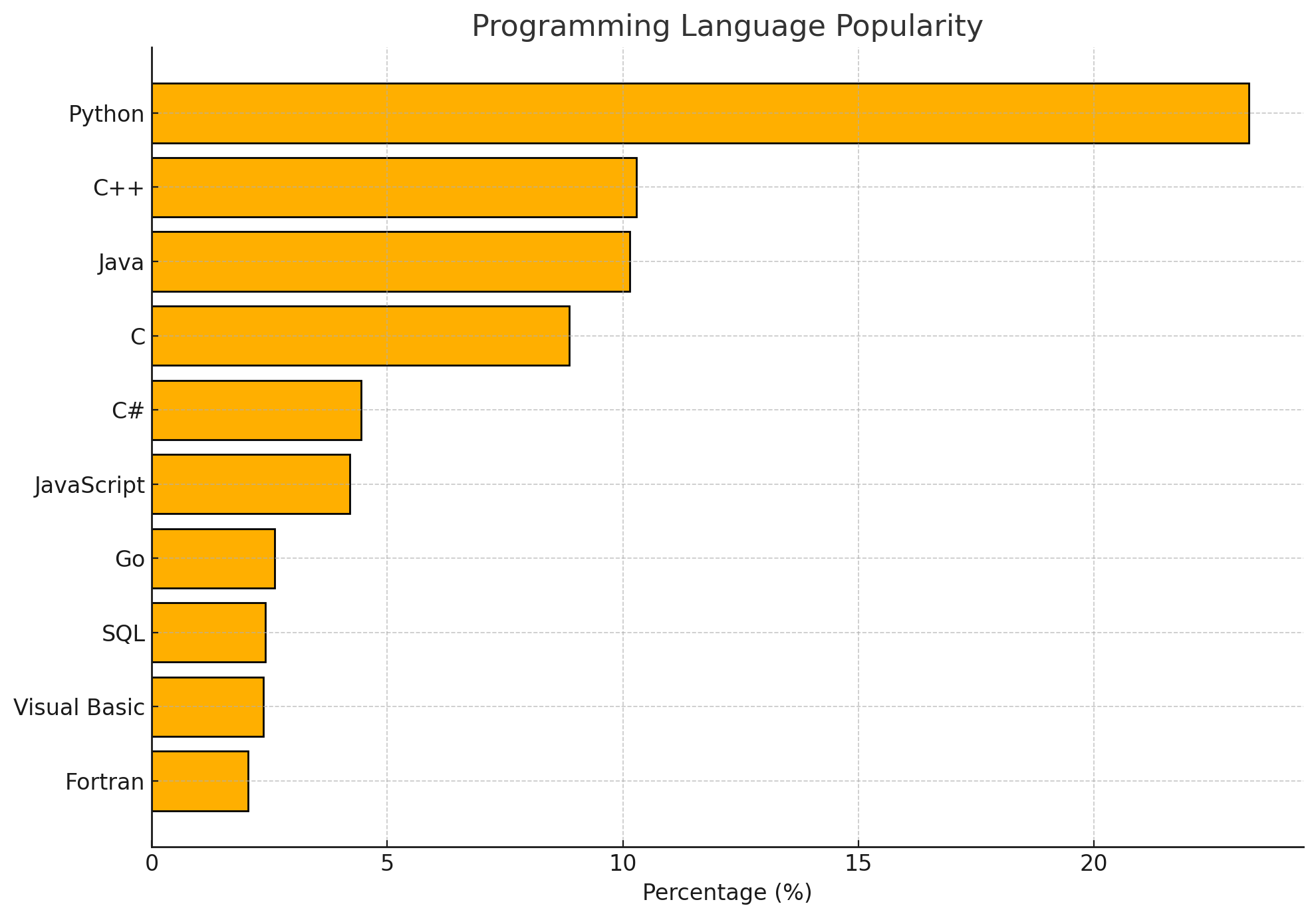
• Python’s Unstoppable Growth: Python’s versatility and simplicity continue to resonate with developers across domains such as data science, machine learning, and web development. Its broad library support and growing community play a key role in its sustained popularity.

C++ and Java Maintain Strong Positions: Both C++ and Java remain critical for system-level programming and enterprise applications, respectively.

The Rise of Specialized Languages: Go, often favored for cloud-native and distributed systems, has carved out a niche position, reflecting the increasing demand for microservices architectures.

SQL’s Enduring Relevance: Despite being older, SQL remains essential in the age of big data and analytics.

Interestingly, while 18 programming languages achieved more than 1% market share, languages like Swift and COBOL narrowly missed this threshold. This suggests that while newer and niche languages gain traction, older, less popular languages still maintain their importance in specific industries.

What Does This Mean for Developers?

Developers should consider honing their skills in Python or C++ to stay competitive. Specialization in languages like Go or SQL might open doors to niche yet lucrative roles in cloud or data-driven domains.

Fortran and Visual Basic’s presence in the top 10 indicates the continued need for maintaining legacy systems, presenting opportunities for those familiar with these languages.

The Tiobe Index for January 2025 highlights the dynamic nature of the programming world. While Python continues its reign, other languages retain their relevance by catering to specific domains and evolving market needs. Whether you’re a seasoned developer or just starting out, keeping an eye on such trends can guide your learning path and career growth.