

惯性聚合 高效追踪和阅读你感兴趣的博客、新闻、科技资讯
阅读原文 在惯性聚合中打开

推荐订阅源

MyScale Blog
MyScale Blog
U
Unit 42
The Register - Security
S
Security Affairs
博客园 - 【当耐特】
Latest news
Latest news
爱范儿
爱范儿
T
The Exploit Database - CXSecurity.com
F
Full Disclosure
C
Cisco Blogs
宝玉的分享
宝玉的分享
C
Cyber Attacks, Cyber Crime and Cyber Security
L
LangChain Blog
P
Privacy & Cybersecurity Law Blog
腾讯CDC
C
CXSECURITY Database RSS Feed - CXSecurity.com
V
Vulnerabilities – Threatpost
Jina AI
Jina AI
Apple Machine Learning Research
博客园 - 叶小钗
www.infosecurity-magazine.com
博客园_首页
博客园 - 三生石上(FineUI控件)
D
DataBreaches.Net
WordPress大学
WordPress大学
cs.AI updates on arXiv.org
Microsoft Security Blog
N
News and Events Feed by Topic
Recorded Future
Recorded Future
Scott Helme
Scott Helme
Hacker News: Ask HN
Hacker News: Ask HN
Webroot Blog
Webroot Blog
AWS News Blog
AWS News Blog
Cyber Security Advisories - MS-ISAC
人人都是产品经理
人人都是产品经理
freeCodeCamp Programming Tutorials: Python, JavaScript, Git & More
T
Tor Project blog
F
Fortinet All Blogs
让小产品的独立变现更简单 - ezindie.com
H
Hacker News: Front Page
J
Java Code Geeks
A
About on SuperTechFans
The GitHub Blog
The GitHub Blog
博客园 - 聂微东
Last Week in AI
Last Week in AI
Threat Intelligence Blog | Flashpoint
W
WeLiveSecurity
V2EX - 技术
V2EX - 技术
T
Troy Hunt's Blog
Attack and Defense Labs

Learn Cloud Native

Agentgateway rate limiting for agents | Learn Cloud Native Local development with coding agents on Kubernetes using Signadot | Learn Cloud Native cuenv: one typed file for your whole project | Learn Cloud Native Preflight: AI Code Review Before You Push Anatomy of AI Agents Accessing Google Drive from Next.js Deploying to Fly.io using Dagger and Github Top Cloud-Native & Kubernetes Certifications [2026 Guide] Rapid microservices development with Signadot How to prepare for Istio certified associate exam (ICA) Global Rate Limiting in Istio with Envoy Rate Limit Service My Journey with Istio: From Incubation to Graduation Cilium Network Policy Tutorial: Secure Kubernetes Step by Step Kubernetes Networking: How kube-proxy and iptables Work Istio ServiceEntry: DNS vs. STATIC Resolution & Endpoints Explained Apply an Istio DestinationRule Globally (Mesh-Wide) Istio Rate Limiting: Configure a Local Rate Limiter in Envoy How to expose custom ports on Istio ingress gateway Portainer Tutorial: A Web UI for Kubernetes & Containers Traefik Proxy 2.x and TLS 101 Kubernetes CLI (kubectl) tips you didn't know about Setting up SSL certificates with Istio Gateway ArgoCD Best Practices You Should Know 在 OCI Ampere A1 计算实例上运行 AI Running AI On OCI Ampere A1 Instance How to Deploy Traefik Proxy Using Flux and GitOps Principles Firebase Emulators with Next.js: Local Setup Guide Running Hugo on free Ampere VM (Oracle Cloud Infrastructure) How to use kwatch to detect crashes in Kubernetes clusters Continuous profiling in Kubernetes using Pyroscope Monitoring containers with cAdvisor Creating a Kubernetes cluster in Google Cloud (LAB) Your first Kubernetes Pod and ReplicaSet (LABS) Container Lifecycle Hooks Maybe Convert Wasm Extension Config? GetIstio - CLI, training, and community Attach multiple VirtualServices to Istio Gateway Kubernetes Volumes Explained: Keep Data Beyond the Pod Send a Slack message when Docker images are updated Kubernetes Network Policy Ambassador Container Pattern Start Kubernetes Release Sidecar Container Pattern Kubernetes Init Containers Deploying multiple Istio Ingress Gateways Branch by Abstraction Pattern The Strangler Pattern Kubernetes Development Environment with Skaffold Securing Kubernetes Ingress with Ambassador and Let's Encrypt All About the Ingress Resource How to quarantine Kubernetes pods? Getting started with Kubernetes Horizontal partitioning in MongoDB Docker image tagging scheme Six things to keep in mind when working with Dockerfiles Beginners guide to Docker Beginners guide to gateways and proxies Deploy and Operate Multiple Istio Meshes in one Kubernetes Cluster Managing service meshes with Meshery Circuit Breaking in Istio Explained Build and push your Docker images using Github Actions Kubernetes and Istio service mesh workshop materials Build Netlify-like deployment for React app using Kubernetes pods Six exciting enhancements in Istio 1.4.0 CAP Theorem Explained Master the Kubernetes CLI (kubectl) - Cheatsheet Minikube Basics and How to Get Started with Kubernetes 5 Tips to Be More Productive with Kubernetes What are sticky sessions and how to configure them with Istio? Debugging Kubernetes applications using Istio Kubernetes Ingress and Istio Gateway Resource Zero Downtime Releases using Kubernetes and Istio Traffic Mirroring with Istio Service Mesh Expose a Kubernetes service on your own custom domain
Fallacies of Distributed Systems
Peter Jausovec · 2019-11-26 · via Learn Cloud Native

The fallacies of distributed computing or distributed system are a collection of eight statements made by L. Peter Deutsch and others at Sun Microsystems about false assumptions people new to developing distributed applications make. Here's the list of 8 fallacies of distributed systems:

  1. Network is reliable
  2. Latency is zero
  3. Infinite bandwidth
  4. Network is secure
  5. Topology does not change
  6. There is one administrator
  7. Transport cost is zero
  8. Network is homogeneous

I'll go through each one of them and explain them in more detail.

1. Network is reliable

If you compare how networks used to be ten or twenty years ago, you could say that networks have become more reliable. However, you can't say that they are and will always be fully reliable.

Network is reliable
Network is reliable

Power failures happen and will affect the network equipment, the equipment fails, attacks happen, and you will have a bad or weak signal, etc. The assumption developers make is to assume that the network is reliable, and they write their applications in such a way as well. You should write your applications in a way that accounts for and expects the network to fail - one way to do that is to retry failing calls (assuming they can and should be retried).

2. Latency is zero

Imagine running two applications on your laptop that talk to each other. Can you guess what the latency for that call will be?

Note

Latency is the time between making a request and receiving a response

It is fair to say that latency will probably be minuscule, however, it will not be zero. Therefore as soon as you start making calls across the network, that latency will always be greater than zero. Latency is one of the metrics you should be aware of and monitor in your distributed system as it can have a significant impact on user experience and performance.
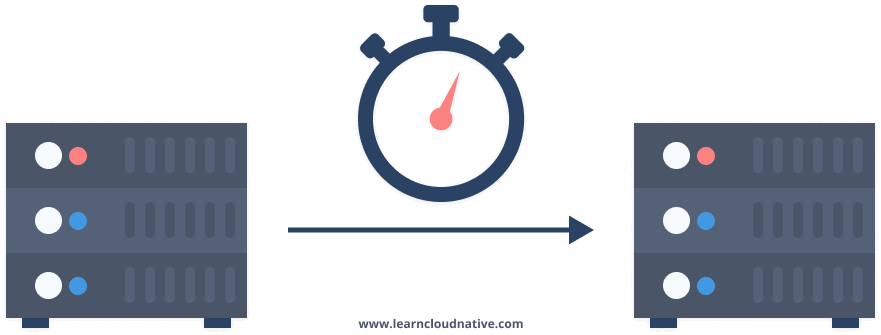
Latency is zero
Latency is zero

If you're not convinced, open the developer and network tab in your browser and switch to "Slow 3G" simulation to feel the latency.

3. Infinite bandwidth

At first, it might seem that there's a lot of bandwidth available. But once you end up with a system that has tens or hundreds and more services, you will notice there's a lot of communication happening between the services and data is being sent back and forth.

Note

Bandwidth is the capacity of a network to transfer data.
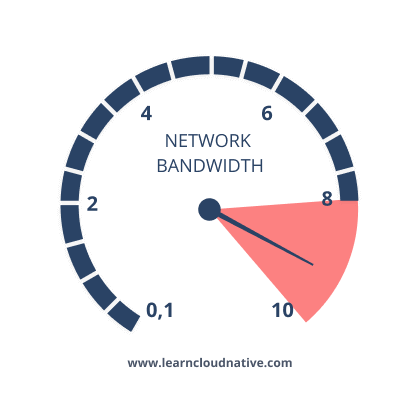
Bandwidth is zero
Bandwidth is zero

Bandwidth capacity has been improving. Ten or twenty years ago, you couldn't even think about streaming high-quality videos to your computer, let alone your phone. Today, we take that for granted, and we don't think about it too much until you get on a low-bandwidth connection.

4. Network is secure

This one can turn out very bad. As soon as you connect your computer to the network, you're already vulnerable. Security needs to be a priority in your design. Make sure you embrace a defense in depth approach where you place multiple layers of defense throughout your system.

Network is secure
Network is secure

You can almost say that it's not the question if you're going to get attacked, but when.

5. Topology does not change

Network topology does not change, assuming you will be running your services and applications on your laptop.

Note

Network topology is the arrangement of network equipment.
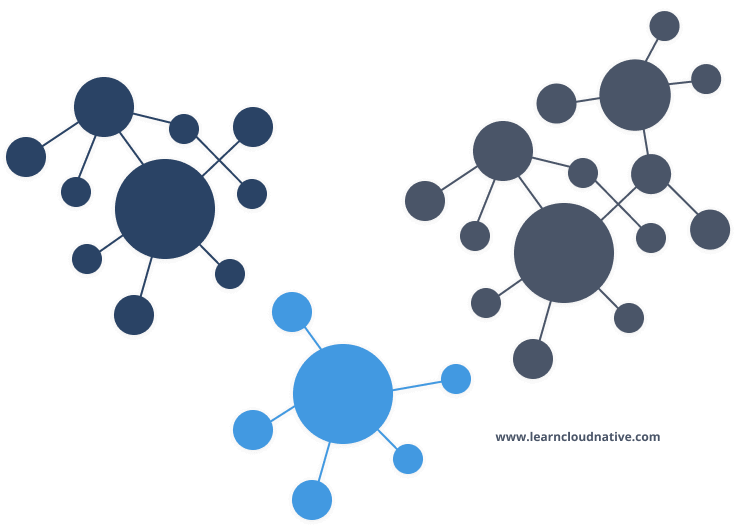
Topology does not change

As soon as you deploy your application to the cloud, the network topology is (usually) out of your control. Machines can get added and removed, network equipment upgraded and changed, and so on. Topology is always changing, and you can't rely on it being constant.

6. There is one administrator

Traditionally, it might have been common to have a single person responsible for environments, doing tasks like installing and upgrading the applications. That is not the case anymore with the shift towards modern cloud architectures.
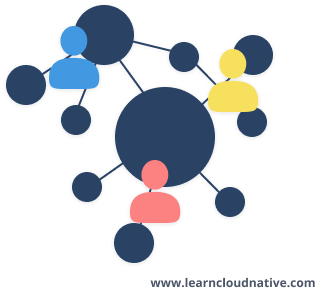
There is one administrator

Modern cloud-native applications are a composite of many services working together, but developed and maintained by different teams. It is practically impossible for a single person to know and understand the whole system, let alone try and fix any issues that arise in the system.

7. Transport cost is zero

There are two ways to interpret this statement. The first one is to interpret it as "network cost" and thinking it's free. That's false. For example, if you think about data ingress (incoming/inbound data transfers) - it's free with most cloud providers. However, data egress (outgoing or outbound transfers) will cost you money. Similarly, there are costs associated with running networks - someone, somewhere needs to pay for the infrastructure, buy new equipment, etc.

Transport cost is zero

The second interpretation is about the overhead you incur when serializing data to get it on to the network. Serialization can be an expensive operation in terms of resources and latency, so you should make sure to think about which format you pick as well as which serializer you are using.

8. Network is homogeneous

Networks are heterogeneous, not homogeneous. For example, you can't predict what type of devices or applications will try to connect to your system, which protocols or operating systems will they use, etc.

Note

Network is homogenous if each computer in the network is using similar configuration and same communication protocol.

The guideline here is to focus and use standard protocols that are widely accepted and avoid relying on proprietary protocols.