
惯性聚合 高效追踪和阅读你感兴趣的博客、新闻、科技资讯
阅读原文 在惯性聚合中打开

推荐订阅源

S
Securelist
腾讯CDC
L
LangChain Blog
aimingoo的专栏
aimingoo的专栏
Cyber Security Advisories - MS-ISAC
博客园_首页
CTFtime.org: upcoming CTF events
云风的 BLOG
云风的 BLOG
P
Proofpoint News Feed
罗磊的独立博客
爱范儿
爱范儿
freeCodeCamp Programming Tutorials: Python, JavaScript, Git & More
H
Help Net Security
Vercel News
Vercel News
MyScale Blog
MyScale Blog
博客园 - 叶小钗
The Register - Security
钛媒体:引领未来商业与生活新知
钛媒体:引领未来商业与生活新知
量子位
Y
Y Combinator Blog
C
Cyber Attacks, Cyber Crime and Cyber Security
NISL@THU
NISL@THU
GbyAI
GbyAI
SecWiki News
SecWiki News
M
MIT News - Artificial intelligence
Engineering at Meta
Engineering at Meta
P
Privacy International News Feed
月光博客
月光博客
奇客Solidot–传递最新科技情报
奇客Solidot–传递最新科技情报
C
Check Point Blog
博客园 - 聂微东
Project Zero
Project Zero
让小产品的独立变现更简单 - ezindie.com
Latest news
Latest news
V
Vulnerabilities – Threatpost
T
The Blog of Author Tim Ferriss
cs.CL updates on arXiv.org
D
Darknet – Hacking Tools, Hacker News & Cyber Security
T
Tor Project blog
F
Fortinet All Blogs
Recorded Future
Recorded Future
IT之家
IT之家
D
Docker
The GitHub Blog
The GitHub Blog
V
Visual Studio Blog
MongoDB | Blog
MongoDB | Blog
T
Threat Research - Cisco Blogs
Hugging Face - Blog
Hugging Face - Blog
C
CXSECURITY Database RSS Feed - CXSecurity.com
V
V2EX

TrueNAS – Open Enterprise Storage

What We Heard at NAB 2026 | TrueNAS - Open Enterprise Storage TrueNAS V160 Launched: High Performance, No All-Flash Tax TrueNAS 26 Is Here: What's New in This Major Release TrueNAS Connect: Enterprise Features on Your Own Hardware TrueNAS Immutability: Multi-Layered Data Protection & Ransomware Defense TrueNAS CEO Note to Community: We Are All TrueNAS TrueNAS 25.10.2 Goldeye: 100+ Fixes & What's New TrueNAS Names Brett Davis CEO for Enterprise Growth TrueNAS Plans for 2026: TrueNAS 26 & OpenZFS 2.4 Roadmap TrueNAS Connect Plus Now Available for All Community Users TrueNAS R60: High-Speed NVMe Storage for AI Workloads Introducing TrueNAS WebShare: Secure Web-Based File Sharing TrueNAS 25.10.1: Goldeye Matures, Performs, and Connects TrueNAS & Veeam v13: Turnkey Cyber‑Resilient Backups Customer Advantages of the TrueNAS Open Core Model TrueNAS Named Data Storage Company of the Year 2025 TrueNAS 25.10: Smarter, Streamlined Updates & Tools TrueNAS F-Series Shines at IBC with Two “Best of Show” Awards TrueNAS 25.10 “Goldeye”: NVMe‑oF, Unified, Simplified Storage Introducing TrueNAS Connect: Secure Monitoring & Alerts The ESG Advantage of Open Enterprise Architecture: Why TrueNAS Is the Sustainable Choice | TrueNAS - Open TrueNAS 25.10-RC1: New Features, Fixes & OpenZFS 2.3.4 Seamless Setup: Exploring TrueNAS Web-Driven Installation | TrueNAS - Open Enterprise Storage TrueNAS 25.10 “Goldeye” BETA is Available TrueNAS 25.10 “Goldeye” Highlights TrueNAS 25.04.2: Fangtooth restores Virtualization iXsystems Rebrands as TrueNAS to Reflect Market Momentum in Enterprise Storage | TrueNAS - Open Enterprise June 1 - Apps Migration Deadline for TrueNAS 24.04 and 23.10 TrueNAS 25.04.1: Fangtooth Unification Gains Momentum TrueNAS 24.10.2.2 Prepares for IP Addressing of Apps TrueNAS H30 and F100 add Fast Dedup with TrueNAS 25.04 Meet TrueNAS Community Edition – The Future of Open Storage TrueNAS Apps Made Easy with Electric Eel & Fangtooth TrueNAS H30 Secures Two ‘Best of Show’ Honors at NAB 2025 | TrueNAS - Open Enterprise Storage TrueNAS H30 Wins Best of Show Awards at NAB 2025 TrueNAS 25.04: Fangtooth is RELEASED Slash Your Virtualization Costs with TrueNAS Storage TrueCommand 3.1 Enhances Management and Monitoring TrueNAS 25.04: Fangtooth Unification Begins with New Features Fangtooth Unification Begins | TrueNAS iXsystems Experiences Record Growth in TrueNAS Enterprise Storage, Spins Off Server Business to Amaara TrueNAS Delivers Record Growth in 2024, Plans Strategic Expansions in 2025 | TrueNAS - Open Enterprise Storage The TrueNAS H30 is the Swiss Army Knife of Storage TrueNAS 24.10.2: Electric Eel Shines Brightly The new TrueNAS H30 brings NVMe Performance to the Edge | TrueNAS - Open Enterprise Storage Ransomware Protection & Immutable Backup with TrueNAS TrueNAS Fangtooth includes OpenZFS 2.3.0 Fangtooth Unifies the TrueNAS Community TrueNAS Electric Eel Performance Sizzles | TrueNAS - Open Enterprise Storage TrueNAS 24.10.1: RAIDZ, Docker & NVMe Storage Upgrades TrueNAS Wins TrustRadius 2025 Buyer's Choice Award for Exceptional Value and Customer Experience | TrueNAS 24.10 “Electric Eel” Powers Up Your Storage TrueNAS Electric Eel: First to Integrate OpenZFS 2.3 Features Electric Eel RC1 Feature Complete | TrueNAS Enhanced Data Migration in Electric Eel | TrueNAS Immutable Backup & Enterprise Storage Security Features | TrueNAS 2024 TrueNAS Electric Eel Emerges TrueNAS Launches “Powered by TrueNAS” with First Partner HexOS The Benefits of Expanding from One to Multiple TrueNAS Systems TrueNAS SCALE Dragonfish Reaches its Second Major Milestone TrueNAS Dragonfish Performance Breathes Fire TrueNAS CORE 13.3 BETA is now Available iXsystems Brings Flagship Data Platform to Market with Production Release of TrueNAS SCALE 24.04 | TrueNAS - Open Enterprise Storage TrueNAS Enterprise H-Series Adds Versatility to Storage TrueNAS SCALE Dragonfish Major Release TrueNAS Delivers Dramatic Quality Improvements The Future of the TrueNAS Community How to Set Up and Install TrueNAS CORE TrueNAS CORE 13.3 Plans TrueNAS SCALE Dragonfish SMB Services and Performance TrueNAS Named a Customers Choice in the North American Region TrueNAS SCALE 23.10.2 Delivers Enterprise Quality Gartner Peer Insights Primary Storage Customers’ Choice New Survey Ranks Top Hypervisor Options as Users Seek VMware Alternatives Beyond VMware: Exploring Virtualization Alternatives Donation of Fast Dedup to OpenZFS and TrueNAS Fast Dedup is a Valentines Gift to the OpenZFS and TrueNAS Communities | TrueNAS - Open Enterprise Storage TrueNAS SCALE Dragonfish Reaches BETA Why Traditional Storage is So Expensive How TrueNAS Delivers Unbeatable Value | TrueNAS - Open Enterprise Storage TrueNAS Year in Review: Top Stories of 2023 TrueCommand 3.0 Manages ZFS Replication | TrueNAS - Open Enterprise Storage TrueNAS SCALE 23.10 has the Fastest Growth Ever TrueNAS 13.0-U6.1 is the Final Update Release Black Friday Special Offer for US Only! 5% Off on TrueNAS Mini R! The New Performance Flagship: TrueNAS F-Series iXsystems Introduces TrueNAS Enterprise F-Series All-NVMe Appliances and TrueNAS SCALE 23.10 TrueNAS SCALE 23.10 is RELEASED with SMB Features iXsystems Invests in Leadership as TrueNAS GrowsiXsystems Invests in Leadership as Enterprise Adoption of OpenZFS Summit highlights Fast Dedup and RAIDZ Expansion TrueNAS SCALE Cobia Has a New WebUI TrueNAS SCALE 23.10-RC.1 introduces dRAID Coffee and Open Source with Kris Moore and Isaac Levin Improves Data Mobility and Furthers Data Freedom TrueNAS SCALE Cobia Has Reached BETA Enterprise Data Protection Solutions & NVMe Secure Storage TrueNAS SCALE “Bluefin” adds SMB Multichannel and Quality iXsystems Named Gartner Peer Insights™ Customers’ Choice Newsletter: Huge iX-Storj giveaway TrueNAS Core-13.0-u5-release and more | TrueNAS - Open Enterprise Storage iXsystems Named a North America Customers Choice in Gartner Peer Insights™
Why SATA-DOMs Are Better than USB Drives for Booting Up Your FreeNAS System | TrueNAS - Open Enterprise
iX Team · 2018-11-10 · via TrueNAS – Open Enterprise Storage


Fair warning: this is mostly a rant. This rant was mostly inspired by discussions about whether it is safe to remove a thumb drive without ejecting it from the computer, and from a wonderful article about mirroring boot devices in FreeNAS.
The non-rant version is: mirror your FreeNAS boot device, back up the configuration often, and if possible don’t use thumb drives (at least not primarily). There is some practical, non-ranty advice at the end.
You have been warned.

I have worked on filesystems, on and off, for some decades. This has also meant that I have had to deal with all sorts of storage media, and the primary lesson I’ve learned after 20 years is: ALL STORAGE MEDIA ARE HORRIBLE. They’re slow or expensive or both; they change data randomly; they stop working the moment you NEED the data on them; none of them have the lifespan of a gnat flying through an asbestos-laced cloud of chlorine gas.

Most of the advances in storage technology have been working around all of those horrors. RAID, for example, exists so that some of your hard drives can explode in a tiff, and you’ll still be able to get at your data. If you’re using FreeNAS, then you hopefully have your data pool set up with some redundancy (mirroring, for the various levels of RAID, or both).

Unfortunately for us at iXsystems, most FreeNAS users use consumer-grade thumb drives as their boot medium. And of all the horrible storage media out there, thumb drives are only better than SD and MMC cards. (Yes, some people use those. Please don’t. There is not enough beer in the world to drown our sorrows when we get bug reports from people using an MMC card as their boot device.) Thumb drives are the modern version of floppy drives. And like floppy drives, they are short-lived, slow, and prone to failure without telling you.

There are many reasons why they are so horrible. One big one is that many of them lie to you — I’ve bought name-brand thumb drives that claimed to be 4GBytes but were only 128kbytes. (This happens due to factory employees making some extra money: they’ll run the machinery after hours, using rejected parts; sometimes, they’ll throw in some firmware that treats the data as a ring buffer, so you’ll write 4Gbytes out, but in doing so will have over-written the contents many times.)

Another reason they will fail on you just when you’ve configured your system the way you like has to do with the tragic melting point of economics and NAND design. NAND, as most people know by now, has a limited lifetime — you can only write to each cell a certain number of times. Each write to it (and, to a lesser degree, each *read*) decreases the lifespan. So NAND-based storage devices have to have spare cells, and remap.

On a good SSD, for example, there might be as much as 10% in spare cells, and every write of a block gets remapped to a new one.

But thumb drives are *cheap*. So they have far fewer spare cells. (In some distressing cases, none — resulting in a thumb drive that can fail after just a couple of days.) The cheaper (and smaller) the thumb drive, the fewer spare cells it is likely to have, and the shorter lifespan.

But thumb drives are also *slow*. And this is because NAND is slow — SSDs are fast primarily because they internally use striping. Reading from one cell may be slow, but you can read from 64 of them at nearly the same time, and get a lot of data throughput. But thumb drives, being small and cheap, don’t have many NAND cells, so performance is hindered. (This is part of the reason a thumb drive may get very high read speeds, but writing may be only a trickle by comparison.)

“But how can I rest easy?” you ask plaintively. And I can help! (This is the practical advice mentioned above.)

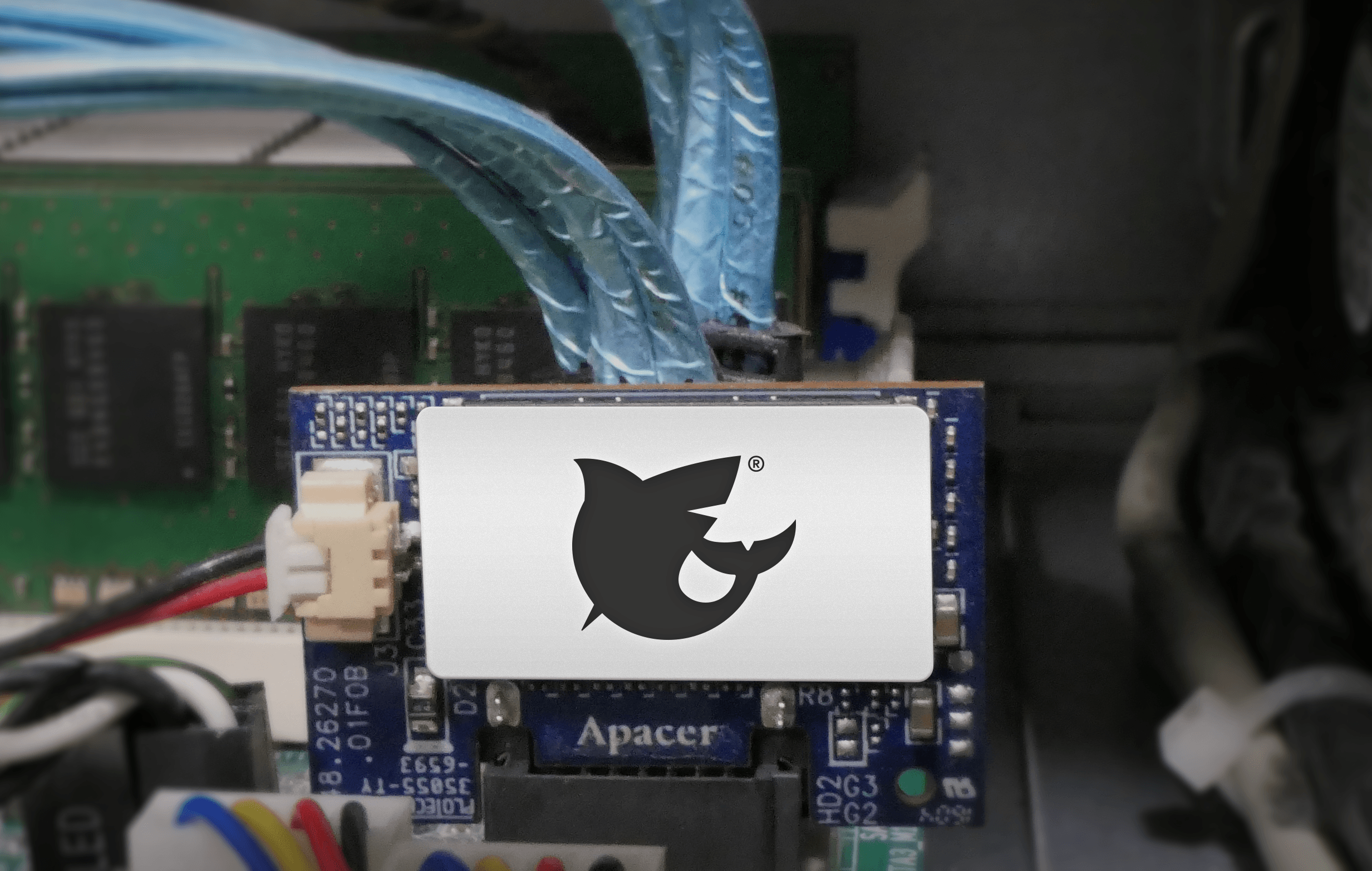
We, at iXsystems, advise using SATA-DOMs for booting, if you can. They are a reasonable trade-off between thumb drives and a full SSD — they typically have a smaller size than an SSD, but more redundancy and parallelism than a thumb drive.

We also strongly advice mirroring your boot device. On a FreeNAS Mini, for example, you can mirror the SATA-DOM with a thumb drive. But check the periodic scrub reports for the boot pool whenever they happen — that’ll show any errors.

But you can also do more than that! For one thing, you can have a mirror with more than two devices — the SATA-DOM being the primary boot device, and two (or even more) thumb drives for mirroring.
You can also be pro-active: every month, get a new thumb drive, add it as a mirror, and then remove the previous thumb drive. (This also gives you a backup of your boot device!)

There is a big caveat with that, unfortunately: every thumb drive has a different size. Yes, sometimes even the same brand from the same manufacturer will have a different amount of bytes for a 16G thumb drive. And this can cause problems when setting up mirrors. (Some of this is my fault, and I apologize.) At this point, the best advice I have to avoid this is to manually set up the mirroring, by manually partitioning the thumb drive, and then attaching it to one of the existing boot devices from the command line.

I have one system where I installed an SSD to act as a cache device for my data pool, but I manually partitioned it so that I had a second ZFS partition on it, which I use to mirror the boot device (a SATA-DOM). This won’t help booting if the SATA-DOM dies, but it does mean that in that case, I have an up-to-date instance of my configuration, and can relatively easily get back up and running.

In conclusion: storage devices, *all of them*, are out to ruin your life. Never trust any of them, and plan for at least one failure at a critical moment.

Sean Fagan, Senior Software Engineer