





My family enjoys doing cozy “out into the city” days for birthdays, Mother’s Day, and Father’s Day. During our recent Father’s Day trip, we visited the local anime shop. That is where we found The Ghost in the Shell: Fully Compiled, and we just had to pick it up.
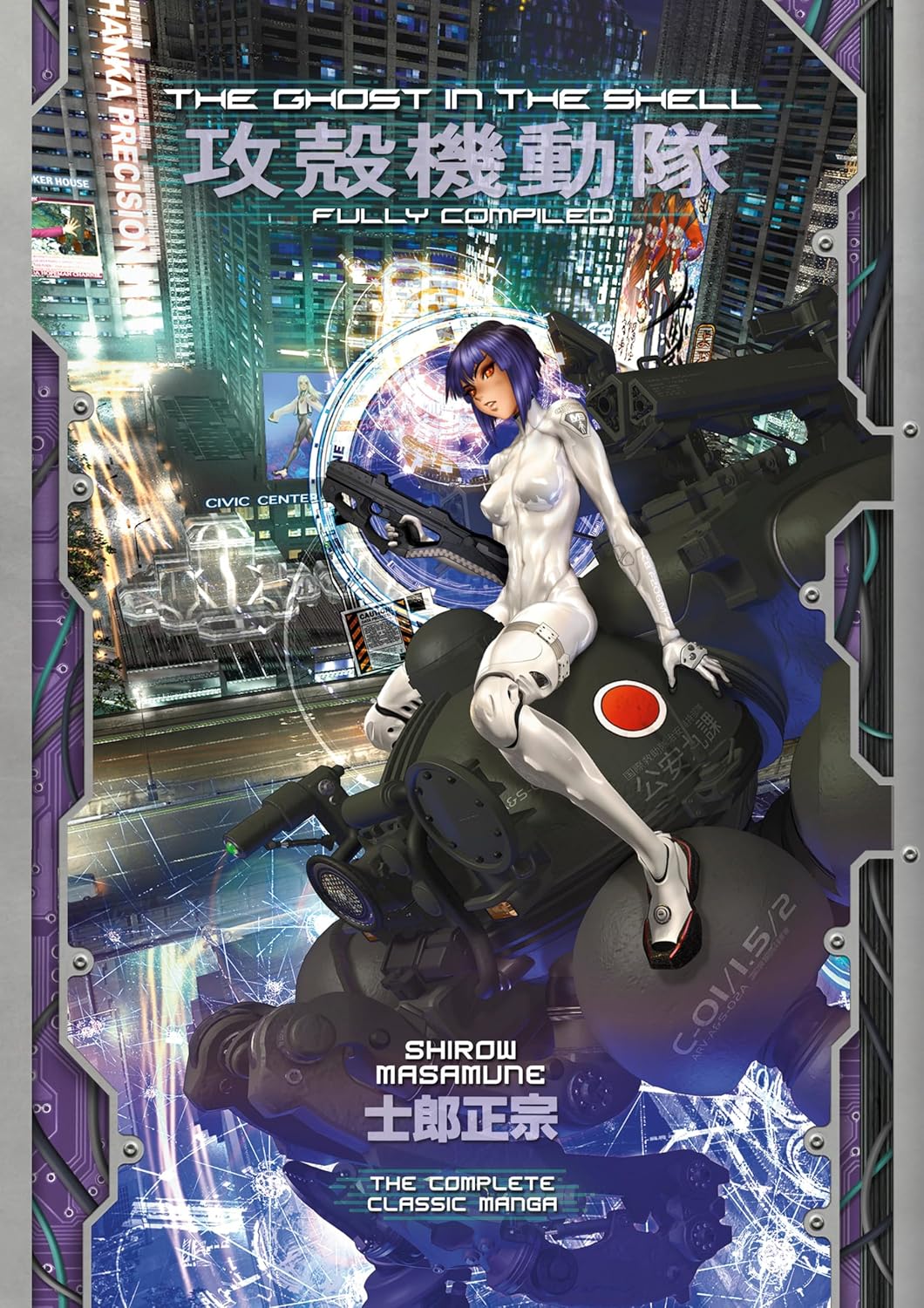
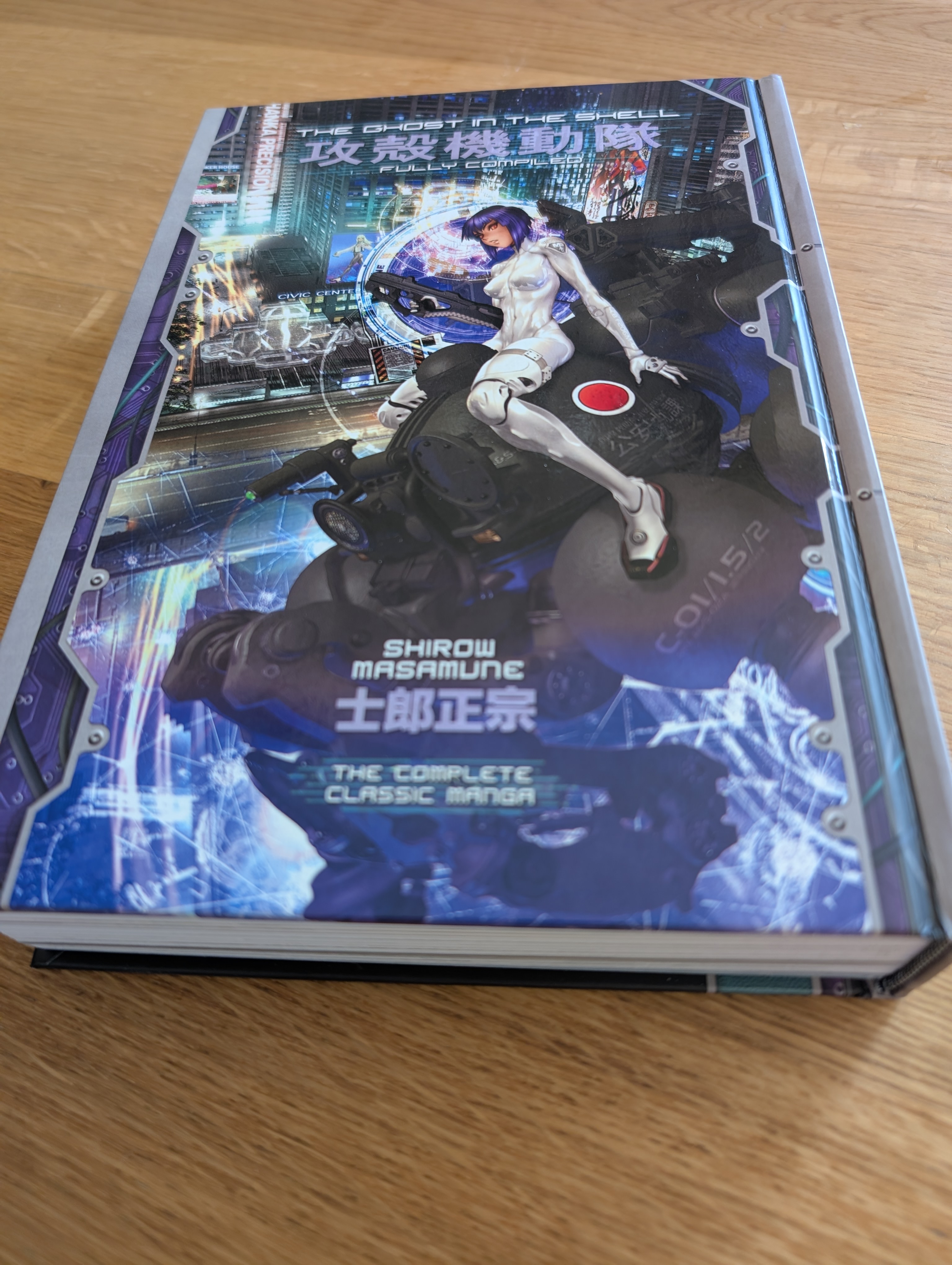
This book is massive!
The Ghost in the Shell: Stand Alone Complex series is my favorite anime series of all time. I also really loved the 1995 movie. So I was excited to read the manga that inspired the anime.
Reading the manga made me think about how the series became one of the defining works of cyberpunk. There is a giant gulf between sci-fi that merely uses flashy futuristic backdrops for action sequences and sci-fi that truly tells a story using the logical implications of future advancements. Ghost in the Shell firmly belongs to the latter. By fully embracing the technological and scientific feasibility of its ideas, it gives us room to ask much more interesting questions. It forces us to consider the systems our real world is built on and how they might change given new technology.
The genre has always been interested in “high tech, low life” and the social implications that come with it. Ghost in the Shell builds on those ideas by asking philosophical questions about cyberization, identity, and what it actually means to be human. When human minds can be altered or copied, what significance does individuality have? The world painted in the manga presents countless ethical dilemmas that challenge some of our most intuitive assumptions about personhood and consciousness.
It also does this with an admirable amount of attention to detail.
The manga features fascinating asides explaining how some of the technology might work by extrapolating from ideas that already exist today. That is where the manga truly won me over, and where it excels beyond any of the anime adaptations. In an animated format, that kind of granular detail would bring the pacing to a crawl. On the page, however, those explanations become part of the experience.
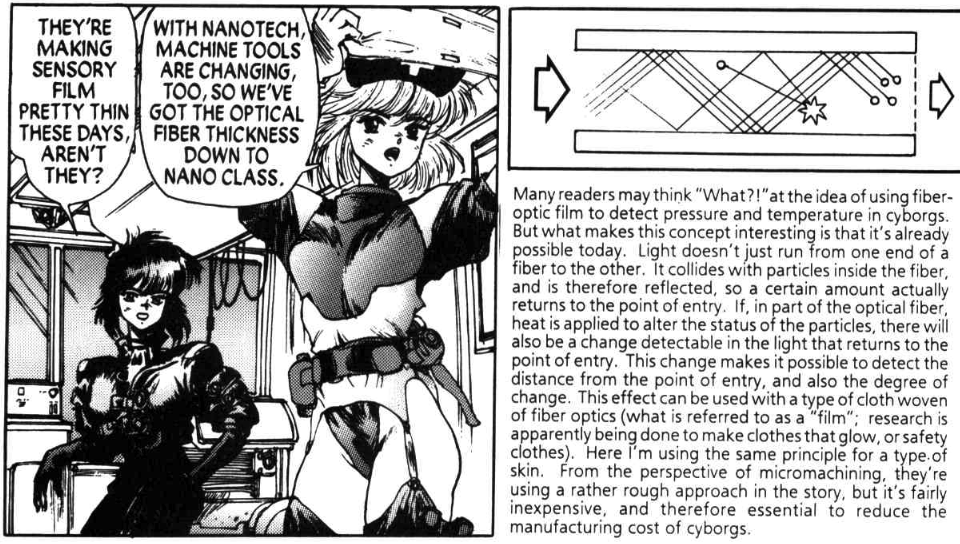
An example of the manga’s technical asides. It grounds advanced cybernetics in existing tech like detecting reflections in optical fiber strands, which is a widely used technique in telecommunications fiber optics today.
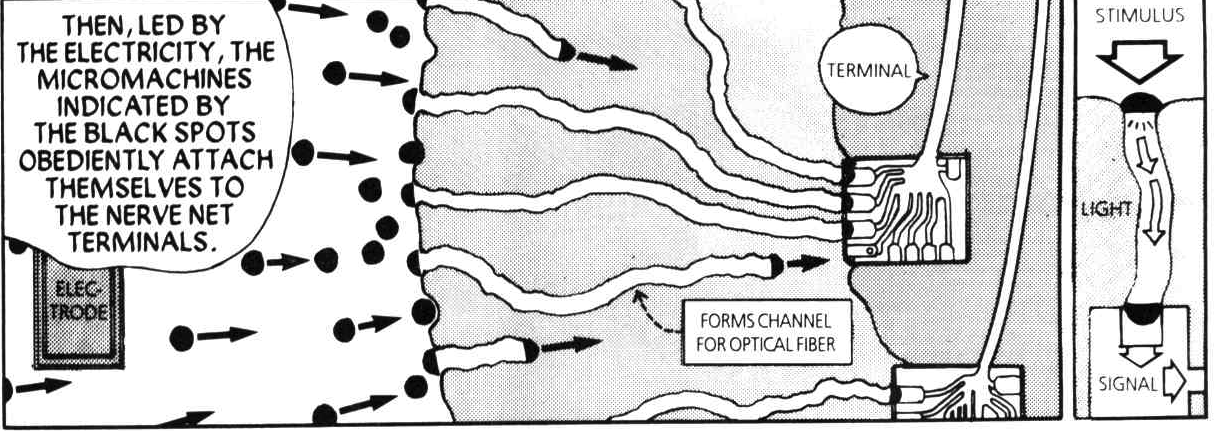
The author could have easily handwaved this entire build process to super advanced technology with entirely made up words, but no. Masamune earns the cyberpunk aesthetic by occasionally diving into these explainations.
Paired with the occasional technical descriptions, Shirow’s incredible artwork is also absolutely exhilarating and has helped refine the cyberpunk aesthetic as we know it today.
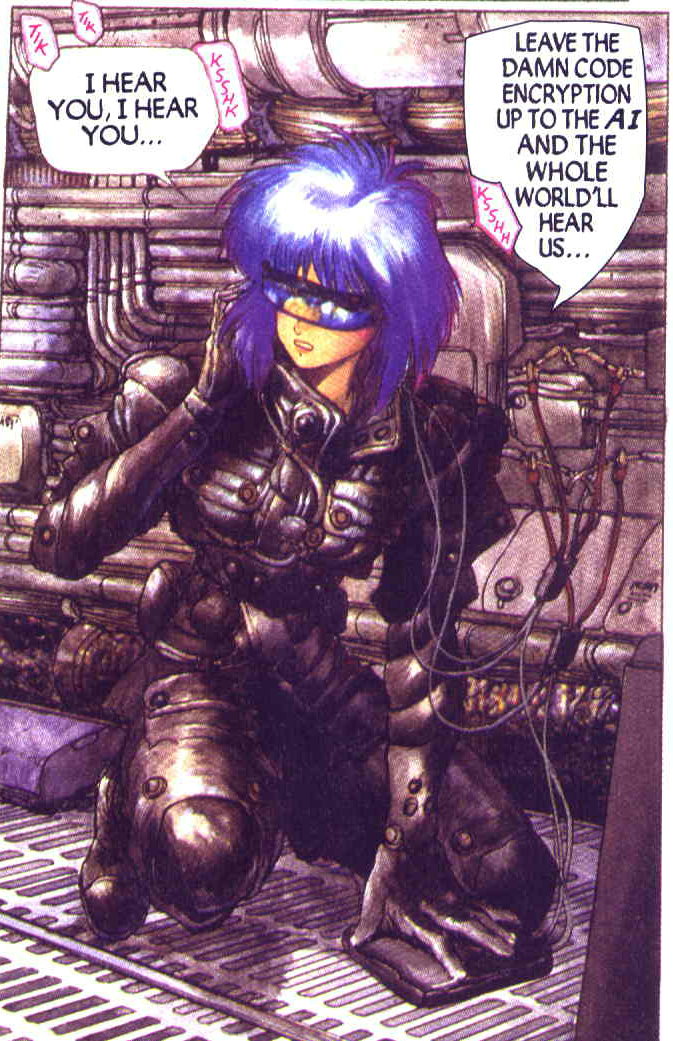
The dense environments and intricate mechanical designs showcase exactly why the original art style is so highly regarded.
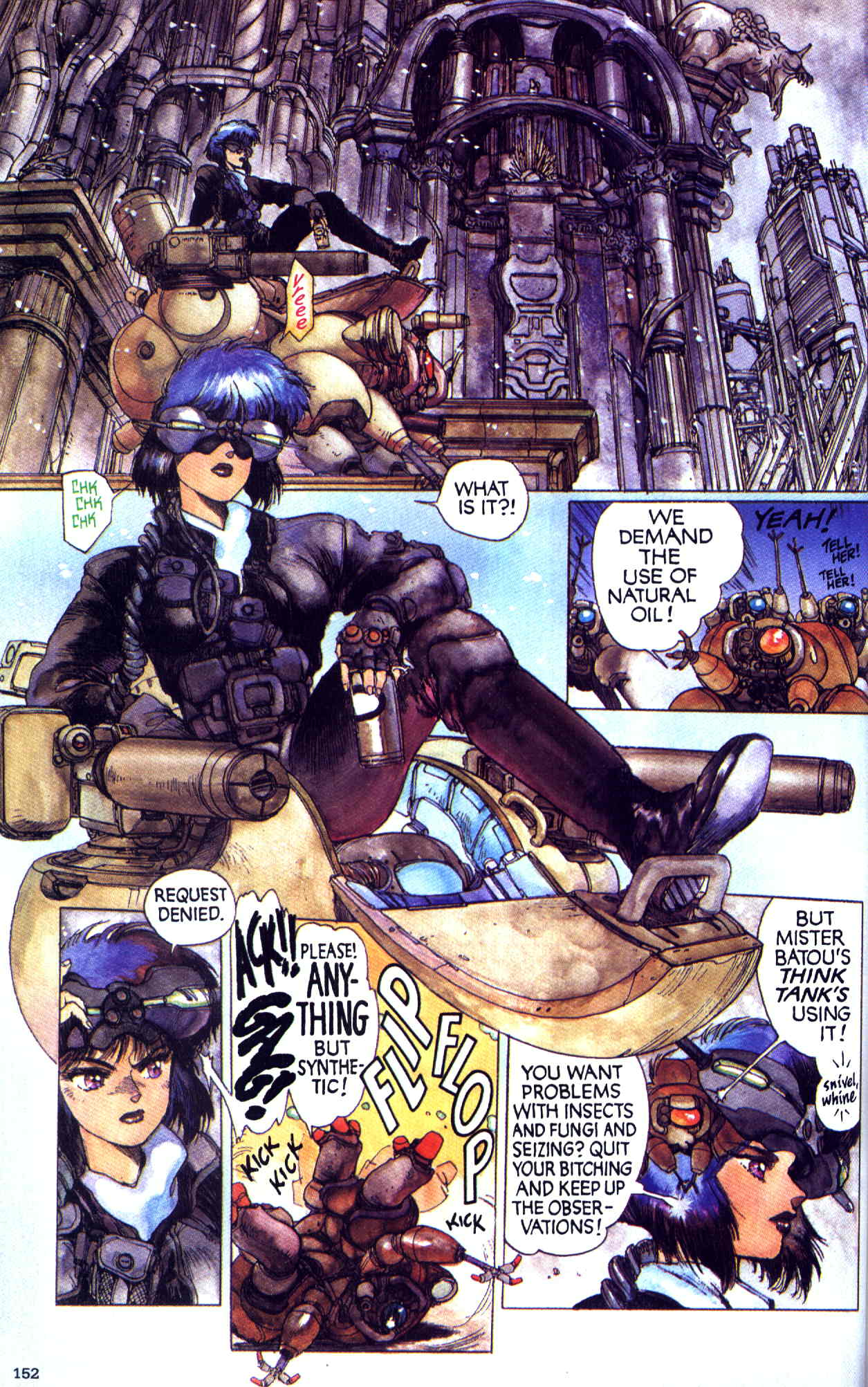
The AI tanks, known as Fuchikoma, contrast their bulky, spider-like armor with a highly inquisitive personality. They provide excellent comic relief while driving some of the core philosophical questions about artificial sentience as the story unfolds.
The artwork is not without its quirks, however. You cannot really talk about the original manga without acknowledging some of the highly suspect body positions and the fact that women are shown with little to no clothes on fairly regularly. It is a well-known hallmark of Shirow Masamune’s work. Additionally, the narrative is distinctly dark and edgy. The book never shies away from the grim realities, violence, and mature topics of its dystopian world. While it can all be a bit jarring at times, especially if you are more familiar with the comparatively grounded tone of Stand Alone Complex, it is simply part of the package when reading the original source material.
I am glad that I finally gave the manga a shot. Ghost in the Shell is probably my favorite franchise overall, even if some of the spin-offs do not quite reach the heights of the original 1995 film or Stand Alone Complex.
Translating such dense storytelling, technical depth, and specific visual quirks to the big screen is an incredibly tricky balancing act. That brings me to the live-action adaptation.
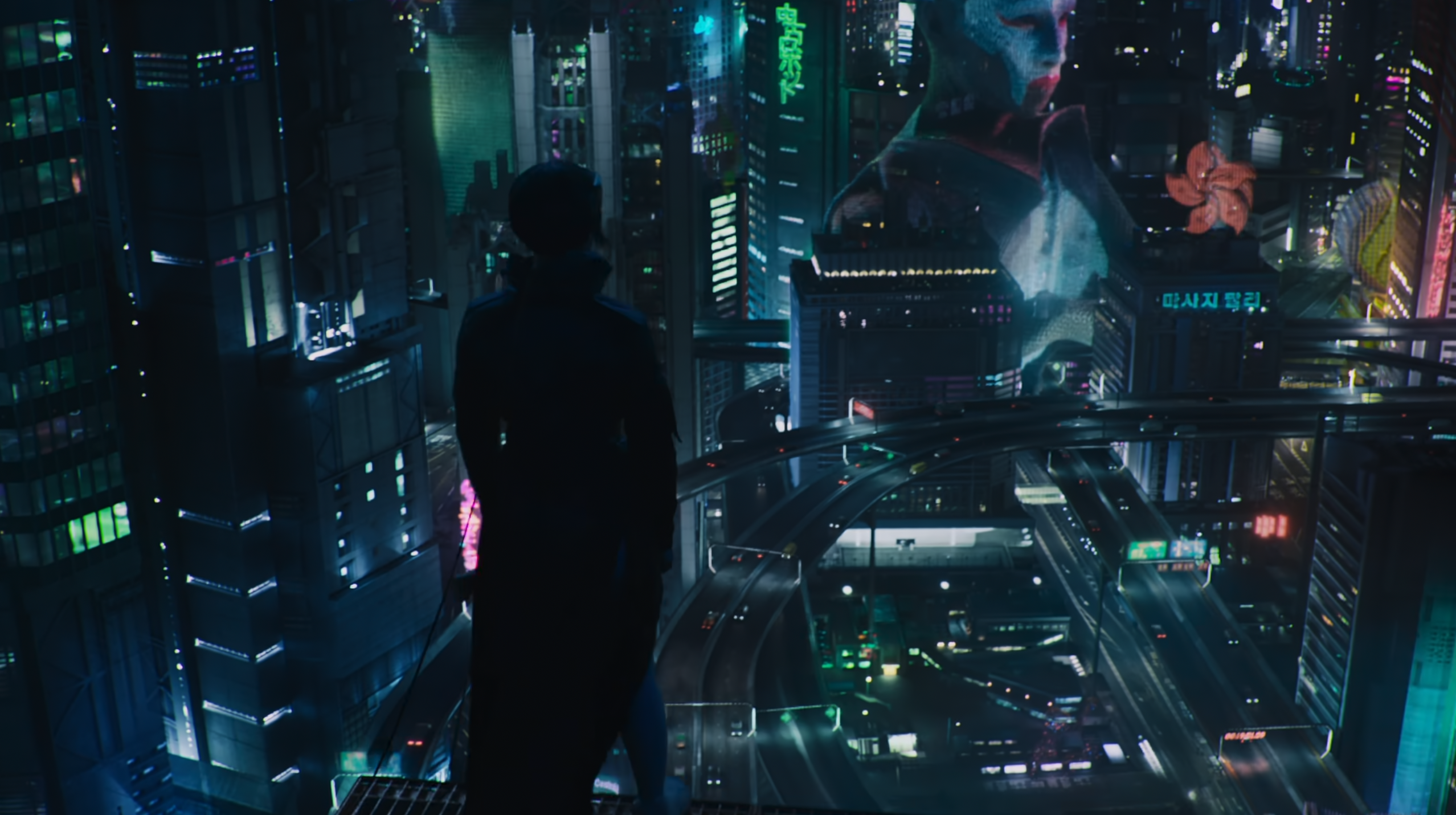
While many were focused on casting choices, it has become clear to me just how much the production misunderstood the source material. Consider me part of the disappointed audience.
While the movie recreated several iconic visual scenes almost perfectly, it often feels as though the filmmakers blindly copied parts from the anime and manga without understanding their context. Instead of focusing on a single narrative thread, which director Mamoru Oshii rightly noted was necessary for the 1995 film to succeed, the live-action movie lifts extraneous plot points from across the manga, movies, and TV series. The result is a confused mess that hopes to nail the world of Ghost in the Shell by just throwing everything at the wall.
This lack of understanding extends to the world-building itself. What I love about both the anime and the manga is the depth of the setting. Cyberization is not a super unique phenomenon reserved for a handful of special individuals. It is a fairly ordinary part of society, and the stories explore the consequences of living in that world.
The live-action film changes that dynamic by making Motoko uniquely important in ways that she simply is not in the original story. In the manga and anime, Motoko is exceptional because of her abilities, experience, and perspective (at least at the beginning, 😉). By shifting the focus to making her uniquely significant, the adaptation weakens one of the core ideas that makes the setting so fascinating.
The appeal of Ghost in the Shell has always been that its technology feels integrated into everyday life. The setting treats cyberization as normal and then explores the consequences of that normality. The manga captures that idea better than any adaptation I have experienced so far.
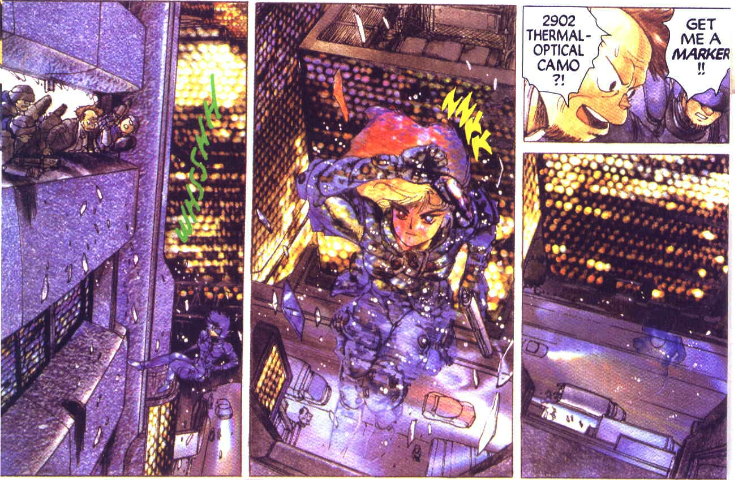
I went into The Ghost in the Shell: Fully Compiled expecting to enjoy it, but I did not expect it to deepen my appreciation for the entire franchise. Now that I have finally read a good amount of the original source material, it is easier than ever to see why Ghost in the Shell has remained so influential for decades. I eagerly await the new anime series slated for release this July. Early material suggests it will stay much closer to Shirow’s original manga, which has me even more excited now that I have finally spent time with it. From the trailer alone, the visual style appears remarkably faithful to the original artwork, right down to Motoko’s blue hair.