






भारतीय रेल
Indian Railways
1853–2026 · THE FULL HISTORY, DRAWN
Every railway line India has built since 1853, mapped from the original opening records.
It starts with one train out of Bombay.
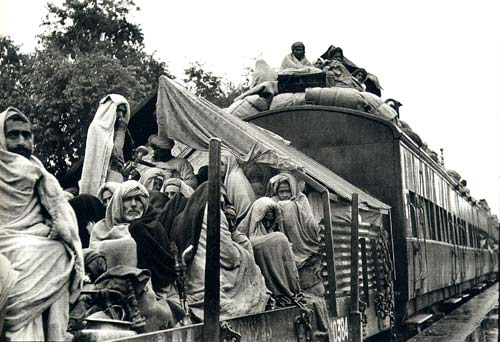
Every other plate in this history adds track. One moment subtracts. Not by lifting a single rail, but by moving two borders across the map. The left map took 94 years to build. The right map is the same track, the morning after.
The same map, drawn eighteen times at identical scale: black for the lines added in that decade, faded ink for everything before. Read it like a contact sheet: the few lines of the 1850s, the rush of the 1890s–1900s, the long pause after 1931, the late push that finally reached Kashmir. Hover any decade for its biggest opening; click it to open it full screen.
Type your home station. 7,927 of the 11,665 stations on this map carry a date. Yours probably knows exactly when it joined the network.
The spine of this piece is a section-by-section ledger of 1,527 railway line openings, 1853–1931, compiled by Fenske, Kala and Wei from colonial administrative records: each entry a section ("Chittagong to Feni"), an exact opening date, an operating company, a mileage.
We placed each section's endpoints against a gazetteer of 13,000+ stations across India, Pakistan, Bangladesh and Myanmar (Wikidata, DataMeet), translating colonial spellings along the way: Cawnpore to Kanpur, Tannah to Thane. Each dated section was then routed along today's actual rail alignments (OpenStreetMap) and validated against the ledger's own recorded mileage. Stations inherit the earliest dated line within reach; where Wikidata records an earlier date of its own, the earlier date wins. The modern era (Konkan 1998, the Kashmir line through the Chenab bridge in 2025) comes from Wikidata's dated railway lines and Indian Railways records. Every line running today that we could not yet date is drawn in grey, from OpenStreetMap, so the network you see is the whole network.
Coverage: 850 dated sections in ink · 28,000 km running today in grey, dates pending · 98% of routed mileage follows true alignments · 7,927 / 11,665 stations dated · vanished lines appear as straight, fainter segments
What the grey means: about a third of the historical mileage resists confident dating. Stations renamed beyond recognition, river-ghat termini that no longer exist, lines whose records vanished with the companies that built them. Rather than leave those lines off the map, we draw everything running today in grey and promote a line to ink only when we can prove its date. The network is complete; the dates are earned.
Made by one person. One interactive data story every week. Last time it was every iPhone ever made; before that, the sound of 130 keyboards.
此内容由惯性聚合(RSS阅读器)自动聚合整理,仅供阅读参考。 原文来自 — 版权归原作者所有。