







Welcome back to our continuing series, a Brief-ish History of SETI. In our previous installments, we examined the origins of the Search for Extraterrestrial Intelligence (SETI) and the earliest experiments. We then looked at the first modern SETI project (Project Ozma) and what is arguably the most foundational principle in the search (The Drake Equation). Then we examined big ideas about how advanced extraterrestrial civilizations (ETC) would look and what technologies they would come to rely on.
This was followed by a look at the first attempt at Messaging Extraterrestrial Intelligence (METI), the Arecibo Message, and what is considered the best candidate for an ET signal to date (the WOW! Signal). Then we looked at the Pioneer Plaques and the Voyager Golden Records, humanity's first attempts to send "messages in a bottle" that might be found by ETCs someday. We then considered two additional principles that are foundational to SETI: the Fermi Paradox and the Great Filter.
Last, we examined how communicating with ETCs might be subject to "brief windows" due to species mortality or technological transcendence. Today, we will consider how scientists in recent years have come to question many of the principles and assumptions inherent in SETI. We will also examine modern attempts to revitalize the field using the most advanced technologies and methods to date.
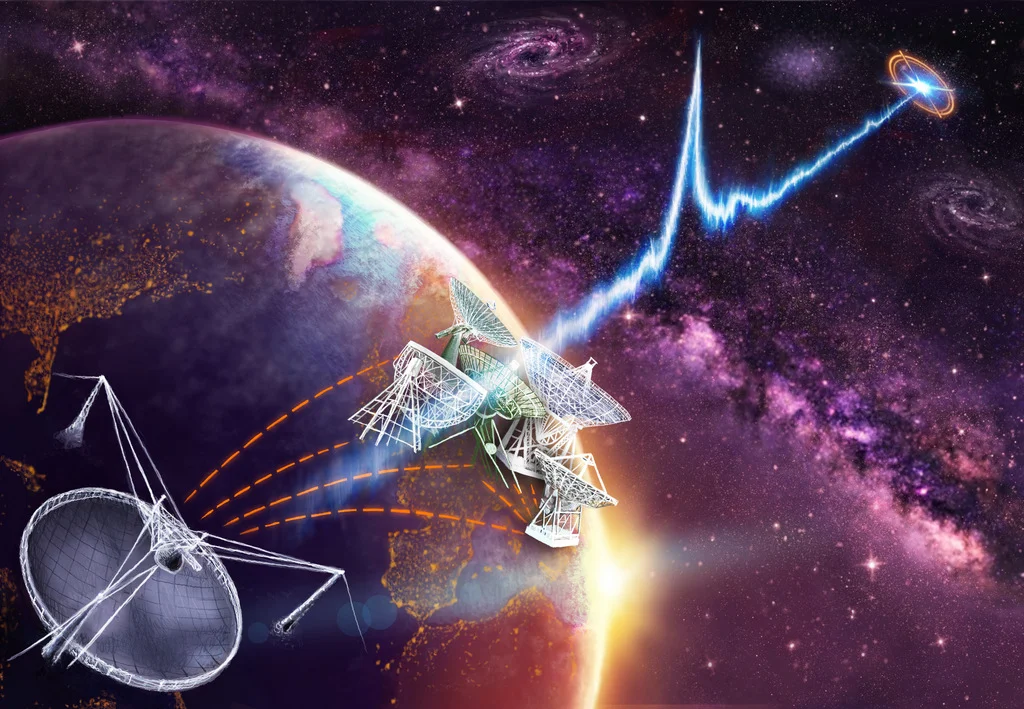 *Artist's impression of the Arecibo array and radio antennas worldwide detecting the Lorimer Burst. Credit: Danielle Futselaar*
Since it was first proposed, the Fermi Paradox has inspired more than 50 proposed resolutions. At the same time, it has inspired criticism from scientists who question the many assumptions upon which it is based. For instance, the Paradox assumes that extraterrestrials should have already emerged, that technological advancement is the norm among intelligent species, and that intelligent life is subject to exponential growth. But perhaps the sharpest criticism concerns the fatalism inherent in the original proposal.
These arguments were summarized brilliantly by data analyst, author, and astronomer Robert Gray, who is perhaps best known for his book The Elusive Wow: Searching for Extraterrestrial Intelligence. In his 2016 essay, "The Fermi Paradox is Neither Fermi's Nor a Paradox," he criticized two problems with how the Paradox was framed. First, he argued that the Paradox did not originate with Fermi's question, but with Michael Hart:
Enrico Fermi, however, never published anything on this topic. On the one occasion he is known to have mentioned it, he asked “where is everybody?”—apparently suggesting that we don’t see extraterrestrials on Earth because interstellar travel may not be feasible, but not suggesting that intelligent extraterrestrial life does not exist, or suggesting its absence is paradoxical.
Second, he addressed another issue scientists have raised repeatedly: that the disparity between the assumed prevalence of life in our Universe and the lack of evidence for it does not constitute a paradox - but rather a conundrum. What's more, Gray indicated that Hart himself selected the term for publication and used only single quotations "as an apology for using a short, convenient two-word label for a large and indistinct field of conjecture."
Above all, he recommended adopting a new perspective that clarified the origins of the ideas behind the Paradox. As he said, this was important because:
[T]he Fermi Paradox is seen by some as an authoritative objection to searching for evidence of extraterrestrial intelligence—cited in the U. S. Congress as a reason for killing NASA’s SETI program on one occasion—but evidence indicates that it misrepresents Fermi’s views, misappropriates his authority, deprives the actual authors of credit, and is not a valid paradox.
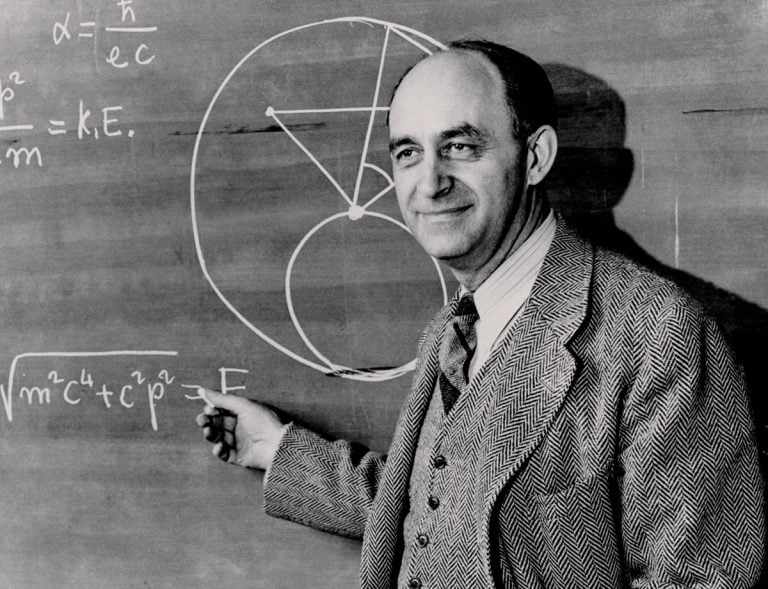 *Enrico Fermi, whose famous question remains foundational to SETI. Credit: Nuclear Heritage Foundation*
In truth, Fermi's Paradox, defined not by the question but by the statement "we don't hear from them, so they don't exist," is properly known as the Hart-Tipler Conjecture. A more accurate description would be Fermi's Question, which addresses the disparity between the assumption abundance of intelligent life in our Universe and the lack of contact with it. This conundrum supports no conclusions, only speculation based on a sample of one - humanity.
As David Brin said in his 1983 essay, "The 'Great Silence': the Controversy Concerning Extraterrestrial Intelligent Life": "Few important subjects are so data-poor, so subject to unwarranted and biased extrapolations - and so caught up in mankind's ultimate destiny - as is this one."
Interestingly, modern reexaminations of the Fermi Paradox have coincided with renewed attempts to explore the Universe for life (and advanced life to boot). The recent explosion in exoplanet discoveries (6,291 confirmed candidates to date) has also rekindled interest in extraterrestrial life by focusing attention on how scientists look for evidence of life ("biosignatures") and technological activity ("technosignatures.")
Before we get to modern efforts to revitalize SETI with the latest technologies and methods, a quick recap on the history thus far seems in order. As we noted in our second installment in this series, the first modern SETI study (Project Ozma) took place in 1960 and was organized by Cornell Professor Frank Drake. This was followed by the first symposium on SETI the following year, where Drake introduced his famous Drake Equation. After this point, projects became more common.
In 1971, NASA produced a study known as Project Cyclops, a design study for a SETI detection network. The main recommendation of this study was to build a 1,500 radio antenna array that would continuously scan the heavens for indications of extraterrestrial signals. While it was never built, the report informed much of the work that followed. This included the Search for Extraterrestrial Radio Emissions from Nearby Developed Intelligent Populations program in 1979. As the name implies, this program involved searching for serendipitous SETI detections by piggybacking on traditional observations made with large radio telescopes, such as those at the Green Bank Observatory and the Arecibo Observatory.
In 1980, Carl Sagan, Bruce Murray, and Louis Friedman (from NASA’s Jet Propulsion Laboratory) came together to create the U.S. Planetary Society. This society has played a significant role in developing SETI-related programs and software, including Sentinel (1983-1985), which relied on the Harvard-Smithsonian radio telescope at the Oak Ridge Observatory. These efforts were followed in 1985 and 1995 with the Megachannel Extra-Terrestrial Assay (META) and the Billion-channel Extraterrestrial Assay (BETA), respectively.
In the late 1980s, the Planetary Society, NASA, and the National Science Foundation came together to help fund SERENDIP. The program originally processed data in real-time, but Berkeley soon began relying on computer algorithms and public involvement through SETI@home to handle the massive data load. The project ran from 1999 to 2020 and saw more than 5.2 people participate, donating spare time and computing power to the search for intelligent life.
In 1992, Jill Tarter of the SETI Institute (and co-founder of its Center for SETI Research) and Samuel Gurkis of NASA JPL proposed the High-Resolution Microwave Survey (HRMS), a long-term effort to survey 800 nearby stars using NASA’s Deep Space Network (DSN), the Green Bank Telescope, and the Arecibo Observatory’s main radio dish. Congress canceled the program in 1993, claiming it was a waste of money and citing the Hart-Tipler Conjecture as justification.
By 1995, the SETI Institute resurrected the program as Project Phoenix, which (by 2004) had observed 800 stars within a 200-light-year radius of Earth.
In 2016, Russian-Israeli billionaire Yuri Milner founded the non-profit Breakthrough Initiatives dedicated to interstellar exploration and SETI. To date, the organization's largest project has been Breakthrough Listen, a ten-year, $100 million effort that represents the largest SETI program mounted. This project relies on the radio-wave telescopes at the Green Bank and Parkes Observatories, and the Lick Observatory's Automated Planet Finder (APF). This program will survey 1 million of the stars nearest to Earth and the 100 closest galaxies for signs of technosignatures.
That same year, China completed the Five-hundred-meter Aperture Spherical radio Telescope(FAST) (aka Tianyan, or the “Eye of Heaven”), the largest filled-aperture radio telescope in the world (a title previously held by Arecibo). In October 2016, it joined the Breakthrough Listen project, with its first SETI observations announced by February 2020.
In 2017, the Dominion Radio Astrophysical Observatory (DRAO) finished construction on the Canadian Hydrogen Intensity Mapping Experiment (CHIME), a dedicated interferometric radio telescope that has been intrinsic to the study of Fast Radio Bursts (FRBs). As of mid 2020, CHIME has detected well over 1,000 FRBs, many of which are repeating (which some scientists speculate could be transmissions from an ETC).
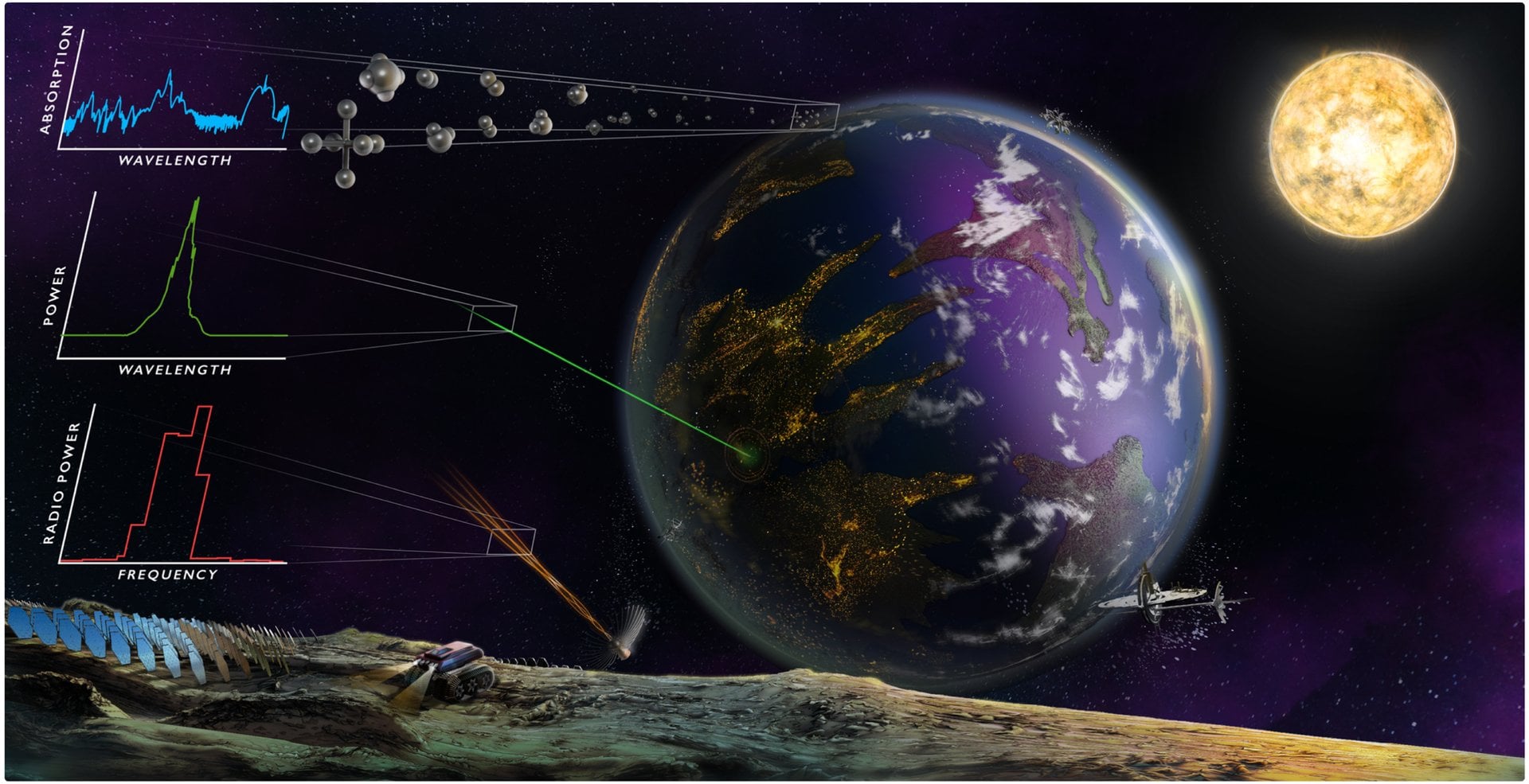 Illustration of various types of technosignatures. Credit: Haqq-Misraa, J. et al. (2022)
This renewed interest in SETI and the commissioning of new surveys have also been mirrored by efforts to expand their scope. To date, the majority of SETI projects have focused on the radio spectrum and thermal signatures, but could expand to include other indicators of technological activity. In September 2018, the first NASA Technosignature Workshop was held at the Lunar and Planetary Institute in Houston, Texas. NASA convened this workshop to learn more about the state of technosignature searches and the role NASA might play in them in the future.
Two months later, NASA released its first Technosignature Report, which summarized the workshop's key findings. In addition to covering the range of experiments conducted to date, the report also established upper detection limits and addressed emerging and future opportunities in technosignature detection. Examples discussed included gamma-ray emissions that might indicate highly advanced propulsion systems, artificial structures passing in front of their stars, "spillover" from optical transmissions, or directed-energy propulsion.
Taking a page from the Anthropocene and Climate Change, scientists have also proposed searching for indications of pollution and industrial chemicals, such as chlorofluorocarbons (CFCs). Artificial light sources are another possible technosignature, which would generate an overabundance of light on an exoplanet's surface when observed using the Direct Imaging Method.
In 2020, the Blue Marble Space Institute of Science (BMSIS) organized Technoclimes, a 5-day virtual workshop to develop a research agenda for non-radio technosignatures with support from NASA’s Nexus for Exoplanetary System Science (NExSS). In 2023, NASA held its second Technosignature Workshop to address emerging technology and how future SETI projects could benefit from it. Jill Tarter, who has played a vital role in SETI for decades, noted that one of the biggest challenges facing researchers is moving the search beyond radio signals.
That’s something we’ve worked very hard on: to establish our legitimacy and distance ourselves from pseudo-science. If anything, my conviction that this is an important and reasonable thing to do has increased. We still want to look at all the sky all the time, at all wavelengths,” Tarter said, including pulses of laser light that might be used for communication. We’re trying to figure out how to do that. That is our focus now.
In addition to optical signals, other transmission technologies considered include neutrinos, gravitational waves, and other exotic particles. Another major recommendation was that future projects should "piggyback" off of studies of exoplanets and other cosmic phenomena. Addressing the growing presence and importance of AI in data analysis, it was also recommended that future SETI surveys leverage increasingly sophisticated algorithms to sort through the massive amounts of data produced by a single survey.
From its humble beginnings, the Search for Extraterrestrial Intelligence has evolved considerably. Its acceptance by the scientific community continues to grow as the field shows signs of blossoming into a serious field of study. While decades of searching have yet to produce any definitive evidence of ETCs in our galaxy, we've barely even begun to scratch the surface. In time, that may change. But before we bring this series to a close, we should review all the "candidate signatures" detected over the years.
Who knows? Maybe we have heard from an advanced civilization and didn't even know it.
此内容由惯性聚合(RSS阅读器)自动聚合整理,仅供阅读参考。 原文来自 — 版权归原作者所有。