


惯性聚合 高效追踪和阅读你感兴趣的博客、新闻、科技资讯
阅读原文 在惯性聚合中打开

推荐订阅源

Forbes - Security
Forbes - Security
The GitHub Blog
The GitHub Blog
腾讯CDC
GbyAI
GbyAI
宝玉的分享
宝玉的分享
The Register - Security
B
Blog RSS Feed
freeCodeCamp Programming Tutorials: Python, JavaScript, Git & More
T
Tailwind CSS Blog
AWS News Blog
AWS News Blog
S
Schneier on Security
P
Proofpoint News Feed
C
Check Point Blog
T
Threat Research - Cisco Blogs
Threat Intelligence Blog | Flashpoint
Last Week in AI
Last Week in AI
NISL@THU
NISL@THU
H
Hacker News: Front Page
Blog — PlanetScale
Blog — PlanetScale
T
The Exploit Database - CXSecurity.com
S
Security Affairs
www.infosecurity-magazine.com
H
Hackread – Cybersecurity News, Data Breaches, AI and More
Latest news
Latest news
MongoDB | Blog
MongoDB | Blog
T
Tenable Blog
C
CERT Recently Published Vulnerability Notes
Security Latest
Security Latest
C
Cisco Blogs
Exploit-DB.com RSS Feed
CTFtime.org: upcoming CTF events
N
News and Events Feed by Topic
人人都是产品经理
人人都是产品经理
Cyber Security Advisories - MS-ISAC
M
MIT News - Artificial intelligence
Google DeepMind News
F
Full Disclosure
L
LINUX DO - 热门话题
博客园 - Franky
K
Kaspersky official blog
C
Cyber Attacks, Cyber Crime and Cyber Security
U
Unit 42
Recorded Future
Recorded Future
Google DeepMind News
WordPress大学
WordPress大学
aimingoo的专栏
aimingoo的专栏
Project Zero
Project Zero
F
Fortinet All Blogs
O
OpenAI News
Recent Announcements

Universe Today

The Shape of a Black Hole Written in Rock Titan's Hidden Blanket Did Life Start When Impacts Created Vast Hydrothermal Systems in Earth's Crust? Meet REMORA: The Autonomous Space Fleet Built to Tag and Track Asteroids Watch the Moon Occult Venus in the Daytime for North America on June 17th Astrochemical Model Digs Into the Universe's Missing Sulfur Building in Space With Laser "Origami" On The Hunt For Cosmic Dawn And The Universe’s Very First Stars David Kipping Has a New Take on the Existence of Advanced Life in the Universe... and the Numbers are Not Encouraging! This is How Supermassive Black Holes Feed Themselves NASA’s Proposed EVE Mission Aims to Solve the Radius Valley Mystery Where Not to Look in the Search for ET Reading the Moon in X-rays Astronomers Find a Four-Carbon Sugar in Deep Space Why Can't the Universe Be Cyclic? Part 4: When a Good Idea Meets Bad Data Orbiting Stars Give Clues to a Quiescent Black Hole's Mass Magnetic Fields Help Binary Stars Form and Black Holes Merge A Rare Meteorite Just Revealed a Lost, Mars-Sized Planet from the Dawn of the Solar System Neptune’s Weirdest Moon Nereid Might Be the Lone Survivor of an Ancient "Moonpocalypse" Space Telescopes Are Now Overwhelmed by Satellite Trails Why Can't the Universe Be Cyclic? Part 3: The Ekpyrotic Universe and Its Bouncing Branes Catch Comet 220P McNaught in Outburst The Hidden Physics Complicating Interstellar Lightsails Student Astronomer Identifies Source of Mysterious Cosmic Signals Why Can't the Universe Be Cyclic? Part 2: The Awkward Triumph of Inflation The SETI Institute Releases Technosignature Report on 3I/ATLAS Why Can't the Universe Be Cyclic? Part 1: The Lure of the Eternal Universe A “Green” Dual-Mode Engine is About to Give CubeSats the Best of Both Worlds SETI Panel Revises Recommendations for Dealing With 'Disclosure Day' NASA Bids Farewell to MAVEN Mars Mission in Public Teleconference Astronomers Make "Live" Observation of a Nearby Protoplanetary Disk's Rotation The Cosmic Web Like You've Never Seen it Before They've Been Searching for the Milky Way's Black Hole Wind for 50 Years and Finally Found It What Happens to a Star That Captures A Primordial Black Hole? New Cloud-Detecting Method Will Help Astronomers Characterize Exoplanets Even Without A Magnetosphere, Mars Can Still Deflect Some Solar Wind The Unexpected Brightness 'Gap' in an Ancient Globular Cluster Cosmic Tryst: Venus Meets Jupiter at Dusk A Brief-ish History of SETI. Part IX: What Have We Found? A New Map of Stars Shows That the Small Magellanic Cloud is Expanding Here's Why So Many Massive Galaxies in the Early Universe Stop Forming Stars Exoplanetary Weather Watchers Find Strong Evidence of Magnetic Fields Asteroid Dirt is "Fluffier" Than We Thought Blue Origin Issues Official Statement on New Glenn Explosion Astronomers Uncover Statistical Evidence for Recoiling Supermassive Black Holes The Next-Generation Very Large Array Prototype (ngVLA) Gathers its First Light Flash-Melted Glass from Chang'e-5 Reveals a High Levels of Iron on the Moon How Early Earth's Unlikely Chemical Hero Appeared Mars Hid its Warm, Wet Crystals Underground Could the Milky Way’s Missing Mass Be Hiding in a Swarm of Interstellar Comets? Ceres’ Surface Is Much More Complex Than Previously Thought Are the JWST's Early Overrmassive Black Holes Just Normal-Range Outliers? Astrobiology's Looming Statistical Crisis The Filamentary Funnels That Form Stars How Heavy Can a Neutron Star Get? Jupiter Created the Birthplace of Rocky Bodies in the Early Solar System How a Giant Moon and a Steam Atmosphere Built the Recipe for Life A Faster Way To Forecast Alien Weather Longest-period young transiting exoplanets discovered Roman Telescope's massive infrared mirror is ready to fly JWST Finds Methane Atmosphere on Temperate Exoplanet Blue Origin's Lunar Lander Just Passed Its Toughest Test Yet The Loudest Planet Wins A Brief-ish History of SETI. Part VIII: Paradox? What Paradox? The Galaxy That Forgot to Spin Did We Invent Dark Energy for Nothing? It Took a Cosmic Village to Shape Early Galaxies Lasers at the Lunar Poles Could Help Astronauts Navigate Who You Send to the Moon Matters More Than You Think MAVEN Spacecraft Finds New Plasma Squeezing at Mars The Sun is Changing and We Don’t Know Why ESA Selects Two New Scout-Class Missions 20,000 Eyes on the Universe The Flash Memory That Space Can't Destroy We Can Now Weigh Galaxies Using Dead Stars As Scales JWST Studies a Dark and Airless Super-Earth Earthly Hors d'oeuvres For Hungry Red Dwarfs The Name N159 Doesn't Do This Brilliant Star-Forming Region Justice An Orbiting Satellite Triad Reveals Motions Inside Earth Just Like Stars, Open Clusters Can Form Binary Pairs Astrophysical Calibration Could "Autotune" Gravitational Wave Detection Something Just Passed Between Us and a Distant Star. When Spacetime Crystallises, a Black Hole is Born The Weirdness of Early Universe SMBHs Gets Even Weirder A Natural Chemistry Laboratory in Protostar Shock Waves A New Model Helps Astronomers Study How Merging Black Holes Ring Why the Second Full Moon of May is a ‘Blue Minimoon’ NASA TESS Reveals Epic All-Sky Map of Distant Worlds Astronomers Observe the Most Chemically Primitive Galaxy in the Early Universe Where Are All the Intermediate Mass Black Holes? Microlensing Fast Radio Bursts Might Reveal Them When the Sun Tries to Explode and Fails The Sun Just Did Something Nobody Expected and it Kept Going For 19 Days Three Stars, One Extraordinary System and a Drama Still to Come The Definitive Census of Multiple Star Systems Within 10 Parsecs Are Satellite Megaconstellations Accidentally Geoengineering the Earth? The Risk of Stellar Flybys and GJ 710 How Mars Can Help Us Understand 'Marginal' Exoplanets Ultrahigh-energy Cosmic Rays May Be Ultraheavy in Origin NASA's Next-Generation AI Processor Passes Early Testing
Why Consciousness Might Not Belong to Us Alone
Mark Thompson · 2026-06-15 · via Universe Today

Here's a question that sounds like science fiction but is being asked in deadly earnest by serious philosophers. Does consciousness require flesh and blood? It's a question I wrestled with myself when I wrote a novel that addresses the very nature of consciousness in the universe, so a new paper claiming the answer is almost certainly no caught my eye at once. That's the conclusion of Eric Schwitzgebel, a distinguished professor of philosophy at the University of California, Riverside.

In the new working paper written with former UCR graduate student Jeremy Pober, now at the University of Lisbon, the pair argue that consciousness could arise in life forms built from radically different stuff than us. Picture the rock skinned, crystal brained alien from the recent film Project Hail Mary, and you are somewhere close to what they have in mind.
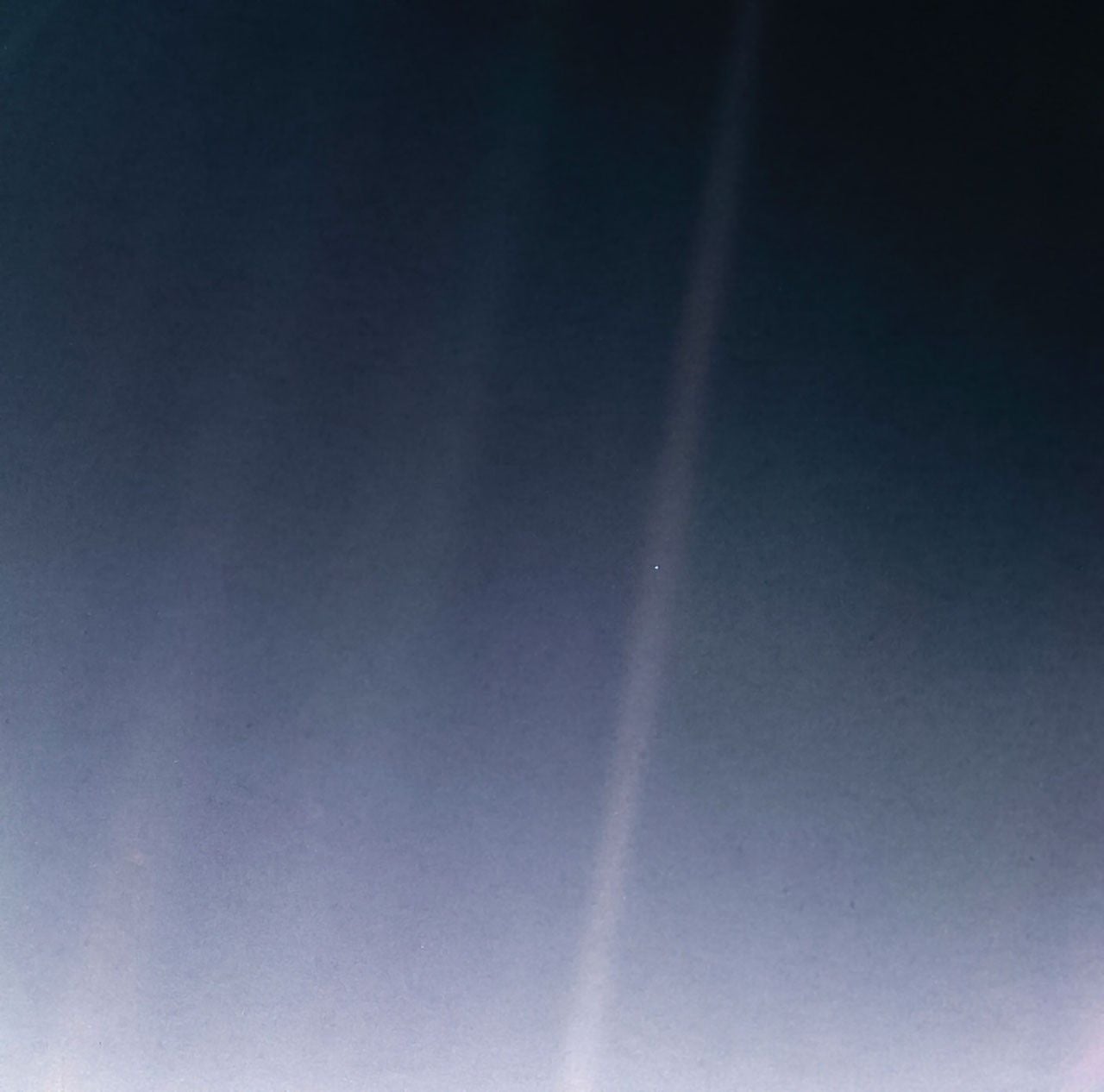
Voyager 1's view of Earth from 3.7 billion miles, a pale blue speck in a sunbeam. If we're not central to the universe, the philosophers ask, why assume consciousness is ours alone? (Credit : NASA/JPL Caltech) Voyager 1's view of Earth from 3.7 billion miles, a pale blue speck in a sunbeam. If we're not central to the universe, the philosophers ask, why assume consciousness is ours alone? (Credit : NASA/JPL Caltech)

The two philosophers are careful not to overreach, since they don't try to define consciousness, and they don't claim exotic alien minds definitely exist. Instead they start from a simpler premise, that consciousness is real and recognisable, and ask a narrower question. Must it be tied to the particular biology that happens to have evolved on Earth?

Their argument rests on an idea called substrate flexibility. A property is substrate flexible if you can achieve it using different materials. A cup holds water whether it's glass or plastic. Music plays whether it's pressed into vinyl or burned onto a disc. Consciousness, they suggest, is the same. It is a phenomenon that could be realised in more than one kind of physical machinery.

It’s interesting to then apply this to the size of the observable universe that holds something like a trillion galaxies, and planets are believed to be everywhere. The authors estimate, conservatively, that at least a thousand behaviourally sophisticated civilisations have existed somewhere in the history of the cosmos. If life can take hold under wildly different chemical conditions, across that many opportunities, it would be very odd if every successful lineage settled on exactly the same biochemical recipe.
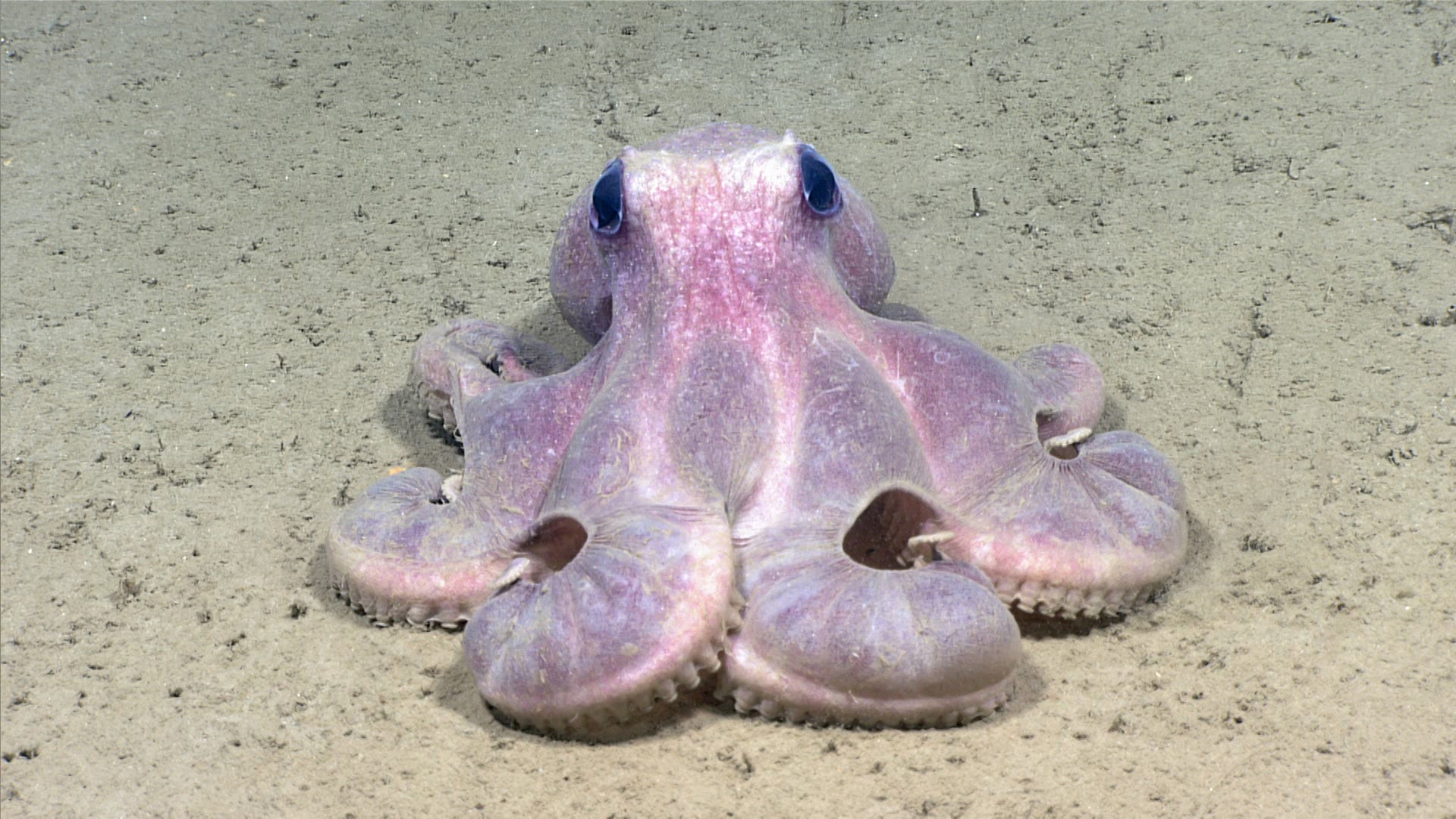
An octopus: an alien-seeming intelligence that evolved on Earth. Even here, nature builds minds to more than one plan (Credit : NOAA Ocean Exploration) An octopus: an alien-seeming intelligence that evolved on Earth. Even here, nature builds minds to more than one plan (Credit : NOAA Ocean Exploration)

This is where Copernicus comes in. Each great astronomical discovery has shoved humanity a little further from the centre of things. Schwitzgebel and Pober extend that humbling lesson to the mind itself, coining the phrase "the Copernican principle of consciousness." To assume awareness belongs only to creatures like us, they argue, is a kind of terrocentrism, an unjustified conceit that Earthly life is uniquely special.

And inevitably, the argument circles back to artificial intelligence. The two don't agree here. Pober warns that flexibility across some substrates doesn't mean every substrate qualifies, so today's silicon may not make the cut. Schwitzgebel is more open, noting that once you drop the demand for human biology, excluding silicon purely for being silicon gets harder to defend. On one point they agree. The real question isn't whether a machine can copy a human brain, but what kinds of systems can wake up at all.

Source : Consciousness likely not unique to earthlings, paper says