










Starting late October 2022, Netlify will begin automatically batch-deleting non-critical deploys older than 90 days. Alongside this release, Netlify is also introducing new, configurable deploy deletion policies for customers on Enterprise plans who may want to keep deploys for longer or delete them more frequently.
Automatic deploy deletion will not impact your production site or your underlying source code hosted by your Git provider. Read on to learn more about automatic deploy deletion and new deploy retention policies for your sites.
Why it’s useful to delete old deploys
Many developers have been enjoying the option to manually delete old deploys they no longer need. The ability to delete old deploys is important for security. You can quickly delete a deploy artifact if some type of sensitive data slipped into the deploy, or ensure that your Netlify teammates don’t use one-click rollbacks to revert projects to undesirable versions from the past.
However, until now, deleting old deploys could be a fairly manual process. There is a clear opportunity to reduce the lift for security-conscious teams by deleting deploys automatically when they’re old enough that they’re unlikely to be needed for reference.
Beyond that, cleaning up old deploys has benefits for Netlify as a platform. More than 3 million developers are building on Netlify today. Storing an infinite number of old deploys for each and every site will eventually become unsustainable in the future.
That’s why we’re making the deploy deletion process automatic for deploys older than 90 days. We will begin batch deleting these deploys no sooner than October 25, 2022.
Automatic cleanup without disrupting production
In order to ensure that automatic deploy deletion never interrupts your sites in production, Netlify will only delete old deploys if they’re not the most recent, published deploys for your site or branches. In order to be eligible for deletion, a deploy must meet these criteria:
The deploy is not the one currently published on your live site, and The deploy is not the most recent, successful deploy from a given Git branch
This means that your production site will never be disrupted due to an automated deploy deletion, even if you haven’t pushed any changes in a while.
The head of your non-production deploy contexts will be preserved as well. For example, the most recent deploy for a given Deploy Preview will still be available unless you decide to manually delete it, or another deploy replaces it. And of course, your source code will not be impacted: you can always re-deploy a change from Git at any time.
Customizing your team’s retention policy
Some teams may find they want a more aggressive deletion schedule, or that they need to hold onto outdated deploys a little longer. Customers on Netlify Enterprise plans will have the option to customize their retention policy:
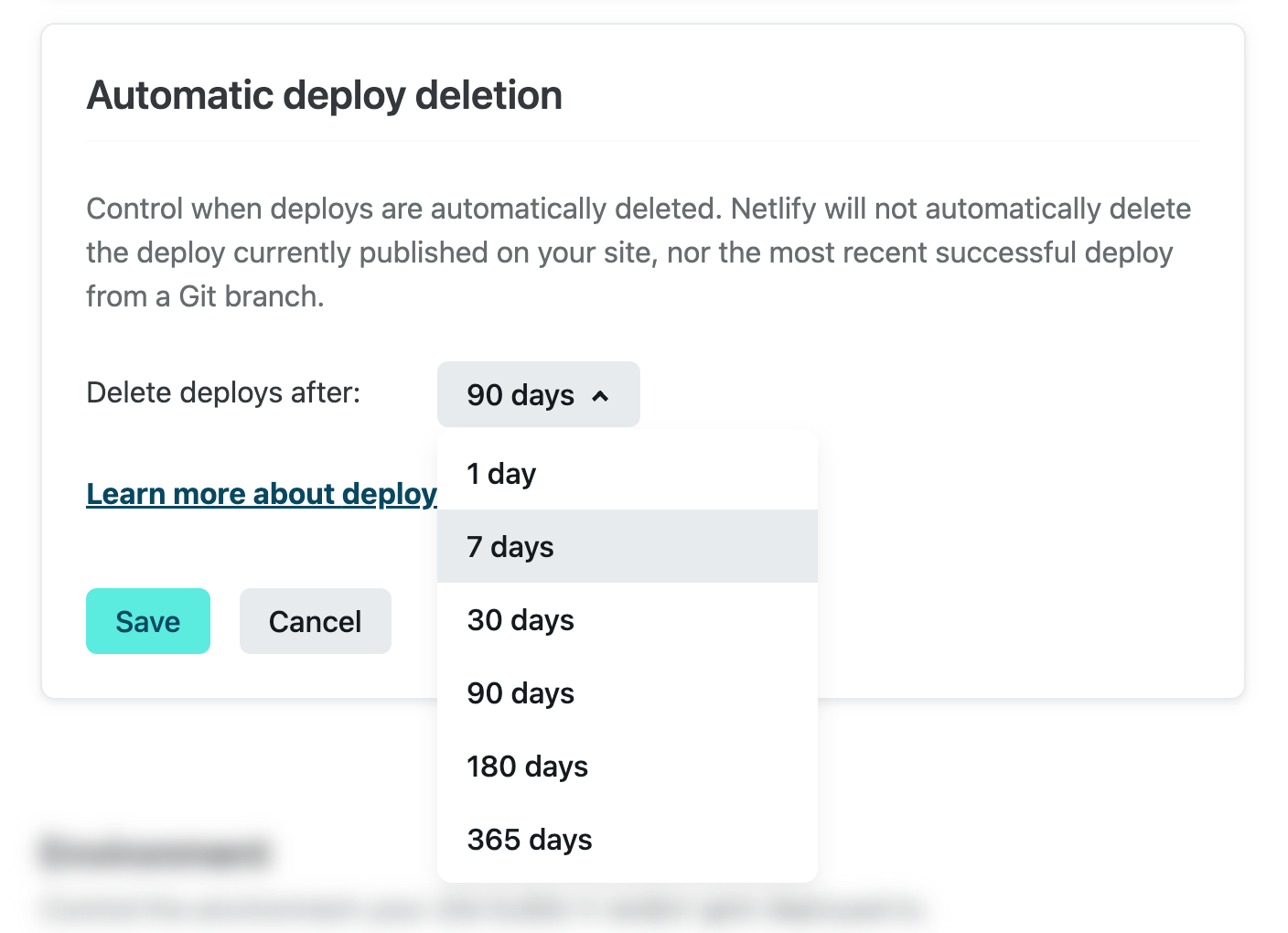
To customize the policy, developers can go to Site Settings > Build & deploy > Automatic deploy deletion and choose one of the available retention options.
Enterprise customers can choose from options ranging from 1 day to 365 days. You can customize your retention policy now, before automatic deploy deletion begins (no earlier than October 25, 2022).
Owners and Contributors on any plan type can manually delete deploys whenever they wish.
Let us know what you think!
We’re always happy to get your feedback on how we can improve the Netlify platform and support your productivity. If you have feedback specifically about deploy deletion for Netlify, we invite you to complete this open survey. For any and all other topics, we’d love to hear from you on our free Community Forums at answers.netlify.com.