




In the fast-paced world of digital content—where volume and quality are often at odds—efficiency and creativity are paramount. Today, we’re introducing AI-Assisted Publishing, a groundbreaking feature designed to rethink how editors, publishers, marketers, and merchandisers transform their creative ideas into structured, publishable content.
Why AI-Assisted Publishing matters for creatives
Traditionally, content creators have faced the tedious task of converting their creative work from platforms like Google Docs and Notion into formats suitable for publication. This often involves manual adjustments and compromises to fit the specifications of headless CMSs (or worse, legacy CMS platforms with template-based publishing), leading to inefficiencies and potential loss of creative intent. Content authors need better tools in today’s world of composable web architectures.
AI-Assisted Publishing addresses these challenges by automating the chores involved in taking content from its original home to production on a site, allowing creators to focus on what they do best—crafting compelling narratives. By leveraging AI’s ability to summarize and transform unstructured content into structured formats, this feature accelerates the journey from ideation to production, ensuring that the creative vision remains intact.
We believe that AI is ideal for removing these non-creative chores. We’ve designed AI-Assisted Publishing in a way that can help content authors simplify the chaos of multiple tools and transpose this creative content into rigid schemas. When content is ready in the writer’s tool of choice, we move the content straight into a compelling, web-ready first draft that they can visually edit and publish safely—independently leveraging the full power of the Netlify platform.
Why AI-Assisted Publishing matters to developers on Netlify
For web teams on Netlify, AI-Assisted Publishing is available within Netlify’s platform which developers are familiar with and already use. This way, they don’t have to worry about supporting another CMS integration and can rely on Netlify’s Visual Editor as the canvas for their content authors to work in while they build structures and experiences that creators are empowered to hook into.
As developers make changes to how the site is built, it’s easy to see how this reflects how content is pulled into the site.
Key features of AI-Assisted Publishing
Here are but a few:
- Seamless content transformation: Automatically convert documents into structured web pages, maintaining original formatting and links.
- Brand consistency: Utilize existing company branding and components to create cohesive landing pages and blog posts.
- User-friendly workflow: Choose templates, customize prompts, and receive notifications upon content creation, all within a streamlined interface.
- Enhanced collaboration: Enable marketers and content stakeholders to make last-mile edits using a visual editor, keeping creative control in their hands.
If this wasn’t enough, AI-Assisted Publishing takes it a step further by going beyond traditional A/B testing and personalization variant tools available today. With Netlify AI-Assisted Publishing, teams can start from a single source of content and produce tailored content for diverse audiences and personas.
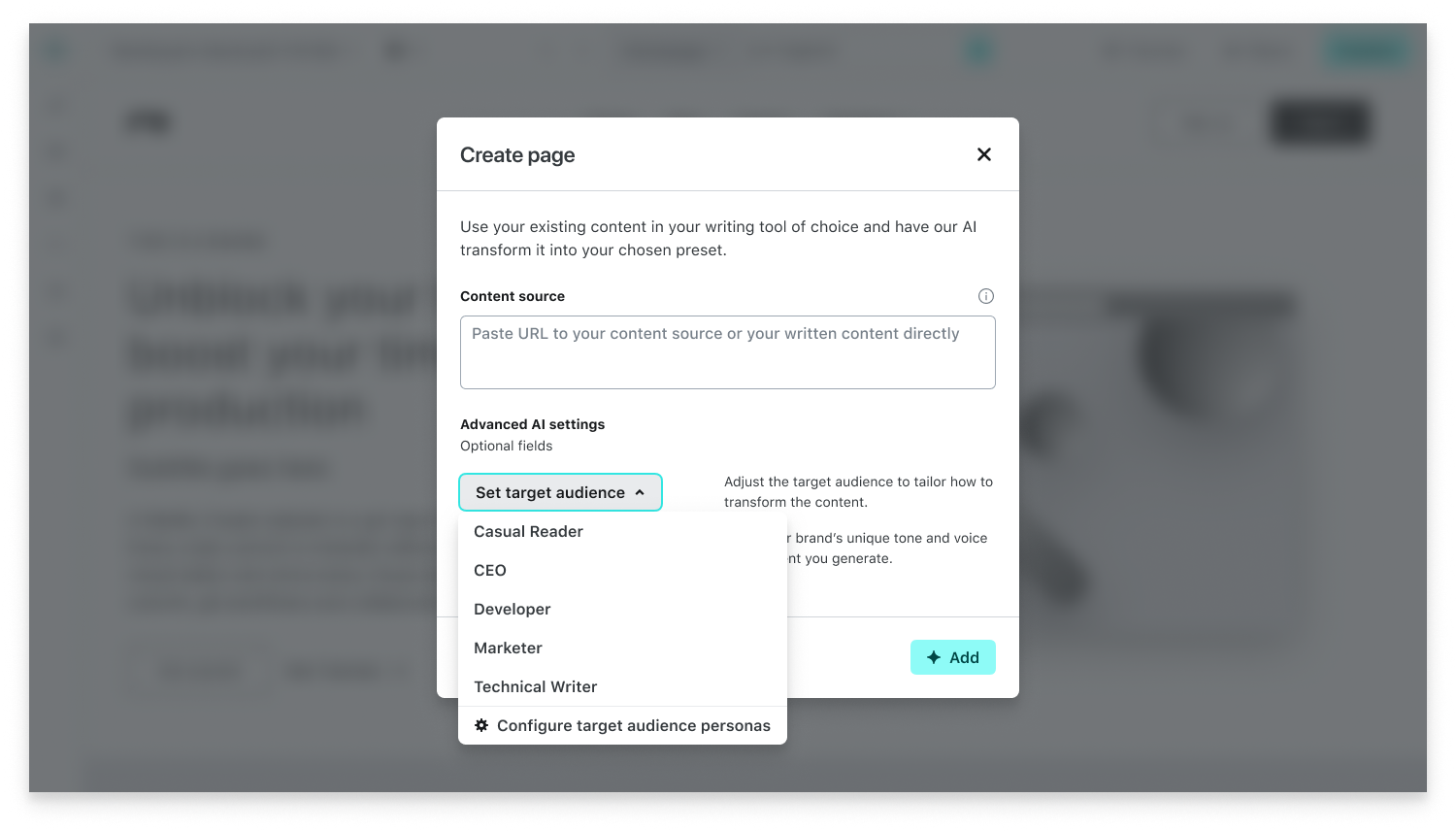
When your team creates a general audience press release, they can turn that press release into variants that speak to a CMO, CTO, or any other type of persona, for example, all without having to rewrite the content from scratch.
Use Cases
While we’re only scratching the surface of what’s possible for AI-Assisted Publishing, here are a couple of primary use cases:
- Blog post creation: Quickly generate structured blog posts from unstructured content, perfect for feature announcements and updates.
- Landing page development: Effortlessly create landing pages that align with brand guidelines and design systems, reducing the need for repetitive manual adjustments.