惯性聚合 高效追踪和阅读你感兴趣的博客、新闻、科技资讯
阅读原文 在惯性聚合中打开

推荐订阅源

Recorded Future
Recorded Future
Security Archives - TechRepublic
OSCHINA 社区最新新闻
OSCHINA 社区最新新闻
Jina AI
Jina AI
I
InfoQ
D
DataBreaches.Net
人人都是产品经理
人人都是产品经理
腾讯CDC
GbyAI
GbyAI
V
Visual Studio Blog
H
Hackread – Cybersecurity News, Data Breaches, AI and More
Microsoft Azure Blog
F
Fortinet All Blogs
博客园 - 聂微东
美团技术团队
The Register - Security
Engineering at Meta
Engineering at Meta
Apple Machine Learning Research
雷峰网
雷峰网
S
Schneier on Security
量子位
A
About on SuperTechFans
H
Help Net Security
MongoDB | Blog
MongoDB | Blog
S
SegmentFault 最新的问题
Know Your Adversary
Know Your Adversary
Cisco Talos Blog
Cisco Talos Blog
Vercel News
Vercel News
Simon Willison's Weblog
PCI Perspectives
PCI Perspectives
B
Blog
K
Kaspersky official blog
V
Vulnerabilities – Threatpost
aimingoo的专栏
aimingoo的专栏
cs.CV updates on arXiv.org
U
Unit 42
G
Google Developers Blog
L
LINUX DO - 最新话题
Forbes - Security
Forbes - Security
AWS News Blog
AWS News Blog
P
Palo Alto Networks Blog
Security Latest
Security Latest
爱范儿
爱范儿
Attack and Defense Labs
IT之家
IT之家
L
LINUX DO - 热门话题
D
Docker
P
Proofpoint News Feed
Y
Y Combinator Blog
P
Proofpoint News Feed

Cybersecurity Dive - Latest News

Dozens of Red Hat npm packages targeted in supply chain attack Turning tension into collaboration: How CIOs and CISOs can lead together Anthropic shares Mythos with 150 more organizations, including critical infrastructure operators Without strong governance, companies put credit ratings at risk in AI era CISA adds critical Palo Alto Networks firewall flaw to KEV as company, researchers warn of exploitation How Canva scaled to 260+M users while elevating security and productivity Top 4 data security best practices for the AI-enabled enterprise CISA urges security teams to check for software development compromises How CISOs can manage sovereign-cloud security risks IBM’s new $5B initiative will help enterprises rapidly patch open-source vulnerabilities Enterprise data is creeping its way into shadow AI tools Coordinated operation takes down Glassworm botnet Leading AI models are more vulnerable to malicious prompts than vendors claim Iranian government, not hacktivist group, breached LA Metro system, security firm says FBI warns about PhaaS platform used to access Microsoft 365 environments Iran-linked hackers target key US, allied sectors with sophisticated spear-phishing messages New York regulator calls for additional cyber mitigation amid heightened threat environment CISA asks cybersecurity community to alert it to vulnerability exploitation Grafana Labs links GitHub environment breach to TanStack npm supply chain attack 7-Eleven hit by data breach Microsoft disrupts cybercrime operation that hid behind legitimate software Compromised coding tool helped hackers breach thousands of GitHub repositories Telecom sector launches its own private ISAC Patch bypass allows hackers to exploit prior flaw in SonicWall SSL-VPN Grafana Labs says hacker gained access to codebase through leaked token How a government contest launched a revolution in AI-based bug hunting Attackers exploit critical flaw in Cisco Catalyst SD-WAN Controller MSPs need AI to fight AI-fueled cyberthreats: Guardz More money is going to physical security, but it’s often CISOs that oversee it: EY Frontier AI models reap rapid discovery of security vulnerabilities West Pharmaceutical starts restoring operations after ransomware attack Foxconn confirms cyberattack affecting some North American facilities OpenAI launches Daybreak to combat cyber threats Canvas owner reaches ‘agreement’ with threat actors after data breach Guardrail Technologies launches Traffic Light for Code & AI™; first security technology to verify & secure AI code and the people creating it Identity takes center stage as a leading factor in enterprise cyberattacks AI and an absent government: Takeaways from RSAC 2026 Second Canvas data breach causes major disruptions for schools, colleges AI used to develop working zero-day exploit, researchers warn New cybersecurity industry alliance aims to lead US critical infrastructure protection Identity is the new perimeter as rapid NHI proliferation threatens visibility and control Instructure confirms cybersecurity incident Anthropic’s Claude used in attempted compromise of Mexican water utility Businesses hide vast majority of ransomware attacks, report finds Palo Alto Networks warns state-linked cluster behind zero-day exploitation Businesses eager but unprepared for AI to transform their security strategies Iran-sponsored threat group behind false flag social engineering campaign NIST will test three major tech firms’ frontier AI models for cybersecurity risks Trellix investigating breach of source code repository CISA urges critical infrastructure firms to ‘fortify’ before it’s too late Critical vulnerability in cPanel leads to widespread exploitation New MOVEit vulnerabilities prompt urgent patch warning How OpenClaw’s agent skills become an attack surface White House questions tech industry on defensive AI use, cybersecurity resilience As email phishing evolves, malicious attachments decline and QR codes surge US and allies urge ‘careful adoption’ of AI agents PwC partners with Google Cloud to take on the managed security market US agencies promote zero-trust practices for operational technology networks CISA adds Microsoft, ConnectWise vulnerabilities to active exploitation catalog State CISOs losing confidence in ability to manage cyber risks ‘Fundamental tension’ undermines manufacturers’ cybersecurity North Korea-linked actor targets Web3 execs in social-engineering campaign US, UK authorities warn that Firestarter backdoor malware survives patching Major critical infrastructure supplier reports cyberattack When security becomes the attack surface: Why endpoint protection must evolve Hasbro expects March cyberattack to impact second-quarter revenue AI-written software creates hassles for wary security teams Iran-nexus threat groups refine attacks against critical infrastructure China disguises cyberattacks with ‘covert network’ botnets, US and allies warn Trump’s CISA director pick withdraws after tumultuous nomination Phishing — sometimes with AI’s help — topped initial-access methods in Q1, Cisco says Microsoft SharePoint vulnerability widely exposed across multiple countries CISA urges security teams to view environments following axios compromise Big banks seek to ease security worries as AI push accelerates CISA confirms exploitation of 3 more Cisco networking device vulnerabilities Stellantis teams with Microsoft to strengthen digital capabilities Vulnerability exploitation surges often precede disclosure, offering possible early warnings Vercel systems targeted after third-party tool compromised Beyond IT: Cybersecurity is a strategic business risk TP-Link routers face exploitation attempt linked to high-severity flaw US joins nearly two dozen other countries in striking back against DDoS-for-hire platforms CIOs fret over rising security concerns amid AI adoption CISA cancels prestigious summer internships, citing government shutdown NIST limits vulnerability analysis as CVE backlog swells Medium-severity flaw in Microsoft SharePoint exploited FCC exempts Netgear from foreign router ban FCC signals continued commitment to Cyber Trust Mark program Brute-force cyberattacks originating in Middle East surge in Q1 CISOs see gaps in their incident response playbooks US, Indonesia shut down ‘sophisticated’ phishing kit Nearly 4K industrial control devices vulnerable to Iran-linked hacking campaign Stryker warns of earnings fallout from March cyberattack NERC is ‘actively monitoring the grid’ following Iran-linked cyber threat CISA adds second critical flaw in Ivanti EPMM to exploited vulnerabilities catalog US operation evicts Russia from hacked SOHO routers used to breach critical infrastructure Iran-linked hackers target water, energy in US, FBI and CISA warn React2Shell vulnerability helps hackers steal credentials, AI platform keys and other sensitive data Olympic Games, FIFA World Cup offer huge platforms, rich cyberattack surface Threat cluster launches extortion campaign using social engineering CISA’s vulnerability scans, field support on chopping block in Trump budget
Major critical infrastructure disruptions are inevitable, acting CISA chief says
Eric Geller · 2026-06-18 · via Cybersecurity Dive - Latest News

An article from site logo

In recent years, the U.S. government has reoriented its cybersecurity strategy away from prevention and toward resilience.

Published June 17, 2026

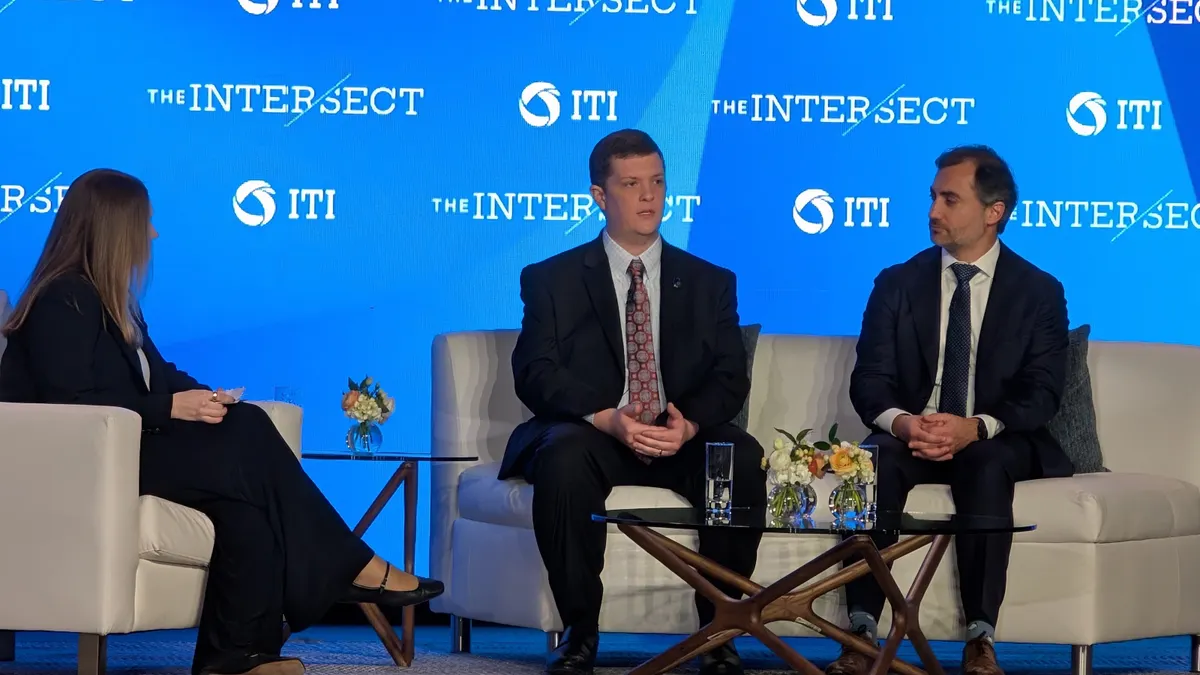
Two men and a woman sit on an event stage in front of a blue backdrop that displays the name of the event and its organizer

Nick Andersen, the executive assistant director for cybersecurity at the Cybersecurity and Infrastructure Security Agency, speaks at an Information Technology Industry Council event in Washington, D.C., on Feb. 3, 2026. Andersen discussed cybersecurity resilience at a conference on Wednesday. Eric Geller/Cybersecurity Dive

WASHINGTON — U.S. cybersecurity resilience in the face of sophisticated threats from China and other adversaries will increasingly depend on critical infrastructure’s ability to weather major disruptions, a top U.S. cyber official said Wednesday.

“Each and every one of us is operating right now on the front lines of a war that is never going to be cleared,” Nick Andersen, the acting director of the Cybersecurity and Infrastructure Security Agency (CISA), said at the Institute for Security and Technology’s Critical Effect conference.

“We are going to see an adversarial disruption of our critical infrastructure,” Andersen said. “It's going to have significant not just technical impact, it's going to have a significant psychological impact on the safety of the American people. … We need to start operating like that's the reality of where we're at — that we're not going to be able to keep everything persistently online and available as much as we would like.”

CISA’s emphasis on resilience marks a shift from earlier government cybersecurity doctrines that focused on preventing intrusions. In recent years, advanced nation-state hacking campaigns — especially Beijing’s Volt Typhoon espionage operation — have increasingly convinced government and industry strategists that their primary goal should be ensuring that infrastructure can continue operating during an attack.

“We have to start making some assumptions, like [that our] telecommunications infrastructure may be disrupted,” Andersen said at the Critical Effect conference, which focused on operational technology cybersecurity issues. “Why? Because the telecommunications infrastructure is going to be disrupted.”

To support national resilience efforts, the federal government has spent years trying to make a list of the most important infrastructure assets that accounts for complex interdependencies and supply-chain relationships. But successive administrations’ programs to identify those assets — referred to as Section 9 entities and systemically important entities — have borne little fruit.

Cybersecurity mandates or money?

During a question-and-answer session, Andersen addressed whether it was time for the government to require water utilities to participate in their sector’s information sharing and analysis center, the WaterISAC, which has one of the lowest participation rates of any ISAC. Andersen acknowledged that water was “a real mess of a sector for us” because of how localized it is, but he expressed skepticism that government mandates were part of the solution.

“I don’t know yet that we will see a moment where we start to move from the voluntary to the mandatory,” he said. “The bigger part for me is, how do we apply things like state and local grant dollars in the smartest way possible?”

CISA is working with lawmakers to reauthorize and reappropriate funds for the Department of Homeland Security’s State and Local Cybersecurity Grant Program, said Andersen, who described the program as a critical support mechanism for cash-strapped municipalities.

Grant funding and asset prioritization are better approaches than “making things mandatory on a sector that … doesn’t have the resources to be able to adapt to all these changing norms,” Andersen argued.

CISA’s goal, he said, was to “identify the entities, in a prioritized way, that we need to start doing that outreach to, and then, in a very deliberate way, making sure they've got … the right level of resources to help secure themselves and hit that higher standard and that higher burden that we're foisting upon them.”