









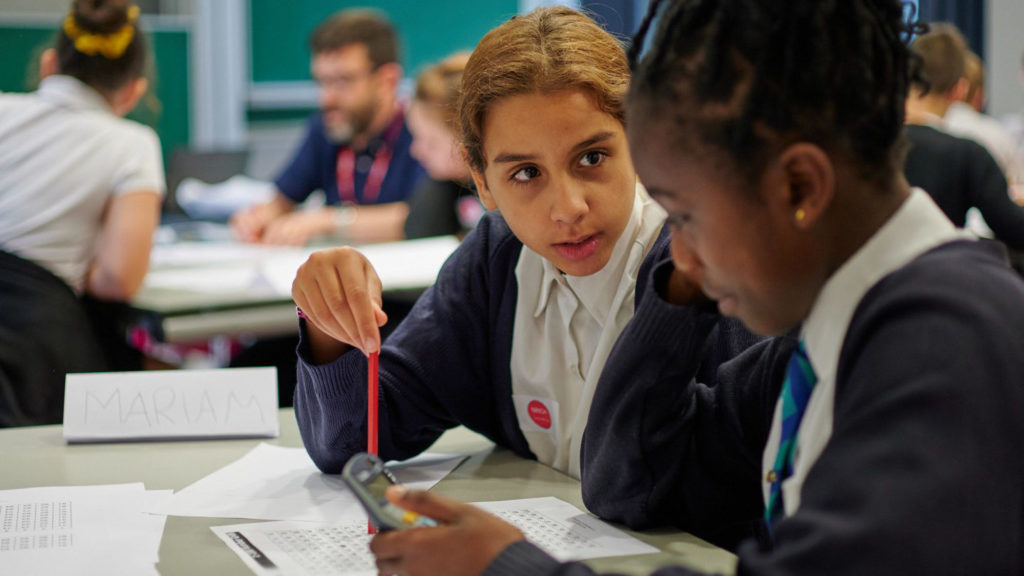
The world needs more people who can think mathematically to solve its mounting problems. This is what drives the researchers behind NRICH, Cambridge’s flagship maths outreach project.
NRICH, so-called because it seeks to enrich the teaching and learning of mathematics, has designed thousands of online resources for every stage of early years, primary and secondary school education, aged 3 to 19 years, and the general public. It focuses on building problem-solving skills, perseverance, mathematical reasoning, ability to apply knowledge creatively in unfamiliar contexts, and confidence in tackling new challenges.
A joint initiative of the Faculties of Mathematics and Education, the project has always shared its materials online, free of charge and without any barriers, internationally.
The project provides specialist training and notes for teachers to help them build lessons around NRICH tasks and maximise their impact in the classroom. The team also organises webinars for thousands of students from across the world.
With users in over 200 countries and jurisdictions, NRICH already reaches a significant audience but during the COVID-19 pandemic, the programme saw a surge in use, with a 95% increase in UK visits to the site between March and September 2020 compared with the previous year. Overall, the NRICH website attracted over 10 million visits and just under 33 million page views in the 2020/21 school year, supporting students as they worked from home and then as they returned to classrooms.
To maximise impact, the programme is underpinned by research such as the ‘Solving Together!’ NRICH-led pilot project, which investigated the potential for increasing parental engagement in supporting children’s learning.
Researchers worked with Year 7 students (age 11) and their parents or carers in six secondary schools in some of the UK’s most challenging local authorities where many of the participants lived in areas of high deprivation. The findings showed that almost a fifth of the families who participated in the pilot worked together more often on mathematics homework than they did before the pilot.
“The whole package in terms of supporting teachers with problem solving and using problem solving in the classroom is just perfect.”
– Mark Dawes, Maths teacher