








NVIDIA’s GTC 2026 announcements reinforce a structural transition underway in client-side AI infrastructure. Traditional workstations are evolving beyond the familiar tower form factor toward a new class of high-density, near-user AI systems that IDC identifies as part of an emerging “sidetop” category.
These systems elevate local compute capabilities while maintaining the proximity, control, and responsiveness required for next-generation AI workflows.
NVIDIA’s updates to the GB300 architecture and advancements in local agent orchestration reflect this broader shift. Combined with Dell’s introduction of its first GB300-based OEM systems, the market is entering a phase in which deskside AI compute is becoming operationally mainstream rather than experimental.
At GTC 2026, NVIDIA introduced an enhanced DGX Station built on the GB300 Grace Blackwell Ultra Desktop Superchip, positioned as the most powerful deskside AI system in NVIDIA’s portfolio.
The platform delivers up to 20 petaflops of local compute performance and is capable of running one-trillion-parameter models entirely onsite, enabling development teams to execute advanced AI workloads without dependency on rack-scale systems or external infrastructure.
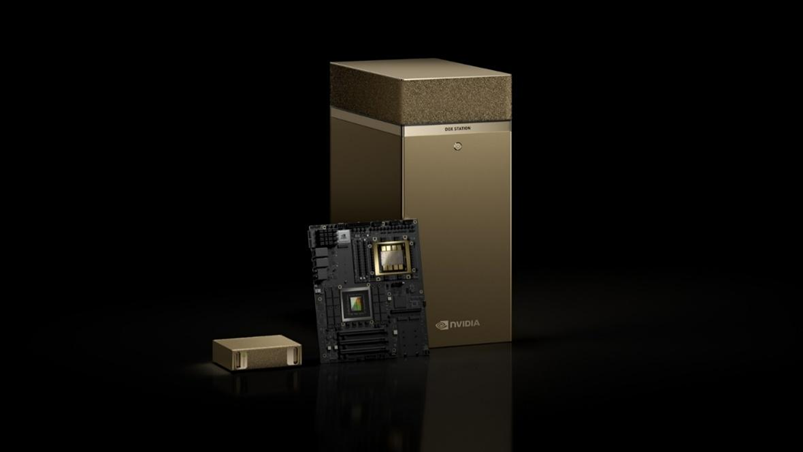
Compared to the GB300 configuration previewed during the GTC 2025 cycle, the 2026 update reflects NVIDIA’s full transition into the Blackwell generation. The system shifts from a hybrid exploratory design to a stable, production-ready architecture aligned with agentic and multimodal workload requirements.
For organizations pursuing AI factory-style development environments in constrained spaces, the GB300 represents a viable deskside alternative to small-scale cluster deployments.
Dell’s GTC 2026 announcement marked a significant milestone, as the company became the first OEM to introduce GB300-based systems within the Dell AI Factory with NVIDIA portfolio. The offering provides enterprises with validated system configurations, integrated storage and data pipeline capabilities, and end-to-end lifecycle support aligned with Dell’s existing AI infrastructure frameworks.
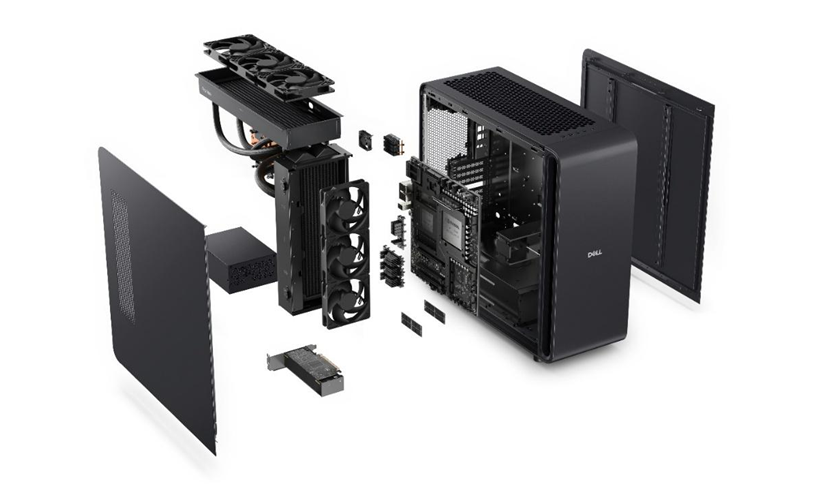
OEM adoption is a critical indicator of enterprise readiness. With Dell bringing GB300 systems into general availability, organizations can now deploy deskside AI compute as part of standardized IT planning rather than custom or isolated implementations. This enhances the GB300’s relevance for enterprise environments where compliance, orchestration, and operational predictability are required.
Alongside hardware updates, NVIDIA introduced NemoClaw, a secure, enterprise-ready reference stack for managing local agentic systems. NemoClaw provides governance and safety layers necessary for operating persistent AI agents on local devices while protecting confidential and sensitive information.

As deskside systems gain the capability to host large models and continuous agent workflows, IDC views frameworks like NemoClaw as essential for enabling practical, policy-aligned deployment of agentic AI within enterprise environments. The combination of local compute capacity and controlled agent execution marks a meaningful shift from experimental agent frameworks toward structured operational use.
The combined effect of NVIDIA’s GTC 2026 announcements signals a foundational change in how AI workloads will be distributed across compute tiers. The workstation is transitioning from a peripheral productivity tool into a critical component of the AI development and inference lifecycle.
IDC assesses that the GTC 2026 announcements represent a pivotal moment in the evolution of workstation computing. The market is moving beyond desktop-centric paradigms toward a sidetop architecture that integrates AI compute into the physical and operational workspace.
Organizations planning AI strategies should expect deskside systems to play a significantly larger role in both development and inference workflows over the next 24 to 36 months.

Mohamed Hefny leads market research in EMEA on professional workstation PCs and solutions. He also reports on professional computing semiconductors, processors, and accelerators (CPUs and GPUs), as well as breakthroughs and trends related to the market. In addition, Mohamed is actively involved in AI PC taxonomy and research. He participates in business development projects, contributes to consulting activities, and provides IDC customers with analysis, opinions, and advice.
此内容由惯性聚合(RSS阅读器)自动聚合整理,仅供阅读参考。 原文来自 — 版权归原作者所有。