





惯性聚合 高效追踪和阅读你感兴趣的博客、新闻、科技资讯
阅读原文 在惯性聚合中打开

推荐订阅源

WordPress大学
WordPress大学
O
OpenAI News
钛媒体:引领未来商业与生活新知
钛媒体:引领未来商业与生活新知
博客园 - 三生石上(FineUI控件)
Webroot Blog
Webroot Blog
GbyAI
GbyAI
S
SegmentFault 最新的问题
Cyberwarzone
Cyberwarzone
Exploit-DB.com RSS Feed
J
Java Code Geeks
Google DeepMind News
cs.CV updates on arXiv.org
博客园 - 【当耐特】
S
Secure Thoughts
酷 壳 – CoolShell
酷 壳 – CoolShell
AWS News Blog
AWS News Blog
Engineering at Meta
Engineering at Meta
S
Security Affairs
H
Help Net Security
Microsoft Security Blog
D
DataBreaches.Net
云风的 BLOG
云风的 BLOG
Hugging Face - Blog
Hugging Face - Blog
Google DeepMind News
Spread Privacy
Spread Privacy
T
Threatpost
Forbes - Security
Forbes - Security
C
Cisco Blogs
Scott Helme
Scott Helme
Attack and Defense Labs
Simon Willison's Weblog
腾讯CDC
The Last Watchdog
The Last Watchdog
Cloudbric
Cloudbric
Last Week in AI
Last Week in AI
Recorded Future
Recorded Future
小众软件
小众软件
V
Vulnerabilities – Threatpost
美团技术团队
人人都是产品经理
人人都是产品经理
有赞技术团队
有赞技术团队
Apple Machine Learning Research
Hacker News - Newest:
Hacker News - Newest: "LLM"
I
Intezer
月光博客
月光博客
C
Cyber Attacks, Cyber Crime and Cyber Security
博客园 - 司徒正美
C
Cybersecurity and Infrastructure Security Agency CISA
Martin Fowler
Martin Fowler
博客园 - 聂微东

NASA Science

Cosmic Origins at AAS 248, June 2026 - NASA Science Cosmic Structure SIG Seminar, 30 April 2026 - NASA Science CMB SAG Meeting, 24 April 2026 - NASA Science BBX SAG Meeting, 30 April 2026 - NASA Science Early Career Investigator Program – Earth Science (ROSES A.11) - NASA Science XR SIG Seminar, 1 May 2026 - NASA Science Night and (Earth) Day - NASA SWERV: High-Impact Historical Case Study - NASA Science AAS Meeting 248, June 2026 - NASA Science Earth Day 2026: Posters and Virtual Backgrounds - NASA Science Advancing Earth Observation at NASA since Release of Earthrise Photo - NASA Science X-59 Adds Freedom 250 Logo - NASA Belts of Green in the Washington Suburbs - NASA Science Artemis II Mission Milestones: An Image and Video Recap Curiosity Blog, Sols 4867-4872: Sand Fill In Antofagasta Crater and Finding Our Next Drill Target NASA Invites Media to Jordan Artemis Accords Signing Ceremony New NASA Views of Earth, From (S)PACE - NASA Science Crew Studies Biotech on Tuesday to Advance Health and Space Economy NASA Invests in Small Businesses Innovating for Space and Earth NASA at SXSW: Johnson Director Vanessa Wyche on Why Artemis Changes Everything Researchers: How Would You Extract Meaningful Insights from Just Four Astronauts? BBX SAG Meeting, 23 April 2026 - NASA Science Thailand’s Krabi Coast - NASA Science AI/ML STIG Lecture Series, 20 April 2026 - NASA Science SWERV: Training Overview and Agenda - NASA Science SWERV: REAL-TIME CAPABILITIES AND IONOSPHERIC DISRUPTIONS OF COMMUNICATIONS - NASA Science SWERV: Operationally Significant Phenomena and Impacts for Ground Operations - NASA Science SWERV: Space Weather Impacts on Satellites - NASA Science SWERV: Space Weather Chain of Events - NASA Science CSDA Quality Assessment Report Evaluates Satellogic NewSat Data - NASA Science NASA Shuts Off Instrument on Voyager 1 to Keep Spacecraft Operating - NASA Science Webinar 4/29: NASA CSDA Program Vendor Focus- MDA Space - NASA Science Testing Begins for Katalyst-NASA Swift Boost Mission - NASA Science Robert Maiberger - NASA William Vantine - NASA Holly Stevens - NASA Dennis McSweeney - NASA Mark T. Vande Hei - NASA Nicole Stott - NASA William Shepherd - NASA Josef Schmid - NASA NASA, OPM Announce New NASA Force Website, Open Job Applications  - NASA Frank Groen - NASA Ginger Kerrick - NASA Daniel Heimerdinger - NASA Michael Greenfield - NASA Kevin Ford - NASA Charles Daniel - NASA Capt. Frank L. Culbertson, Jr., USN (Ret.) - NASA Spring Rains Saturate Michigan - NASA Science NASA CubeSat Begins Mission to Study Radio Waves in Space - NASA Correction to F.5 FINESST, SMD’s Graduate Student Research Opportunity - NASA Science Restoring NASA's Core Competencies - NASA Small Steps, Giant Leaps: Episode 171: How NASA's Pandora Mission Unboxes Distant Worlds - NASA Physics of the Cosmos PAG Meetings - NASA Science NASA Science Veg-06: How plants and beneficial bacteria work together in microgravity Virtual Engineering & Spacecraft Flight Applications (VESFA) - NASA NASA Heliophysics Spacecraft Witness Comet’s Demise - NASA Science BBX SAG Meeting, 16 April 2026 - NASA Science NASA Invites Media to Latvia Artemis Accords Signing Ceremony - NASA Weak Lensing  - NASA Science At the Edge of Light - NASA NASA’s Mobile Launcher Rolls Ahead of Artemis III Preparation - NASA XR SIG Meeting, 27 April 2026 - NASA Science CRN SIG Meeting, 27 April 2026 - NASA Science GW SIG Seminar, 28 April 2026 - NASA Science Eyeing the Richat Structure - NASA Science I Am Artemis: Rebekah Tolatovicz - NASA NASA Selects Voyager for Seventh Private Mission to Space Station - NASA NASA Launches Six CubeSats to International Space Station Odyssey Celebrates 25 Years - NASA Science Crew Begins New Space Research and Installs New Science Gear - NASA NASA’s X-59 Completes First Wheels-Up Flight 2026 NSTA Hyperwall Schedule - NASA Science Update: Artemis II Crew Comes Home - NASA GW SIG Seminar, 14 April 2026 - NASA Science GR SIG Seminar, 17 April 2026 - NASA Science NASA's Webb Redefines Dividing Line Between Planets, Stars - NASA Science Vianni Ricano Cadenas Super Typhoon Sinlaku - NASA Science DGCE SIG Seminar, 23 April 2026 - NASA Science AI/ML STIG Lecture Series, 13 April 2026 - NASA Science NASA Night-light Imagery Tracks US Energy Transition, Global Volatility - NASA Science Hubble Completion Study 2012 - NASA Science Hubble Spies an Active Spiral - NASA Science Science with the Hubble and James Webb Space Telescopes VIII: Enriching the Universe: From Primordial Megaberg Ends Its Long Odyssey at Sea - NASA Science Artemis II Astronauts Back in Houston, Reunite with Families  - NASA Cygnus XL Cargo Craft Solar Arrays Deploy Powering Flight to Station - NASA Cygnus XL Cargo Craft Launches to Resupply Expedition 74 Crew - NASA La NASA da la bienvenida a la Tierra a los exploradores lunares de Artemis II, quienes batieron récords - NASA NASA Science, Cargo Launch Aboard Northrop Grumman CRS-24 - NASA Artemis II Splashes Down - NASA Artemis II Flight Day 10: Crew Completes Final Burn Before Splashdown  - NASA NASA Welcomes Record-Setting Artemis II Moonfarers Back to Earth  - NASA Human Perception and Performance Laboratory - NASA Artemis II Splashdown and Recovery - NASA Crew Preps for Cygnus XL Cargo Mission Targeted for Saturday Launch - NASA New Perspective of Home - NASA Artemis II Flight Day 10: Crew Sets for Final Burn, Splashdown - NASA
Origin of the Isotopes Science Analysis Group (Isotopes SAG) - NASA Science
Patricia Tyl · 2026-05-07 · via NASA Science

Origin of the Isotopes

The  Origin of the Isotopes SAG will explore the scientific potential of a next-generation mission optimized to enable transformative studies of nuclear processes in explosive transients and compact objects.

About Isotopes SAG

Enabling Studies of Nucleosynthesis and Explosion Physics Inaccessible by Other Means

The Isotopes SAG will explore the scientific potential of a next-generation gamma-ray mission optimized for narrow line sensitivity to point sources.

Such a mission could prioritize detection sensitivity with spectral resolution, potentially at the expense of field of view or imaging performance, in order to enable transformative studies of nuclear processes in explosive transients and compact objects that will test the laws of physics and trace the origin and evolution of matter in the universe, from the production of the elements to the expansion history of cosmic space-time.

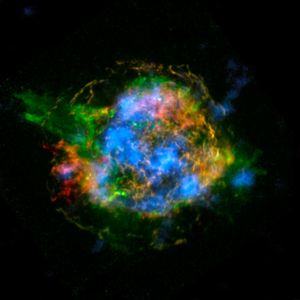
Nuclear gamma rays and positron annihilation radiation are among the most powerful diagnostics in astrophysics. Whereas atomic lines reveal elemental abundances and plasma conditions, and molecular lines probe gas dynamics and chemistry, nuclear lines provide direct measurements tied to specific radioactive isotopes. Further, their known decay lifetimes serve as intrinsic chronometers. These properties enable studies of nucleosynthesis, explosion physics, and matter transport that are inaccessible by other means. Observations of radioactive isotopes uniquely probe the creation, distribution, and annihilation of matter in the universe, connecting stellar explosions, compact objects, and Galactic ecosystems.

The principal objectives of this science interest group are to: 

  1. Astrophysical Sources and Discovery Space
    Which transient and persistent sources can be studied through nuclear gamma rays and positron annihilation? What unique insights would such observations provide? Candidate targets include thermonuclear supernovae, novae, core-collapse supernovae, kilonovae, rapidly accreting white dwarfs, and other explosive or accretion-powered systems. Are there additional source classes that would benefit from enhanced sensitivity?
  1. Measurement Requirements
    What detection sensitivity is required to observe these sources to meaningful distances? What spectral resolution is needed to measure line profiles and kinematics? What are the scientific gains as a function of field of view or spatial resolution? What mission or instrument requirements are driven by these science goals?
  1. Mission Concepts and Pathways
    What mission architectures or detector technologies could achieve the required performance? What mission classes (e.g., Probe, MIDEX, or strategic missions) are necessary to reach these capabilities? How do existing or proposed concepts compare with the science requirements identified by this group?

Stay Connected

Subscribe to the Isotopes SAG Email List

To join the list, send an email to Isotopes-SAG-join@lists.nasa.gov with Subject="join"

To unsubscribe, send an email to Isotopes-SAG-leave@lists.nasa.gov with Subject="leave"

Your email address will be used only for the purpose of subscription to the selected email distribution list. For further information, read the NASA Web Privacy Policy.

SAG Leadership

NameInstitution
Eric BurnsLSU
Carolyn KieransNASA/GSFC
Chris FryerLANL

News & Events

Meetings, conferences, seminars, workshops, and other events for Isotopes SAG
Origin of the Isotopes Science Analysis Group (Isotopes SAG)

Nuclear gamma rays and positron annihilation radiation are among the most powerful diagnostics in astrophysics. Whereas atomic lines reveal elemental abundances and plasma conditions, and molecular lines probe gas dynamics and chemistry, nuclear lines provide direct measurements tied to specific…

May 6, 2026
Isotopes SAG Kickoff Meeting, 5 June 2026

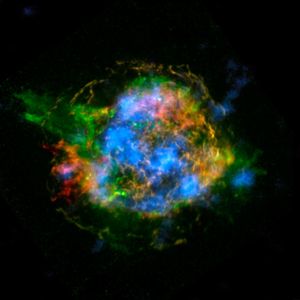
Kickoff Meeting As we are now unraveling the origin of the heaviest elements, we begin exploring the Origin of the Isotopes. In this area of interest, we have initiated a new Science Analysis Group to explore what a next-generation nuclear…

May 6, 2026

Documents

Isotopes SAG Terms of Reference