


惯性聚合 高效追踪和阅读你感兴趣的博客、新闻、科技资讯
阅读原文 在惯性聚合中打开

推荐订阅源

Security Latest
Security Latest
T
The Exploit Database - CXSecurity.com
Threat Intelligence Blog | Flashpoint
T
Tor Project blog
Help Net Security
Help Net Security
PCI Perspectives
PCI Perspectives
T
The Blog of Author Tim Ferriss
H
Heimdal Security Blog
The Register - Security
Schneier on Security
宝玉的分享
宝玉的分享
Google DeepMind News
人人都是产品经理
人人都是产品经理
cs.AI updates on arXiv.org
C
CERT Recently Published Vulnerability Notes
L
LangChain Blog
Security Archives - TechRepublic
MongoDB | Blog
MongoDB | Blog
美团技术团队
S
Security @ Cisco Blogs
Cloudbric
Cloudbric
Cisco Talos Blog
Cisco Talos Blog
C
Cybersecurity and Infrastructure Security Agency CISA
月光博客
月光博客
B
Blog RSS Feed
Cyberwarzone
Cyberwarzone
U
Unit 42
AWS News Blog
AWS News Blog
F
Fortinet All Blogs
L
LINUX DO - 最新话题
GbyAI
GbyAI
T
Threat Research - Cisco Blogs
cs.CV updates on arXiv.org
A
About on SuperTechFans
Hugging Face - Blog
Hugging Face - Blog
Attack and Defense Labs
Engineering at Meta
Engineering at Meta
MyScale Blog
MyScale Blog
Hacker News - Newest:
Hacker News - Newest: "LLM"
V2EX - 技术
V2EX - 技术
Y
Y Combinator Blog
T
Tailwind CSS Blog
酷 壳 – CoolShell
酷 壳 – CoolShell
Recorded Future
Recorded Future
TaoSecurity Blog
TaoSecurity Blog
博客园_首页
C
CXSECURITY Database RSS Feed - CXSecurity.com
M
MIT News - Artificial intelligence
K
KPMG report finds enterprise disconnect between AI and its ROI | CIO
H
Hacker News: Front Page

Citrix Blogs

What’s left for humans? – Citrix Blogs Why this moment feels different – Citrix Blogs Introducing Citrix Platform for Public Sector – Citrix Blogs how our partnership with Google has matured secure access for the browser era – Citrix Blogs When session recording stops scaling – Citrix Blogs A conversation with Cletis Earle – Citrix Blogs Imprivata Ready Certification validates Citrix Unicon: A practical guide for healthcare IT – Citrix Blogs Skills are all you need – Citrix Blogs UHMC customers now have expanded Citrix Secure Private Access entitlement – Citrix Blogs How CIOs turn post‑merger disorder into a synergy engine – Citrix Blogs why your AI strategy is focused on the wrong layer – Citrix Blogs Securing high privileged admin access doesn’t have to be complicated – Citrix Blogs What will knowledge work be in 18 months? Look at what AI is doing to coding right now. – Citrix Blogs Untangling spaghetti – Citrix Blogs Workers’ “second brains” break every assumption about how we secure knowledge work – Citrix Blogs Taming integration chaos (the core of M&A failure) – Citrix Blogs OpenClaw and Moltbook preview the changes needed with corporate AI governance – Citrix Blogs Three years. Five Use Cases. A Leader: Citrix – Citrix Blogs The hard truths about hospital consolidation: An M&A guide for IT leaders – Citrix Blogs Why Citrix is the most complete EUC platform – Citrix Blogs Sign in once, get more done: Why continuous identity is a strategic advantage – Citrix Blogs Everyone’s worried about the wrong AI security risk – Citrix Blogs Security by design, proven by action with Citrix NetScaler – Citrix Blogs The invisible 80%—what corporate-led AI transformations can’t see – Citrix Blogs Workers don’t want to build automations. They want to delegate. – Citrix Blogs speed vs. security – Citrix Blogs AI will be THE interface to knowledge work. Here’s how we’ll get there. – Citrix Blogs Why I joined Citrix — and what it means for healthcare leaders – Citrix Blogs How the most successful CIOs are building successful merger and acquisition approaches – Citrix Blogs IT admits workers control AI. Workers admit they use it to leave at 5. – Citrix Blogs One identity. Every app. Now inside Citrix sessions. – Citrix Blogs Built-in AI intelligence that keeps IT focused – Citrix Blogs Everyone wants to provide your AI. Nobody wants to help you manage it. – Citrix Blogs Certificate lifetimes are shrinking—your business continuity doesn’t have to: Automating SSL/TLS at scale with NetScaler – Citrix Blogs Advancing Zero Trust at the browser – Citrix Blogs Citrix is headed to Microsoft Ignite 2025 as a Partner of the Year Finalist, top sponsor, and more! – Citrix Blogs Three trends reshaping how work happens – Citrix Blogs Our vision for secure access in a browser-first world – Citrix Blogs Will AI need to operate your legacy desktop apps or is direct file manipulation enough? – Citrix Blogs an executive blueprint for streamlined app delivery – Citrix Blogs AI just created 10,000 accidental citizen developers in your company. Welcome to the post-application era! – Citrix Blogs Why healthcare IT leaders are embracing Unicon + Imprivata – Citrix Blogs Windows 10 & IGEL OS 11 end-of-life: How Unicon OS turns deadlines into competitive advantage – Citrix Blogs The bitter lesson of workplace AI: Stop engineering, start enabling – Citrix Blogs If AI is normal technology, boring infrastructure is your best strategy – Citrix Blogs Innovation, efficiency, and the future of licensing – Citrix Blogs Worker-led AI isn’t shadow IT. It’s shadow strategy. – Citrix Blogs Everyone’s wrong about why enterprise AI is failing – Citrix Blogs Citrix Virtual Apps and Desktops 2507 Long Term Service Release is now available: Get current, stay ahead – Citrix Blogs If AI progress stopped today, we can still transform the enterprise with what we have – Citrix Blogs AI agents are the new insider threat. Secure them like human workers. – Citrix Blogs How NetScaler helps prevent a silent data breach decades in the making – Citrix Blogs What happens when AI agents score 100% in computing using benchmarks? – Citrix Blogs Citrix DaaS for Amazon WorkSpaces Core Managed Instances – Citrix Blogs Why AI agents will use the same desktops and apps as human workers – Citrix Blogs Modern applications need modern networking — Here’s what that means for your business – Citrix Blogs Powering your present, readying your future, and now available for all workloads – Citrix Blogs To understand AI’s future impact, check out this playbook from 150 years ago – Citrix Blogs The 7-stage roadmap for human-AI collaboration in the workplace (2025 edition) – Citrix Blogs Secure your business with Citrix and Google Chrome Enterprise Premium – Citrix Blogs AI agents need a secure place to work. The Citrix workspace is ready. – Citrix Blogs What’s New and Next with Citrix: Q&A from our May 2025 webinar – Citrix Blogs What if your CEO never sends the AI-first memo? – Citrix Blogs Your CEO just sent a company-wide “AI-First” memo. Now what? – Citrix Blogs Citrix and Nutanix team up to simplify virtual desktop management – Citrix Blogs eLux + Imprivata coming soon for healthcare and beyond – Citrix Blogs Rising costs. Aging hardware. One smart solution. – Citrix Blogs The desktop has dissolved. Now where does work live in 2025? – Citrix Blogs Citrix Virtual Apps and Desktops 2503 is now generally available – Citrix Blogs What does “AI” mean at Citrix? – Citrix Blogs Making sense of AI in the workplace: A starting point for leaders – Citrix Blogs Control the endpoint, control the experience – Citrix Blogs Why I joined Citrix and what I’m excited about – Citrix Blogs Citrix’s approach to Secure by Design – Citrix Blogs Citrix and NVIDIA partner to deliver AI Virtual Workstations – Citrix Blogs Welcoming Google Chrome Enterprise Premium into the Citrix platform – Citrix Blogs Apple M4 chip delivers another significant performance boost to Citrix VDA for macOS! – Citrix Blogs Updated STIG guidance for highly secure environments – Citrix Blogs It’s time to upgrade your hypervisor to XenServer 8! – Citrix Blogs Furthering our investment in the Citrix platform with the strategic acquisition of Unicon – Citrix Blogs Faster logins, more productivity – Citrix Blogs New optimization for Microsoft Teams in Citrix environments – Citrix Blogs Password spraying attacks on NetScaler/NetScaler Gateway – December 2024 – Citrix Blogs Citrix Secure Private Access delivers ZTNA in hybrid mode – Citrix Blogs Citrix strengthens zero trust security posture with strategic acquisitions of deviceTRUST and Strong Network – Citrix Blogs Ease your virtual machine device management with MCS & Intune – Citrix Blogs Free uberAgent training is now available on Pluralsight – Citrix Blogs Improved security, admin interfaces, and user experiences across the Citrix solution portfolio – Citrix Blogs Citrix ranked highest for all 4 Use Cases in the Gartner® Critical Capabilities for Desktop as a Service Report – Citrix Blogs Join us at Microsoft Ignite – Citrix innovations for the modern workplace – Citrix Blogs Improve user experiences and reliability with new expanded uberAgent entitlements – Citrix Blogs Citrix Secure Private Access now supports multi-session VDI – Citrix Blogs The new Citrix platform experience – Citrix Blogs Citrix Secure Private Access for ZTNA now supports Linux – Citrix Blogs Citrix Workspace app – いつの間に?Citrixへの入口がこんなに進化しました – Citrix Blogs Launch right into your Citrix environment with Desktop Lock – Citrix Blogs Making Policy Management Smarter and Simpler with Citrix Policy Sets – Citrix Blogs Image and Power Management Support for Azure Sovereign Air-gap – Citrix Blogs Think you have what it takes to be a CTP or CTA? Apply today! – Citrix Blogs How Citrix supports financial contact centers 24/7 – Citrix Blogs
The 7-stage roadmap for human-AI collaboration (2026 Edition) – Citrix Blogs
Brian Madden · 2026-06-10 · via Citrix Blogs

Last year I published the first version of my 7-stage roadmap which detailed how human workers adopt AI over time. It started with workers using AI as simple answer bots in 2024 and stepped through the incremental changes up through full AI-orchestrated work by 2028.

That roadmap was directionally correct, though my timelines where hilariously off. (My Phase 6, which I predicted for 2027+, accurately describes how I’ve been working every day since January 2026. In other words, what I thought would happen 18+ months in the future happened in only 6 months!)

I’ve also realized that the framing of last year’s roadmap could have been better. Last year, I focused each stage on what the AI does, which can make it hard to understand the impact. So for 2026, I changed the roadmap so it focused on how the worker uses the AI at each stage.

So let’s walk through the new 7 stages of human-AI collaboration (now with pictures!). As you read through this, think about where you are on this roadmap, but also where your users are. Also be aware that each stage incrementally builds on the one before it, and you can’t skip steps. (Of course different workers at the same company will all be at different stages. It will be pretty jagged for the next few years.)

Stage 1: AI as Faster Search

When workers first start using AI, it’s for simple “one-and-done” tasks like summarizing documents, writing emails, and answering questions. The worker types a question, gets an answer, and moves on. Most workers are still here. This is unchanged from my 2025 roadmap.
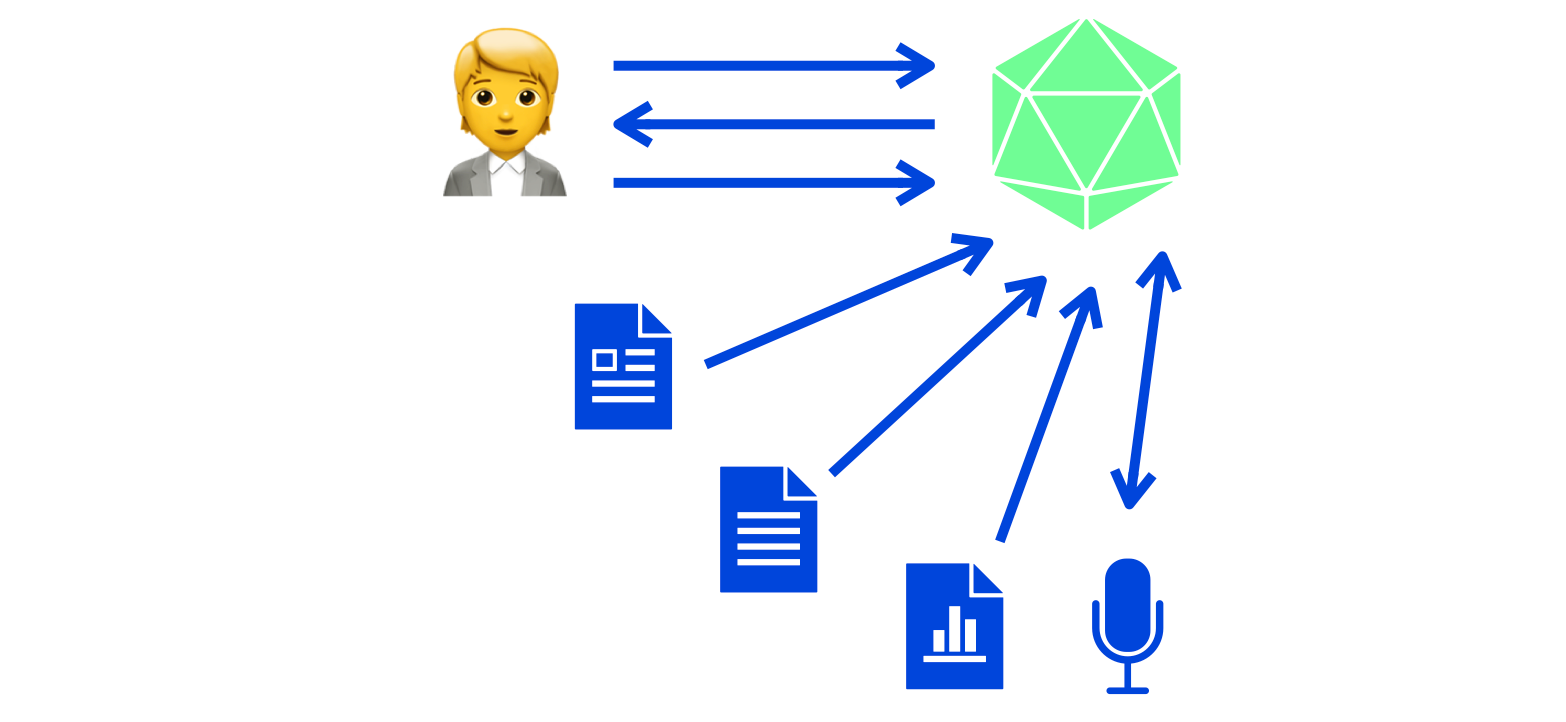
Stage 2: AI as a Thinking Partner

In Stage 2, workers start going back-and-forth with the AI instead of just asking one-off questions. This stage starts when workers load documents into conversations and start using the “projects” or “notebook” features to give the AI project-level context that’s shared across multiple chats. This is usually where people start talking or dictating to their AI instead of typing, and it’s usually where they have their first “aha” moment. Maybe 20% of workers are here today.
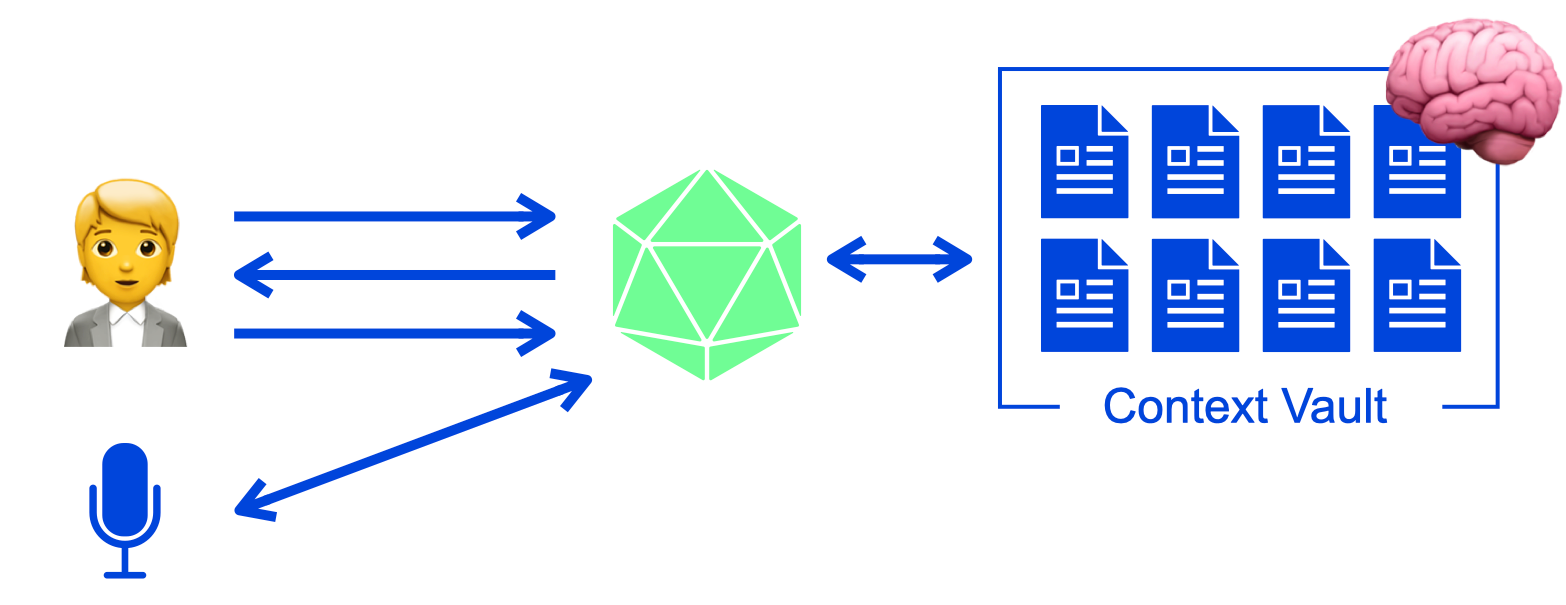
Stage 3: AI as a Cognitive Extension

The jump to Stage 3 is when you stop bringing documents to the AI and instead flip it and start bringing your AI to your docs (and everything else). So instead of loading a few files into each conversation, you point your AI at all of it: documents, emails, notes, meeting transcripts, and the half-finished ideas you’ve been carrying around for months. (This is often referred to as a creating a “context vault”, “second brain”, or even “your own personal Wikipedia” which the AI has full read/write access to.)

At this point, AI stops being an occasional tool and instead becomes part of how you think. It holds your full context all the time, so you never start from a blank page, and it can connect something you said in a meeting today to a document you wrote two months ago.

I’ve personally been working this way since January and strongly believe using AI in this way is the future of knowledge work. (When I started, creating a second brain was a lot of work. But over the past six months, the AI labs have added capabilities and are making it so their products use a persistent vault as an out-of-the-box feature. In the meantime, I published a starter prompt you can paste into your AI which instructs it how to interview you to set up a second brain for you.

This stage is new for 2026 (second brains weren’t really a thing until January 2026), and the roadmap from here on out diverges from last year’s version.
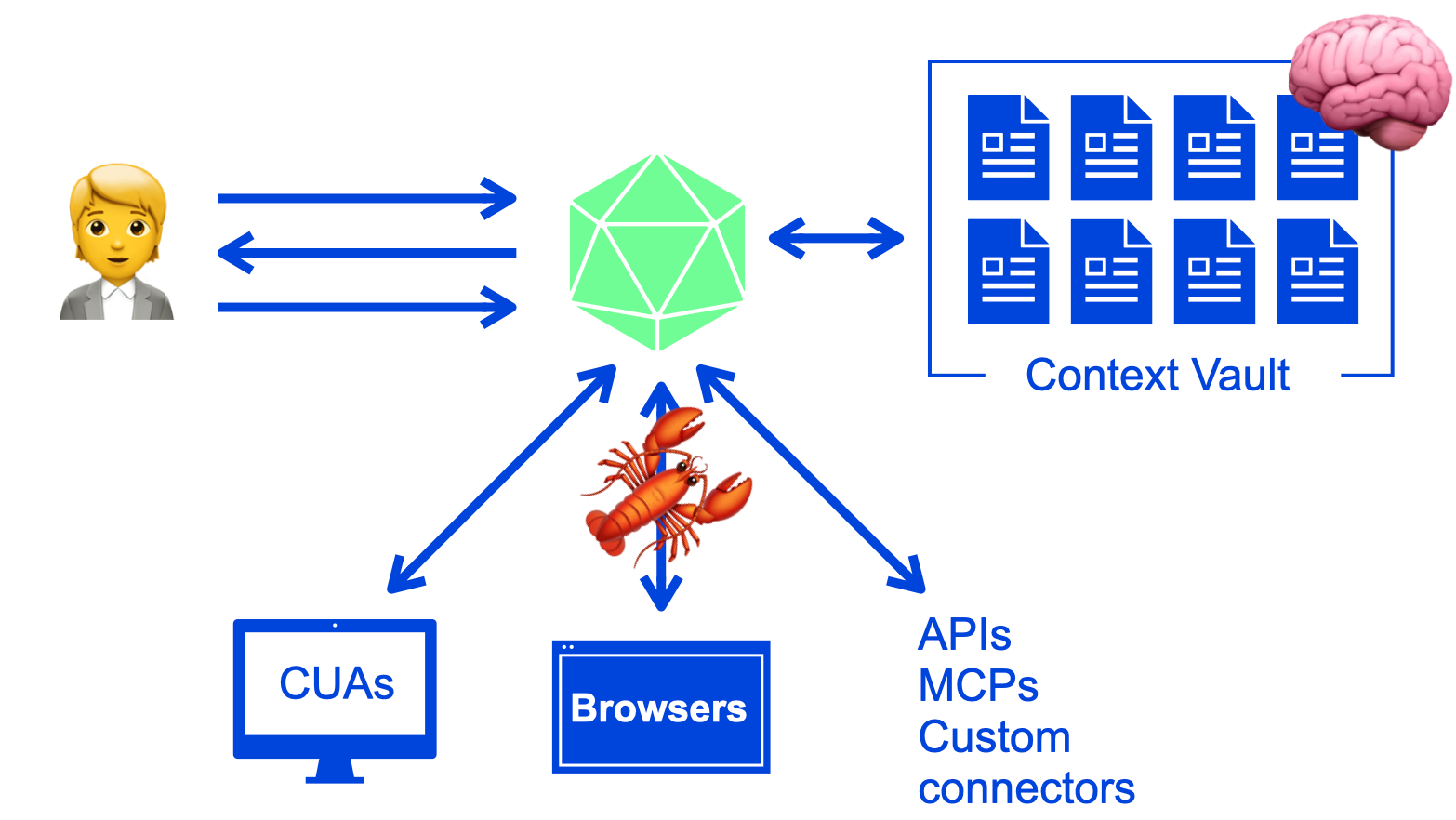
Stage 4: AI as a Multi-Tool Agent

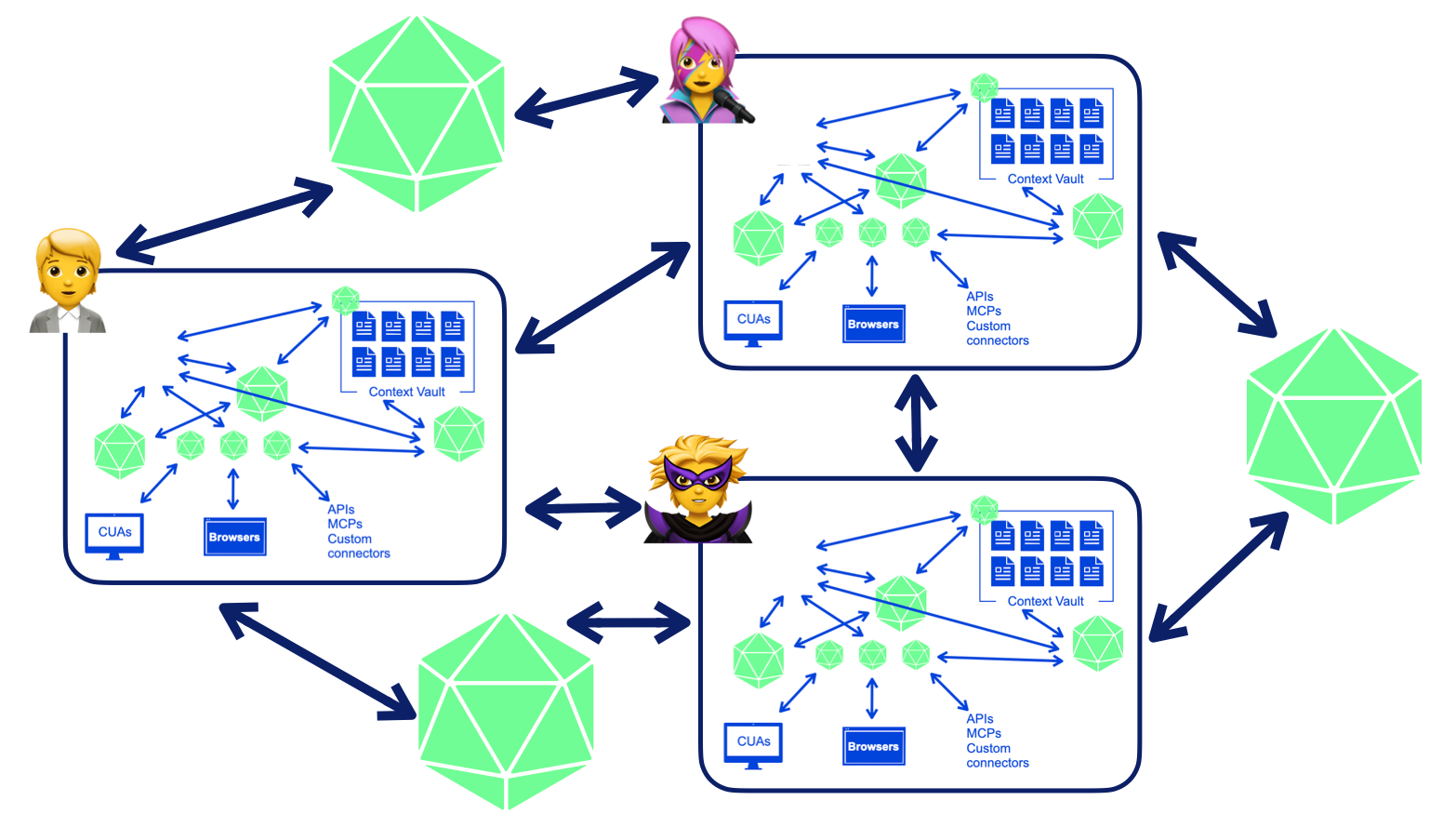
Once your AI has your persistent context, you’ll find yourself using it all the time but still just for conversations and thinking. The next step is to let the AI reach out into the world and do things. This is where computer-using agents (CUAs), browser operation, and MCP connections come in, along with specialized sub-agents for specific jobs. (People call this the “claws” of AI, since it can reach out into the world and do stuff.) At this point, the AI is “doing” more than “thinking.” It’s pulling data, filling out forms, running analyses, and driving the apps & websites to get you what you need to get your work done. (Note this is much more than “automations”.)

Since these “claws” are powered by a “brain” (from Stage 3), the AI is able to use its skills to know how to get things done, rather than the worker having to dictate each step. At this stage, apps start to feel like compatibility layers. Word, Excel, Outlook, and Teams are not where the work happens anymore, they’re just legacy interfaces AI uses when it has to.
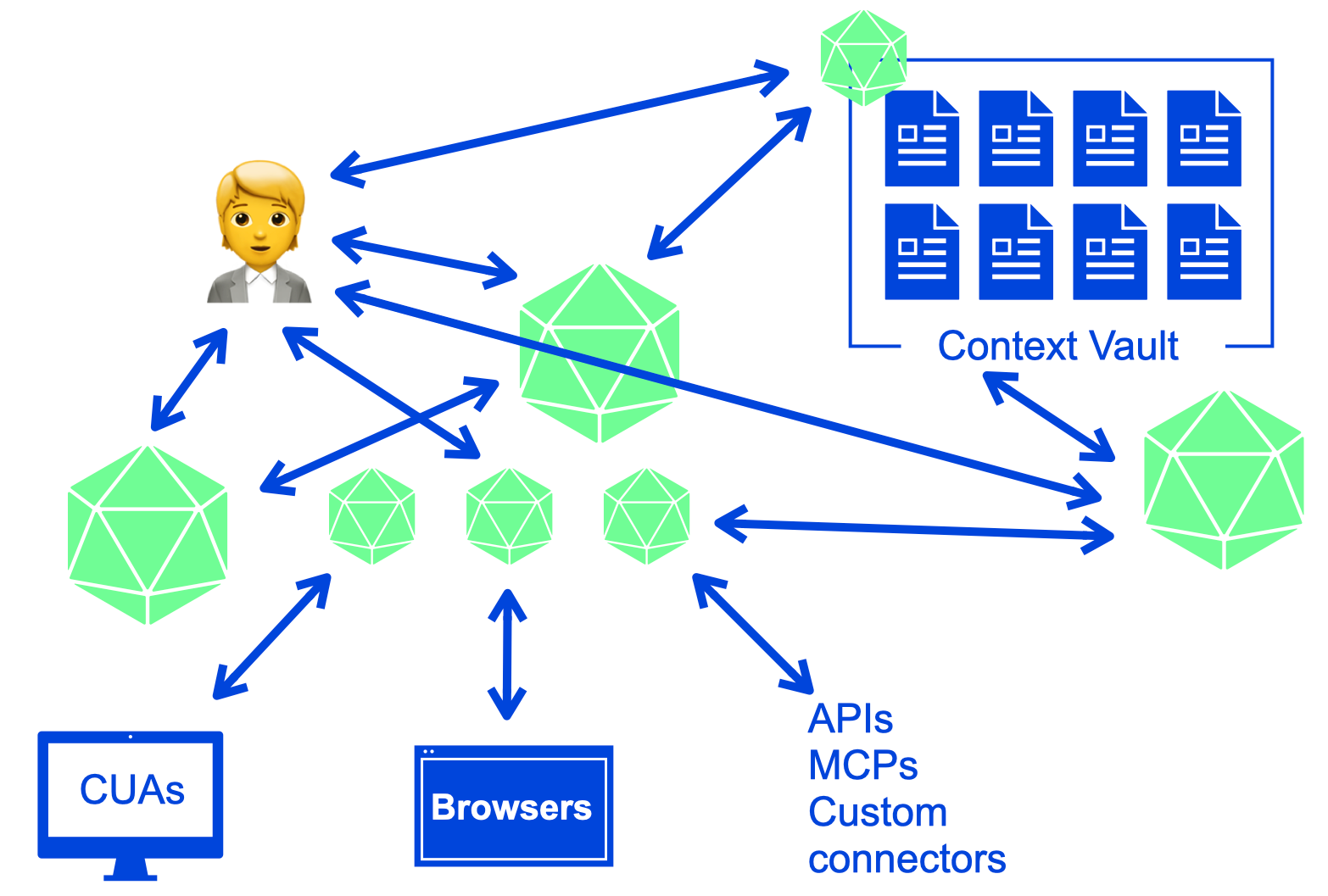
Stage 5: AI as a Fleet

So far we’ve shown each worker using their own single AI. But in reality, workers will use multiple AI systems. Their primary AI might fire up sub-agents to fan out and complete tasks. Many apps and systems will have their own AI interfaces, and workers’ AIs will talk to and coordinate with other AIs just like human workers work with each other.

At this stage, workers aren’t doing as much raw work, instead they’re directing and coordinating work of various AI agents & systems. (In other words, everyone becomes a manager.)

Most people will find this stage genuinely uncomfortable, the same way first-time managers struggle to stop doing the work themselves. The skills that matter at this point will not be about how well you can do a task but how well you delegate, review, and decide what’s good enough.
Stage 6: AI as a Pod

Stage 6 is another big one which really changes the shape of a job. Once you have a fleet of AI agents as outlined in the previous step, you realize that those AIs don’t have to stop working when you do. Agents can work overnight, coordinate with other agents, and get as much done as they can, queuing up questions and decisions needed for you whenever you next check in.

This is essentially where the model “flips”, where the AIs are doing the work, reaching out to the human as needed for guidance, rather than the human directing every step. This will happen across the workforce for many employees. Each employee will have their own pods, each with a fleet of agents, much of them doing work on their own.

At this point the unit of work stops being “one human worker for one 8-hour day” and evolves into a small team (one human plus a handful of agents) running more or less continuously.
Stage 7: The Published Self (Optional Fork)

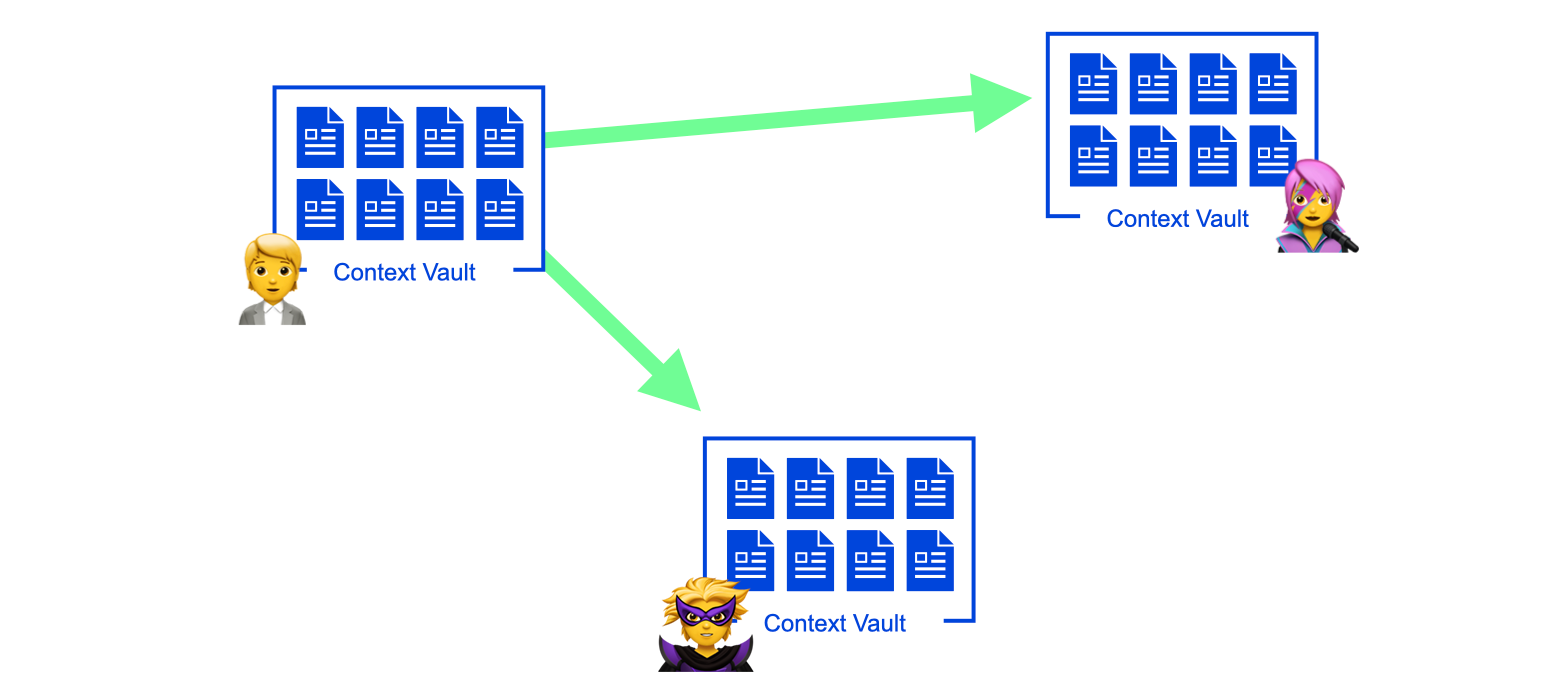
The last stage isn’t chronological, but rather an optional fork which could happen at any point after you’ve started working with AI as the second brain / context vault from Stage 3. Once your second brain holds your context, judgment, and way of working, you can publish it for other peoples’ AIs to connect to. This lets other people feed your context into their AI to draw on your expertise directly, without you in the room.

I wrote more about this on LinkedIn, and in fact I publish my own personal context vault / second brain at brianmadden.ai which you can connect your AI system to today.

This model will not just be for public influencers publishing content, but will also be used extensively within companies, as individual workers pull company-wide, department-level, or even individual worker feeds into their own AI context systems.

My important takeaways

A few closing thoughts on this.

First, as I mentioned in the opening, every worker is going to move through this roadmap at their own pace. I’m personally deeply into Phase 3 (AI as a cognitive extension) and just starting to move into Phase 4. I also am deeply in the optional Phase 7.

Second, I’ve learned that I’m not great at predicting timing, since the main thing I was wrong about for last year’s roadmap was the phases came about 3x faster than I expected. For this 2026 roadmap, I’m confident I’ll be deep into Phase 4 by the end of 2026 and probably starting to dip my toes into Phase 5. And I’m sure Phase 6 will be real by the end of 2027. (So, I guess I can say that this roadmap is for the next 18 months.)

Of course we need to keep in mind that “when AI can do a thing” and “when those capabilities are actually used by all workers” are two very different timelines. Even if everything in this post is technically possible by the end of next year, it will be many years before every worker is working this way.

In the meantime, use this updated roadmap to track your progression through the phases. In future posts I’ll go deeper on how to deliver various capabilities at each phase to your workers.


Read more & connect

Join the conversation and discuss this post on LinkedIn. You can find all my posts on my author page (or via RSS).