


惯性聚合 高效追踪和阅读你感兴趣的博客、新闻、科技资讯
阅读原文 在惯性聚合中打开

推荐订阅源

F
Fox-IT International blog
Security Latest
Security Latest
S
Security @ Cisco Blogs
L
LINUX DO - 热门话题
T
Threatpost
W
WeLiveSecurity
cs.CL updates on arXiv.org
腾讯CDC
雷峰网
雷峰网
Cyberwarzone
Cyberwarzone
V
V2EX - 技术
freeCodeCamp Programming Tutorials: Python, JavaScript, Git & More
P
Proofpoint News Feed
T
Tailwind CSS Blog
Cisco Talos Blog
Cisco Talos Blog
人人都是产品经理
人人都是产品经理
罗磊的独立博客
P
Privacy International News Feed
The Register - Security
T
Threat Research - Cisco Blogs
IT之家
IT之家
T
True Tiger Recordings
SecWiki News
SecWiki News
V
Vulnerabilities – Threatpost
博客园_首页
OSCHINA 社区最新新闻
OSCHINA 社区最新新闻
博客园 - 司徒正美
月光博客
月光博客
P
Privacy & Cybersecurity Law Blog
N
News | PayPal Newsroom
Google DeepMind News
The Cloudflare Blog
美团技术团队
Simon Willison's Weblog
博客园 - Franky
V
Visual Studio Blog
E
Exploit-DB.com RSS Feed
酷 壳 – CoolShell
酷 壳 – CoolShell
F
Future of Privacy Forum
J
Java Code Geeks
Microsoft Azure Blog
奇客Solidot–传递最新科技情报
奇客Solidot–传递最新科技情报
Recent Commits to openclaw:main
C
Cisco Blogs
AWS News Blog
AWS News Blog
cs.AI updates on arXiv.org
Scott Helme
Scott Helme
D
Darknet – Hacking Tools, Hacker News & Cyber Security
I
InfoQ
U
Unit 42

Citrix Blogs

the Citrix AI Hotsheet – Citrix Blogs What is Citrix DaaS Flex, and why desktop modernization needs a different operating model – Citrix Blogs The secure access model needs a rethink: Introducing Citrix Platform Flex – Citrix Blogs AI is moving fast. Your infrastructure needs to keep up. – Citrix Blogs Why enterprise AI agents disappoint (and why the fix is not “better agents”) – Citrix Blogs Simplifying operations, reducing risk, and driving better outcomes with Citrix LAS – Citrix Blogs Announcing Citrix SDS support on Nutanix NKP: Solving the developer platform puzzle – Citrix Blogs A reflection – Citrix Blogs The SaaSpocalypse won’t touch the enterprise software moat – Citrix Blogs Celebrating the Partners powering Citrix forward – Citrix Blogs What’s left for humans? AI governance in healthcare: Why this moment feels different When modernization meets cloud sovereignty: Introducing Citrix Platform for Public Sector how our partnership with Google has matured secure access for the browser era – Citrix Blogs When session recording stops scaling Building business resiliency in healthcare: A conversation with Cletis Earle Imprivata Ready Certification validates Citrix Unicon: A practical guide for healthcare IT Skills are all you need UHMC customers now have expanded Citrix Secure Private Access entitlement From chaos to catalyst: How CIOs turn post‑merger disorder into a synergy engine Understanding the cognitive stack: why your AI strategy is focused on the wrong layer Securing high privileged admin access doesn’t have to be complicated What will knowledge work be in 18 months? Look at what AI is doing to coding right now. Divestitures and carve-outs: Untangling spaghetti Workers’ “second brains” break every assumption about how we secure knowledge work – Citrix Blogs Taming integration chaos (the core of M&A failure) OpenClaw and Moltbook preview the changes needed with corporate AI governance Three years. Five Use Cases. A Leader: Citrix The hard truths about hospital consolidation: An M&A guide for IT leaders Why Citrix is the most complete EUC platform Sign in once, get more done: Why continuous identity is a strategic advantage Everyone’s worried about the wrong AI security risk Security by design, proven by action with Citrix NetScaler The invisible 80%—what corporate-led AI transformations can’t see Workers don’t want to build automations. They want to delegate. The CIO’s M&A integration dilemma: speed vs. security AI will be THE interface to knowledge work. Here’s how we’ll get there. Why I joined Citrix — and what it means for healthcare leaders How the most successful CIOs are building successful merger and acquisition approaches IT admits workers control AI. Workers admit they use it to leave at 5. One identity. Every app. Now inside Citrix sessions. Citrix Aidrien: Built-in AI intelligence that keeps IT focused Everyone wants to provide your AI. Nobody wants to help you manage it. Certificate lifetimes are shrinking—your business continuity doesn’t have to: Automating SSL/TLS at scale with NetScaler – Citrix Blogs Advancing Zero Trust at the browser – Citrix Blogs Citrix is headed to Microsoft Ignite 2025 as a Partner of the Year Finalist, top sponsor, and more! – Citrix Blogs Three trends reshaping how work happens – Citrix Blogs Rethinking the last mile: Our vision for secure access in a browser-first world Will AI need to operate your legacy desktop apps or is direct file manipulation enough? – Citrix Blogs Simplify and secure without stress: an executive blueprint for streamlined app delivery AI just created 10,000 accidental citizen developers in your company. Welcome to the post-application era! One tap, zero complexity: Why healthcare IT leaders are embracing Unicon + Imprivata Windows 10 & IGEL OS 11 end-of-life: How Unicon OS turns deadlines into competitive advantage The bitter lesson of workplace AI: Stop engineering, start enabling If AI is normal technology, boring infrastructure is your best strategy Elevating your Citrix experience: Innovation, efficiency, and the future of licensing Worker-led AI isn’t shadow IT. It’s shadow strategy. Everyone’s wrong about why enterprise AI is failing Citrix Virtual Apps and Desktops 2507 Long Term Service Release is now available: Get current, stay ahead If AI progress stopped today, we can still transform the enterprise with what we have AI agents are the new insider threat. Secure them like human workers. Leading the quantum-ready transition: How NetScaler helps prevent a silent data breach decades in the making What happens when AI agents score 100% in computing using benchmarks? Now available: Citrix DaaS for Amazon WorkSpaces Core Managed Instances Why AI agents will use the same desktops and apps as human workers Modern applications need modern networking — Here’s what that means for your business Powering your present, readying your future, and now available for all workloads – Citrix Blogs The 7-stage roadmap for human-AI collaboration in the workplace Secure your business with Citrix and Google Chrome Enterprise Premium AI agents need a secure place to work. The Citrix workspace is ready. What’s New and Next with Citrix: Q&A from our May 2025 webinar What if your CEO never sends the AI-first memo? Your CEO just sent a company-wide “AI-First” memo. Now what? Citrix and Nutanix team up to simplify virtual desktop management eLux + Imprivata coming soon for healthcare and beyond – Citrix Blogs Rising costs. Aging hardware. One smart solution. The desktop has dissolved. Now where does work live in 2025? What’s new with Citrix: Citrix Virtual Apps and Desktops 2503 is now generally available What does “AI” mean at Citrix? Making sense of AI in the workplace: A starting point for leaders Citrix and Unicon: Control the endpoint, control the experience Why I joined Citrix and what I’m excited about Citrix’s approach to Secure by Design Citrix and NVIDIA partner to deliver AI Virtual Workstations Welcoming Google Chrome Enterprise Premium into the Citrix platform Apple M4 chip delivers another significant performance boost to Citrix VDA for macOS! Enhance your security with Citrix: Updated STIG guidance for highly secure environments It’s time to upgrade your hypervisor to XenServer 8! Furthering our investment in the Citrix platform with the strategic acquisition of Unicon Introducing Session Remote Start: Faster logins, more productivity Experience the difference: New optimization for Microsoft Teams in Citrix environments Password spraying attacks on NetScaler/NetScaler Gateway – December 2024 – Citrix Blogs Citrix Secure Private Access delivers ZTNA in hybrid mode Citrix strengthens zero trust security posture with strategic acquisitions of deviceTRUST and Strong Network Ease your virtual machine device management with MCS & Intune Free uberAgent training is now available on Pluralsight Improved security, admin interfaces, and user experiences across the Citrix solution portfolio Citrix ranked highest for all 4 Use Cases in the Gartner® Critical Capabilities for Desktop as a Service Report Join us at Microsoft Ignite – Citrix innovations for the modern workplace Improve user experiences and reliability with new expanded uberAgent entitlements
To understand AI’s future impact, check out this playbook from 150 years ago – Citrix Blogs
2025-07-08 · via Citrix Blogs

Yes, AI will transform the workplace. But if you’re only looking at its current capabilities and how it’s used today, it’s easy to feel skeptical, as the impact of today’s AI can feel incremental at best and underwhelming at worst. That’s one reason I recently laid out a 7-stage roadmap for how human-AI collaboration will evolve in the workplace. Transformation happens in phases, not all at once. Each stage builds on the one before it, and you can’t skip steps.

But even with a step-by-step roadmap to the future, people still get stuck thinking about AI in the context of automating today’s tasks within today’s organizational structures. If this is you, if you believe the future of work is just us humans doing the same things while AI handles the repetitive bits, then I understand why you’d be skeptical that AI will be transformational!

But this isn’t how real change works over time. Moving forward, AI’s capabilities will reshape workflows, roles, and org structures. But this kind of impact won’t arrive all at once, unfolding instead via a series of incremental steps which will only be obvious in hindsight. This is why we need to focus on that roadmap to envision what the future will really be like.

Fortunately, this is a common pattern which has happened multiple times in the past. In today’s post, I’m going to go back 150 years to look at one such technological transformation that also didn’t feel like a big deal in its early days: the electrification of factories. Walking through that 50-year history from about 1880 to 1930 highlights another instance where the initial implementation was met with a collective “meh”, and real value didn’t emerge until the workflows, roles, and org structures were reoriented around what that new technology made possible.

How factory electrification transformed production (in 5 phases, 50 years)

The story of how electrification transformed factories via second-order effects is a well-worn business school trope. What most people don’t realize a century later is (1) it didn’t happen all at once, (2) people thought it was overblown hype then too, and (3) it took a full 50 years from “hey check out this new tech!” until the full benefits were realized. (If this is interesting to you, Nicholas Carr wrote a 2008 book about it called “The Big Switch”. Great read!)

1. Before electricity: centralized mechanical power

Before electricity, factories ran on water or steam power. A large central engine turned a long rotating shaft that ran the length of the factory. Machines were physically connected to the shaft via belts, and their placement on the factory floor was dictated by their mechanical needs (similar torque, speed, and scheduling).

an image of factory gears

There was no flexibility. Machines were not arranged for workflow efficiency, they were just grouped by power compatibility. (Consultants of the era most likely circulated leaflets about machine “personas”—group your simple task machines in one line, high powered machines in another, etc.)

2. Early electrification: Woo-hoo! (Wait, how is this different?)

When electricity came onto the scene, the first wave of adoption was simple. Just swap out the central steam engines for electric motors. C’est simple!

an image of electricity powering a factory

I imagine vendor presentations at the “Future Factory Forum 1890” talking about how this is the “easiest onramp to electrification” because you can “re-use your existing infrastructure” and “be up and running in weeks instead of months!”

The challenge is that this steam engine-to-electric motor drop-in replacement didn’t provide a ton of new value. Sure, the electric motors might be more efficient, but they were also new and unfamiliar. Technicians and engineers were harder to come by (and probably more expensive)!

And of course, since all the individual machines were still driven by the large central shafts, they were locked into the same layout. New tech, old workflows. There was no real productivity gain.

3. Decentralized motors!

By 1900 or so, electric motors became reliable and affordable enough to attach directly to individual machines. This meant that the factories could remove the central drive shafts and all the belts. Huzzah!
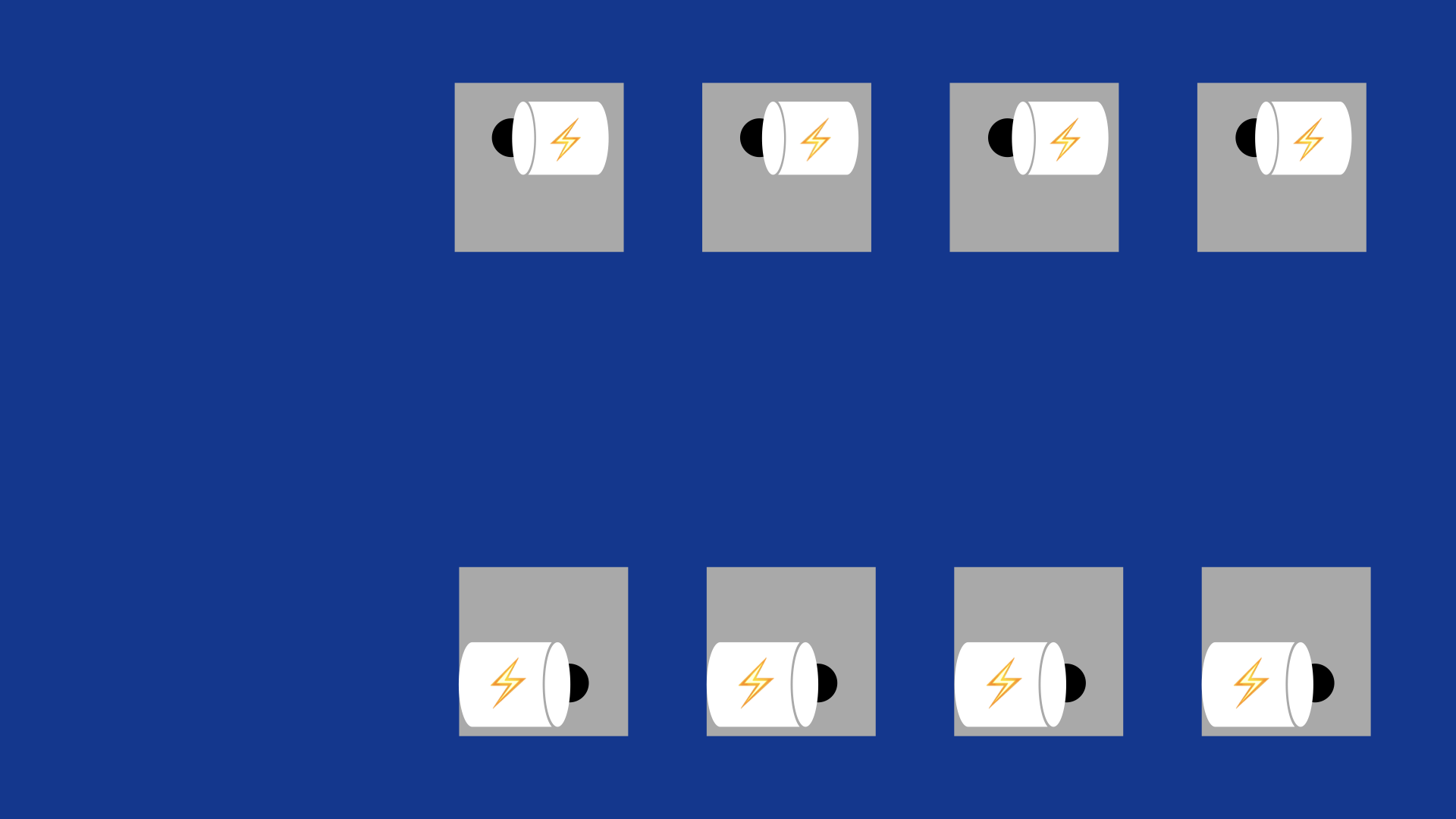
an image depicting decentralized motors

While this was a huge technological advancement, factories kept the same layouts. Parts, people, workflows, shipping, receiving—everything in the factory was built around those machines being in that order and it wasn’t easy to change.

But zooming out looking at it was still pretty wild, as the machines and flows were arranged by the old constraints rather than the actual workflows:
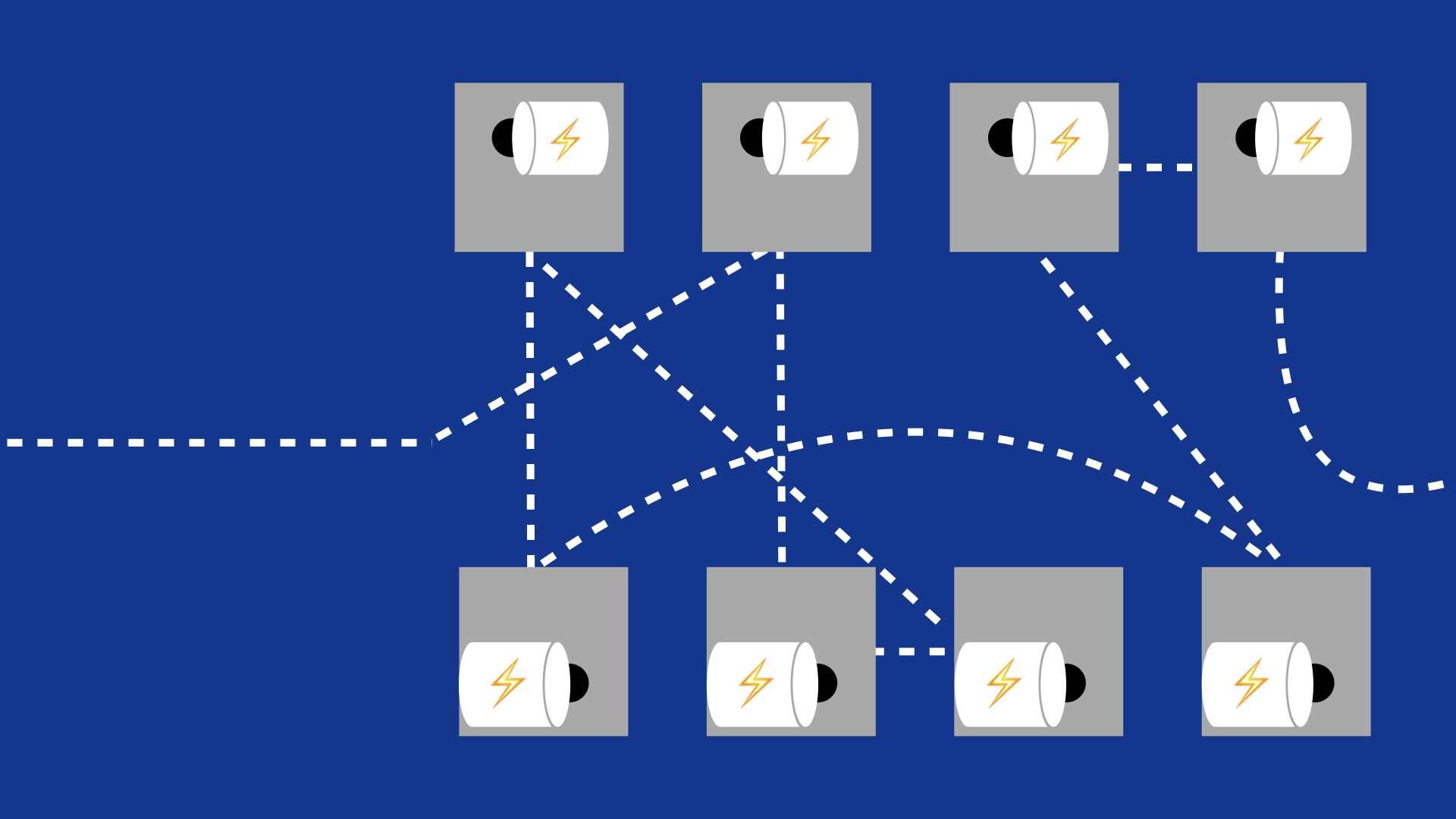
an image depicting decentralized motors

4. The real transformation: eliminate old constraints, design for modernity

The real transformation came when someone realized, “Hey, now that these machines are truly independent from each other, we can move them.” They could be arranged by task order, not power requirements.

an image depicting factory lines designed for modernity

This was the birth of the modern assembly line. Machines, people, and processes were reorganized around flow, not antiquated hardware constraints. This is when productivity took off and the factory was truly transformed. Just took 50 years!

The new normal: a system built around the tech

Once factory managers began rethinking the layout of their machines, rather than just the technological change of how they were powered, everything changed and a major transformation happened.

What started as a seemingly small technical improvement ultimately led to entire new workflows, management practices, and organizational roles. It wasn’t just that the layout was different—the core logic of how a factory operates transformed.

This wasn’t because electricity made the machines run better—which it did—it was because electricity made it possible to rebuild the system around what the technology enabled. That’s the leap. And that’s what AI will do to the knowledge worker workspace in the coming years.

How this applies to AI in the workplace

Today, AI is being plugged into existing workflows built around the constraints of human workers. This is great! But it’s also just the beginning, similar to the first stage of swapping out the central factory engines with electric motors.

Over time, AI will start to reshape our existing workflows rather than just fitting into them. As its capabilities grow, (and as our understanding and comfort with it grows), AI will challenge assumptions (about when, where, and how work happens) that are so deeply embedded in the way we work today that we don’t even notice them. This is going to be huge and something that most people miss today.

Today’s workplaces are built around human constraints. Humans require rigid work / non-work cycles. We need meetings. We process information slowly. We have cognitive biases. We rely on memory, context, and coordination. We move data through screens and keyboards at a paltry 200 tokens per minute.

AI doesn’t have these limitations. It can run 24/7. It remembers everything. It can take in large volumes of structured and unstructured data at once and act on it without waiting for handoffs, emails, or status meetings.

This doesn’t just speed things up—it opens doors to entirely new ways of working. Just like factories were redesigned once electricity removed the physical constraints, AI will lead us to rethink how knowledge work is structured in a world without human bottlenecks.

Workflows will simplify. Roles will shift. Teams will be reorganized around outcomes instead of processes. These changes won’t all come at once, and they won’t always be obvious in advance. But step by step, the core organization of flows of knowledge work will shift, just like how electrification transformed factories.
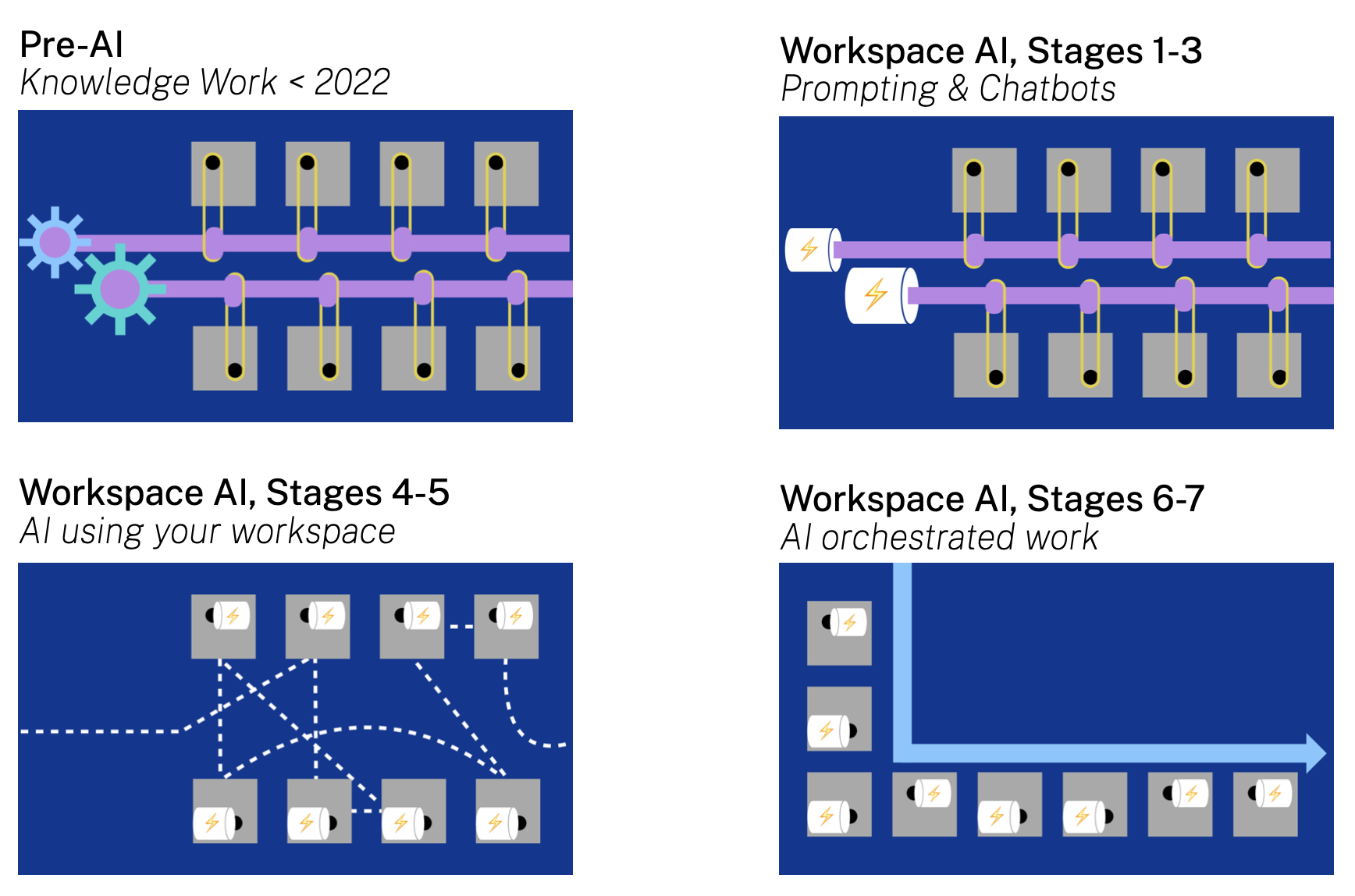
an image of factory-to-AI mapping

Real transformation isn’t about installing new tools, it’s about outgrowing the assumptions those tools were originally designed to serve. It’s not about doing the same work faster; it’s about rethinking what work looks like in a world without the old constraints.

It happened a century ago with electricity. It happened more recently with the internet, smartphones, and cloud computing. And it will happen in the future as AI enters the workplace.


Read more & connect

Join the conversation and discuss this post on LinkedIn. You can find all my posts on my author page on the Citrix blog (or via RSS).

Video of my most recent talk

In May I gave the closing keynote at the EUCtech Denmark 2025 conference, called The Future of Work in an AI-Native World. I talked about a lot of what I covered today and walked through how AI will evolve and impact the workplace in the coming years. You can watch it on YouTube.

My upcoming talks

  • AppManagEvent: Closing Keynote: AI & the Future of Enterprise Apps — Utrecht, Netherlands, Oct 10
  • MAICON 2025: AI at Work: The Employees’ Revolution! — Cleveland, Ohio, Oct 14-16