





Blog summary:
When the United Nations’ UNESCO agency declared 2025 the International Year of Quantum Science & Technology, it placed a global spotlight on the science that has shaped our understanding of nature and powered numerous technological innovations. For us, it was the perfect opportunity to celebrate the 100th anniversary of quantum theory and the nearly 40 years of quantum computing progress that have brought us to the threshold of quantum advantage.
A decade ago, IBM put the first quantum processor on the cloud and made that device accessible to anyone with an internet connection. What began as an experiment in open access and open science quickly became the foundation for a global community—developers, researchers, educators, and policymakers all working together across six continents to realize the full potential of this generational technology. That’s why, for International Year of Quantum (IYQ), we set out to honor not only the progress of quantum science and technology, but also the people who made it all possible.
Throughout the year, we saw students stepping up to lead their first quantum workshops. We saw researchers and engineers troubleshooting implementation strategies late into the evening. Civil society organizations explored quantum computing’s societal implications, while industry partners advanced new collaboration models. Community organizers brought quantum conversations into new regions and sparked new connections. Everywhere we looked, the momentum came from you—our global quantum community.
For a deep dive into all the quantum community achieved during the International Year of Quantum, take a look at UNESCO's full report here.
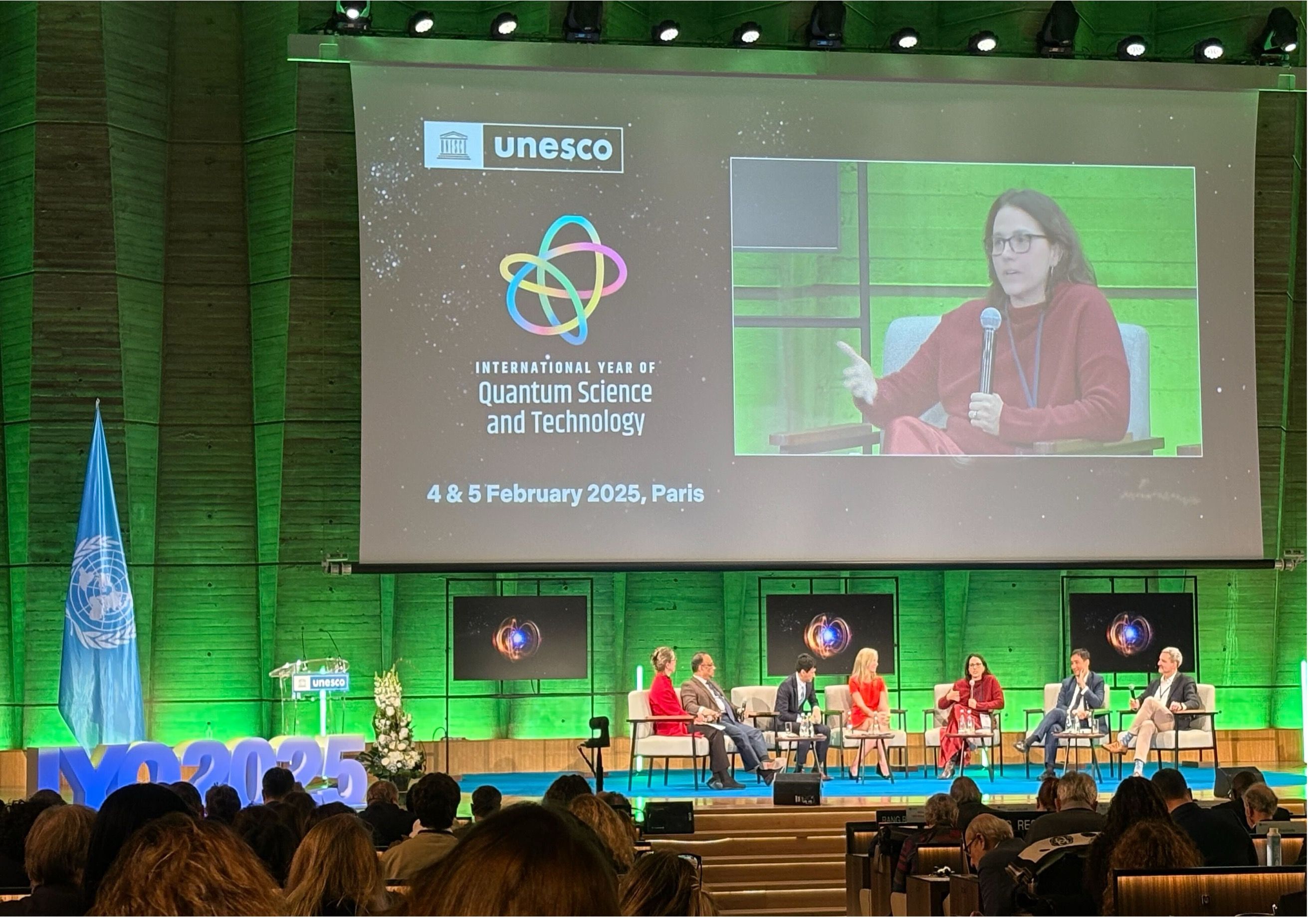
International Year of Quantum opened with a clear message: progress in quantum science and technology now depends on global collaboration. More than 1,000 attendees joined the opening ceremony in February at UNESCO headquarters in Paris, France, and another 2,500 participated virtually. That kickoff event saw researchers, educators, policymakers, and community leaders all coming together the shape the future of the quantum community.
During industry panels focused on topics like responsible quantum computing and the challenges of developing quantum at scale, IBM leaders emphasized that advancing the field requires building systems in close collaboration with the broader ecosystem. Those discussions also underscored that trust and transparency must guide how quantum technologies evolve.
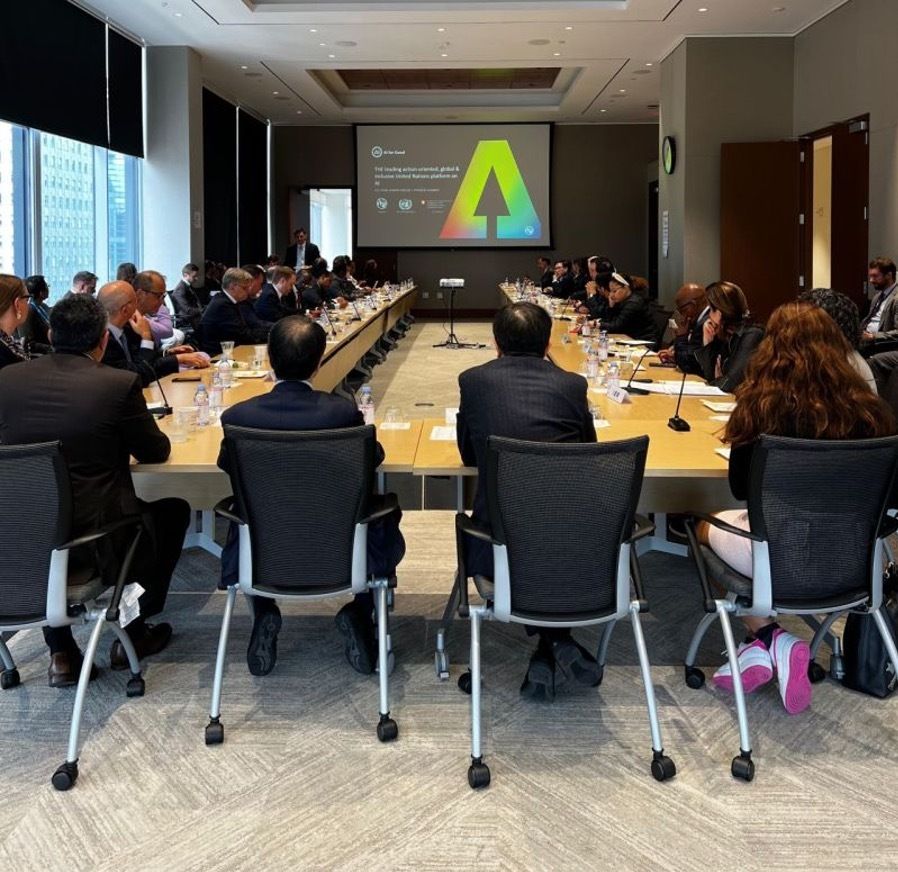
Around the world, countries are now developing national quantum strategies, and the conversation has shifted from the question of whether to participate to the question of how they’ll build programs that are coordinated, credible, and impactful. IBM contributed to that broader effort at the UN’s Science, Technology, and Innovation Forum for the Sustainable Development Goals, meeting with diplomats to share practical pathways to workforce development, research collaboration, ecosystem building, and standards alignment.
But global coordination is only part of the story. Another important piece centers on workforce development—how we’re preparing real people to step into the quantum future.
Open access has always been a core pillar of our approach to quantum computing. A decade ago, IBM’s decision to put quantum processors on the cloud lowered barriers to entry for anyone eager to experiment. Today, expanding that access means creating clear, structured pathways that help learners at every level build durable expertise across the quantum stack.
Last year, IBM Quantum Learning introduced a fresh batch of advanced coursework to align with evolving developer needs. We also launched an updated Qiskit 2.x Developer Certification to establish a clear benchmark for applied quantum software proficiency within the modern Qiskit framework. Shared credentials like these help employers, researchers, and developers align around demonstrated skills and a consistent standard for quantum readiness.
Beyond formal coursework, community-driven learning continued to be a central area of focus. We partnered with the International Telecommunications Union (ITU) to launch the Voices in Quantum event series, which brought together participants from over 100 countries—including perspectives from academia, industry, and civil society—to discuss quantum research, policy, entrepreneurship, and education. This global distribution of expertise isn’t incidental—it’s essential to building a sustainable quantum workforce.
We expanded the Qiskit YouTube channel as well, adding structured learning series, technical explainers, and community spotlights designed to make advanced concepts more approachable without sacrificing rigor. We believe that accessiblity doesn’t have to mean simplifying the science. Instead, we aim to create a diverse set of entry points that meet learners where they are and grow with their ambitions. Any throughout the year, we saw what happens when learning meets opportunity.
What stood out in 2025 wasn’t just participation—it was progress. Around the world, community experimentation increasingly translated into practical prototypes, early-stage applications, and real use-case exploration on quantum systems.
At the ITU Future Leaders in Quantum (FLIQ) Hackathon, more than 400 participants from over 30 countries developed quantum-enabled approaches to real-world challenges, working directly with cloud-based quantum computers and software tools to prototype solutions. Winning teams were later featured at the AI for Good Summit, underscoring the growing intersections between quantum computing, artificial intelligence, and public-interest innovation.
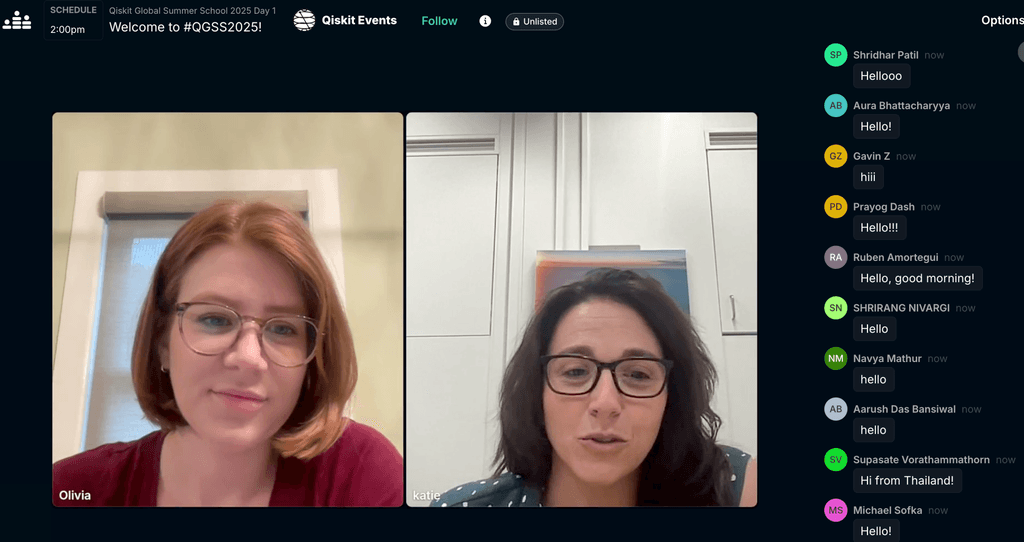
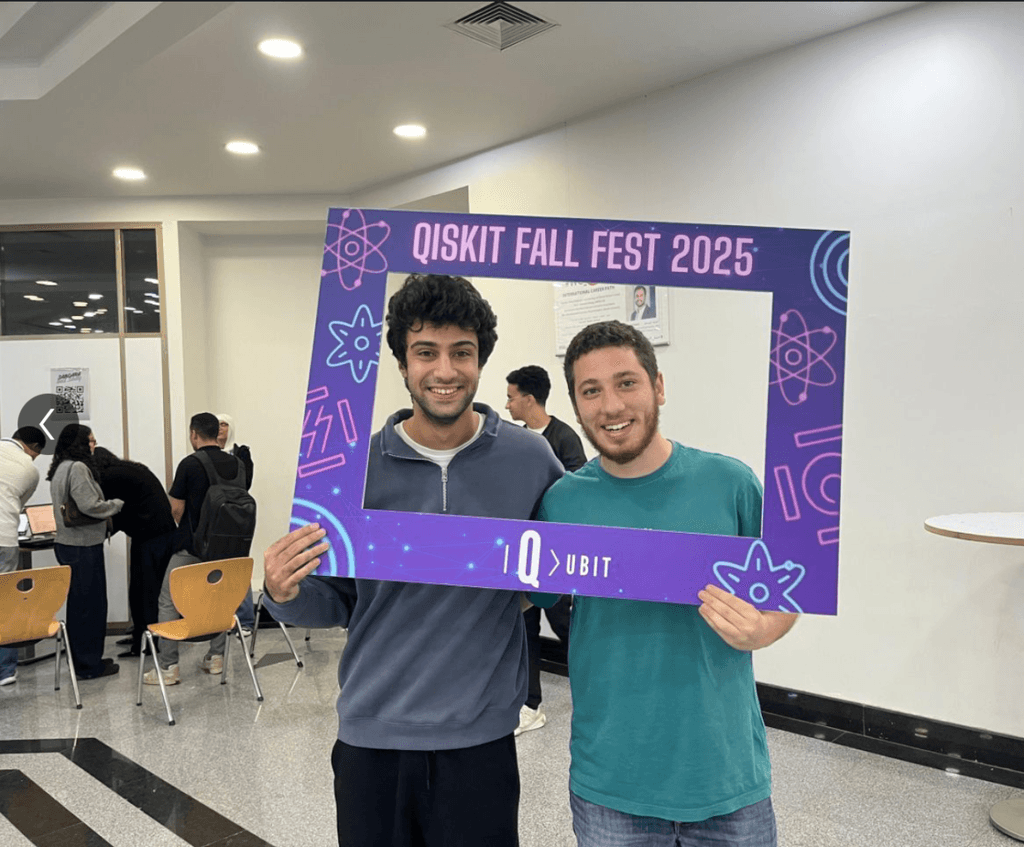
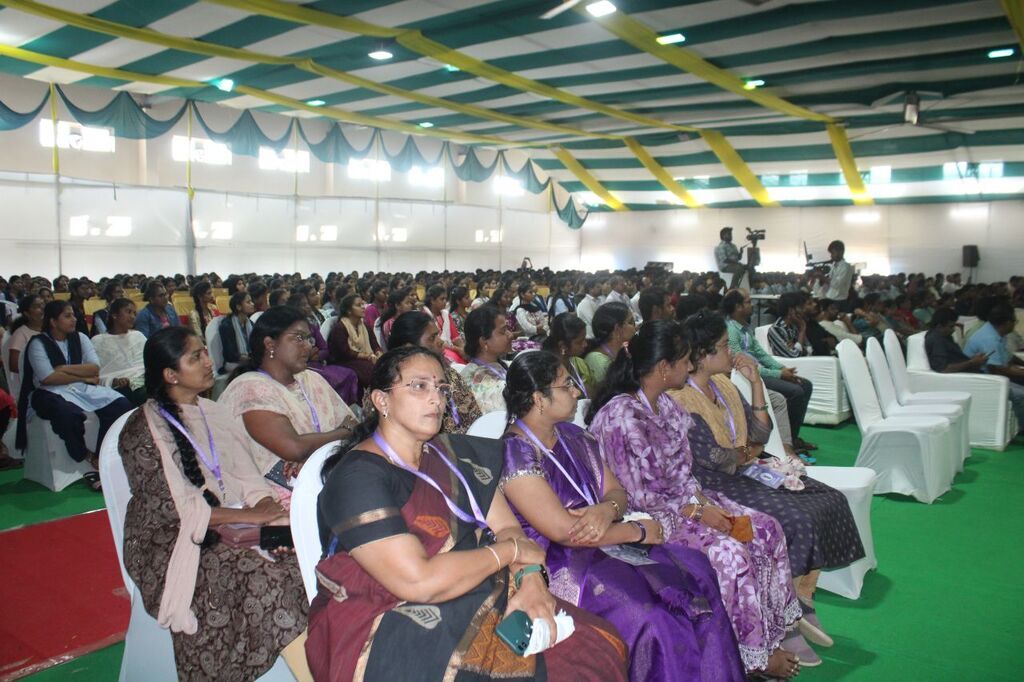
Throughout the year, we continued enabling hands-on learning through hackathons, open system access, structured labs, and guided technical challenges designed to translate theory into execution. Many of these showed up in longtime community-led programs like the 6th annual Qiskit Global Summer School and 5th annual Qiskit Fall Fest, with both programs growing in scale and reach.
Qiskit Global Summer School 2025 brought together 8,000+ registrants—a new record—representing 115 countries and 30% growth over 2024 summer school registrations. Qiskit Fall Fest 2025 hosted 150 events, engaged 32,000+ participants across 49 countries, and achieved 3x year‑over‑year growth in total participation. Both programs used International Year of Quantum as the inspiration for their 2025 themes, which centered on looking back at a century of quantum progress.
As experimentation accelerates, so does the need for shared and trusted tools that allow use evaluate progress and separate substance from hype. Our goal is to support that clarity with tools and collaborations that make the state of the field easier to understand.
In collaboration with the Unitary Foundation and the broader quantum community, we contributed to a UNESCO-aligned ecosystem report designed to map out how organizations are engaging with quantum technologies worldwide. The survey gathered nearly 600 responses from academia, industry, and government to collect valuable insights into global opportunities and challenges in quantum technology, with a full report slated for publication later this year.
One of the most exciting community benchmarking initiatives to emerge during International Year of Quantum was the open-source Quantum Advantage Tracker. This collaborative effort lets researchers compare quantum and classical methods as we enter the final stretch of the journey to quantum advantage.
The tracker is open to any individual, research team, and organization exploring new quantum technologies or pushing classical methods forward. If you’re working in either space, we encourage you to join the effort and help chart the course to validated quantum advantage. These shared tools set the stage for where we go next.
The International Year of Quantum marked the 100th anniversary of quantum mechanics. Now, in 2026, we’re gearing up to celebrate the 10-year anniversary of IBM placing the first quantum processor on the cloud. Together, these milestones remind us how quickly the field has grown and how much opportunity lies ahead.
The next decade will challenge the community to integrate quantum computers into broader computational workflows and unlock the next great breakthrough in quantum information science: the first large-scale, fault-tolerant quantum computers. Crucially, we must do all of this with an open and collaborative approach to development.
Quantum computing has entered a phase where technical ambition must be matched by operational clarity and global participation. A century after quantum mechanics reshaped our understanding of science, and a decade after the advent of open quantum access, the next chapter will be built the same way real progress always is: Together.
此内容由惯性聚合(RSS阅读器)自动聚合整理,仅供阅读参考。 原文来自 — 版权归原作者所有。