






This is the second story in our Voices from the Field series. Read the first blog about farmers building resilient local economies across rural America.
This World Ocean Day, I chatted with ocean conservation nonprofit Blue Ventures about…people. Seems unusual, right? When I think of the ocean, I picture a chatty coral reef, bubbling with colorful parrotfish and angelfish. Or maybe a smiley pod of dolphins, or velvety seaweed tangling on the seafloor.
But London-based nonprofit Blue Ventures situates the conversation around oceans differently. Aligning with the Cisco Foundation’s $100M climate commitment to invest in tech-based nature preservation solutions, their approach to marine conservation has coastal communities at its center. Their goal is to support coastal communities to rebuild fisheries and restore ocean life, and with support from the Cisco Foundation, they’re bringing this vision to life on the coast of Belize, home to the world’s second largest coral reef.
“We are empowering people to take charge in ensuring that conservation efforts are achieved,” Belize Country Director Breanna Mossiah –Conorquie, says. Breanna, born and raised in Belize, says that Blue Ventures’ community-centered approach to systemic change drew her to work for the nonprofit for the past 5.5 years.
“At the end of the day, any decision we make that supports conservation efforts also affects people,” she says. “Conservation efforts exist because people exist.”
Fisherman and Treasurer of the San Esteban Fisherman Association, Ron Escobar, is one of the fishermen that Blue Ventures works closely with. Ron has seen the effects of a changing climate alter the ocean he’s spent his life fishing in. Warmer waters have caused fish and crustaceans like lobster to seek cooler temperatures. An unpredictable variation in rainfall has created murky water and poor fishing conditions.
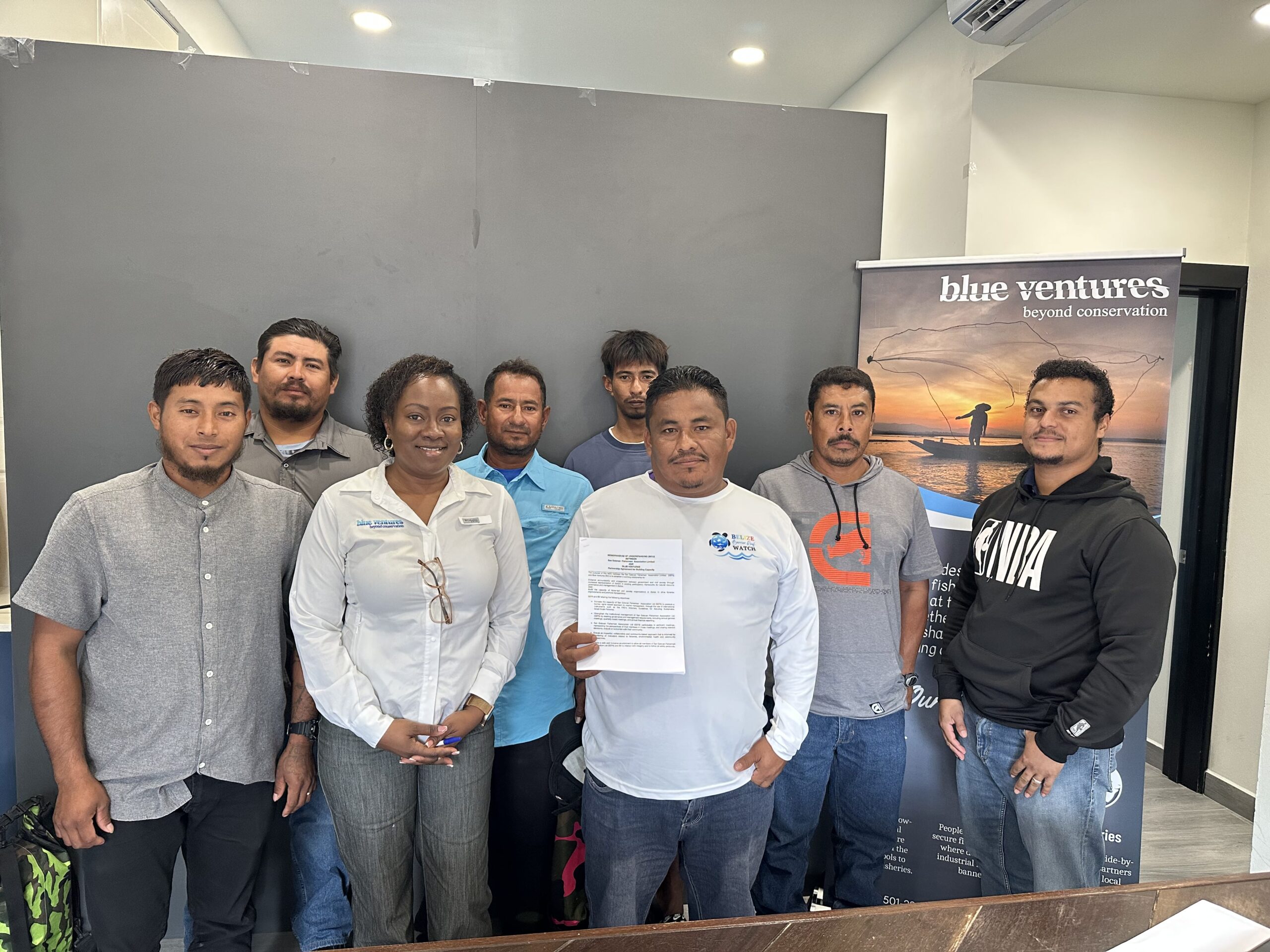
“Production is getting scarcer and slower,” Ron says. “[The ocean] is our living. If we can’t depend on the sea and don’t mind the sea, we can’t … provide for our family and our community.”
Paula Jacobs Williams is the Chairlady of Southern Grassroots Fishers Association and caters traditional Belizean seafood. Paula says she’s been a “fisherwoman since I was in my mother’s belly!” Like Ron, she says the ocean has been central to her livelihood in Belize.
“The ocean is important to me in a lot of ways because from when I was young, it helped send me to … primary school and secondary school,” Paula says. “That’s our food. We do almost everything with the ocean, like lobster, conch, and fish.”
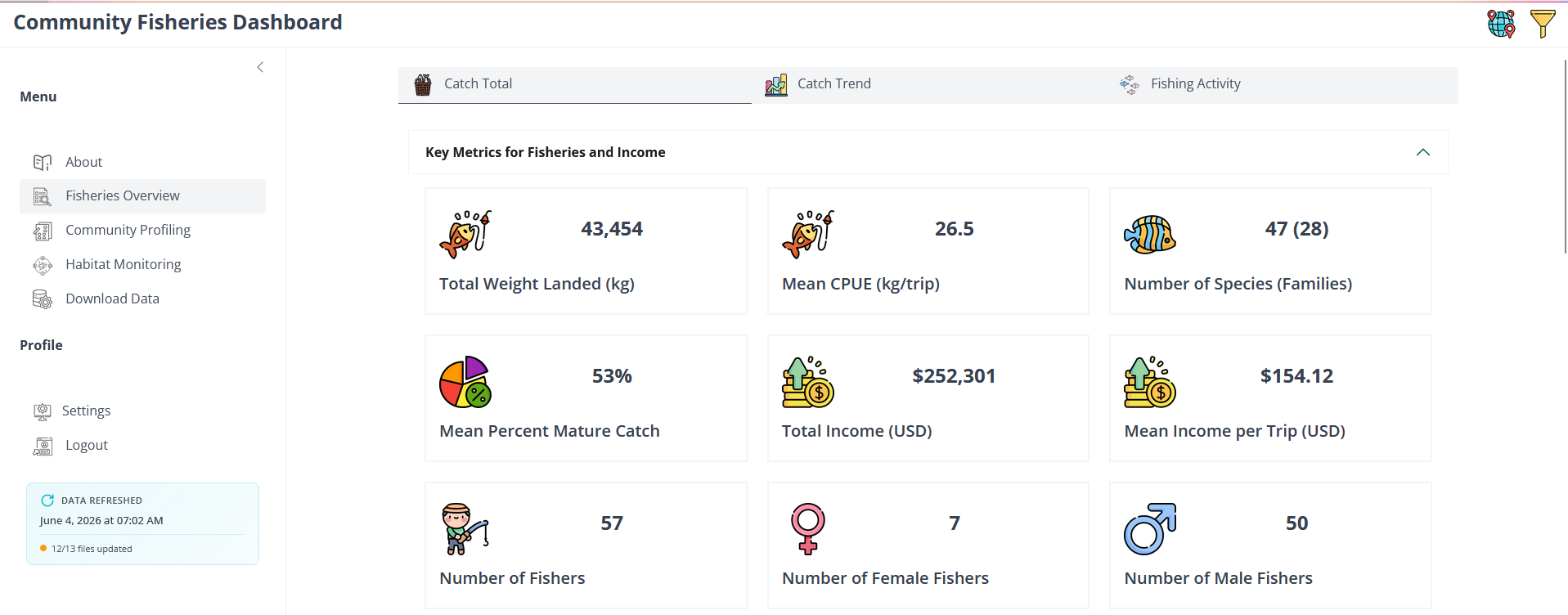
Community members like Paula and Ron lacked the systems to collect, visualize, and use their own fisheries data to inform management and support their interests. Blue Ventures is collaborating with communities to address this challenge.
By developing a Community Fisheries Data system, designed with and for small-scale fishing communities, Blue Ventures helps fishers make informed decisions that improve ocean health and local resilience. Staff train community members to collect data on fish, like weight, species, and quantity. Fishers then use this data to determine where and how much to fish, supporting strategic, data-based decision making that guides more sustainable management of fisheries.
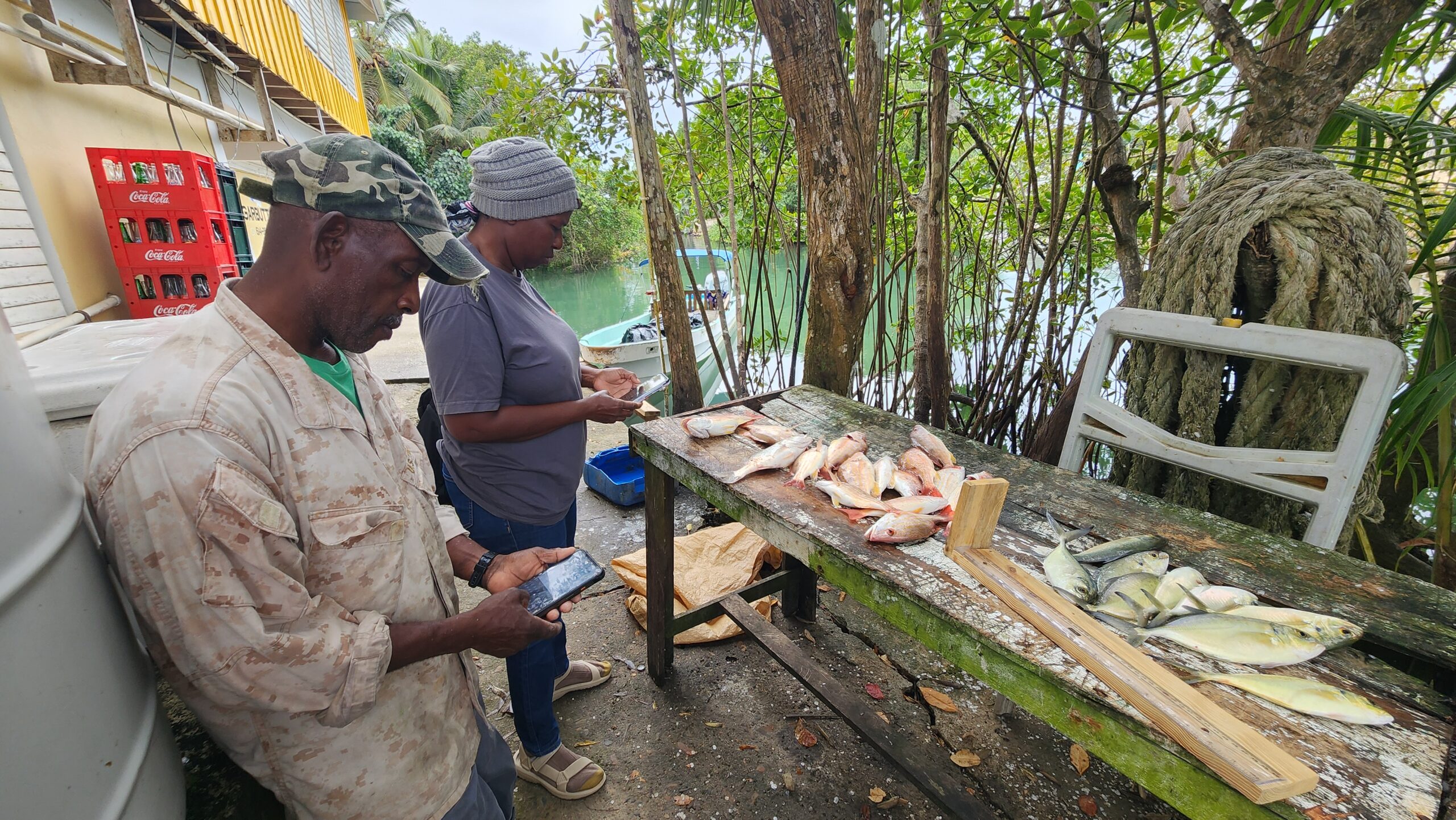
Victor Jacobs has fished the waters of Belize for over 48 years. He prides himself on his deep involvement with his local fishing community, serving as Vice Chairman of the Southern Grassroots Fisherman Association. Like Ron and Paula, he’s passionate about protecting the oceans that have supported his entire life.
“We are smart fishers,” Victor says. “We want to catch stuff and catch again, [so] my kids can catch, my grandkids can catch, everybody can catch – but we have to start saving from now on to protect what is ours.”
Victor has worked with Blue Ventures staff in Belize for over a year and says they’ve helped his community learn to collect and interpret valuable data on fishery health.
“We have been trained by Blue Ventures, so some of the fishers that are in our group know how to handle the gadgets,” Victor says. “It’s a very good thing because at the end of the day, … we’re going to be able to represent ourselves with our own data.”
Blue Ventures’ Head of Global Development, Olivia Wordsworth, emphasizes that it’s essential that data lies in the hands of communities to maximize the global impact of conservation efforts.
“Coastal community members are best placed to restore our oceans. They’re the people that live by the sea, derive their food and income from the sea… so [supporting these communities] is the most sustainable way to steward the ocean. Our strategy was designed to address the systemic barriers that those coastal communities face in managing their fisheries and wider locally managed area.”
Paula agrees. She enjoys being directly engaged in conservation efforts.
“We are doing data collection so we can know the size and different kinds of fish,” Paula says. “We know our very own data, so we don’t have to go and ask somebody else how to do things.”
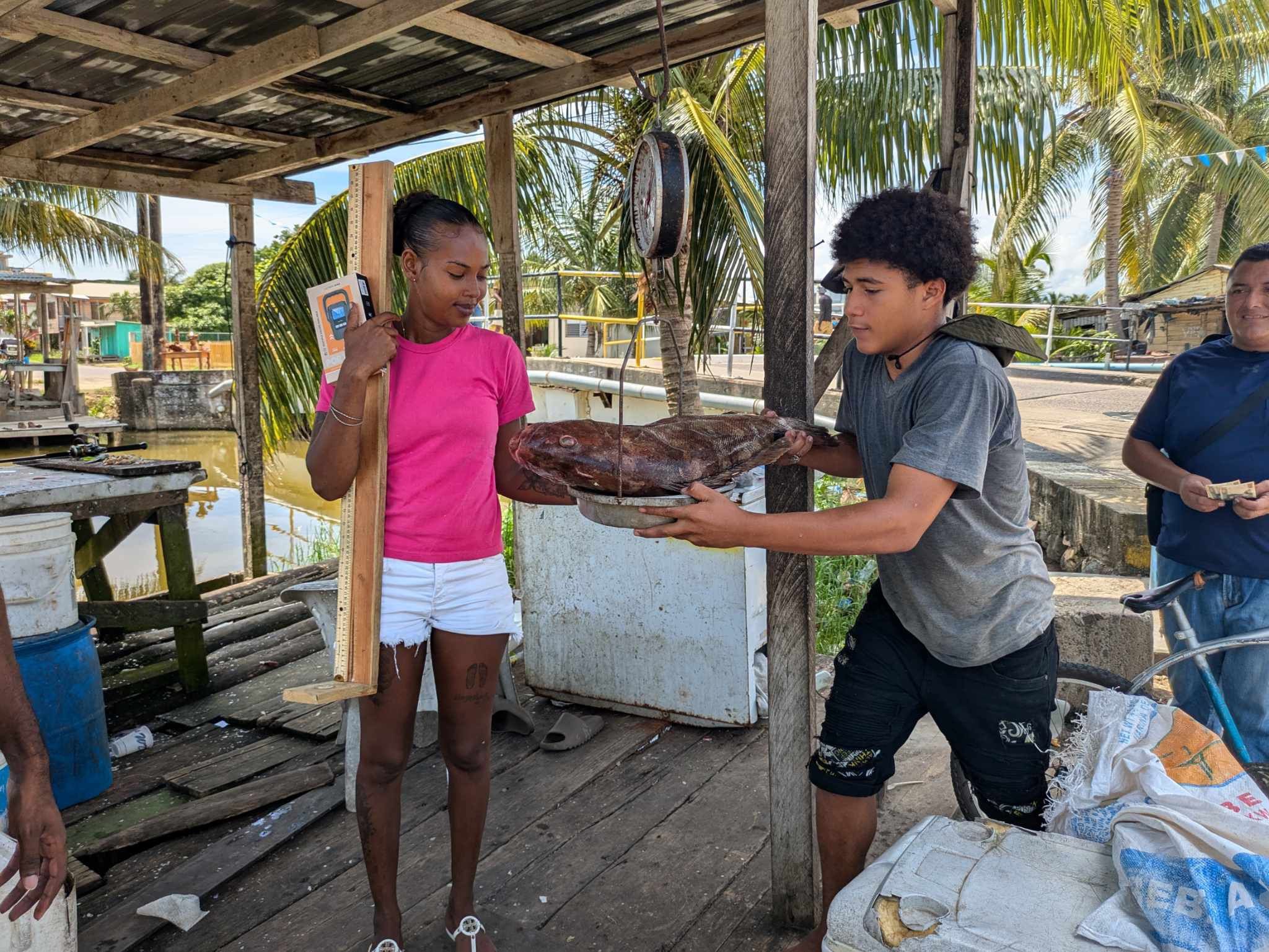
Accessible, local data allows small-scale fishers and fish workers to share evidence that backs their lived experiences and join conversations about conservation strategy.
Olivia emphasizes that the data that Blue Ventures helps communities collect and own is crucial to the global fabric of ocean conservation.
“… at a broader level, regionally and nationally, we’re building up this amazing picture that didn’t previously exist because it’s such a data poor sector,” she says. “[This shows] the value of small-scale fisheries for food security, local economies, and climate resilience. This data can then inform evidence-based advocacy on small-scale fisheries and community-led conservation. So, it helps us to make that case at a higher level once you aggregate data from all these sites.”
Blue Ventures has already seen proof of this approach in Indonesia, one of the 12 countries where they operate. Here, community-owned data informed the drafting of the national management plan for Octopus cyanea. Olivia hopes these efforts can be replicated in places like Belize, as communities continue to learn to utilize their dashboards.
With support from the Cisco Foundation, Blue Ventures will continue helping fishers like Ron, Victor, and Paula, charting a more inclusive and resilient future for our ocean, this World Ocean Day and beyond.
此内容由惯性聚合(RSS阅读器)自动聚合整理,仅供阅读参考。 原文来自 — 版权归原作者所有。