
惯性聚合 高效追踪和阅读你感兴趣的博客、新闻、科技资讯
阅读原文 在惯性聚合中打开

推荐订阅源

Google DeepMind News
博客园_首页
H
Help Net Security
T
Tailwind CSS Blog
S
SegmentFault 最新的问题
GbyAI
GbyAI
Scott Helme
Scott Helme
D
Docker
Hacker News: Ask HN
Hacker News: Ask HN
P
Privacy & Cybersecurity Law Blog
Jina AI
Jina AI
雷峰网
雷峰网
Threat Intelligence Blog | Flashpoint
Spread Privacy
Spread Privacy
G
GRAHAM CLULEY
C
Cisco Blogs
The Hacker News
The Hacker News
F
Full Disclosure
Y
Y Combinator Blog
Blog — PlanetScale
Blog — PlanetScale
Recent Announcements
G
Google Developers Blog
量子位
K
Kaspersky official blog
Cisco Talos Blog
Cisco Talos Blog
The Cloudflare Blog
A
About on SuperTechFans
C
Cybersecurity and Infrastructure Security Agency CISA
Last Week in AI
Last Week in AI
博客园 - 三生石上(FineUI控件)
Microsoft Security Blog
Martin Fowler
Martin Fowler
T
Tenable Blog
P
Palo Alto Networks Blog
H
Heimdal Security Blog
cs.AI updates on arXiv.org
W
WeLiveSecurity
Schneier on Security
The Register - Security
F
Fortinet All Blogs
Stack Overflow Blog
Stack Overflow Blog
Cyber Security Advisories - MS-ISAC
钛媒体:引领未来商业与生活新知
钛媒体:引领未来商业与生活新知
让小产品的独立变现更简单 - ezindie.com
T
The Blog of Author Tim Ferriss
N
News and Events Feed by Topic
Hugging Face - Blog
Hugging Face - Blog
小众软件
小众软件
V
V2EX
爱范儿
爱范儿

Cisco Blogs

Cisco Live 2026: Bringing the Future of Customer Experience to Las Vegas Edge opportunity for service providers: Turn infrastructure into new services MRC and SRv6: How Foundational Networking Innovations Are Enabling the Next Generation of AI Supercomputers The SMB Marketing Reset: Winning Customer Trust in a Digital-First Economy Inside the SOC: AI-powered DNS defense against ransomware Our Path Forward Securing the Federal Digital Experience with Cisco ThousandEyes for Government Cisco at ONUG Dallas 2026: Securing the AI Data Center in the Agentic Era Cisco and Red Hat are powering intelligent core to edge: Red Hat Summit insights Building the Capabilities That Win: How Cisco Partners Can Lead in the SMB & Mid-Market Era How Two Hours Felt Bigger Than My To-Do List Announcing Foundry Security Spec Ace the CCIE Collaboration Lab: Success Tips from a TAC Engineer Turned CCIE Protecting Agents with Cisco AI Defense and Google Agent Development Kit Powering an Inclusive Future: Your guide to the Purpose Pavilion at Cisco Live Las Vegas The Infrastructure Behind the Mission: SOF Week 2026 Cisco Networking App Marketplace Partners at Cisco Live 2026 Beyond the Pilot: Building the Clinical Data Fabric for the Agentic Era Benchmarking scale-out AI fabrics with Cisco N9000 + AMD Pensando™ Pollara 400 NICs Month of Developer Productivity: Build and Forget The race to autonomous transport networks: A new study Lean IT, future-ready: How to save time and simplify wireless management with AI Reading Between the Pixels: Failure Modes in Vision Language Models Designing a Proactive Customer Journey Modernize your data center operations with Cisco Nexus Dashboard Why your automation stack needs Cisco Agentic Workflows Try Cisco AI Defense Explorer Edition in this hands-on lab From Bandwidth to Intelligence: How Cisco is Powering AI-Ready Networks Spotlight on digital transformation | FY25 Purpose Report Galaxy Mode is live: A limited-time look at what your Cisco AI Assistant and AgenticOps can already do Securing the Agentic Workforce: Cisco Announces Intent to Acquire Astrix Security Understanding CISA BOD 26-02: Mitigating Risk from End-of-Support Edge Devices Digging Deeper: The Future of Mining with Automation and Ultra-Reliable Wireless Voices from the field: Helping farmers build resilient local economies across rural America Built like a startup, scaled like Cisco: Transforming data center cooling for the AI era Defining Model Provenance: A Constitution for AI Supply Chain Safety and Security Introducing Model Provenance Kit: Know Where Your AI Models Come From Security Insights: A Threat-First View for the Platform That Enforces Access How I Turned My Curiosity into a Patent From Strategy to Architecture: How Cisco is Building a Quantum-Safe Future Maximizing Managed Security Services: A Strategic Guide to Optimizing Your Portfolio (Part 1 of 2) Simplify access control in five easy steps Trust: Why security is your next growth engine Cisco IQ is generally available. Here’s what that actually means. From Vision to Reality: Intelligence in Action with Cisco IQ How connectivity is shaping the future of surgical care The power of your network: Solving a physical security incident on Vision portal 5 signs your data center is holding your AI strategy back Stop Overthinking OT Security: The Total Cost of Ownership and Being Smart with Refreshes AI-Ready, Simpler, and More Secure WAN: Cisco SD-WAN Innovations Scaling the digital future: Why AI and skills investments matter for business and society Expanding our Product Organization Recap Scaling the Future: Reddit AMA on Network Automation at Scale Bringing Professional-Level Skills to Cisco Networking Academy Announcing Cisco Availability in Google Cloud Marketplace: A New Path to Scalable, Partner-Led Growth The Innovation Paradox: How We Reduced Incidents by 25% While Deploying Faster Funding the AI-ready data center: Why flexibility wins The switch that quantum networking has been waiting for From a Message I Couldn’t Believe to a Stage I’ll Never Forget The Hidden Bottleneck Slowing Down Manufacturing Transformation 30 Years as a CCIE: Why Certifications Matter in the AI Era Securing Enterprise AI: Cisco AI Defense Expands to Google Cloud How ThousandEyes Closed the Cloud Visibility Gap by Solving It Themselves First Energy Will Define the Scale of AI Introducing the AI Agent Security Scanner for IDEs: Verify Your Agents Stop Overthinking OT Security: People, Process and Technology Powering the Future of Research: Join Cisco at NLIT 2026 Building the Digital Foundation for a Smarter West Lincoln Memorial Hospital How Cisco built an AI-RRM that maximizes your wireless solution From Automation to Autonomy: Cisco and Rockwell Power a New Era for Manufacturing Unlocking the Future of Fan Engagement: The Power of VisionEDGE Find Yourself in the Future: AI Is the New Baseline—Here’s How to Build Your Skills One Day with Our Customers: Driving better outcomes through customer centricity What It Really Takes to Build an AI-First Workforce From Connectivity to Security: How E80 Future-proofed its AGV Operations with Cisco The Infrastructure of a Floating City: AIDA Cruises’ CX-Led Digital Transformation Scaling your network for AI without a forklift upgrade Why modern networks are moving DDoS defense to the edge Evolve IP Media to AI-Driven Media Fabrics: Future-Proof Broadcast with Cisco and NVIDIA Cisco and Generation are scaling AI-powered pathways to employment Reading Between the Pixels: Assessing Prompt Injection Attack Success in Images Lean IT, future-ready: Why Wi-Fi is your AI growth strategy Cisco Modeling Labs: Bringing the Network Digital Twin to Life AI on the Factory Floor: Why Manufacturing Requires a New Architecture with Cisco Unified Edge Designing for What’s Next: Securing AI-Scale Infrastructure Without Compromise Scaling the Future: Join Our Reddit AMA on Network Automation at Scale 5 wireless trends retail IT teams can’t ignore in 2026 Can your infrastructure management tools do that? Sustainability 101: Let’s talk about energy efficiency From Chai Breaks to Checkpoints: A Day at Cisco Bengaluru Preparing for Post-Quantum Cryptography: The Secure Firewall Roadmap Non-Obvious Patterns in Building Enterprise AI Assistants Making AI Trustworthy and Observable in Real-Time: Cisco Announces Intent to Acquire Galileo A simpler path to unified, AI-ready network operations Cisco Celebrates The Smart Industry Industrial Transformation Award Winners Mobile World Congress 2026: AI-powered Network Security Powering MWC Barcelona – Building a Unified SOC and NOC with Splunk in Record Time How New Data Streams Transformed Cisco Store’s Decision-Making AI-powered Network Security at the Mobile World Congress 2026 SNOC Inside the Mobile World Congress 2026 SOC: Detecting Shadow Traffic with Firepower 6100
Biochar’s triple win: Healthier soils, improved crops, and decarbonization
Jocelyn Maty · 2026-05-06 · via Cisco Blogs

We often think of agricultural waste, such as crop residues, forestry byproducts, or even manure, as an end-of-the-line byproduct. But what if it were actually a valuable resource? Enter Biochar.  Heating organic matter in a low-oxygen environment through a process called pyrolysis creates a material, biochar, that acts as a fortress for soil health and a vault for carbon. It’s a simple, circular solution that helps our farms thrive.

Demand for biochar is surging as it gains recognition as both a powerful carbon removal tool and a solution for soil health. The market reflects this momentum, with a valuation reaching $1.7 billion in 2023 and a projected annual growth rate of over 13% through 2030 (Zion Market Research, 2025). This growth is primarily fueled by two sectors: the carbon market, where biochar accounts for roughly 90% of all durable carbon removal credits (BeZero, 2023), and the agricultural sector, where farmers are increasingly adopting it to boost soil fertility, improve water retention, and increase crop productivity.

The Cisco Foundation Regenerative Future Fund has supported two early-stage biochar companies: Applied Carbon in the United States and Poas Bioenergy in Costa Rica. These companies are aiming to optimize their climate impact and reduce carbon footprints of biochar operations by diversifying feedstocks and lowering production and transportation costs through decentralized production. Traditional biochar producers have typically avoided processing this type of residue because it is costly to move, store, and control.

Tackling Diverse Feedstocks for more Circular Agro-Economies

Rather than relying solely on conventional woody biomass, Applied Carbon and Poas are converting hard-to-recycle, high-volume agricultural residues into biochar using customized pyrolysis technologies. Applied Carbon tackles corn stover, wheat straw, sugarcane waste, and other agricultural residues that dominate agri-waste in the United States, while Poas focuses on the wet agri-residues of more tropical agricultural climates, such as those of coffee and pineapple.

Jason Aramburu, founder of Applied Carbon, elaborates, “Each year billions of tonnes of agricultural residue are wasted or underutilized in North America. With the right technology, these resources can be efficiently converted into value-added products like biochar and carbon removal credits.”

This not only addresses problematic waste streams but also helps to generate social and ecological co-benefits, such as habitat restoration and circular resource use.
Farm equipment in a barn setting.
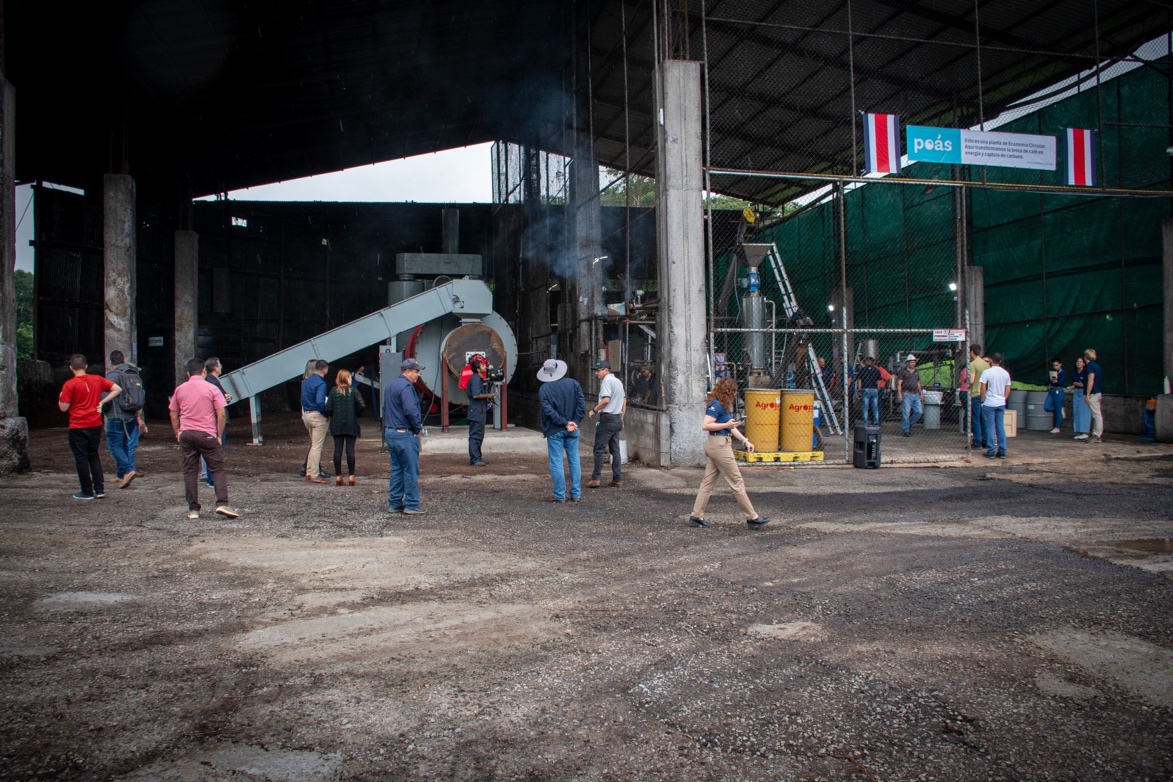
Poas’s patented reactor – which produces biochar and captures syngas, a byproduct energy source that can be used on site – is used to dry coffee residues directly at Café de Altura in Costa Rica.

Poas Founder Jose Alfaro shares, “We have spoken with other biochar producers who tell us they would never touch the wet agri-residues Poas does. However, these residues are the ones causing the most environmental harm and pain to the wallets of the producers. Worldwide there are more than 160 million tons of wet coffee and pineapple residues per year, the residues Poas currently utilizes, and they cause pests, odors, and methane emissions. So, it’s not just a differentiator for us, it’s a multiplier for the impact we can have.”

Decentralizing Production for Amplified Impact

Unlike large, centralized facilities, flexible, decentralized, and smaller systems like those deployed in both Applied Carbon and Poas can operate on farms, forestry operations, or remote locations, enabling the conversion of local agricultural residues and invasive plant species into valuable biochar on-site. This not only reduces logistical challenges and costs but also makes biochar production accessible to smallholder and resource-limited farmers worldwide.

According to Applied Carbon, their “…decentralized operation is critical to reducing the cost of carbon dioxide removal and biochar production in North America. With the wide geographic scope of agriculture in the United States, distributed, modular solutions are optimal for scale.”
A group of people standing in front of farm equipment in a rural setting.
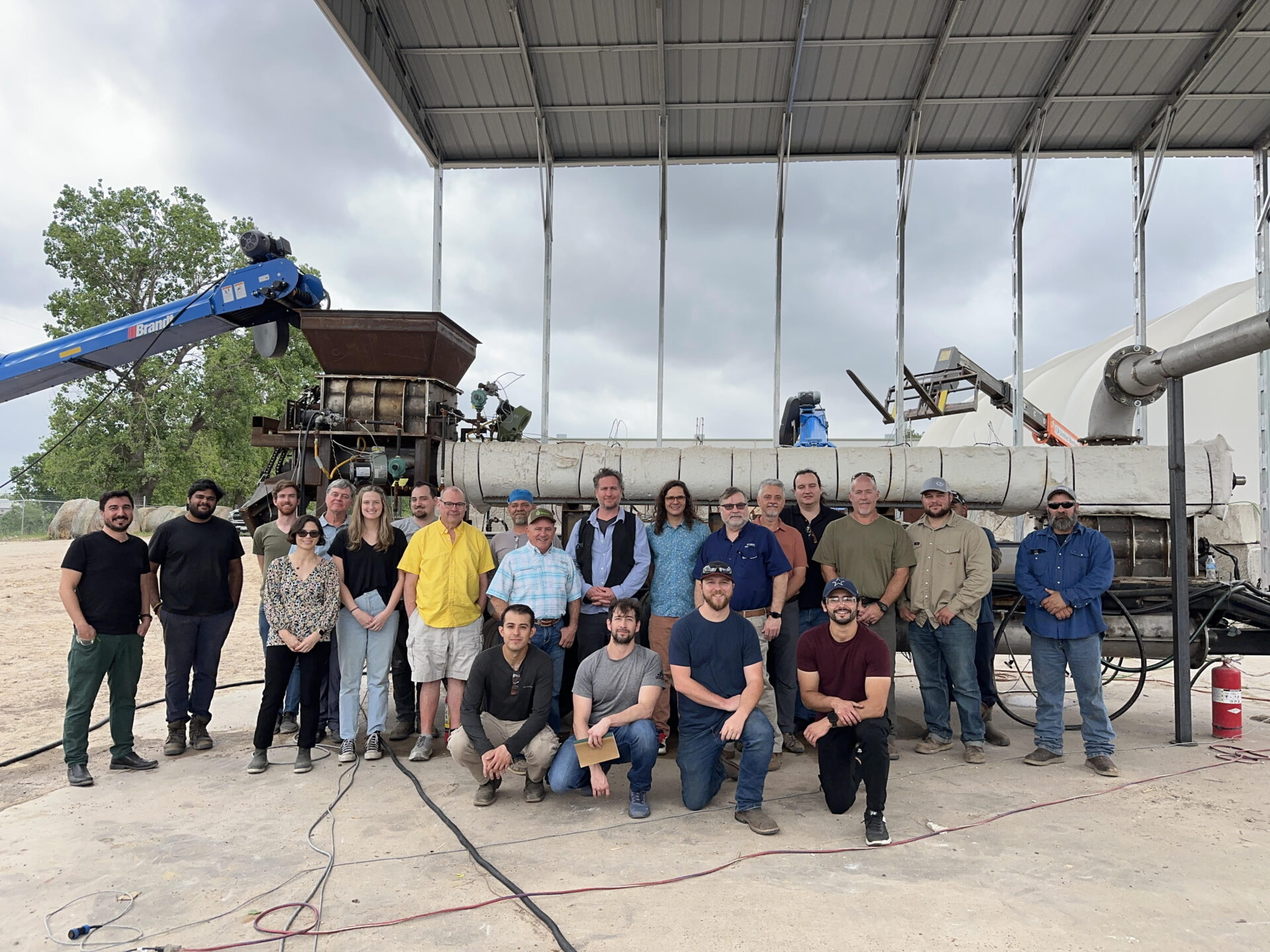
The Applied Carbon team with their mobile pyrolyzer which collects crop residue and pyrolyzes it on site on farms.

Agriculture remains the dominant end market for biochar. These technologies empower communities to enhance soil fertility, boost crop yields, and sequester carbon using available resources, all while promoting circular economies and minimizing waste. By decentralizing production, mobile and modular systems are helping to unlock new opportunities for scalable impact in agricultural landscapes.

For example, Poas’s first commercial pilot is at a coffee mill in Costa Rica, where over 900 smallholder farmers deliver their product. “Every dollar Poas saves the mill in waste management by converting their residues to biochar goes directly to the bottom line of their farmers,” Jose says. “Furthermore, it gives us a channel to advertise the benefits biochar can have on their soils and a ready-made distribution center.”

As we look to the future, the next frontier for biochar lies not just in carbon credits, but in a world of uncharted opportunities — transforming waste, protecting water, and building more resilient communities.