

惯性聚合 高效追踪和阅读你感兴趣的博客、新闻、科技资讯
阅读原文 在惯性聚合中打开

推荐订阅源

F
Full Disclosure
月光博客
月光博客
D
Darknet – Hacking Tools, Hacker News & Cyber Security
Y
Y Combinator Blog
有赞技术团队
有赞技术团队
PCI Perspectives
PCI Perspectives
云风的 BLOG
云风的 BLOG
MyScale Blog
MyScale Blog
Latest news
Latest news
P
Palo Alto Networks Blog
Blog — PlanetScale
Blog — PlanetScale
Cyberwarzone
Cyberwarzone
P
Privacy International News Feed
Scott Helme
Scott Helme
CTFtime.org: upcoming CTF events
F
Fortinet All Blogs
Engineering at Meta
Engineering at Meta
V
Vulnerabilities – Threatpost
C
CXSECURITY Database RSS Feed - CXSecurity.com
cs.CL updates on arXiv.org
T
Tor Project blog
S
Securelist
H
Hackread – Cybersecurity News, Data Breaches, AI and More
NISL@THU
NISL@THU
GbyAI
GbyAI
H
Hacker News: Front Page
博客园 - 三生石上(FineUI控件)
S
Secure Thoughts
U
Unit 42
T
The Blog of Author Tim Ferriss
Exploit-DB.com RSS Feed
Cloudbric
Cloudbric
Microsoft Security Blog
博客园 - Franky
L
LINUX DO - 最新话题
The Hacker News
The Hacker News
WordPress大学
WordPress大学
博客园 - 叶小钗
阮一峰的网络日志
阮一峰的网络日志
小众软件
小众软件
T
Threatpost
Cisco Talos Blog
Cisco Talos Blog
V
V2EX
L
LINUX DO - 热门话题
cs.AI updates on arXiv.org
Recorded Future
Recorded Future
K
Kaspersky official blog
S
Schneier on Security
T
The Exploit Database - CXSecurity.com
钛媒体:引领未来商业与生活新知
钛媒体:引领未来商业与生活新知

Cisco Blogs

Edge opportunity for service providers: Turn infrastructure into new services MRC and SRv6: How Foundational Networking Innovations Are Enabling the Next Generation of AI Supercomputers The SMB Marketing Reset: Winning Customer Trust in a Digital-First Economy Inside the SOC: AI-powered DNS defense against ransomware Our Path Forward Securing the Federal Digital Experience with Cisco ThousandEyes for Government Cisco at ONUG Dallas 2026: Securing the AI Data Center in the Agentic Era Cisco and Red Hat are powering intelligent core to edge: Red Hat Summit insights Building the Capabilities That Win: How Cisco Partners Can Lead in the SMB & Mid-Market Era How Two Hours Felt Bigger Than My To-Do List Announcing Foundry Security Spec Ace the CCIE Collaboration Lab: Success Tips from a TAC Engineer Turned CCIE Protecting Agents with Cisco AI Defense and Google Agent Development Kit Powering an Inclusive Future: Your guide to the Purpose Pavilion at Cisco Live Las Vegas The Infrastructure Behind the Mission: SOF Week 2026 Cisco Networking App Marketplace Partners at Cisco Live 2026 Beyond the Pilot: Building the Clinical Data Fabric for the Agentic Era Benchmarking scale-out AI fabrics with Cisco N9000 + AMD Pensando™ Pollara 400 NICs Month of Developer Productivity: Build and Forget The race to autonomous transport networks: A new study Lean IT, future-ready: How to save time and simplify wireless management with AI Reading Between the Pixels: Failure Modes in Vision Language Models Biochar’s triple win: Healthier soils, improved crops, and decarbonization Designing a Proactive Customer Journey Modernize your data center operations with Cisco Nexus Dashboard Why your automation stack needs Cisco Agentic Workflows Try Cisco AI Defense Explorer Edition in this hands-on lab From Bandwidth to Intelligence: How Cisco is Powering AI-Ready Networks Spotlight on digital transformation | FY25 Purpose Report Galaxy Mode is live: A limited-time look at what your Cisco AI Assistant and AgenticOps can already do Securing the Agentic Workforce: Cisco Announces Intent to Acquire Astrix Security Understanding CISA BOD 26-02: Mitigating Risk from End-of-Support Edge Devices Digging Deeper: The Future of Mining with Automation and Ultra-Reliable Wireless Voices from the field: Helping farmers build resilient local economies across rural America Built like a startup, scaled like Cisco: Transforming data center cooling for the AI era Defining Model Provenance: A Constitution for AI Supply Chain Safety and Security Introducing Model Provenance Kit: Know Where Your AI Models Come From Security Insights: A Threat-First View for the Platform That Enforces Access How I Turned My Curiosity into a Patent From Strategy to Architecture: How Cisco is Building a Quantum-Safe Future Maximizing Managed Security Services: A Strategic Guide to Optimizing Your Portfolio (Part 1 of 2) Simplify access control in five easy steps Trust: Why security is your next growth engine Cisco IQ is generally available. Here’s what that actually means. From Vision to Reality: Intelligence in Action with Cisco IQ How connectivity is shaping the future of surgical care The power of your network: Solving a physical security incident on Vision portal 5 signs your data center is holding your AI strategy back Stop Overthinking OT Security: The Total Cost of Ownership and Being Smart with Refreshes AI-Ready, Simpler, and More Secure WAN: Cisco SD-WAN Innovations Scaling the digital future: Why AI and skills investments matter for business and society Expanding our Product Organization Recap Scaling the Future: Reddit AMA on Network Automation at Scale Bringing Professional-Level Skills to Cisco Networking Academy Announcing Cisco Availability in Google Cloud Marketplace: A New Path to Scalable, Partner-Led Growth The Innovation Paradox: How We Reduced Incidents by 25% While Deploying Faster Funding the AI-ready data center: Why flexibility wins The switch that quantum networking has been waiting for From a Message I Couldn’t Believe to a Stage I’ll Never Forget The Hidden Bottleneck Slowing Down Manufacturing Transformation 30 Years as a CCIE: Why Certifications Matter in the AI Era Securing Enterprise AI: Cisco AI Defense Expands to Google Cloud How ThousandEyes Closed the Cloud Visibility Gap by Solving It Themselves First Energy Will Define the Scale of AI Introducing the AI Agent Security Scanner for IDEs: Verify Your Agents Stop Overthinking OT Security: People, Process and Technology Powering the Future of Research: Join Cisco at NLIT 2026 Building the Digital Foundation for a Smarter West Lincoln Memorial Hospital How Cisco built an AI-RRM that maximizes your wireless solution From Automation to Autonomy: Cisco and Rockwell Power a New Era for Manufacturing Unlocking the Future of Fan Engagement: The Power of VisionEDGE Find Yourself in the Future: AI Is the New Baseline—Here’s How to Build Your Skills One Day with Our Customers: Driving better outcomes through customer centricity What It Really Takes to Build an AI-First Workforce From Connectivity to Security: How E80 Future-proofed its AGV Operations with Cisco The Infrastructure of a Floating City: AIDA Cruises’ CX-Led Digital Transformation Scaling your network for AI without a forklift upgrade Why modern networks are moving DDoS defense to the edge Evolve IP Media to AI-Driven Media Fabrics: Future-Proof Broadcast with Cisco and NVIDIA Cisco and Generation are scaling AI-powered pathways to employment Reading Between the Pixels: Assessing Prompt Injection Attack Success in Images Lean IT, future-ready: Why Wi-Fi is your AI growth strategy Cisco Modeling Labs: Bringing the Network Digital Twin to Life AI on the Factory Floor: Why Manufacturing Requires a New Architecture with Cisco Unified Edge Designing for What’s Next: Securing AI-Scale Infrastructure Without Compromise Scaling the Future: Join Our Reddit AMA on Network Automation at Scale 5 wireless trends retail IT teams can’t ignore in 2026 Can your infrastructure management tools do that? Sustainability 101: Let’s talk about energy efficiency From Chai Breaks to Checkpoints: A Day at Cisco Bengaluru Preparing for Post-Quantum Cryptography: The Secure Firewall Roadmap Non-Obvious Patterns in Building Enterprise AI Assistants Making AI Trustworthy and Observable in Real-Time: Cisco Announces Intent to Acquire Galileo A simpler path to unified, AI-ready network operations Cisco Celebrates The Smart Industry Industrial Transformation Award Winners Mobile World Congress 2026: AI-powered Network Security Powering MWC Barcelona – Building a Unified SOC and NOC with Splunk in Record Time How New Data Streams Transformed Cisco Store’s Decision-Making AI-powered Network Security at the Mobile World Congress 2026 SNOC Inside the Mobile World Congress 2026 SOC: Detecting Shadow Traffic with Firepower 6100
Skills-based volunteering for the AI era: Inside Cisco’s first Tech for Social Good Hackathon
Julie Rose · 2026-05-15 · via Cisco Blogs

Many nonprofits know they need to embrace AI, and most are already feeling the pressure to move faster than their resources allow.  AI is advancing at a speed that’s hard for them to keep pace with, let alone adopt responsibly. For mission-driven organizations with lean teams and limited resources, the question isn’t just how to implement AI. It’s how to do it ethically and in ways that support the long-term wellbeing of the communities they serve.

At Cisco, we believe that technological expertise, deployed with purpose, is one of the most powerful resources we can offer our nonprofit partners. Beyond financial investment and access to technology, what many nonprofits need is direct access to people who understand this AI moment deeply and can help them translate that knowledge into practice.

That conviction shaped our first annual Tech for Social Good Hackathon. In early 2026, more than 160 Cisco experts volunteered to form 27 teams and spent one week building AI-powered solutions for seven Cisco Foundation nonprofit partners working across climate resilience and economic opportunity. Each team started with an actual problem statement submitted by the nonprofit organization and a mandate to solve the problem responsibly.
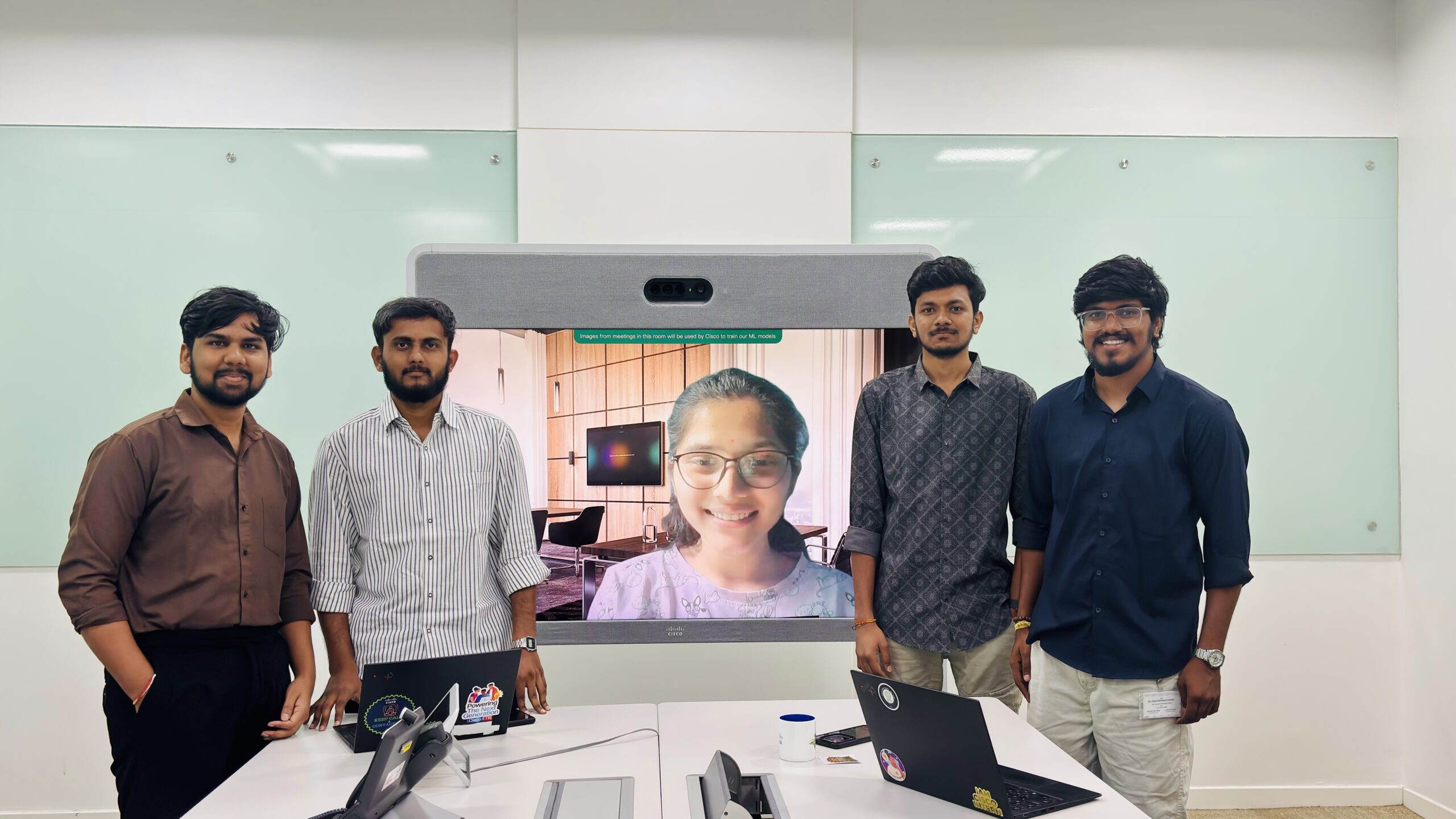
Inside the build to develop ethical AI solutions for nonprofit partners

Four Cisco volunteers stand at a table with laptops during the Tech for Social Good Hackathon, presenting their work on a monitor to a remote team member displayed on screen. The team is in a modern office space with mint green glass walls.
Cisco experts collaborated in person and remotely to build AI solutions for real problems facing nonprofits.

Across all 27 teams, the most effective solutions shared something in common: they were built by volunteers who thought as much about the people implementing the tools as the problems the tools were solving. As Venkata Naga Rajesh Badveti, a Cisco engineer who designed a workflow solution for Generation’s curriculum development team, which creates lessons for thousands of learners worldwide, put it: “AI is a multiplier, not a standalone solution. It works best when it amplifies human expertise rather than replacing it.”

That mindset extended to how teams thought about the communities their solutions would ultimately serve. Sathwik Kothapalli worked with Farmers for Forests on an AI tool to automate the verification of handwritten documents in multiple regional languages, a prerequisite for farmers joining the nonprofit’s reforestation program in India. His team built for speed without sacrificing accuracy, embedding human review at every step with a clear-eyed understanding of what was at stake for each person in the process. “Knowing that a farmer in rural Maharashtra could get verified faster and join a reforestation program sooner because of code I wrote made this the most meaningful project of my career,” Sathwik shared.

“The Tech for Social Good Hackathon reminded me that the skills we hone and develop every day at Cisco can be genuinely life-changing for communities that have never had access to them.”
– Sathwik Kothapalli, Cisco engineer

Abhishek Kumar, who helped build a donor prospect platform for Opportunity International, brought both hands-on engineering depth and the systems-level thinking that comes from managing technical teams. “These are the kinds of operational bottlenecks I help my own teams solve every day, and seeing that same pattern at a nonprofit reinforced how transferable our skills really are.” More than the technical output, though, he saw the Hackathon as a symbol of what partnership with Cisco looks like: “An event like the Hackathon signals that we see our partners as organizations with real operational challenges that deserve the same caliber of engineering we bring to our customers.”

“Financial contributions and corporate donations matter, but building a working AI solution that a nonprofit can actually deploy — that’s a fundamentally different kind of partnership.”
– Abhishek Kumar, Cisco engineer

For Cisco volunteers, the experience was meaningful. They deepened their AI expertise, collaborated across teams, and saw immediate impact from their work, all of which strengthened both individual skill and organizational culture.

Deployable tools, lasting impact

The feedback from participating organizations was equally consistent: the volunteers came ready to listen and offer tailored solutions, and left their partners energized about what else was possible. “You not only found great one-stop-shop solutions for multiple issues we’re trying to solve,” says Maja Cimpric, Digital Product Lead at Generation. “This entire experience is also triggering great follow-up conversations on our team about our workflows and other potential for automations, which we are confident will lead to more exciting projects down the road.”

That pattern, a solution that solves the problem and reframes what’s possible, showed up across organizations. Jennifer Wolford, Operation Hope‘s Chief Innovation Officer, reflected: “Working with Cisco’s team made it clear how quickly the right technical expertise can turn ideas into real, usable solutions that improve how we serve our clients. That kind of collaboration is what allows us to adopt emerging technology in a way that actually scales impact.”

For some nonprofits, the Hackathon represented something more fundamental: a chance to move past the manual, resource-intensive ways of working that have historically limited their reach. Jessica White, Director of Data Analytics and Systems Integrations at Opportunity International, described it in concrete terms: “They took a process that was previously inconsistent and hard to scale and turned it into something actionable. That shift from manual effort to strategic action has real potential to increase fundraising and expand our impact for the clients we serve.”

The case for skills-based volunteering as a social impact strategy

Cisco has long invested in its nonprofit partners by providing funding and technology, but skills-based volunteering, at this level of rigor and technical depth, represents something additive: an opportunity for the kind of engaged, purposeful expertise that helps organizations build real AI capability from the inside out.

“As we are living and evolving in the AI era, we at Cisco have a unique opportunity to make an immediate impact with nonprofits through our state-of-the-art technology,” said Tim Barnes, Cisco engineer who worked with NESsT. “Imagine if we did this for all of society’s challenges? We could streamline and upgrade nonprofit operations, freeing funds for them to lengthen reach, widen scope, and enable them to better help those in need.”

The Tech for Social Good program will keep growing. We are bringing more volunteers and partners into this model — our next cohort will expand into Crisis Response and Education sectors — because the results suggest it’s worth scaling. In a moment when AI fluency is becoming a prerequisite for nonprofit effectiveness, this is one more way Cisco can help close the gap.