


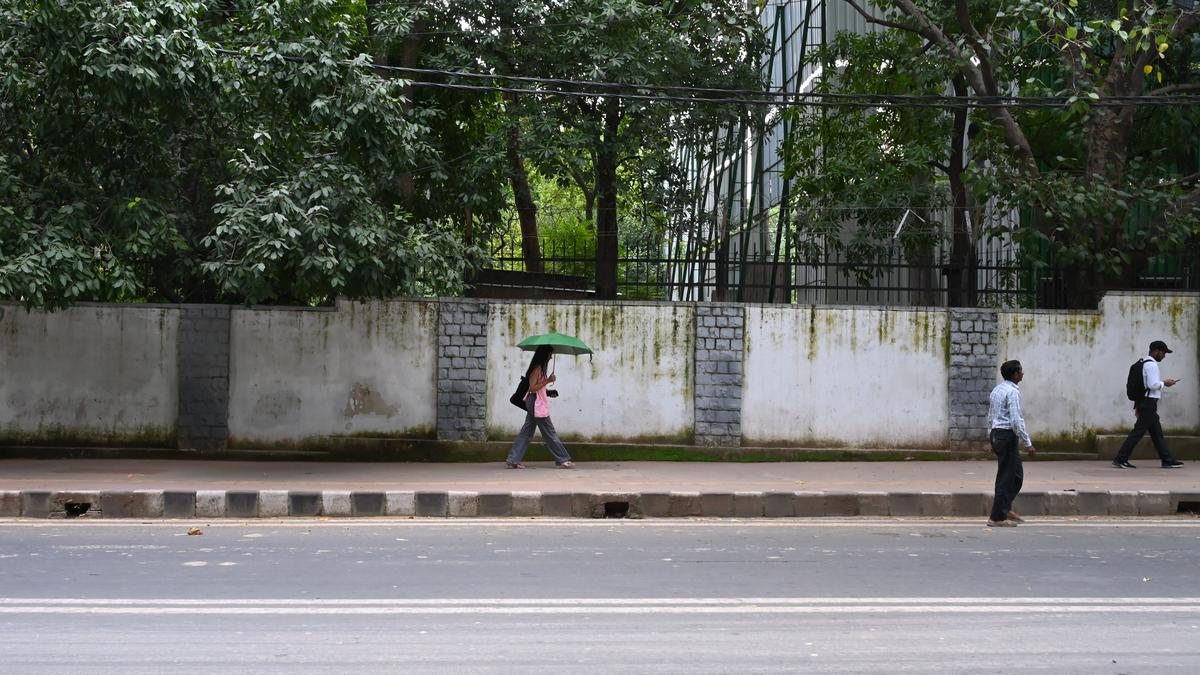
As Indians, many of us have grown up aspiring for the prestige of owning a fancy car. Yet, ask almost anyone enduring the daily grind on our city roads, and the sentiment is likely universal: dread. The daily commute, whether to work or a weekend outing, has become synonymous with soul-draining congestion and depleting productive hours that could otherwise be spent with family or focused on work. This widespread frustration, born from endless brake-paddle toggling in traffic, is reshaping our urban landscapes.
Supreme Court declares right to walk on footpath a fundamental right, wants law
Indian cities are organically evolving into ‘mini pocket cities,’ where essential amenities such as malls, offices, and high streets are clustering within a 5 km radius of major residential zones. This decentralisation is a direct response to the long commute, inadvertently highlighting an overlooked opportunity in urban mobility.
According to the World Bank’s insightful report ‘Investing for momentum in active mobility’, a significant portion of urban travel in India is short distance: 35% of trips are under 3 km, and 50% are under 10 km. This data reveals a compelling truth: at least 35% of these trips could potentially be offloaded from congested roads if our cities prioritised and properly developed pedestrian infrastructure. Astonishingly, the financial case for footpaths is compelling. The cost of constructing a well-designed footpath, complete with proper width, barricades, and level surfaces, is approximately ₹10 lakh per km. Compare this to an average of ₹10 crore per km for a modern road, and you quickly realise footpaths are roughly 100 times more cost-effective.
While footpaths alone cannot entirely resolve India’s formidable traffic challenges or unlock all economic benefits, they represent a foundational requirement that can no longer be overlooked in the journey towards decongestion. Their impact multiplies exponentially when paired with robust public transport systems such as metro networks and efficient feeder buses, which together can significantly reduce reliance on private vehicles and make urban travel more predictable and manageable.
To truly grasp the potential of walkable cities and how Indian urban planning can strategically leverage its unique evolution, it’s beneficial to examine how international metros encourage and utilise walking. Understanding these diverse contexts can illuminate practical lessons for our ‘mini pocket cities.’
Lessons from global metros
Examining global cities provides valuable context. Across cities worldwide, the share of trips made on foot varies widely, shaped by density, design, and climate. In Hong Kong, where extreme density, integrated skywalks, and a rail-first planning model dominate, walking accounts for an estimated 30%–40% of all trips, while Tokyo follows at around 20%–30%, supported by rail dominance and consistently safe sidewalks. London, with its walkable core and congestion charges, sees roughly 20%–25% of trips made on foot, and Copenhagen records about 15%–20%, reflecting its compact urban form and strong walking and cycling culture. By contrast, Singapore’s walking share remains much lower, at about 5%–8%, largely constrained by its tropical climate.
The key takeaway for Indian cities is profound. Unlike many global metros, where density primarily drives walking, in our country, strategic walking paths paired with public transport can drastically reduce reliance on private cars within localised pockets.
This isn’t merely about easing traffic; it holds immense potential for economic revitalization. Imagine business districts such as tech parks, office properties, malls, and shopping streets becoming far more accessible. This increased accessibility can directly translate into significantly higher commercial output and vibrancy across all urban pockets.
Holistic sustainability
Beyond the economic advantages, footpaths champion holistic sustainability. As a zero-carbon mode of transport, they directly contribute to mitigating air pollution and reducing the carbon footprint of our cities. Furthermore, a walkable urban environment has a deep, positive impact on the health and well-being of citizens, encouraging physical activity and fostering a more engaged public realm.
Footpaths unequivocally represent a crucial and cost-effective step to begin tackling what currently appears to be an intractable challenge. By prioritising walkable infrastructure in our town and country planning, we can lay a basic, yet superpowered, foundation for more efficient, sustainable, and economically vibrant Indian cities.
The writer is founder of Hanto Workspace.
Published - February 06, 2026 05:48 pm IST