惯性聚合 高效追踪和阅读你感兴趣的博客、新闻、科技资讯
阅读原文 在惯性聚合中打开

推荐订阅源

F
Fortinet All Blogs
S
Secure Thoughts
月光博客
月光博客
美团技术团队
雷峰网
雷峰网
Exploit-DB.com RSS Feed
奇客Solidot–传递最新科技情报
奇客Solidot–传递最新科技情报
N
News and Events Feed by Topic
freeCodeCamp Programming Tutorials: Python, JavaScript, Git & More
Forbes - Security
Forbes - Security
W
WeLiveSecurity
P
Proofpoint News Feed
阮一峰的网络日志
阮一峰的网络日志
爱范儿
爱范儿
G
GRAHAM CLULEY
cs.AI updates on arXiv.org
AI
AI
Last Week in AI
Last Week in AI
Google Online Security Blog
Schneier on Security
云风的 BLOG
云风的 BLOG
Threat Intelligence Blog | Flashpoint
Recent Announcements
Webroot Blog
Webroot Blog
T
Tor Project blog
Cisco Talos Blog
Cisco Talos Blog
N
News and Events Feed by Topic
罗磊的独立博客
The Register - Security
Blog — PlanetScale
Blog — PlanetScale
T
Threat Research - Cisco Blogs
博客园 - 【当耐特】
Apple Machine Learning Research
人人都是产品经理
人人都是产品经理
T
The Exploit Database - CXSecurity.com
www.infosecurity-magazine.com
B
Blog
腾讯CDC
Microsoft Azure Blog
酷 壳 – CoolShell
酷 壳 – CoolShell
H
Hacker News: Front Page
Application and Cybersecurity Blog
Engineering at Meta
Engineering at Meta
Latest news
Latest news
IT之家
IT之家
D
DataBreaches.Net
博客园 - 司徒正美
N
Netflix TechBlog - Medium
V
V2EX
钛媒体:引领未来商业与生活新知
钛媒体:引领未来商业与生活新知

Marketing, Brand, Advertising, Digital Marketing, Retail, Shopping | The HinduBusinessLine

Has your brand become an everyday habit? Cannes dichotomy: The lion and the login screen Private radio’s fight to get its voice heard Red hot mystery We are nearing a fair value zone, says Elara Capital's MD, Harendra Kumar The changing Indian kitchen countertop Brands and the beautiful game India fails to roar Gujarati movie Laalo’s word-of-mouth ascent to blockbuster status Celebrating the iconic Bengali brands The cockroach brief: Why virality is not a marketing strategy Nike rips the script We’re increasingly acting as consultants rather than just advertisers: Innocean COO Sirona’s Act II: Breaking more taboos The ASCI report is an uncomfortable but necessary reading: Chtrbox head Raj Mishra Bapu and Bajaj Prices are going up, so let’s buy lots more! Coming up next, the AI political candidate? The beauty category’s big transformation The future of shopping India’s first denim brand gets a Gen-Z makeover ‘Helping out’ is not enough The hot seat Adobe’s brand visibility tools for an AI-powered world Ikea’s omni-channel retail transformation Gen-Zers and their extraordinary new/old pastimes Steering a new course, wearing a little magic and Tvarra Weaving together ITC Fiama is lathering up its premium reach Iran just won the (meme) war How creators are making curiosity cool Ballooning up Taking a sweet break Hansa’s second act for a scroll-first audience Inside Kerala’s meme-fuelled poll battle Lego aces, brick by brick, in the age of Nvidia Authenticity and influence Fandom economy Sustainability, spirituality and a good sleep Spykar’s cut Green, gourmet and regional: Flavours of the AAHAR 2026 exhibition Another brick in the (fire)wall Goafest dates announced The changing face of loyalty and rewards Dennis the Menace and the simple joys of childhood How millennials and Gen Z are redefining timekeeping Carefree celebration Well paired! ‘Profit-ad spend link appears broken’ Behind the scenes, the quiet threshold moments at the AI Impact Summit Quick commerce fires up ad industry A new ‘brand’ of B-school comes to Bengaluru The next 10 years in advertising Of culture, collaborations and commerce ‘Our college campuses are with us forever’ Claude vs ChatGPT Painting 50 years of stardom AI Impact Summit: What’s in it for the Indian start-up ecosystem Why building fandoms, not funnels, matters in the Gen Z era For marketers, the New Year begins in the third week of January A new sparkle in oral care, as it moves beyond hygiene to aesthetic needs Baking evergreen loyalty with cakes, puffs and khara buns Scent of soil Analytics fuels surge in market research The zeitgeist... in 2026 words for 2026 The best of times, and the worst of times... to come Inclusive journeys Not quite black-and-white The ‘going out’ economy Dentsu India’s true eigyo pitch to CMOs GST, GenZ, AI and a man named Piyush Pandey Moving ahead with AI Human connection, crafted by Piyush Pandey Daggers drawn between AI evangelists and doomsayers When bio-hacking enters the supermarket aisles Apps — billboards under your thumb Imprinting their way into readers’ minds Fanning loyalty The first season is always the most difficult to get past: Raj Nayak Volkswagen: Driving a goofy viral trend Falling in love with tea, all over again How digital marketing is incomplete without the Piyush Pandey doctrine Algo branding: Simplify and surprise New youth labels, pop-ups, stories that are wooing Gen Z Desi ‘horror’ takes hold on ads The Great Indian LinkedIn Circus — of uplift, hustle and performance art How byproduct brands valorise waste in a virtuous cycle The circle of generosity When brands think out of the box for a Diwali sparkle The drawer economy Tea industry bets on repositioning the brew to woo Gen Z
The festival of lights is also a celebration of mithai
2025-10-19 · via Marketing, Brand, Advertising, Digital Marketing, Retail, Shopping | The HinduBusinessLine
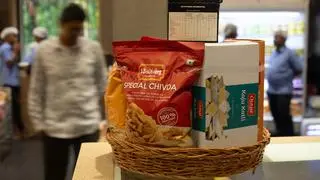
FUDGY AND FESTIVE. Mithais are intrinsic to Indian celebrations

FUDGY AND FESTIVE. Mithais are intrinsic to Indian celebrations | Photo Credit: ShashikantDurshettiwar

One of my favourite Indian mithais is the Mysore pak. I generally eat this in strict moderation. But at Diwali, I tend to indulge. This soft and fudgy sweet bursts with the flavours of besan (gram flour) and ghee, and melts in the mouth. It is such a heavenly sensation.

Royal origins

Mysore pak derives its name from its geographic origins and ingredients. It was first made in the royal kitchens of the Mysore maharaja, by a palace chef named Kakasura Madappa, and is therefore named after the city. The “pak” here has no connection with our neighbouring country, just in case you were wondering. Rather, it is derived from “paaka”, Kannada for sweet syrup, a key ingredient in the sweet.

Today, Mysore pak is sold by several famous South Indian brands. It arrives in beautiful, festive packs. Brands have tried to differentiate themselves by creating variants of this mithai. For instance, Sri Krishna Sweets, a leading chain for sweets and savouries, markets its special variant by the name ‘Mysurpa’. This is described as being particularly soft and creamy.

The happy thought of eating Mysore paks during Diwali has led me to think about some of the trends I am seeing with respect to mithais in the recent past. Mithais have always been a part of Indian festivals, yet their nature is evolving. Here are a few observations.

Dry fruit mithais

Virtually every box of mithais my family and I have been gifted this year includes dry fruit mithais — anjeer barfikaju pista roll and the cleverly named ‘khajur pak’ (made of dates). There are also variants of these sweets with no added sugar. It appears these dry fruit mithais are growing popular due to three key reasons. First and foremost, dry fruits are seen as healthy, so these mithais combine the best of both worlds — health and taste. Second, most of these dry fruit sweets do not contain dairy, and are ideal for people who are lactose intolerant. Third, dry fruits as gift traditionally has connotations of status in India because they are relatively expensive.

Mom’s mithais

Very few of us make mithais at home any more. Most large brands, however, offer mass-produced mithais, which use preservatives and cheaper oils. This has led to the emergence of brands offering mithais that promise a taste and purity equivalent to “mom’s home-made mithais”. They make them in small quantities, without preservatives, and hence have low shelf-life. They do not use palm oil, which is cost-effective. Instead, they use premium oils or ghee, staying true to the original home recipe. What these mithais offer is freshness, authenticity and artisanal quality, in an age of mass production. Because of the convenience of e-commerce and quick commerce, many of these small brands are easily accessible to consumers who are willing to pay a premium.

Mini-mithais

These bite-sized mithais radiate excellent quality and are ideal for those yearning to indulge in sinfully delicious sweets, but in moderation. The packaging, highlighting premiumness and portion control, must safe-keep the smaller portions, which tend to break or turn dry quicker. Some mini-mithais are individually packed, a la luxurious Belgian or Swiss chocolates. There may be a subliminal force at play here: when we think that something is a luxury or gourmet food, we are often content with eating smaller portions.

Fusion mithais

These Indian mithais incorporate global ingredients and influences, such as dark chocolate, blueberries, cacao, caramel and sea salt. So you have dark chocolate barfibesan laddoo truffles and gulab jamun cheesecake. Personally, I am not a fan of fusion mithais because I like desi authenticity in my sweets. However, these creative expressions have a lot of takers looking for new-age experiences and novelty.

So, what will be your choice of mithai this festive season, whether for your consumption or for gifting? On that note, let me wish you a very happy Diwali!

(Harish Bhat is an avid marketer and bestselling author)

More Like This

Apart from its signature bakarwadi, Chitale’s offers a host of snacking delights

Can tea be declared as the national drink? 

Performance art is disguised as ‘authentic sharing’

Published on October 19, 2025