


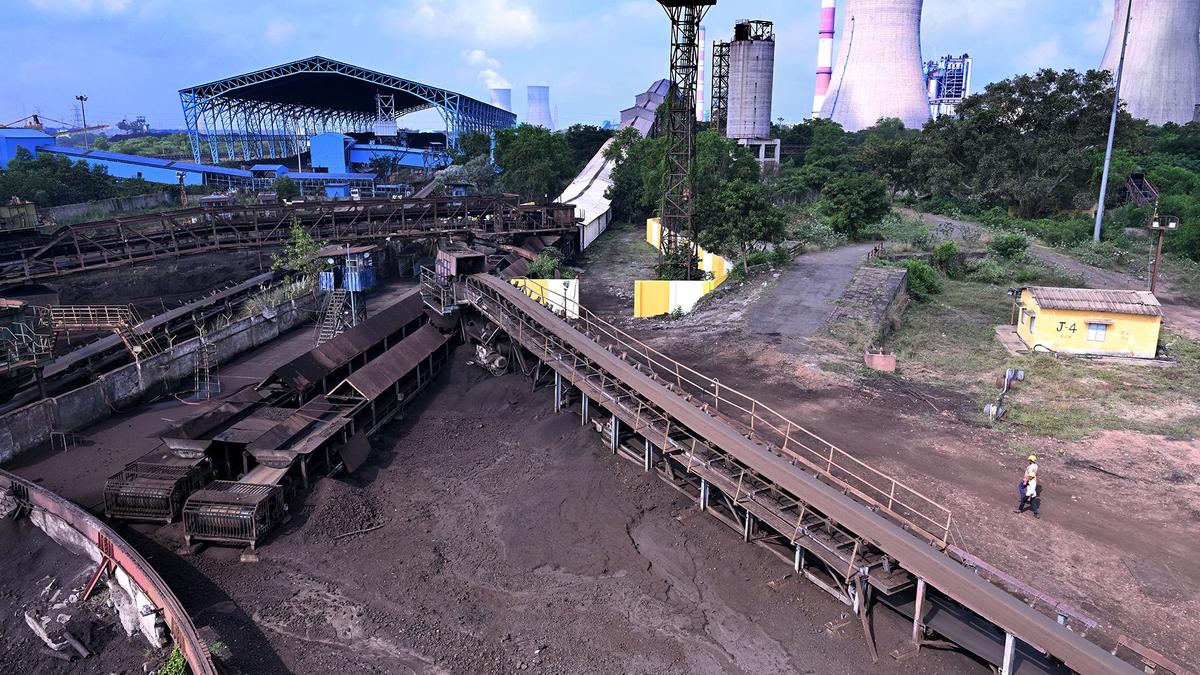
FLEXI ASSET. Thermal-green power combo for grid stability | Photo Credit: JOTHI RAMALINGAM B
The National Electricity Plan (2026), scripted by the Ministry of Power, brought in several new concepts that reflect modern thinking. One of the concepts introduced is ‘capacity markets’.
The Central Electricity Regulatory Commission (CERC) has followed up with a ‘staff paper’ on the subject and put it out for public comments.
The concept of ‘capacity markets’ could be somewhat confusing in India because the country’s two-part tariff system already compensates generators through fixed capacity charges.
Generators under long-term power purchase agreements (PPAs) are currently compensated through the two-part tariff comprising a fixed capacity charge and a variable energy charge. In other words, the tariff includes an assured payment for the power plant, regardless of whether it runs or not.
The ‘capacity market’ concept further breaks the two-part tariff into two. It seeks to make capacity itself a separately traded, competitively priced product. Developers put up capacities under ‘capacity markets’. They are not guaranteed recovery of the costs — they compete in the market. The lowest cost capacity gets business.
The ‘capacity market’ system tells generators that there is “no administratively assured payment for your capacity availability, so compete in the market and recover your costs — just as you do for your energy”.
As renewable energy expands, the power system increasingly needs generators that may run infrequently but must be available at short notice — driving interest in capacity market mechanisms.
The staff paper says: “The central concern is that India’s power system is changing rapidly due to the growing share of renewable energy, especially solar and wind, whose output is intermittent. While India’s present market structure compensates generators mainly for the electricity they actually supply (“energy-only market”), the paper asks whether the country also needs a mechanism that pays generators simply for keeping dependable capacity available when required.”
The paper notes that renewable-heavy systems face periods when solar or wind generation suddenly falls, while demand remains high. Under such conditions, the grid needs sufficient despatchable or flexible resources — thermal plants, hydro stations, storage systems, gas plants and demand-response resources — to maintain reliability.
However, many of these assets may not remain financially viable if their revenues come only from selling electricity in spot markets, particularly during periods of low market-clearing prices caused by abundant renewable generation.
CERC, therefore, explores the concept of a ‘capacity market’, under which generators would receive payments not only for actual energy supplied but also maintaining available capacity. In effect, the system would compensate plants for being ready to supply power whenever needed. The staff paper stresses that the issue is not immediate shortage of installed capacity — India currently has surplus capacity in many regions — but the future adequacy and financial sustainability of reliable generation as the energy mix changes.
The paper also outlines the possible advantages of such mechanisms in India. These include improving investment signals for flexible generation and storage, ensuring resource adequacy during peak demand periods, supporting grid reliability, and facilitating higher renewable penetration. Capacity markets could also encourage investment in battery storage and other balancing resources. On the other hand, critics argue that capacity payments can distort markets, increase the cost for consumers and lock in inefficient thermal assets longer than necessary.
Capacity markets are not about to invade India anytime soon, but they are making an appearance on the horizon.
Published on May 11, 2026
此内容由惯性聚合(RSS阅读器)自动聚合整理,仅供阅读参考。 原文来自 — 版权归原作者所有。