
惯性聚合 高效追踪和阅读你感兴趣的博客、新闻、科技资讯
阅读原文 在惯性聚合中打开

推荐订阅源

Vercel News
Vercel News
The GitHub Blog
The GitHub Blog
博客园 - 【当耐特】
Cyber Security Advisories - MS-ISAC
Recent Announcements
D
Docker
GbyAI
GbyAI
酷 壳 – CoolShell
酷 壳 – CoolShell
WordPress大学
WordPress大学
The Cloudflare Blog
雷峰网
雷峰网
A
About on SuperTechFans
小众软件
小众软件
博客园 - Franky
博客园 - 聂微东
F
Full Disclosure
大猫的无限游戏
大猫的无限游戏
C
Check Point Blog
MongoDB | Blog
MongoDB | Blog
G
Google Developers Blog
Microsoft Azure Blog
U
Unit 42
freeCodeCamp Programming Tutorials: Python, JavaScript, Git & More
V
V2EX
Engineering at Meta
Engineering at Meta
宝玉的分享
宝玉的分享
aimingoo的专栏
aimingoo的专栏
量子位
P
Proofpoint News Feed
Hugging Face - Blog
Hugging Face - Blog
博客园_首页
罗磊的独立博客
Martin Fowler
Martin Fowler
D
DataBreaches.Net
cs.CL updates on arXiv.org
S
Secure Thoughts
Project Zero
Project Zero
L
LangChain Blog
阮一峰的网络日志
阮一峰的网络日志
C
Cybersecurity and Infrastructure Security Agency CISA
T
Tailwind CSS Blog
S
Schneier on Security
Blog — PlanetScale
Blog — PlanetScale
The Hacker News
The Hacker News
Spread Privacy
Spread Privacy
Security Latest
Security Latest
NISL@THU
NISL@THU
奇客Solidot–传递最新科技情报
奇客Solidot–传递最新科技情报
C
CXSECURITY Database RSS Feed - CXSecurity.com
J
Java Code Geeks

Health, Aviation, Automobiles, Entrepreneurs, India, Technology, Luxury | The HinduBusinessLine

How to retire financially secure APTEL’s judgement is a wakeup call for discoms For a partial exit via a secondary, timing and context matter After a lull, why temperature spikes are likely to intensify in north India JAL insolvency sees corporate titans cross swords Putting planet earth on livestream We channel savings to build infra: NaBFID chief Rajkiran Rai Power regulator’s nudge towards ‘market coupling’ Cruising towards Indian carbon market Backing India’s next phase of industrial growth New hope at HOEC GST reform is sweet news for Perfetti Van Melle India Faired Play Yamaha's Aerox EC-06: Off the mark Lenovo Legion 5 review: Slim profile, serious gaming muscle The ultra-quick marathon runner Inside India’s GLP-1 rush Stalling the silent spread of TB cases Meditation, play and staying curious Towards a malaria-free future Don’t hide unfavourable clinical trial results: FDA Countries take more ownership of immunisation Medical supply chain leaks: Where does the buck stop? Feature-rich, bass-heavy Comfortingly familiar? India credit funds shrug off US blues What an Oracle foretells about jobs and careers in the AI era Less engaged workforce Renewable energy ministry approves pilot CfD scheme Banking on deposit tokens and tokenisation Renewable components supply chained to imports Strengthening the hands of agentic AI Voice AI: The chatter-bots speaking up for India Should founders cash in while the firm is still shaky? Biotech firm takes the battle to metastasis TVS Motor bikes into global third spot Building Lalit hotels with emotion Despite PFBR going critical, India is still a long way from thorium utilisation Oil-starved industry looks to reignite heat pumps Eclectic Force Tax Benefits An antidote for battery anxiety Ring in the future Stand with science for universal wellbeing Wearable tech: Health monitors on the go The uncomfortable conversations over end-of-life decisions USEPA labels microplastics, pharmaceuticals as contaminants How medical myths go viral at deadly speed Gym sessions, yoga and occasional return to rollerblading Australia looks for improved ways to regulate sunscreens EC To Like The OG Returns Nothing Phone (4a) Pro review: For the love of metal Apple Inc. Turns 50 on April 1: A look back at its journey Key takeaways from CEA’s national power generation adequacy plan for the coming decade Storage, flexible usage and ‘virtual supply’ are key to taming peak power demand Insuring the gift of longevity with dignity Lupin goes for bigger bites of innovation Does greater online penetration destroy profitability? L’affaire HDFC: The curious case of a resignation CERC settles dispute dating back a quarter century From 200 hotels to 500: Radisson’s blueprint for growth in India New NDC: As wars rage elsewhere, India must battle to green itself AI talent transformation at LTM Judging and backing early winners Startups now deliver healthcare too How D2C firms must adapt to find buyers in the AI era Armatrix’s robots slither into dangerous industrial nooks Show and Tell Plush Point Xiaomi Pad 8. Solid performance meets productivity MacBook Neo. Entry-level laptop done right Slower pace of reduction in child mortality India’s silent newborn crisis Small daily habits, no quick fixes TB endgame: Yes, we can Alternatives to animal testing in drug development The pothole ‘miracle’ that wasn’t ‘Special 301’ report, in a time of strife Sound Majority Skoda Kushaq Facelift: Game of Thrones in SUV market iPhone 17e. All the iPhone you need? Samsung Galaxy S26 Ultra: Samsung hits peak Android, yet again Marine insurance’s added cost of war Ikea’s DIY plans for India Can ‘district cooling’ temper peak power demand? How should CEOs respond to the West Asian crisis Buzz in energy storage sector Electrifying effect of India Energy Stack Women-led commerce Finding a niche in air, water and carbon The Pygmalion effect on cricket and work! What is slowing residential rooftop solar installations ‘Ability to protect innovations is key’ Democratising cross-border payments The AI tsunami that is engulfing D2C startups Patenting for plastic circularity Ready to Raid On a Charge The Honda Shine 100 DX review: Light work
Liquidation of discoms’ regulatory assets will spur industrial use of renewable energy
By M Ramesh · 2026-05-11 · via Health, Aviation, Automobiles, Entrepreneurs, India, Technology, Luxury | The HinduBusinessLine
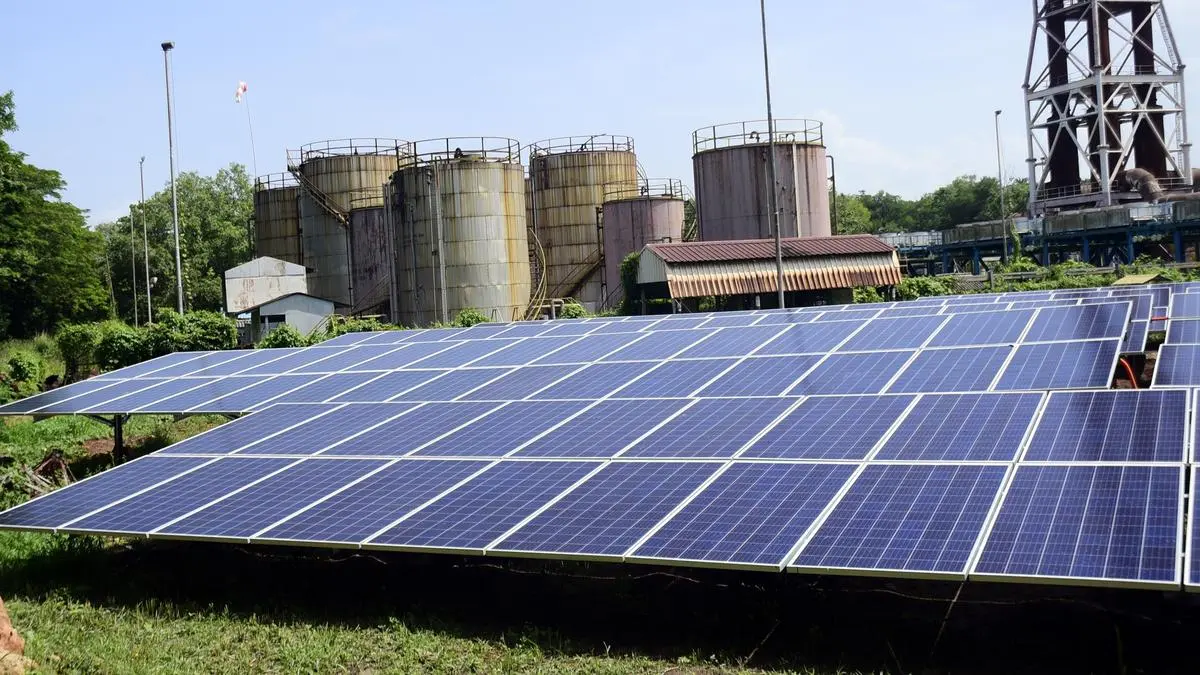
TARIFF SHOCKER. More takers for ‘solar-plus-battery’

TARIFF SHOCKER. More takers for ‘solar-plus-battery’ | Photo Credit: K Ragesh

For Coimbatore-based Natrinai Ventures, the Supreme Court’s August 2025 order directing electricity distribution companies (discoms) to liquidate their regulatory assets within four years came as a major boost. The IPO-bound company, which operates under the brand name NGE Green, plans to build 350 MW of solar capacity — 50 MW by September and the rest over the next three years — and sell power directly to consumers. The order strengthened the company’s confidence in the market.

In simple terms, liquidating regulatory assets means raising electricity tariffs. That, in turn, makes ‘solar-plus-battery’ solutions more attractive to consumers. The commercial and industrial (C&I) market is already growing rapidly, with estimates suggesting it could reach 80 GW by 2030.

Though the Supreme Court later relaxed its directive, giving discoms seven years instead of four to eliminate accumulated regulatory assets, the order has strengthened the case for open-access renewable energy.

Regulatory assets refer to costs incurred by discoms but not recovered through tariffs in a given period, leaving them to be recovered later. In effect, it is a way of postponing tariff increases.

Over time, such deferred costs have piled up to nearly ₹3 lakh crore across Indian discoms, with Tamil Nadu, Uttar Pradesh, Rajasthan and Delhi accounting for a significant share. The Supreme Court said tariffs must, as a “first principle”, reflect actual costs. It also cited Rule 23 of the Electricity Rules, whereby regulatory assets should not exceed 3 per cent of approved annual revenue requirements.

Following the order, ratings agency ICRA estimated discoms may need tariff hikes of 20-40 per cent to eliminate regulatory assets.

The apex court also suo motu directed the Appellate Tribunal for Electricity (APTEL) to monitor the implementation of its directives. Last month, APTEL pulled up the Delhi Electricity Regulatory Commission for delaying the liquidation of regulatory assets “for one reason or the other” and remarked that its conduct appeared “mala fide”.

Green opportunity

Discoms can eliminate regulatory assets either through tariff hikes or support from State governments; a combination of both appears likely. Either way, consumers — especially industrial users — are expected to face higher tariffs in the coming years.

The renewable energy industry sees opportunity in this shift. Eazhil Sudharman, Whole-time Director and CEO of Natrinai Ventures, says the company has already tied up with customers for the first 50 MW projects coming up by September, at tariffs of ₹4.20–4.60 a unit. After additional charges such as cross-subsidy levies, the effective tariff works out to be around ₹6.5 a unit — still attractive for many industrial consumers.

The ₹430-crore company expects improved realisations for future projects — a prospect that could support its planned ₹130-crore IPO.

Other industry executives share the optimism. “We are witnessing the end of the era of subsidised grid stability,” Vinay Pabba, CEO of Hyderabad-based Vibrant Energy, says. As legacy costs move from discom balance sheets to consumer bills through mandatory surcharges, the economics of renewable energy for the C&I sector become stronger, he reasons. Renewable power, he adds, is increasingly becoming “less of a procurement choice and more a long-term hedge”.

Ashwitha Tunga, policy analyst at the Winnipeg-based International Institute for Sustainable Development (IISD), calls the liquidation of regulatory assets a “welcome step” that is long overdue.

“Discoms have long struggled to raise electricity tariffs, leading to a sharp rise in electricity subsidies — reaching ₹2.4 lakh crore, or 1.3 per cent of real GDP, in FY25,” Tunga says over email. According to IISD estimates, between FY19 and FY25, discoms’ dependence on subsidies to cover operating costs increased in 23 of the 30 states and Union territories.

“Regular tariff revisions can help discoms attain financial viability while avoiding abrupt tariff shocks to consumers,” Tunga says, adding that disciplined tariff-setting practices would prevent future accumulation of regulatory assets.

More Like This

Published on May 11, 2026