惯性聚合 高效追踪和阅读你感兴趣的博客、新闻、科技资讯
阅读原文 在惯性聚合中打开

推荐订阅源

B
Blog
D
Docker
J
Java Code Geeks
腾讯CDC
Blog — PlanetScale
Blog — PlanetScale
G
Google Developers Blog
M
MIT News - Artificial intelligence
L
LangChain Blog
T
The Blog of Author Tim Ferriss
P
Proofpoint News Feed
MyScale Blog
MyScale Blog
博客园 - Franky
GbyAI
GbyAI
Hugging Face - Blog
Hugging Face - Blog
aimingoo的专栏
aimingoo的专栏
Last Week in AI
Last Week in AI
OSCHINA 社区最新新闻
OSCHINA 社区最新新闻
博客园 - 聂微东
N
Netflix TechBlog - Medium
B
Blog RSS Feed
Y
Y Combinator Blog
阮一峰的网络日志
阮一峰的网络日志
奇客Solidot–传递最新科技情报
奇客Solidot–传递最新科技情报
Google DeepMind News

Flight Plan News | The HinduBusinessLine

Boeing bids farewell to ‘Queen of the skies’ Why do planes dump excess fuel in the sky? Compliance with regulation: Staying ahead is key Why has private capital not been taken to Indian aviation Global shipping lines look skywards Why opening the emergency door mid-flight is not possible Reviving businesses will benefit from air cargo’s growth How do commercial aircraft navigate? Air India’s roadmap can be tricky to pull off Navigating newer disruptions with maximum agility Why do plane crashes happen? Embraer expects capacity dynamics to tilt demand in its favour Post-pandemic, OTAs are coming of age Air infrastructure plans should be future-proof Airlines’ performance metrics may need an overhaul Why do planes leave a white trail behind them? 5 things Indian airlines must do to break their way out of pandemic blues Hope you never get into a ‘coffin corner’ while flying Mission to Net Zero: Aviation’s focus on making sustainable connections Blockchain: Piloting the future of aviation Chicken gun test: Saving jets from bird strikes Will Akasa Air’s contra bet on Boeing 737 Max instead of Airbus pay off? Slots scarcity hits Indian airlines’ flight roadmap Cabin crew with an invisible cape Yoke vs. sidestick: Jury still out on what works best for pilots Redressing flaws: IndiGo needs to tweak its way The art of avoiding accidents in air Travel now, pay later Thrust reversal in aircraft Regaining momentum during turbulent times
Deep tech is helping airlines sustain operations during C...
2022-01-24 · via Flight Plan News | The HinduBusinessLine

Just as the world had started opening up after the Covid-19 pandemic, the latest strain of the virus — Omicron — has forced countries to once again look at shutting down their borders.

The United States and many countries in Europe have put in place restrictions which can be termed as ‘soft lockdown’ for the general public, and ‘full lockdown’ conditions for the non-vaccinated. Some countries like Thailand have re-imposed mandatory quarantine for those entering the country.

However, during the last few days, some countries have lifted certain restrictions.

Mitigating threats

Omicron struck the global aviation industry just as recovery was being witnessed. Figures released by the International Air Transport Association in late December show that demand for air travel in October 2021 measured in revenue passenger kilometres was down by just under 50 per cent compared to October 2019. Global domestic air travel was down 21.6 per cent compared to October 2019 — better than international — largely driven by the robust domestic numbers that the Indian and Chinese markets reported.

Globally, airlines are pinning their hopes on rising vaccination rates and better testing and reporting mechanisms. They believe that this will help the market bounce back, despite hiccups like the Omicron variant. Ensuring the health and safety of passengers will continue to be the top priority in mitigating Covid threats. Seamless and tamper-proof validation of passengers’ real-time health status, vaccination certificates and other critical information at scale are key to making air travel safe.

Digital ecosystem

All stakeholders — the government, international agencies such as the International Civil Aviation Organization and the International Air Transport Association, civil society and border agencies — need to make use of technology to protect their lives and livelihood.

Digital health passports (unique digital travel id) for international and domestic travel will pave the way for growth in aviation. This unique id is supported by blockchain technology to ensure the sanctity of data, reports and certifications. Digital health applications should be envisioned as an integrated biometric-enabled framework for real-time test results, travel details and vaccine status, and be interfaced with global initiatives like the IATA Travel Pass. This infrastructure will also ensure fast-tracking of passengers with digital health passports and hence limit pressure on aviation assets which, in the last two years, have successfully created an digital ecosystem for a touchless passenger journey.

Manu Tandon is Vice President – Middle East and South Asia of Elenium Automation

Manu Tandon is Vice President – Middle East and South Asia of Elenium Automation

An investment in creating such infrastructure with support from IATA, ACI and technology providers will help rescue aviation industry and India, with its strong credentials, can surely guide the world in creating this critical technology infrastructure.

More Like This

MIKE BLAKE

Most airlines are now prioritising new IT to make their operations more sustainable

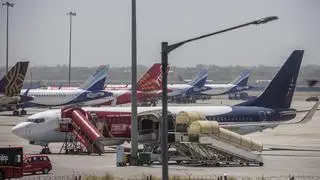
Karnataka Bengaluru   08 /03/2018  Pic for FILE 
 View of    Kempegowda International Airport Bengaluru .
(Kempegowda International Airport is an international airport serving Bengaluru, the capital of the Indian state of Karnataka. Spread over 4,000 acres (1,600 ha), it is located about 40 kilometres (25 mi) north of the city near the village of Devanahalli. It is owned and operated by Bangalore International Airport Limited (BIAL), a public–private consortium. The airport opened in May 2008 as an alternative to increased congestion at HAL Airport, the original primary commercial airport serving the city. It is named after Kempe Gowda  the founder of Bangalore. Kempegowda International Airport became Karnataka's first fully solar powered airport developed by CleanMax Solar.
As of 2016, Kempegowda Airport is the third-busiest airport by passenger traffic in the country, behind the airports in Delhi, Mumbai and is the 35th-busiest airport in Asia. It handled over 22.2 million passengers with little less than 500 aircraft movements a day. The airport also handled about 314,060 tonnes (346,190 short tons) of cargo. By 2020, it is expected to handle at least 40 million passengers per year, with 45 international airlines and more than 1000 aircraft movements per day.
The airport consists of a single runway and passenger terminal, which handles both domestic and international operations. A second runway is being constructed and is expected to be operational by September 2019 while a second terminal is in the early stages of construction. In addition, there is a cargo village and three cargo terminals. The airport serves as a hub for AirAsia India, Alliance Air, Jet Airways and IndiGo and a focus city for Air India and SpiceJet )
Photo: Sampath Kumar G P

Published on January 24, 2022