


Technology News |
By Alina Neacsu
Thoro introduced CoreFlex at MODEX 2026, a modular autonomy platform designed to work across multiple classes of industrial vehicles without fixed infrastructure. The system combines Thoro’s software and fleet tools with Orbbec 3D cameras to support navigation, pallet handling and obstacle detection in warehouse and logistics settings.
For eeNews Europe readers, the announcement points to how autonomous material handling systems are evolving toward modular, reusable platforms rather than single-purpose robots. It also reflects a change in industrial automation toward reusable platforms that could potentially shorten integration cycles across material handling fleets.
At the centre of the launch is CoreFlex, which Thoro describes as a full-stack autonomy system combining sensors, lightweight compute, plug-and-play interfaces, autonomy software, fleet management, and a cloud platform. The idea is to let OEMs deploy one autonomy architecture across several robot or vehicle types instead of rebuilding systems for each platform.
That matters in material handling, where pallet trucks, tuggers, and other industrial vehicles often share similar perception and navigation requirements but are still developed separately. A cross-platform stack could potentially reduce engineering effort and help suppliers scale automation across mixed fleets more efficiently.
Thoro says the system is infrastructure-free, which suggests deployments may avoid reliance on extensive site modifications. In large warehouses and logistics centres, that could make rollouts easier where operators want to automate gradually rather than commit to a fully redesigned facility.
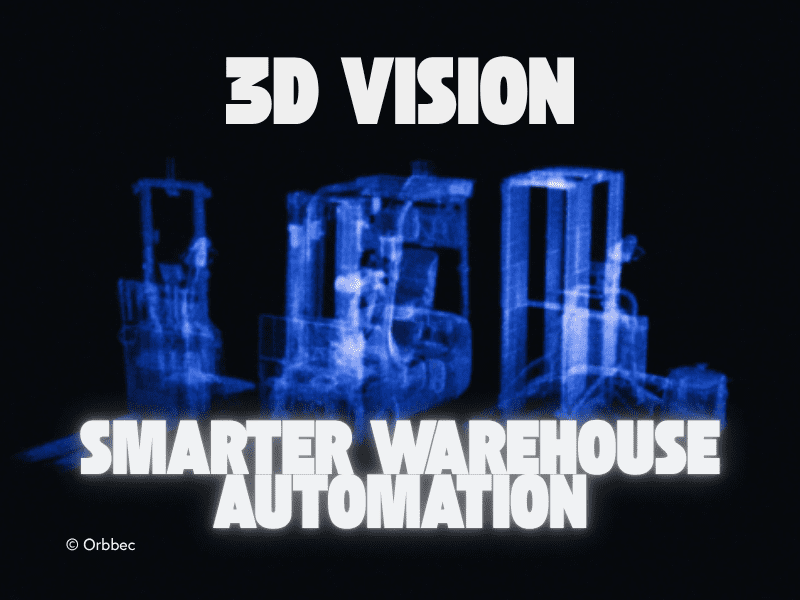
Orbbec’s Gemini 336 stereo 3D camera is presented as a key part of the system. According to the companies, the camera’s depth sensing supports smoother navigation and more precise pallet handling, while active infrared imaging is intended to improve performance in changing light, reflective areas, and dynamic warehouse scenes.
The compact form factor and standardised interface also fit the modular design goal. For autonomy developers, that kind of sensor packaging can be as important as raw imaging performance, especially when the same hardware is expected to move between different vehicle designs.
Patrick Mondi, CEO of Thoro, states, “When sensor performance is exceptional, the software fully delivers on its design intent. We commit to providing OEMs worldwide with safe, scalable, and easy-to-use industrial autonomy solutions. Orbbec’s superior hardware and software capabilities give us the confidence to scale applications, and we are excited to expand into new vehicle types and deployment scenarios.”
Brad Suessmith, Robotics Sales Manager at Orbbec, adds, “CoreFlex demonstrates the tremendous potential of modular autonomous systems. The chip-level depth sensing capability of Orbbec enables CoreFlex to achieve stable and efficient autonomous operations even in complex warehouse environments. We look forward to accelerating the industry’s shift toward intelligent, automated operations together.”
The companies also say they plan to launch four autonomous mobile robots next year for cleaning and material handling, all based on the Gemini 336 camera platform.
 If you enjoyed this article, you will like the following ones: don't miss them by subscribing to :
此内容由惯性聚合(RSS阅读器)自动聚合整理,仅供阅读参考。 原文来自 — 版权归原作者所有。