


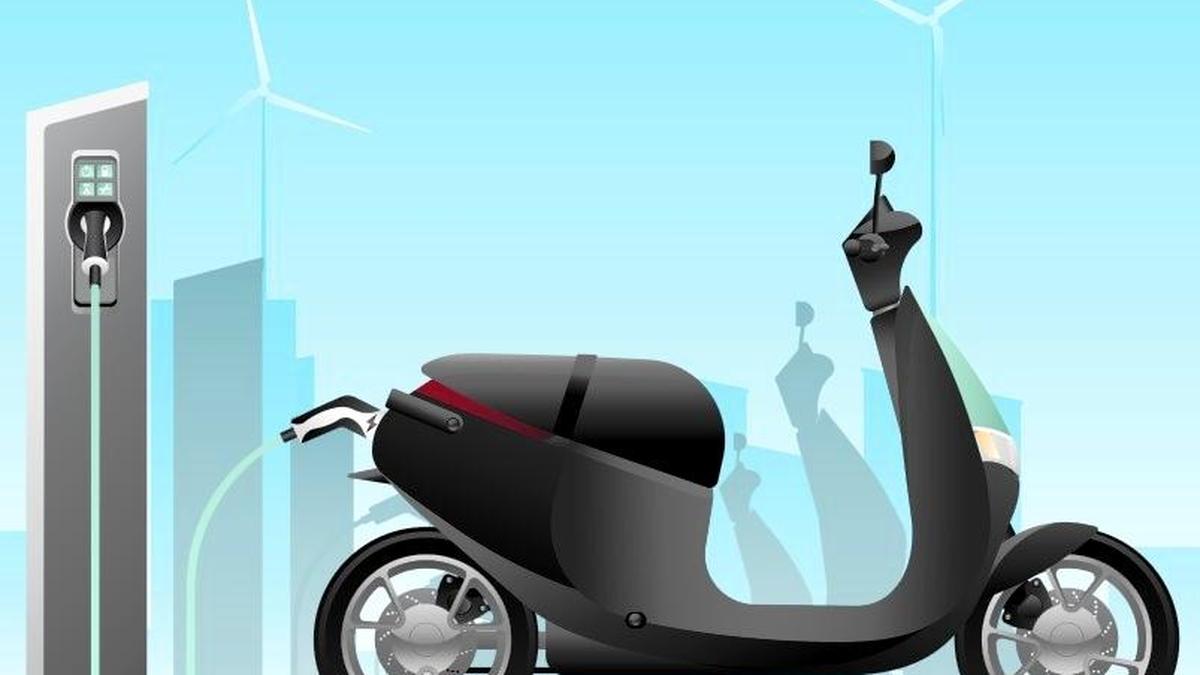
Electric two-wheelers will be eligible for incentives of up to ₹10,000 per kWh, capped at ₹30,000 in the first year, with support declining to ₹6,600 per kWh and ₹3,300 per kWh in subsequent years | Photo Credit: Scharfsinn86
The Delhi government on Saturday released a draft electric vehicle (EV) policy proposing that new registrations will be restricted to electric three-wheelers starting January 2027 and electric two-wheelers from April 2028, marking a shift from incentives-led adoption to a deadline-driven transition.
The draft Delhi EV Policy 2026–2030 sets clear electrification targets for key vehicle segments, supported by a combination of subsidies, scrappage incentives and tax exemptions aimed at accelerating early adoption.
Two- and three-wheelers are central to the policy, as they account for the majority of vehicles in Delhi and see high daily utilisation. Two-wheelers alone make up nearly 67 per cent of the city’s vehicle stock, making their electrification critical to the government’s emissions strategy.
Uday Narang, founder and chairman of electric three-wheeler maker Omega Seiki Mobility, said the policy strengthens the economic case for EV adoption. “The Delhi EV Policy 2026–2030 is a timely and well-calibrated intervention that reinforces the shift towards clean and sustainable mobility. By focusing on high-usage segments like two- and three-wheelers and backing it with strong incentives, scrappage benefits and tax exemptions, the policy significantly strengthens the total cost of ownership advantage for electric vehicles,” he said.
To accelerate adoption ahead of the deadlines, the policy introduces a front-loaded incentive structure that tapers over three years. Electric two-wheelers will be eligible for incentives of up to ₹10,000 per kWh, capped at ₹30,000 in the first year, with support declining to ₹6,600 per kWh and ₹3,300 per kWh in subsequent years. Electric three-wheelers will receive ₹50,000 in the first year, reducing to ₹40,000 and ₹30,000 over the next two years, while N1 category electric goods vehicles will be eligible for incentives of up to ₹1 lakh initially.
The policy also links incentives to scrappage, offering benefits for replacing BS-IV and older vehicles within a defined timeframe, signalling a push towards faster fleet replacement.
In a key fiscal shift, the policy caps eligibility for road tax and registration fee exemptions for electric cars at an ex-showroom price of ₹30 lakh. Vehicles above this threshold will not receive any exemption, while strong hybrid vehicles below the cap will be eligible for a 50 per cent concession.
Industry executives welcomed the targeted approach. Hemant Kabra, founder and managing director of electric two-wheeler maker BGauss Electric, said the policy aligns with existing EV economics. “The policy rightly focuses on segments where EV economics already make sense. The combination of early incentives and clear timelines will drive faster adoption, particularly in two-wheelers, where price sensitivity and running costs are critical.”
Beyond demand incentives, the draft policy introduces obligations for manufacturers and infrastructure providers. Original equipment manufacturers will be required to deploy charging infrastructure at dealerships, while Delhi Transco Ltd will act as the nodal agency for planning and rolling out a city-wide charging and battery-swapping network, supported by a single-window clearance system.
For commercial mobility, the draft policy focuses on delivery and logistics fleets rather than passenger ride-hailing services. It bars the induction of new petrol and diesel two-wheelers and light goods vehicles into aggregator fleets from January 2026, with a limited transition window for BS-VI two-wheelers. Passenger vehicle fleets, however, are not subject to direct electrification mandates or targeted incentives under the draft, with the transition expected to be market-driven. “The Draft Delhi EV Policy 2026 is a strong and progressive step towards accelerating EV adoption, especially in commercial mobility,” said Sahil Jindal, co-founder and chief growth officer at Trevel. “Incentives like road tax waivers and support for charging infrastructure make EVs more viable for both consumers and fleet operators. However, the real impact will depend on execution—ease of operations, reliable charging access, and clear transition timelines will be key for large-scale adoption.”
Published on April 11, 2026
此内容由惯性聚合(RSS阅读器)自动聚合整理,仅供阅读参考。 原文来自 — 版权归原作者所有。