


X Corp has launched XChat, a standalone iOS messaging app. This expansion into private communications, including a rollout in markets like India, represents a key step toward X’s goal of becoming a multi-service “everything app” that integrates messaging, file sharing, payments, and social networking, according to a Techcrunch report.
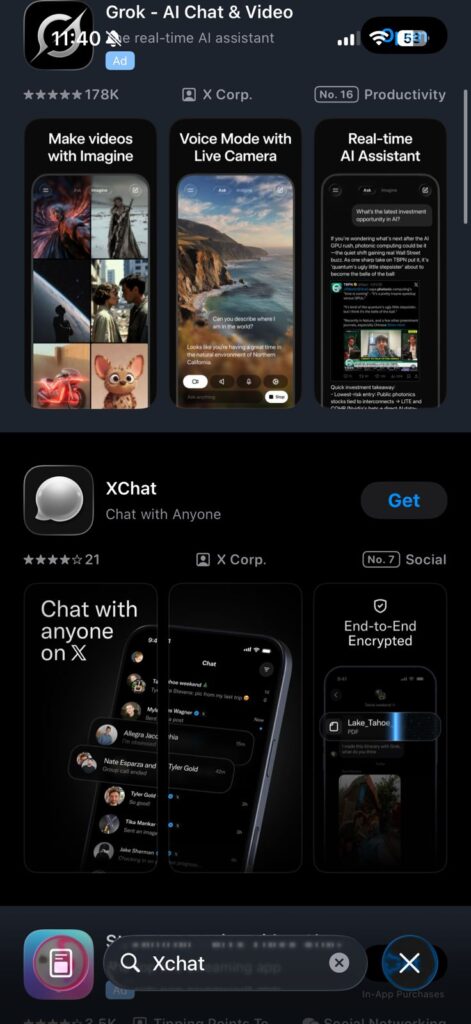
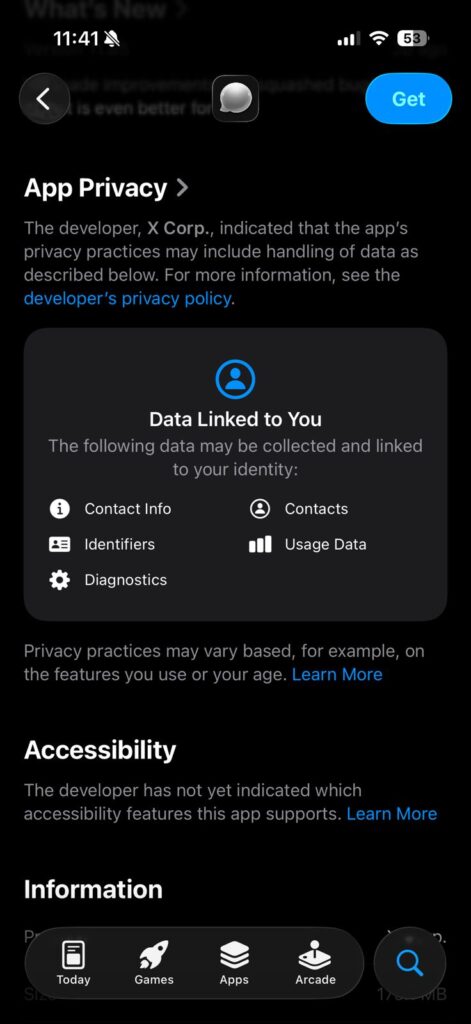
Screenshots shared by Aakriti Bansal from her iPhone.
Privacy-first positioning amid rivals’ scrutiny: XChat offers privacy and features such as end-to-end encryption, disappearing messages, screenshot blocking, and message editing. The company also promotes an ad-free, low-tracking experience, positioning the app as a cleaner alternative to other messaging platforms.
According to The Indian Express, the launch comes as WhatsApp faces scrutiny over its encryption claims, with legal challenges alleging that it may have access to user data despite assurances of end-to-end encryption. Musk has publicly criticised WhatsApp’s practices, positioning XChat as offering “actual privacy” by comparison.
XChat departs from standard onboarding by allowing users to sign in with their X accounts instead of phone numbers. This reduces reliance on contact-based identity and supports its privacy-focused approach.
India highlights the scale of the challenge: Although X has not released the complete list of XChat markets, the app’s launch is especially significant in India, as it is one of the largest messaging markets.
Earlier in September 2025, Arattai, developed by Zoho Corporation, experienced a surge in downloads due to government support and interest in domestic alternatives. However, long-term adoption remains uncertain as the platform couldn’t deal with the “unexpected load” on its servers, resulting in OTP delays and slower contact syncing.
Messaging platforms in India are influenced by strong network effects. Users typically stay on services where their contacts are, making it difficult for new entrants to scale, even if they offer similar features or privacy benefits. Arattai’s experience indicates that downloads driven by policy momentum or privacy concerns do not necessarily lead to lasting changes in user behaviour.
Moreover, Arattai’s security and privacy features fell short of WhatsApp’s, as its text messages were not end-to-end encrypted.
SIM-binding proposals could reshape onboarding: Policy discussions in India point to increased regulatory interest in linking messaging accounts to telecom identities to enhance traceability and curb fraud. Proposals such as SIM-binding would require platforms to tie user accounts to verified mobile numbers, creating a direct conflict with XChat’s current model, which relies on platform-based identities rather than phone numbers. If implemented, such rules could force XChat to implement phone-number-based verification or risk being classified as a non-compliant intermediary—effectively undermining one of its core differentiators: reduced reliance on telecom-linked identities.
Expanding compliance beyond apps: India is moving toward a broader regulatory approach that goes beyond messaging apps to encompass operating systems and device-level identifiers, effectively extending compliance obligations across the entire digital stack. For XChat, this could mean deeper integration with device or OS-level identity systems, stricter requirements around metadata sharing and reporting, and significantly higher operational complexity—especially compared to incumbents that are already more closely aligned with existing Indian regulations.
What this means: With XChat, X is making a direct move into private communication, a critical area for its goal of becoming an all-in-one platform.
However, competing with established messaging services will require more than new features. In markets such as India, X must overcome strong network effects and convince users to change their primary communication habits.
MediaNama was unable to reach X and was directed to the Grievance Officer contact address in Bangalore, India. The following are the questions MediaNama had for X:
Read more:
For You
此内容由惯性聚合(RSS阅读器)自动聚合整理,仅供阅读参考。 原文来自 — 版权归原作者所有。