


Serving tech enthusiasts for over 25 years.
TechSpot means tech analysis and advice you can trust.
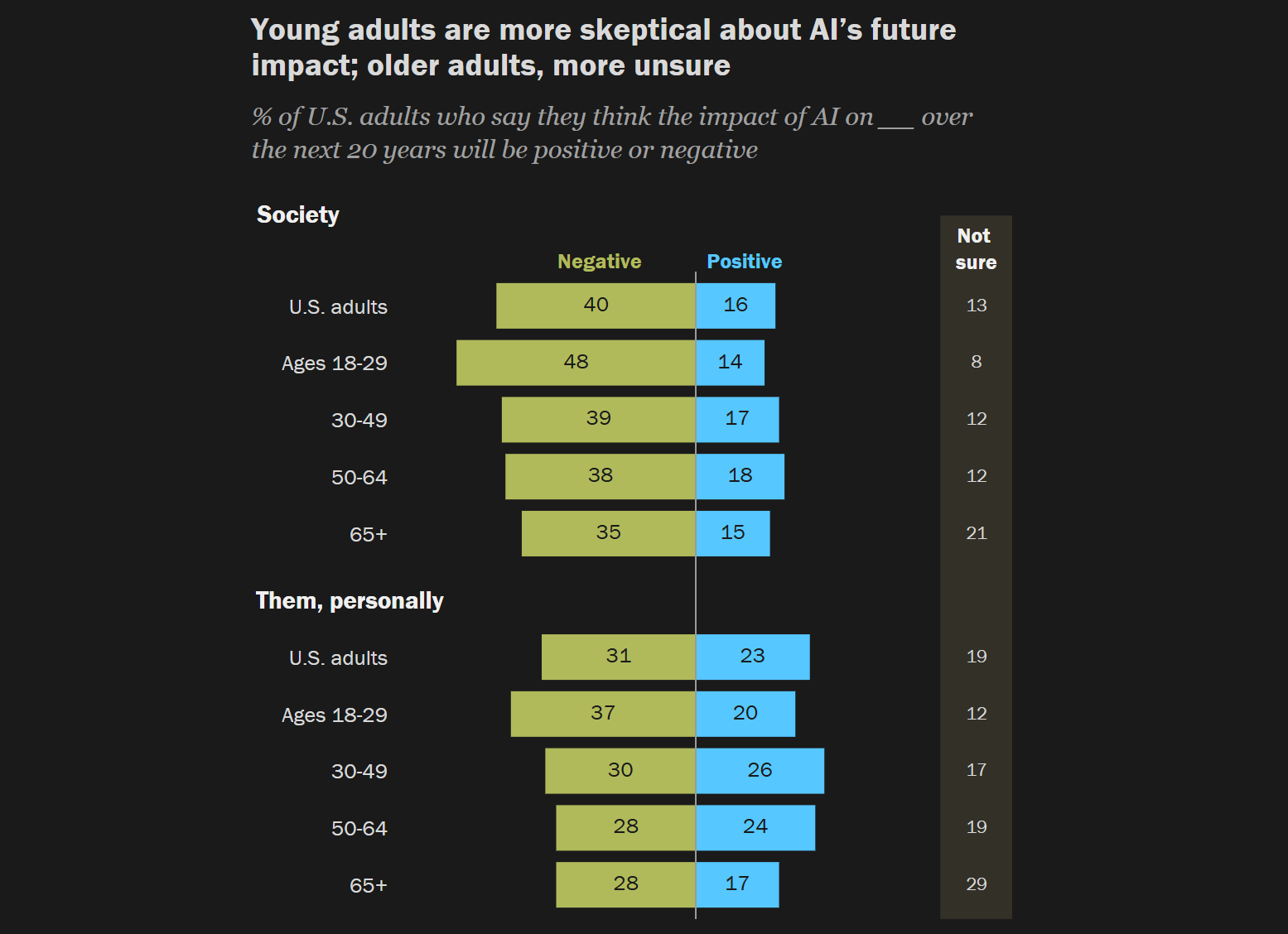
The takeaway: Despite the apparent growth of an anti-generative AI movement, more Americans are using chatbots than ever before, according to a new survey. But somewhat paradoxically, just 16% of participants believe the technology will have a positive impact on society over the next 20 years, while 40% think the impact will be negative.
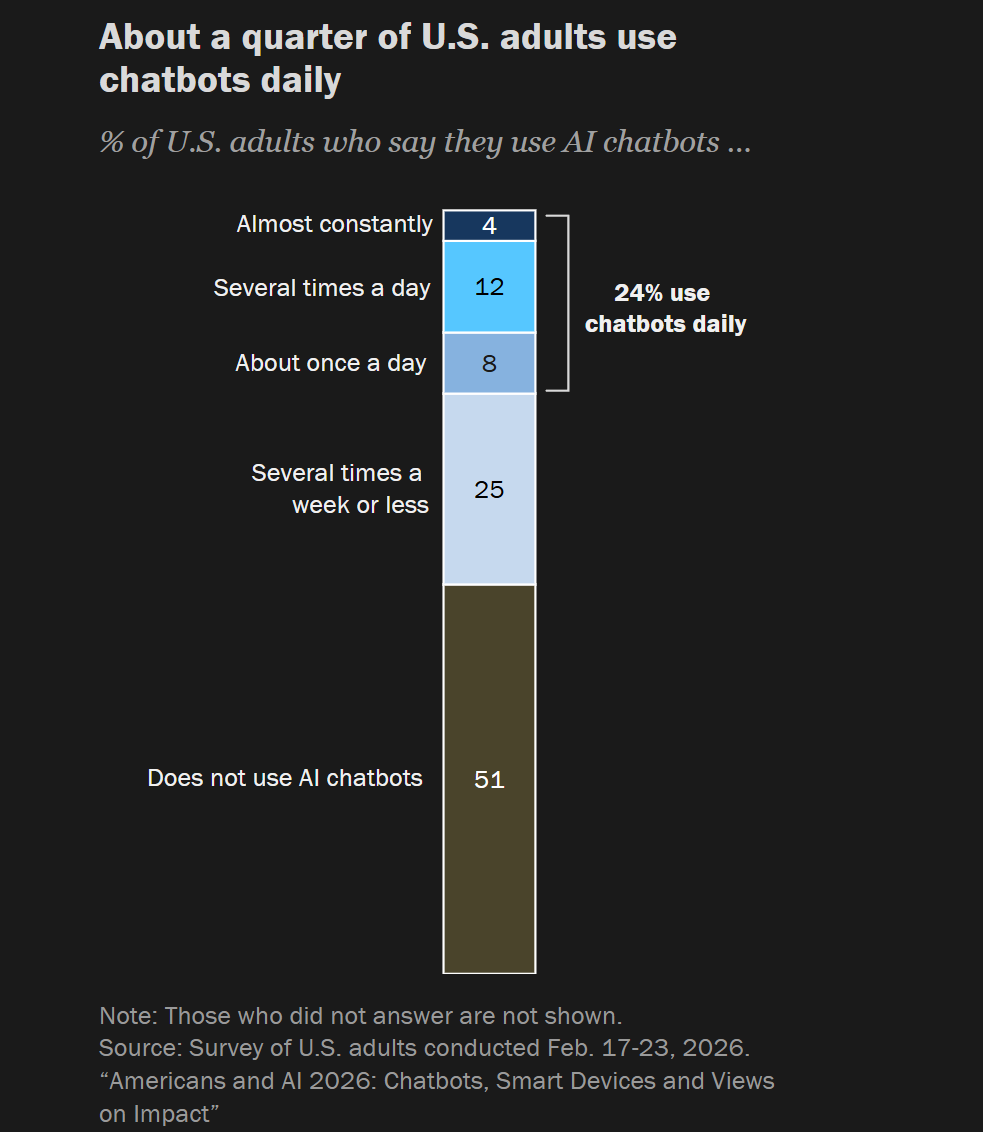
The Pew Research Center found that 49% of US adults now use chatbots, up from 33% two years ago. This includes roughly one in four who use these tools on daily basis. Fifty-one percent say they don't use chatbots at all, the majority of whom are 50 and older.
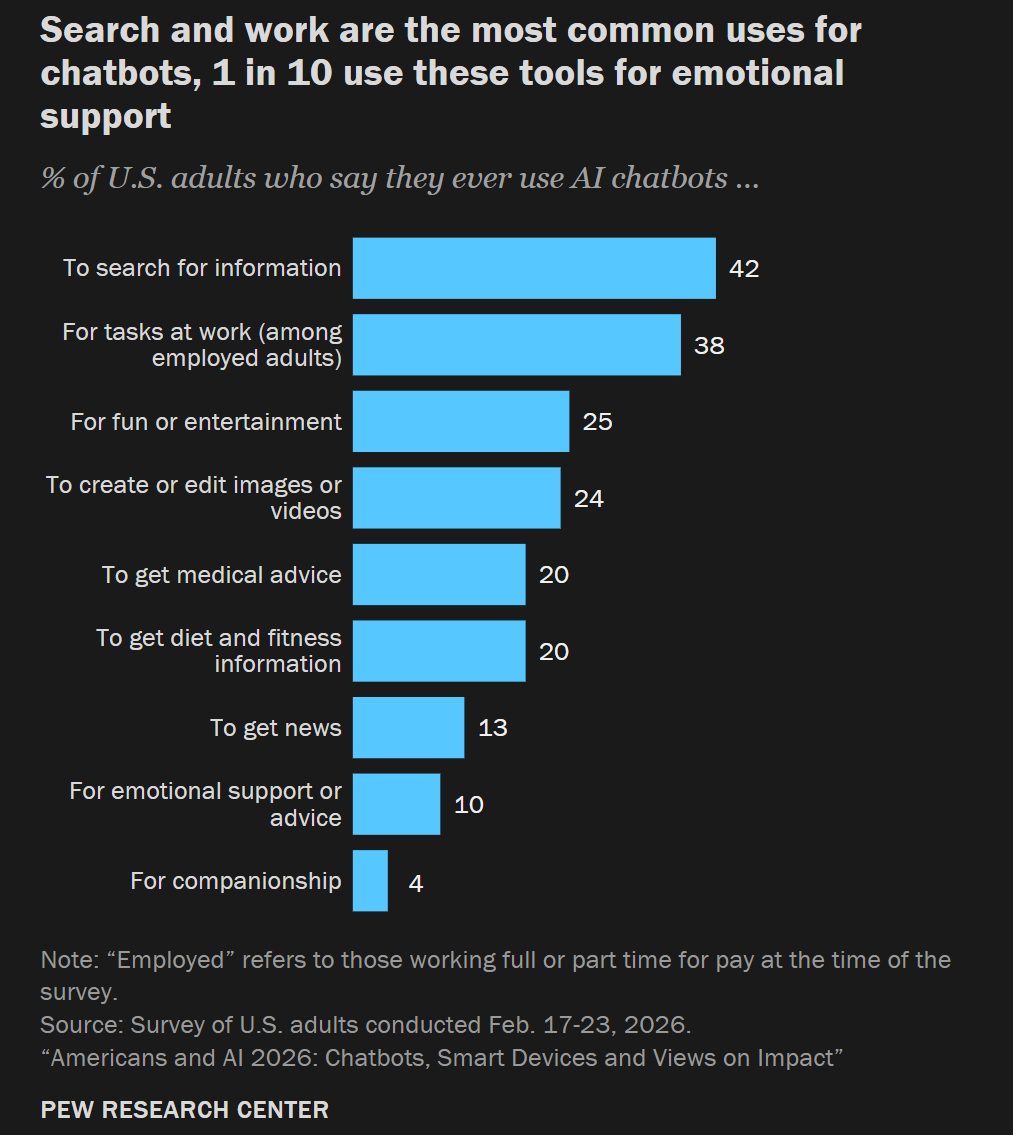
Most people use the bots to search for information, illustrating how many people are now using the likes of ChatGPT instead of visiting websites to find information, eroding the web's business model.
Work tasks, fun or entertainment, and creating or editing images are the other most popular use cases. Using them for medical and diet/fitness advice is also popular, though even the chatbots' makers advise users against relying on their tools for medical advice, diagnoses, or treatment recommendations.
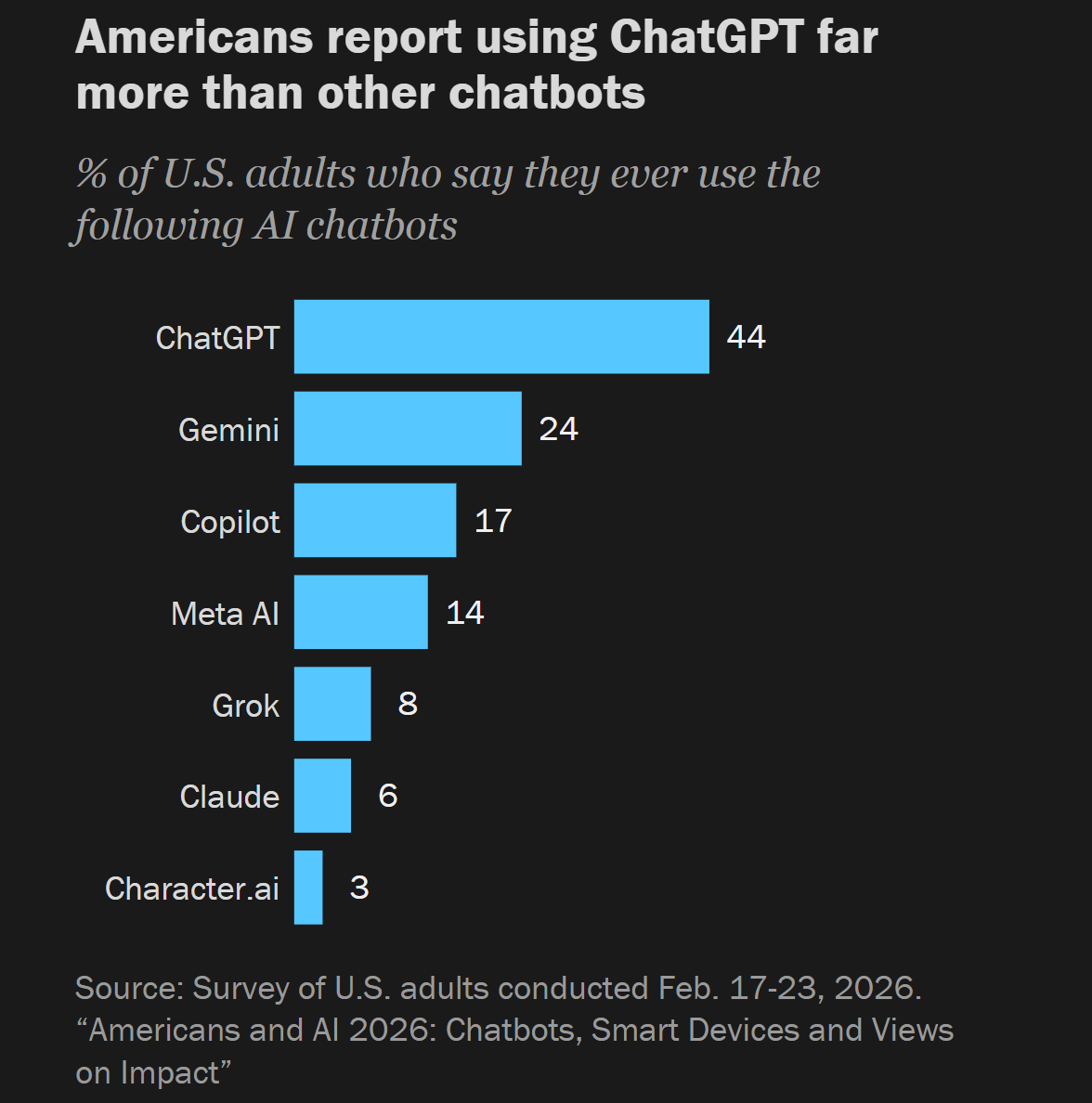
The survey also found that about a quarter of adults use the chatbots daily, while the other quarter use them several times a week or less. And while some of its rivals are catching up, ChatGPT remains the most popular chatbot (44%). It's followed by Gemini (24%), Copilot (17%), and Meta AI (14%).
Despite the increased usage, most Americans predict AI will be bad rather than good for society (40% vs. 16%), while one in three believes the effect will be equally positive and negative.
More people also expect it will have a negative rather than positive effect on their own lives (31% vs. 23%).
Unsurprisinglye group most concerned about AI's impact on society and their own lives is adults ages 18 to 29. The technology continues to drive mass job losses, though some execs now argue that it is creating just as many.
Another interesting finding is that around two-thirds of Americans think AI is advancing too quickly. This has been a concern since the generative AI revolution began, and has picked up steam since Anthropic called Mythos too dangerous to release.
Participants expressed other concerns: most think AI will make their personal information less secure, 67% have little to no confidence in the government to regulate AI effectively, and about six in ten adults are not confident in companies to develop and use these tools responsibly.
Another sign that generative AI use is growing in parallel with its dislike came from market intelligence firm Sensor Tower. It reported that ChatGPT has become the fastest app ever to reach one billion monthly app users (MAUs), beating the previous record holder, Google Maps.
此内容由惯性聚合(RSS阅读器)自动聚合整理,仅供阅读参考。 原文来自 — 版权归原作者所有。