
惯性聚合 高效追踪和阅读你感兴趣的博客、新闻、科技资讯
阅读原文 在惯性聚合中打开

推荐订阅源

C
Check Point Blog
aimingoo的专栏
aimingoo的专栏
Jina AI
Jina AI
Microsoft Security Blog
IT之家
IT之家
V
Visual Studio Blog
量子位
OSCHINA 社区最新新闻
OSCHINA 社区最新新闻
freeCodeCamp Programming Tutorials: Python, JavaScript, Git & More
博客园 - 聂微东
Cyber Security Advisories - MS-ISAC
大猫的无限游戏
大猫的无限游戏
Y
Y Combinator Blog
Stack Overflow Blog
Stack Overflow Blog
D
Docker
MyScale Blog
MyScale Blog
小众软件
小众软件
云风的 BLOG
云风的 BLOG
美团技术团队
Microsoft Azure Blog
酷 壳 – CoolShell
酷 壳 – CoolShell
Last Week in AI
Last Week in AI
Apple Machine Learning Research
博客园 - 【当耐特】

TechSpot

Flagship Rematch: Ryzen 7 5800X3D vs. Core i9-12900K Slack chats and internal data from failed startups are finding a second life in AI training A $5 Bluetooth tracker hidden in a postcard exposed a warship's movements Leakers claim PlayStation 6 could offer at least 3x the performance of the PS5 The Mac Mini is no longer a niche product, it's local AI infrastructure IPv6 traffic reaches parity with IPv4 for the first time, Google data shows Xbox expansion cards are now cheaper than SSDs, and PC users are repurposing them Blue Origin prepares to reuse New Glenn booster in bid to challenge SpaceX Nvidia could bring back the 12GB RTX 3060 as supply issues disrupt GPU roadmap What was the first OS you ever used? SNK revives NeoGeo AES with modern upgrades and HDMI support Valve's Proton 11 beta boosts Linux gaming with better performance and classic game support Researchers warn Microsoft Defender vulnerability is already being exploited A four-day Steam freebie turned into $250,000 for an indie game AMD may relaunch Ryzen 7 5800X3D for AM4's 10th anniversary This humanoid robot can almost run as fast as a human sprinter Two New Jersey men jailed for helping North Korean IT workers infiltrate 100+ companies A $7,000 DIY radar project is taking on hardware that usually costs over $100,000 Metro 2039 is going darker than ever, launching this winter on PC and consoles Gemini arrives on macOS with a dedicated desktop app AI infrastructure boom pushes AMD, Intel and Arm to new valuation heights New self-healing material can repair itself over 1,000 times, extend the lifespan of cars and aircraft Japan's bullet train to debut high-tech private cabins, for an added fee Memory card and flash drive pricing surges 120%, with some models spiking 260% Open-source tool decrypts all private data collected by Windows Recall on Copilot PCs The 2026 PC and Console Gaming Report shows most revenue now comes from games outside the Top 20 PureMac is a new open-source macOS cleanup and app removal tool Your Airbnb host might actually be AI Steam might soon display 30-day price history for game deals Intel brings 18A process to budget laptops with new Core Series 3 CPUs
Birds in Ukraine are building nests from discarded drone ...
Rob Thubron · 2026-06-08 · via TechSpot

Serving tech enthusiasts for over 25 years.
TechSpot means tech analysis and advice you can trust.

WTF?! Has there ever been something as apocalyptically cyberpunk as a bird nest being made from battlefield drones' fiber-optic cables? That depressing sight has been discovered in the Donbas region of Ukraine, which has seen heavy fighting since 2014.

The image was posted on X by Olena Tregub, co-founder of the Independent Defense Anti-Corruption Commission, who credited researcher Oleh Malchenko for taking the photo. According to the post, a Russian glide bomb knocked down a tree in Donbas, and the nest rolled out from the shattered branches.

– Olena Tregub (@OTregub) June 6, 2026

The small structure appears to be woven from grass and thin strands of fiber-optic cable, the kind increasingly left behind by first-person-view drones on both sides in the war. It illustrates how modern battlefields are not just littered with shell fragments and burned-out vehicles, but also the disposable wiring of cheap, mass-produced weapons.

Unlike radio-controlled FPV drones, fiber-optic drones trail a physical cable behind them, giving operators a connection that cannot be jammed by traditional electronic warfare. The obvious drawback is that every flight can leave miles of nearly invisible plastic thread across fields, roads, woods, and trenches.

Some spools used by these drones can stretch up to 65 km, or around 40 miles, while previous systems have had ranges of around 42 km. Even shorter runs add up quickly when FPV drones are used on such a huge scale along the front.
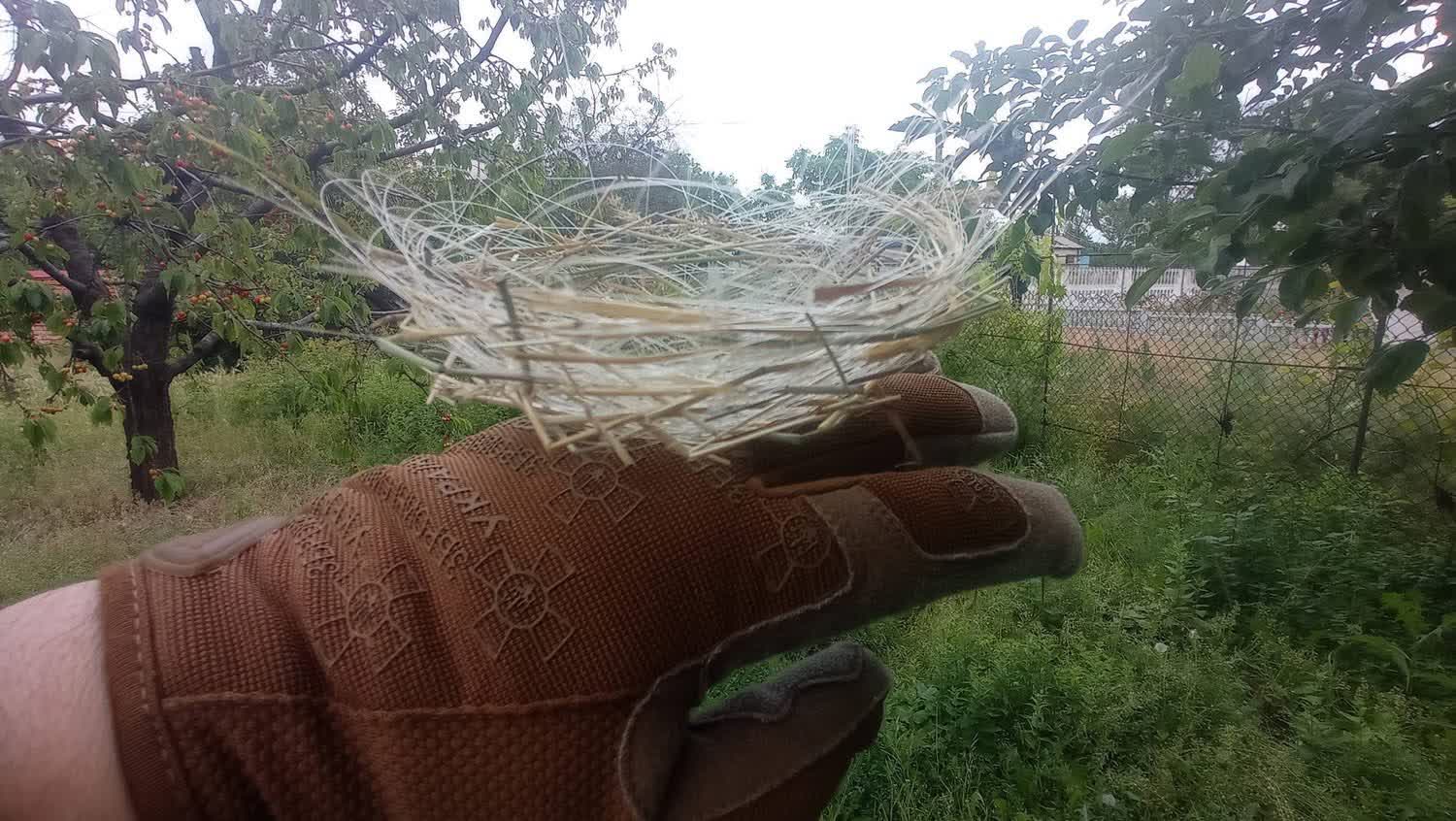
For the birds, the material is just another nesting resource. It's light, flexible, strong, and likely provides some insulation, which helps explain why it would end up woven into a nest alongside grass. There's something darkly poetic about wildlife repurposing the wastes of war, but it's hard to view the image as anything other than grim.

Researchers have already warned that discarded fiber-optic cables could become a long-term environmental problem in Ukraine. The British Ornithologists' Union has written that polymer optical fibers used in drones could pose entanglement risks to birds, bats, and ground-dwelling mammals, as well as break down into microplastics over time.

Malchenko has written about the other hazards birds face near the front, including explosions, artillery fire, disorientation, and debris.