


Serving tech enthusiasts for over 25 years. TechSpot means tech analysis and advice you can trust.
TL;DR: Microsoft is working on a new "location check-in" feature for its AI-powered collaboration platform. Organizations will be able to gain clearer visibility into what their employees are doing, while tenants can better organize team collaboration. The privacy concerns? Largely overblown.
Microsoft first introduced its location detection feature in December 2025. Now, the company has detailed how the capability will actually work and how users can control it. Employees concerned about a new "surveillance" layer in the corporate world can take a step back: in most cases, organizations already know a great deal about what their workers are doing during office hours and beyond.
The location detection feature is officially known as workplace check-in via Wi-Fi. Microsoft says the option will become part of the Teams collaboration platform, further enhancing AI-powered capabilities in Microsoft Places. Workplace check-in is designed to improve employee coordination, Microsoft said, by providing a more accurate way to keep a worker's location "current" when they are in the office.
Location check-in uses several presence signals from Microsoft 365, including calendar availability and Teams status. The feature can automatically update an employee's location based on their wireless connection, but only when the device is connected to a properly configured, company-managed network.
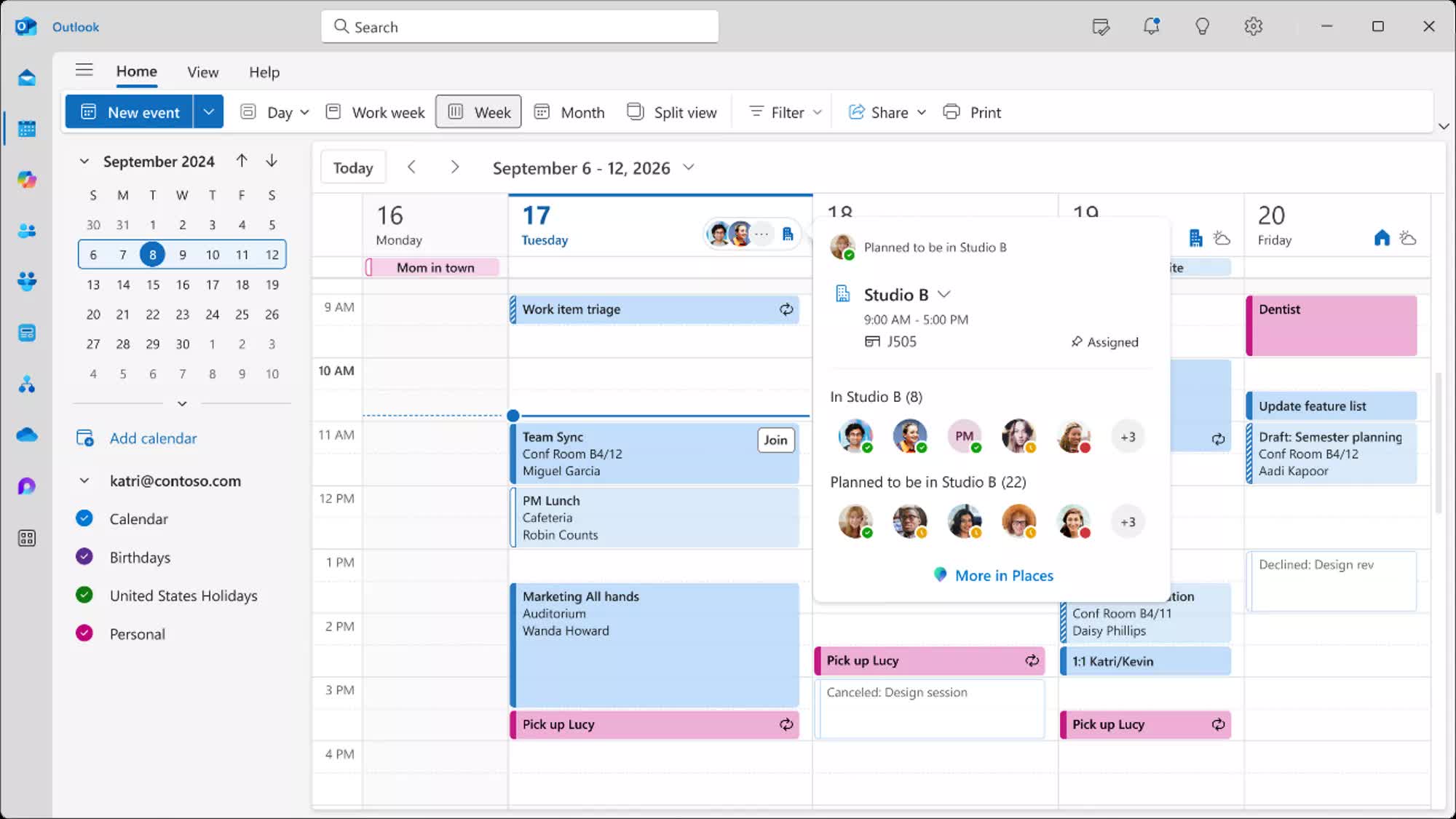
Microsoft highlights how location check-in eliminates the need to manually change status in Teams. The new "experience" essentially expands existing workplace check-in options – from physical peripherals or desk terminals to wireless connectivity. Workers can get a clearer picture of where their colleagues are and what they are doing, helping them organize meetings and streamline collaboration.
The company also notes that the new location feature is built on the principle that employees remain in control. While it must be properly configured by an organization's IT team, location check-in must also be enabled on the end user's device. The feature does not retain location information over time, cannot store historical data, and does not function outside the corporate network infrastructure.
"Sharing workplace presence and using workplace check-in are separate decisions, so employees can choose whether their workplace presence is visible to others when working from the office," Microsoft explained.
When it was first introduced, location check-in raised concerns among some users about its potential privacy implications. Now, many more users are arguing that privacy is largely a non-issue here. Enterprise organizations already have access to a wide range of tools and methods to monitor employee activity during office hours. The location check-in feature simply integrates this type of existing functionality into Teams and Places and is expected to arrive later this year.
此内容由惯性聚合(RSS阅读器)自动聚合整理,仅供阅读参考。 原文来自 — 版权归原作者所有。