


Serving tech enthusiasts for over 25 years.
TechSpot means tech analysis and advice you can trust.
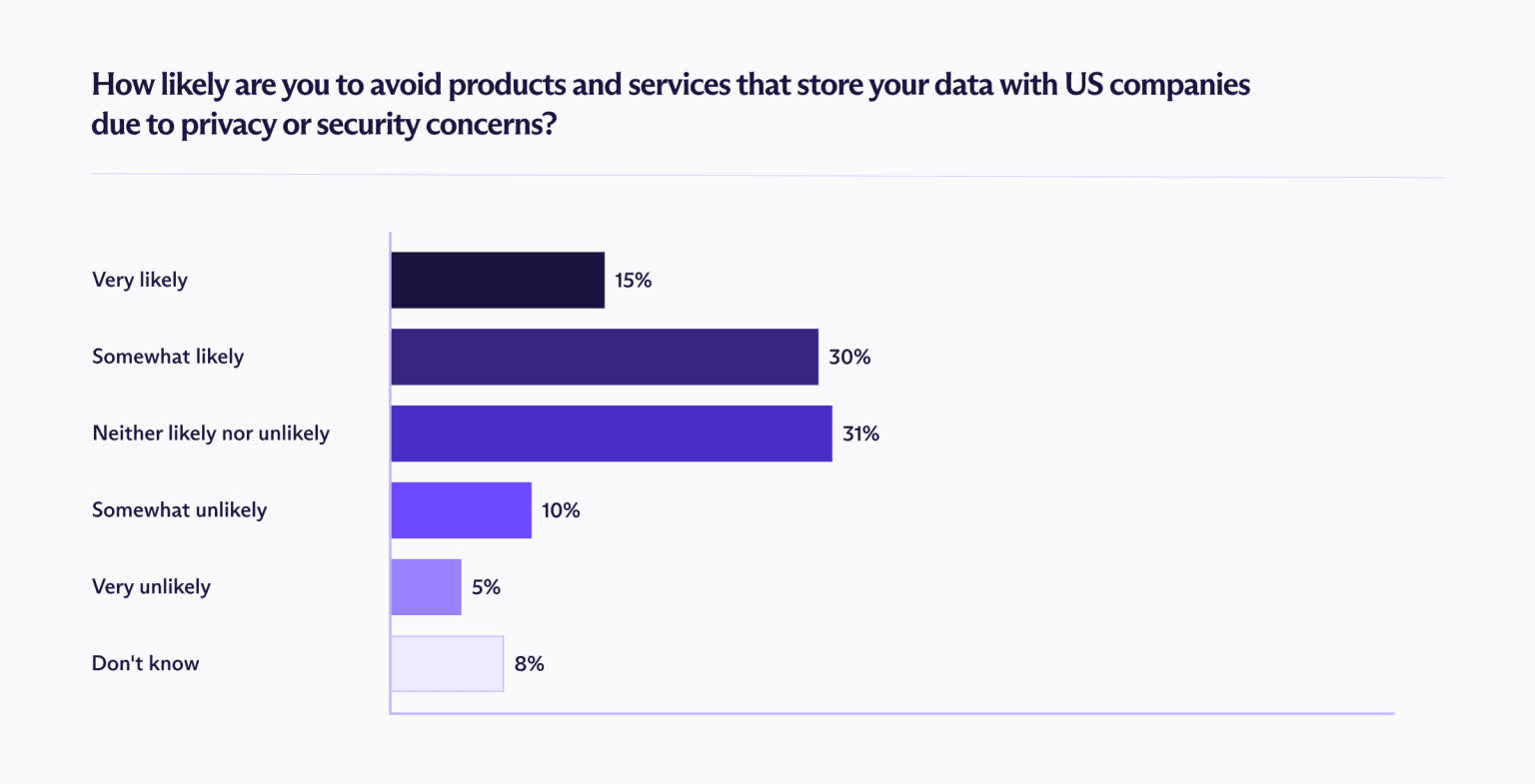
A hot potato: A new survey has illustrated Europe's growing reluctance to rely on US technology. It found that 45% of the 3,000 people surveyed in the UK, France, and Germany would actively avoid companies that store their data with US-based firms.
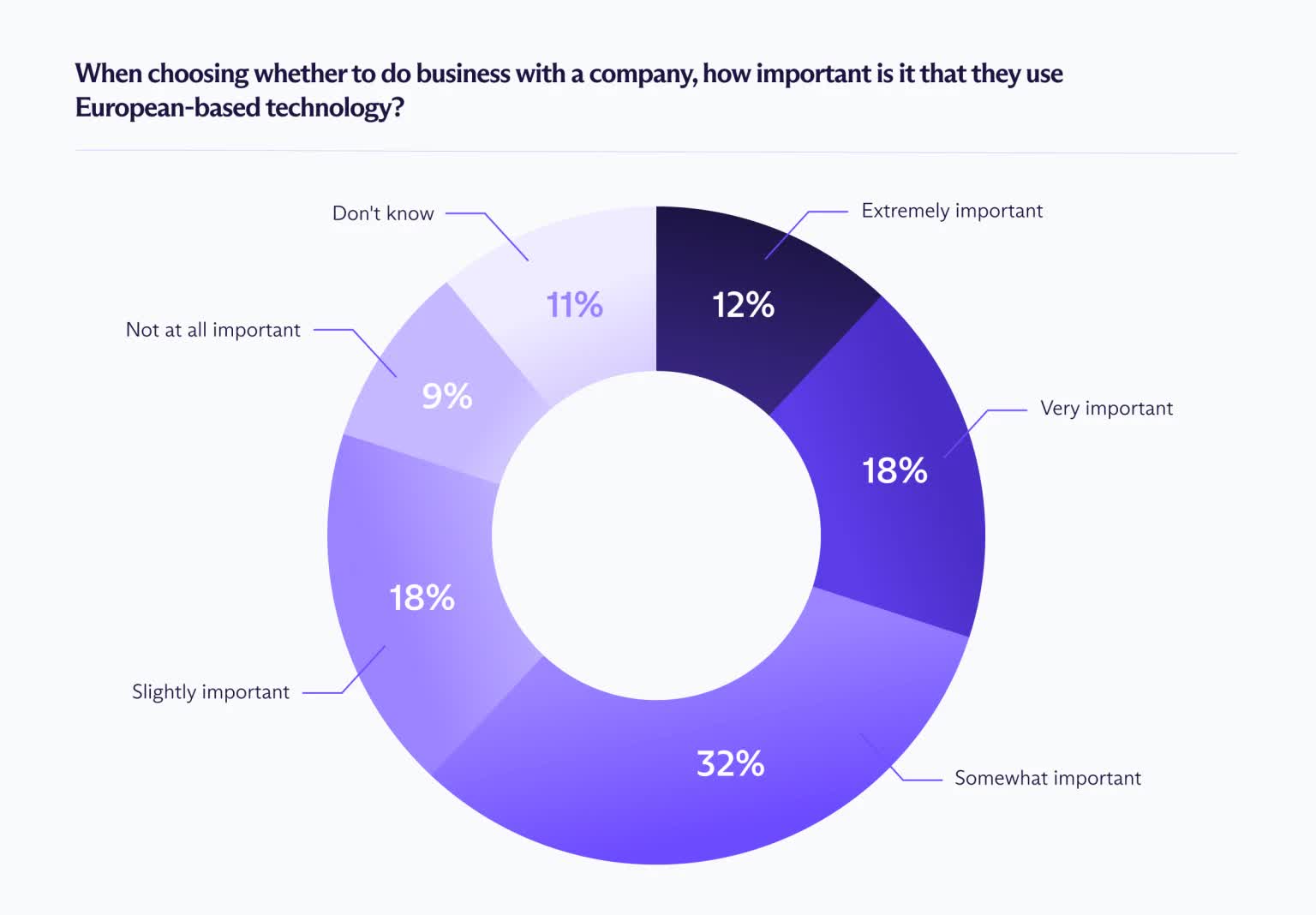
Proton's survey discovered that four out of five European consumers now consider the use of European technology a factor when deciding whether to buy from or work with a business. Almost half of those surveyed said they would avoid companies that store their data with US providers over privacy and security concerns.
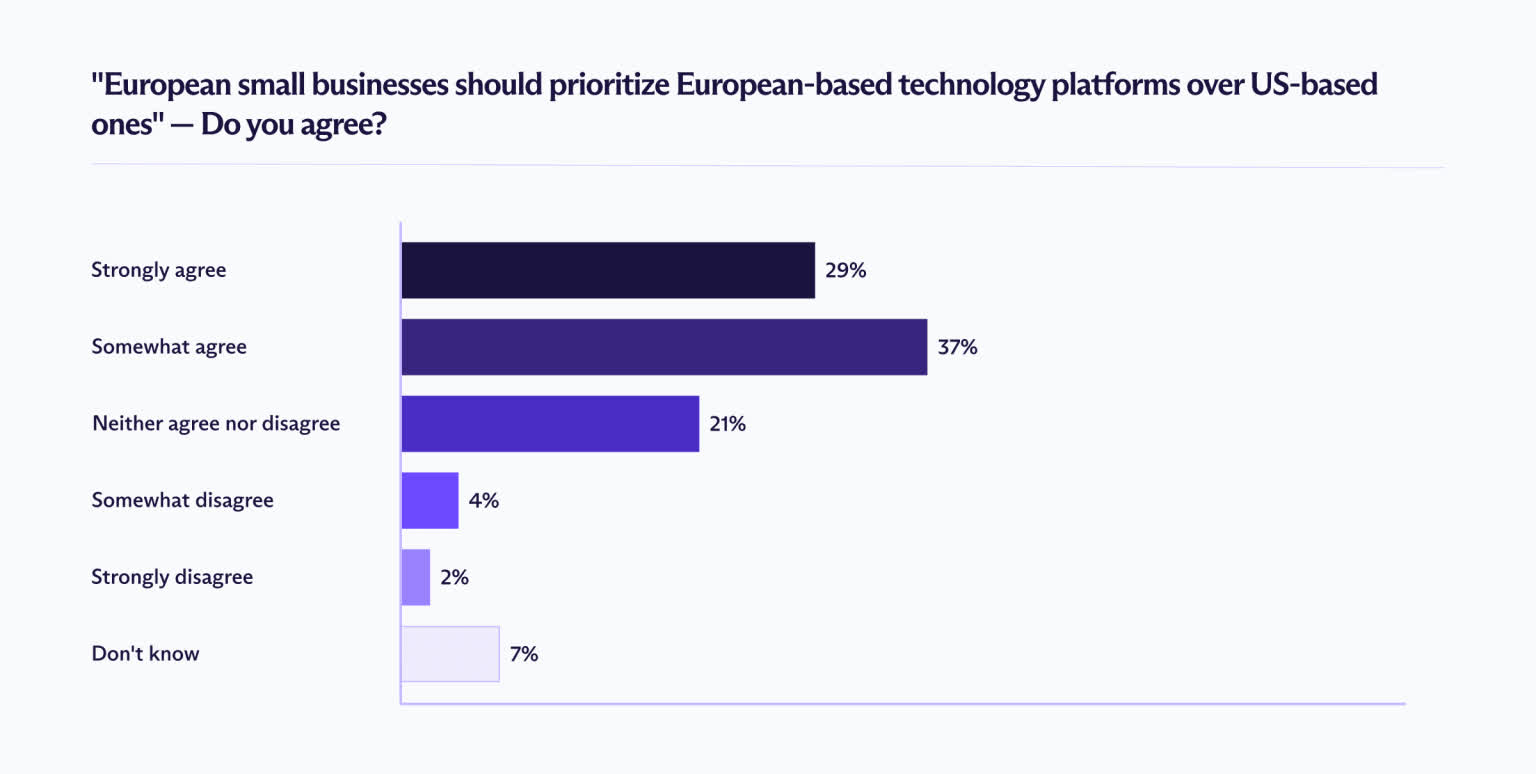
Some 65% of respondents said European small businesses should prioritize European-based tools over US alternatives, while 56% said it is more important now than a year ago that European businesses rely on local infrastructure.
Proton found that social media apps were the online services Europeans were most worried about from a data-privacy perspective, cited by 48% of respondents. This was followed by email at 46%, messaging apps at 40%, cloud storage at 38%, and browsers at 31%.
The findings suggest that choosing AWS, Microsoft 365, Google Workspace, or Meta services is no longer seen by some European customers as the best or sometimes only option. More people on the continent are worried about where their personal data might end up and who could potentially access it.
Part of that concern comes from the US Cloud Act, which allows US law enforcement agencies to demand data from American technology companies, even when it is stored in data centers outside the country.
There are legal safeguards around such requests, but the perception for many Europeans is that data stored with a US company is not truly European.
It's not just consumers who are concerned. Last month, the Netherlands blocked US enterprise services provider Kyndryl from buying Dutch cloud specialist Solvinity, which supports DigiD, the authentication platform used by citizens to access public services. Dutch officials said the decision was based on national security and public-interest risks, rather than hostility toward US companies.
Europe has also been looking at ways to restrict Microsoft, Amazon, and Google from handling sensitive government health, financial, and legal data as part of its push for digital sovereignty.
Proton, which has an obvious interest in the findings as a Swiss provider of privacy-focused services, argues that US tech dependence is becoming a commercial liability.
The firm previously claimed that 74% of publicly listed European companies rely on US-based services such as Google and Microsoft.
US platforms remain deeply integrated into European businesses, and are often very good at what they do, so dependence will not disappear overnight. But Proton's numbers suggest the privacy backlash is starting to reach ordinary customers, not just regulators and campaigners.
此内容由惯性聚合(RSS阅读器)自动聚合整理,仅供阅读参考。 原文来自 — 版权归原作者所有。