
惯性聚合 高效追踪和阅读你感兴趣的博客、新闻、科技资讯
阅读原文 在惯性聚合中打开

推荐订阅源

量子位
博客园_首页
Google DeepMind News
博客园 - Franky
The GitHub Blog
The GitHub Blog
GbyAI
GbyAI
有赞技术团队
有赞技术团队
Microsoft Azure Blog
G
Google Developers Blog
Recent Announcements
A
About on SuperTechFans
博客园 - 【当耐特】
博客园 - 三生石上(FineUI控件)
酷 壳 – CoolShell
酷 壳 – CoolShell
美团技术团队
罗磊的独立博客
IT之家
IT之家
博客园 - 聂微东
Stack Overflow Blog
Stack Overflow Blog
Jina AI
Jina AI
腾讯CDC
P
Proofpoint News Feed
Hugging Face - Blog
Hugging Face - Blog
让小产品的独立变现更简单 - ezindie.com

TechSpot

Flagship Rematch: Ryzen 7 5800X3D vs. Core i9-12900K Slack chats and internal data from failed startups are finding a second life in AI training A $5 Bluetooth tracker hidden in a postcard exposed a warship's movements Leakers claim PlayStation 6 could offer at least 3x the performance of the PS5 The Mac Mini is no longer a niche product, it's local AI infrastructure IPv6 traffic reaches parity with IPv4 for the first time, Google data shows Xbox expansion cards are now cheaper than SSDs, and PC users are repurposing them Blue Origin prepares to reuse New Glenn booster in bid to challenge SpaceX Nvidia could bring back the 12GB RTX 3060 as supply issues disrupt GPU roadmap What was the first OS you ever used? SNK revives NeoGeo AES with modern upgrades and HDMI support Valve's Proton 11 beta boosts Linux gaming with better performance and classic game support Researchers warn Microsoft Defender vulnerability is already being exploited A four-day Steam freebie turned into $250,000 for an indie game AMD may relaunch Ryzen 7 5800X3D for AM4's 10th anniversary This humanoid robot can almost run as fast as a human sprinter Two New Jersey men jailed for helping North Korean IT workers infiltrate 100+ companies A $7,000 DIY radar project is taking on hardware that usually costs over $100,000 Metro 2039 is going darker than ever, launching this winter on PC and consoles Gemini arrives on macOS with a dedicated desktop app AI infrastructure boom pushes AMD, Intel and Arm to new valuation heights New self-healing material can repair itself over 1,000 times, extend the lifespan of cars and aircraft Japan's bullet train to debut high-tech private cabins, for an added fee Memory card and flash drive pricing surges 120%, with some models spiking 260% Open-source tool decrypts all private data collected by Windows Recall on Copilot PCs The 2026 PC and Console Gaming Report shows most revenue now comes from games outside the Top 20 PureMac is a new open-source macOS cleanup and app removal tool Your Airbnb host might actually be AI Steam might soon display 30-day price history for game deals Intel brings 18A process to budget laptops with new Core Series 3 CPUs
Samsung is building floating data centers on ships, and i...
Alfonso Maruccia · 2026-06-12 · via TechSpot

Serving tech enthusiasts for over 25 years.
TechSpot means tech analysis and advice you can trust.

Does AI Float?: The need for massive infrastructure to store digital data is growing, so tech giants are trying some novel approaches. Samsung's shipbuilding division, for example, would like to move AI data centers away from the mainland and out to sea.

Hitachi recently announced a partnership with Mitsui O.S.K. Lines to develop floating systems to host self-sustaining AI data center facilities. Now, Samsung Heavy Industries is cooperating with different partners to fully develop its novel Floating Data Centers (FDC) concept. Samsung Heavy Industries is a South Korean shipbuilding company that's part of the wider Samsung Group conglomerate.

While Hitachi is working with Mitsui to convert existing vessels into "refurbished" data center plants, Samsung HI is doing something different. The Korean corporation recently signed an agreement with Capital Clean Energy Carriers, a Greece-based shipowner, to develop new data-ready vessels from scratch.

Samsung HI Executive Vice-President and CTO Young-kyu Ahn previously stated that FDCs are a new business model that brings shipbuilding capabilities and digital infrastructure together. Samsung has already developed its 50MW-class FDC model, which could run on both a self-generating power system and an external power source coming from the mainland.
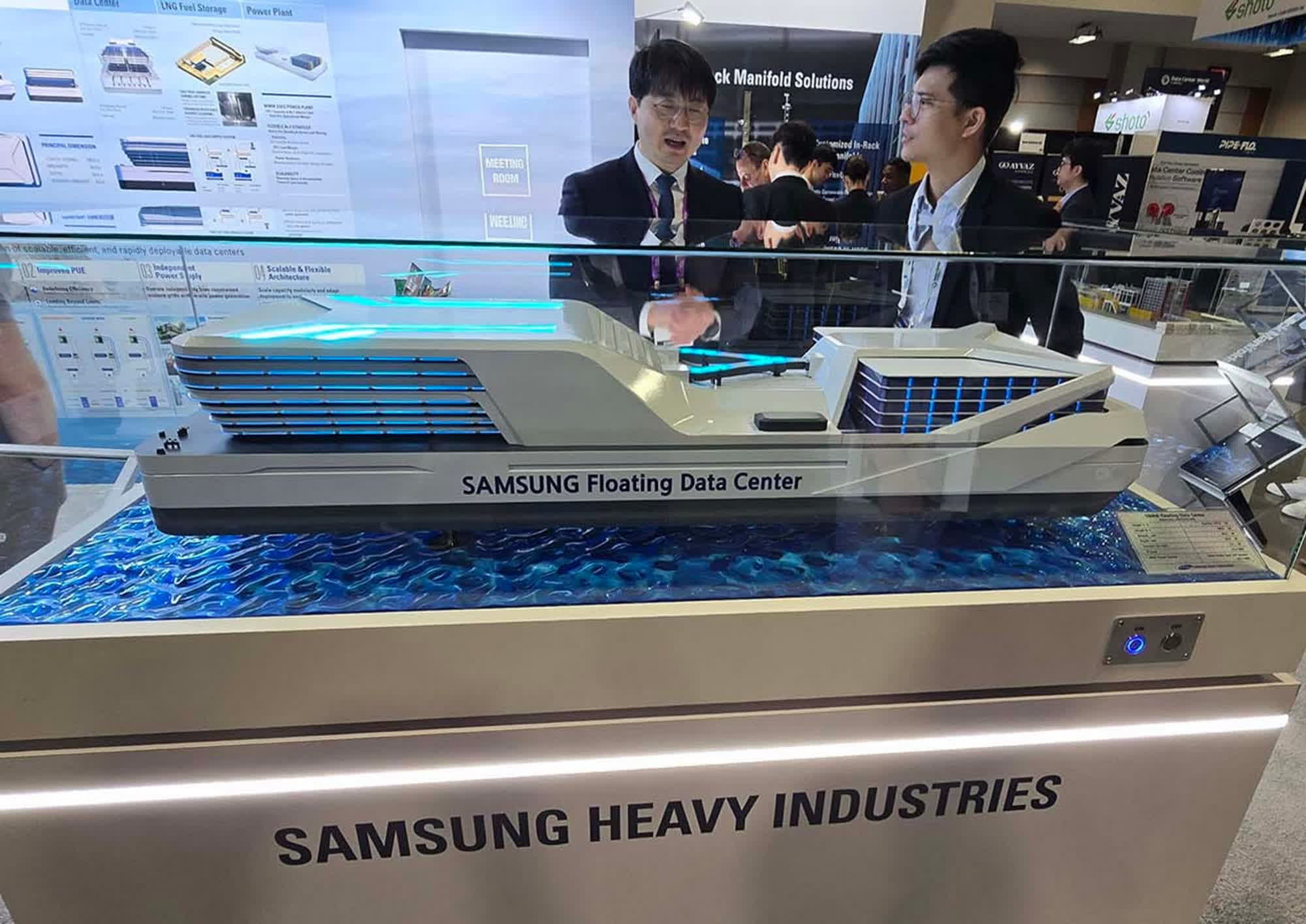
Samsung's 50MW FDC concept design has already been approved by the American Bureau of Shipping and Lloyd's Register, but the job is not done yet. Together with Capital Clean Energy, the Asian giant is now looking to fully validate its concept with real-world prototypes. The partnership is instrumental in checking for potential issues with the FDC design, looking for reliability problems with the data-related workloads, humidity or salinity damage, vibration, and more.

Turning a data center operation into a seafaring vessel is no easy feat, which is why Samsung previously signed an agreement with Supermicro to develop new server setups. At any rate, Samsung HI is investing significant energy in this new FDC idea.

A few weeks ago, the company signed yet another agreement with US venture Mousterian Corporation. The Dallas-based specializes in developing floating and "water-adjacent" data center infrastructure, which is a core concept behind the FDC design.

According to Mousterian CEO Min Suh, the partnership with an established shipbuilding business such as Samsung HI serves as a clear demonstration of the business viability of floating data center designs. A few months ago, Samsung signed an agreement with OpenAI to greatly expand AI data center capacity around the world. If the FDC model works, some of these facilities might not be on land.