


Serving tech enthusiasts for over 25 years.
TechSpot means tech analysis and advice you can trust.
Through the looking glass: AI image generators have grown sophisticated enough to largely eliminate early tells like malformed hands or feet. However, image forensics experts recently began focusing on laws of physics that large language models do not (yet) understand, such as those governing light and perspective.
A study published in the journal Science explains that while modern image generators are rapidly improving, the models behind them remain fundamentally ignorant of how light and geometry work in the real world. Measuring simple details like reflections or shadows can still give away a fake photo – that gap, experts argue, is now one of the most reliable ways to distinguish authentic photographs from AI fakes.
Spotting a fabricated image used to be straightforward. Early generators mangled anatomical details, rendered text as gibberish, and missed the grain and compression artifacts native to real photography. Those flaws have largely been engineered away in the latest tools, making AI-generated imagery convincing enough to fool casual viewers, which means they are increasingly likely to spread unchecked across social media.
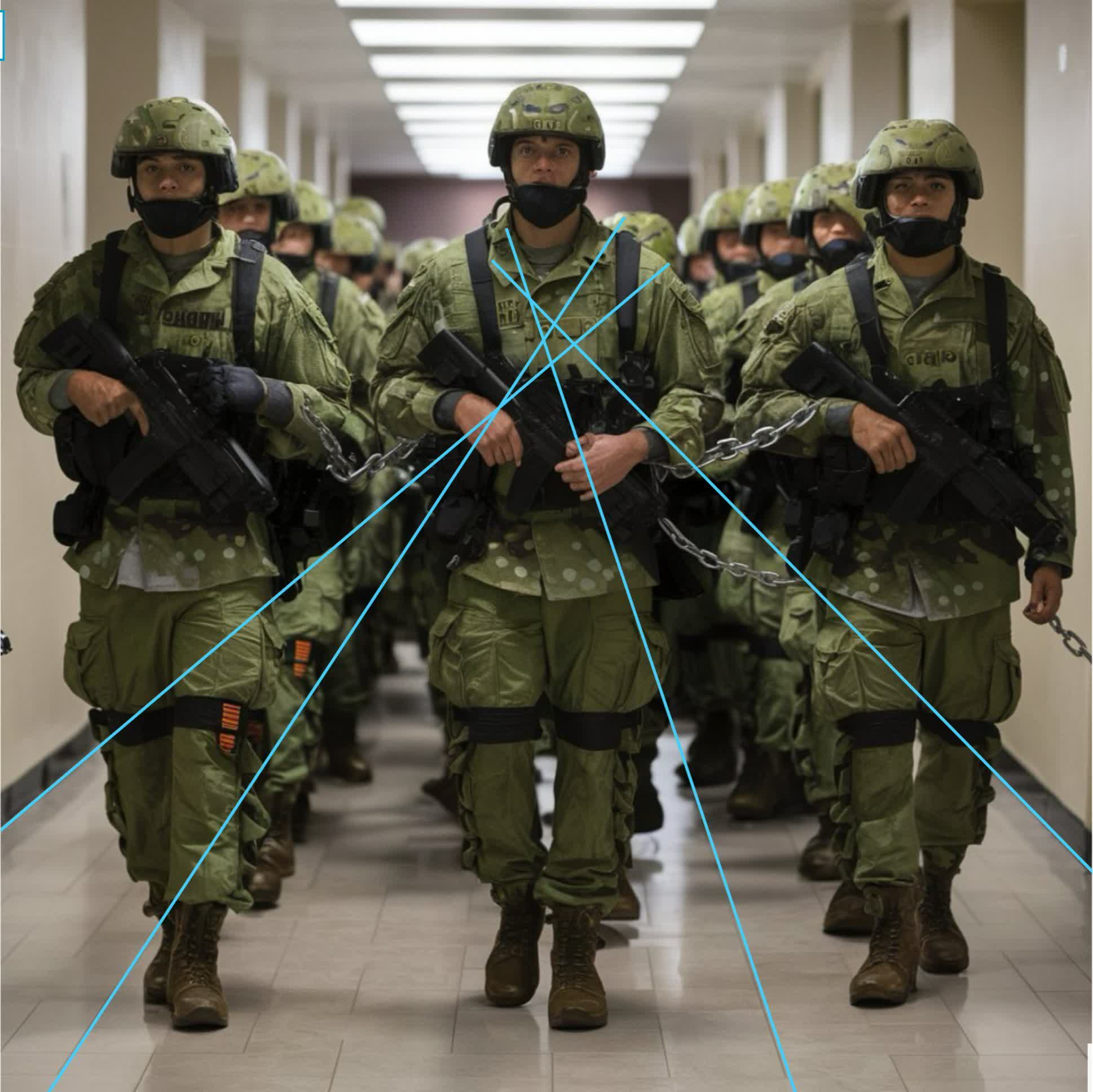
Part of what makes these images effective is a kind of manufactured drama. They tend to look the way humans expect reality to look: vivid, cinematic, and stylized in ways shaped by decades of movies and media.
Hany Farid, a UC Berkeley professor widely considered one of the founders of digital forensics, has been exploiting a subtler weakness. He has (so far) successfully fought AI fakes by comparing small details to how they should appear in reality. AI image generators, he argues, have yet to learn a foundational lesson from any introductory art class: the vanishing point.
For example, although the above AI-generated image of soldiers marching down a hallway contains obvious flaws such as garbled text and chains leading nowhere, the floor tiles reveal a subtler mistake. In the real world, parallel lines, such as floor tiles or floorboards, should meet at a vanishing point. Drawing lines on a photo to find the vanishing point is a good way to verify its authenticity.
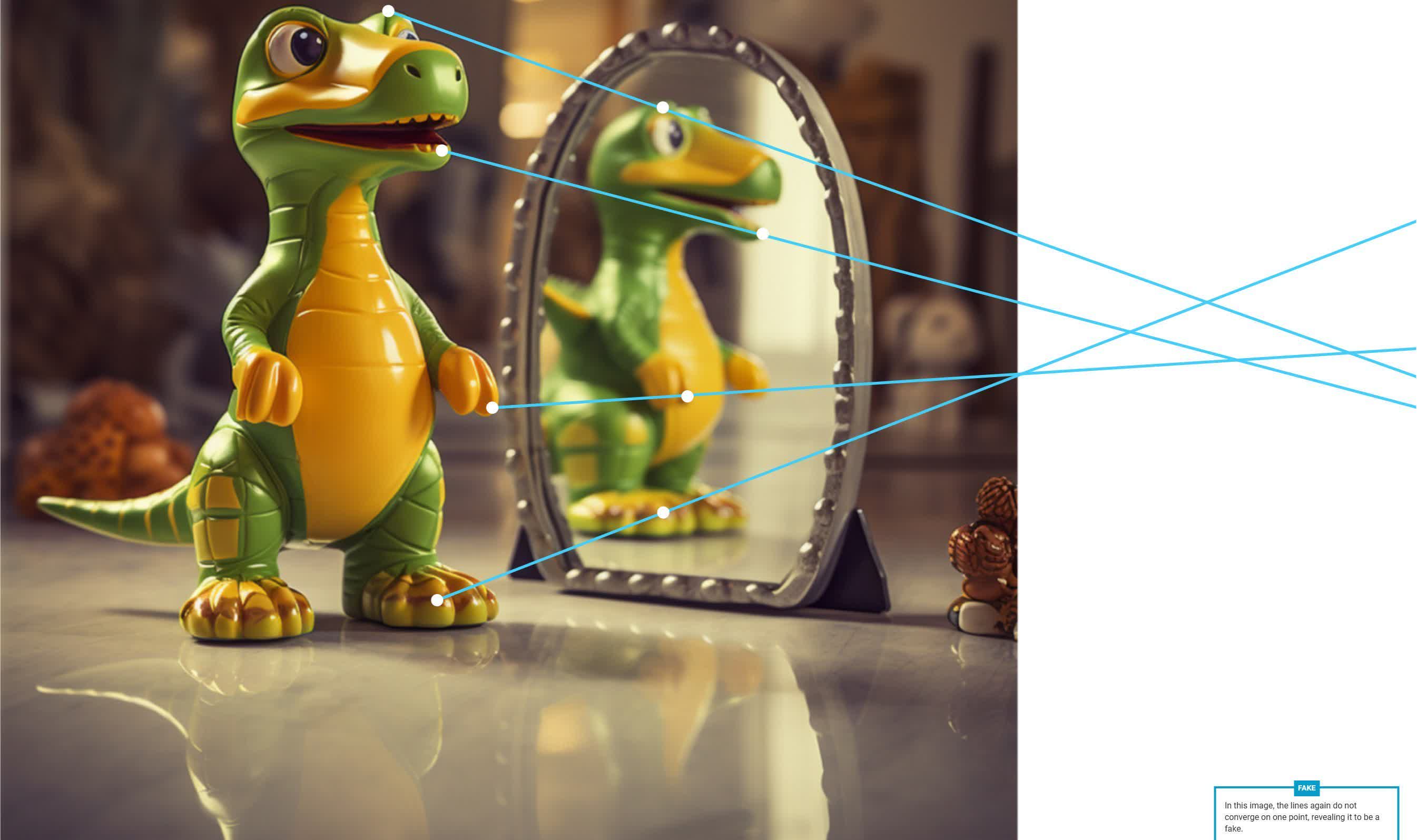
Reflections offer another opportunity to administer the same test. Although AI image generators can now create reflections convincing enough for the human eye, any straight measuring tool can break the illusion, since lines connecting points to their matching points in reflections should run parallel and meet at a vanishing point.
Shadows created by sunlight follow the same rules. The Sun is so far away from the Earth that its rays are effectively parallel when they reach us, so lines connecting points on objects to the same points on their shadows should also intersect at a vanishing point.
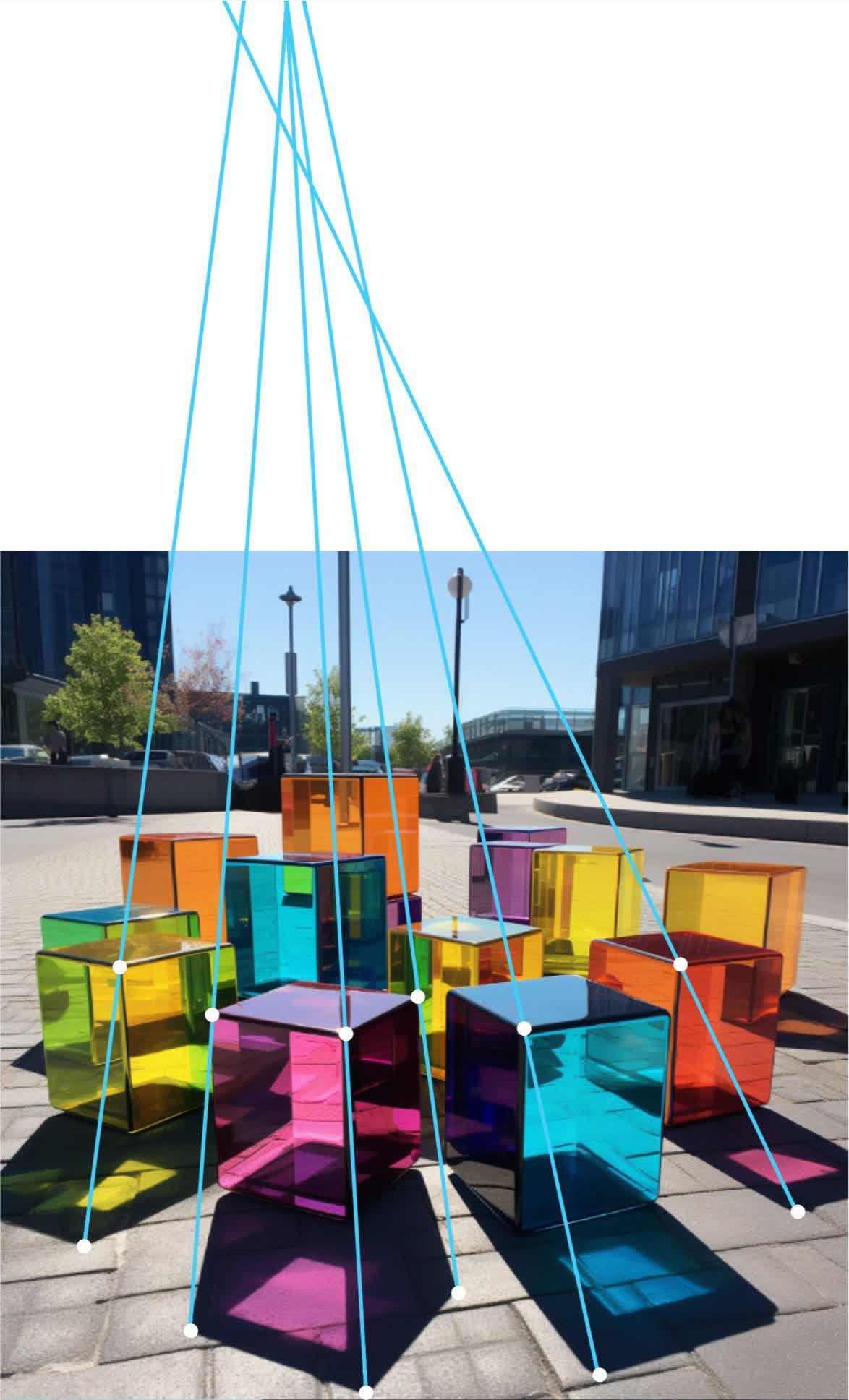
Whether LLMs will overcome these errors, or when, remains unclear. While other AI flaws are quickly disappearing, measuring perspective lines requires more time and effort than casual viewers are willing to spend. Understanding such physical laws might also be beyond the capabilities of current generative AI models.
Researchers also warn skeptical users against using AI-based detection tools. While some can be more reliable than untrained human eyes, they can struggle with input that differs significantly from their training data.
A separate study adds an unexpected wrinkle: verifying a real photo may actually be harder than catching a fake one. The longer a viewer examines an image and fails to find anything wrong, the more likely it is to be genuine – meaning that sometimes, the absence of errors is itself the evidence.
此内容由惯性聚合(RSS阅读器)自动聚合整理,仅供阅读参考。 原文来自 — 版权归原作者所有。