


Serving tech enthusiasts for over 25 years.
TechSpot means tech analysis and advice you can trust.
Bottom line: Panthalassa wants to move a chunk of the AI infrastructure stack off land and into deep water, running neural network workloads on towers that live entirely on wave power and seawater cooling. The company has raised $140 million in Series B funding to move from prototypes into its first commercial hardware. It is effectively betting that open-ocean energy and offshore compute will scale faster than new land-based data centers.
The basic concept is straightfoward: generate electricity from waves, use it on the spot, and run AI chips with no connection to the grid. Panthalassa builds autonomous platforms it calls nodes, tall steel structures that sit mostly below the surface and rise and fall with the motion of the sea.
Inside, the vertical movement pushes water through an internal turbine, producing electricity in a closed loop. The company does not plan to send any of that power back to shore. Instead, the nodes carry their own compute stack in a sealed capsule, and the energy feeds those processors directly.
Results from the AI workloads travel to land via satellite links such as Starlink, so the units operate as self-contained, offshore data centers.
Panthalassa is doing that on purpose. "One of the key insights that we had . . . was that it's very important to use the electricity in place," chief executive and co-founder Garth Sheldon-Coulson told the Financial Times. "We will never be transmitting electricity back to shore. That makes us very different from all other ocean energy that's been tried in the past."
The nodes are built to avoid the complexity that has tripped up earlier marine power systems. The structures are largely solid, with no hinges, flaps or gearboxes exposed to constant wave impact. Panthalassa argues that this design cuts maintenance risk and makes the units easier to manufacture at scale from standard steel plate. The design also recirculates the same internal water to drive the turbine, which the company says eliminates emissions and limits interaction with sea life.
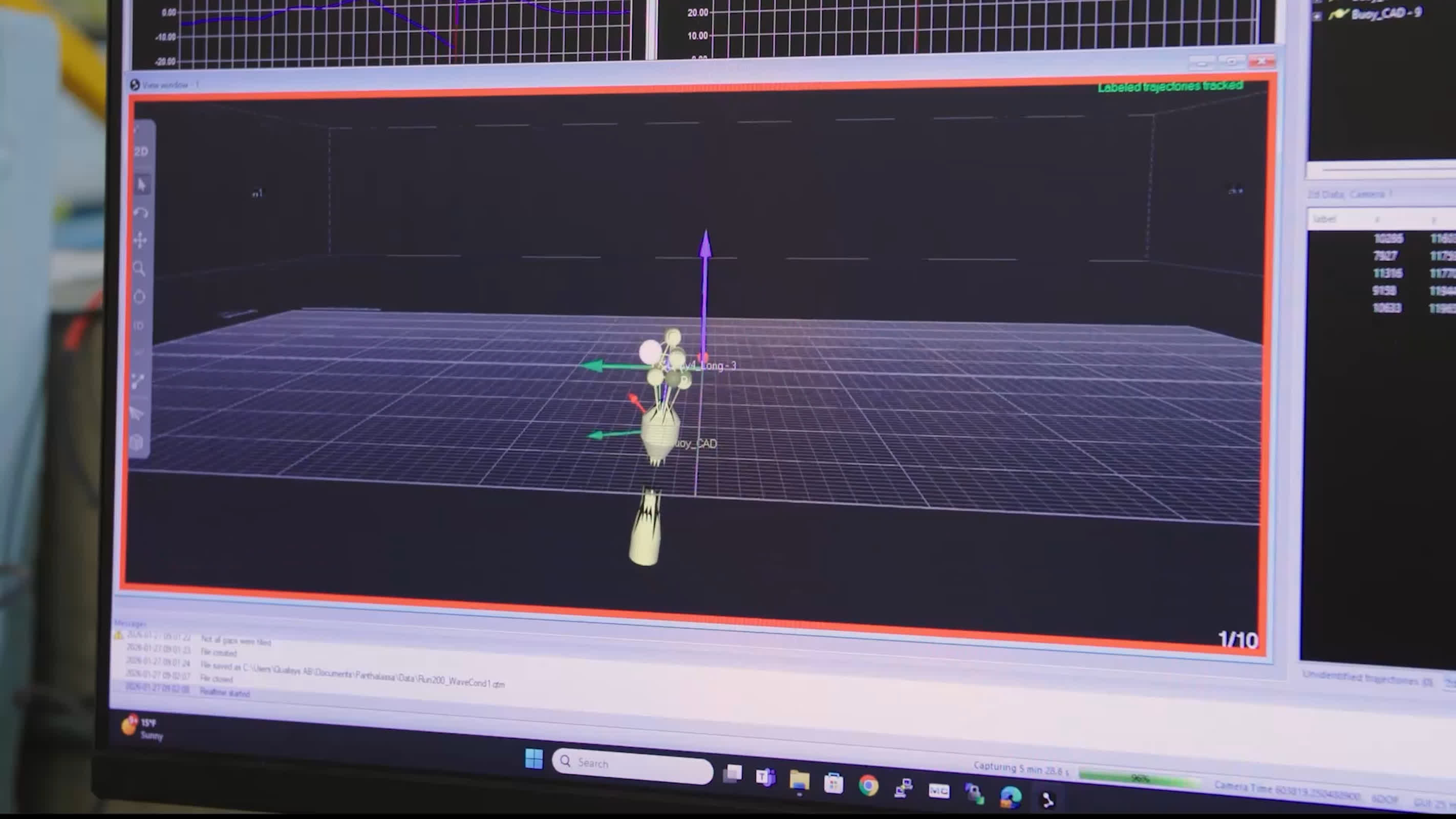
Rather than drawing on freshwater or building out large chiller plants, Panthalassa uses the surrounding ocean as a thermal sink to cool its servers. The company says that this setup not only helps keep temperatures in check but also extends hardware life, because the thermal profile is more stable than in many land-based sites. The company says it uses "earth-abundant materials" and existing steel supply chains so the nodes can be built quickly in coastal factories and shipped offshore.
The nodes are assembled on land, towed out horizontally behind a boat and then flipped upright once they reach deep water. From there, they use their hull shape and the surrounding waves to make their way into the open ocean, rather than relying on engines.
The company has tested earlier versions of the system – including its Ocean-1, Ocean-2 and Wavehopper prototypes – to dial in propulsion, autonomy, and energy generation in real conditions. Those trials fed into the current Ocean-3 series, which Panthalassa plans to deploy in the northern Pacific starting in 2026, with broader commercial rollout expected in 2027.
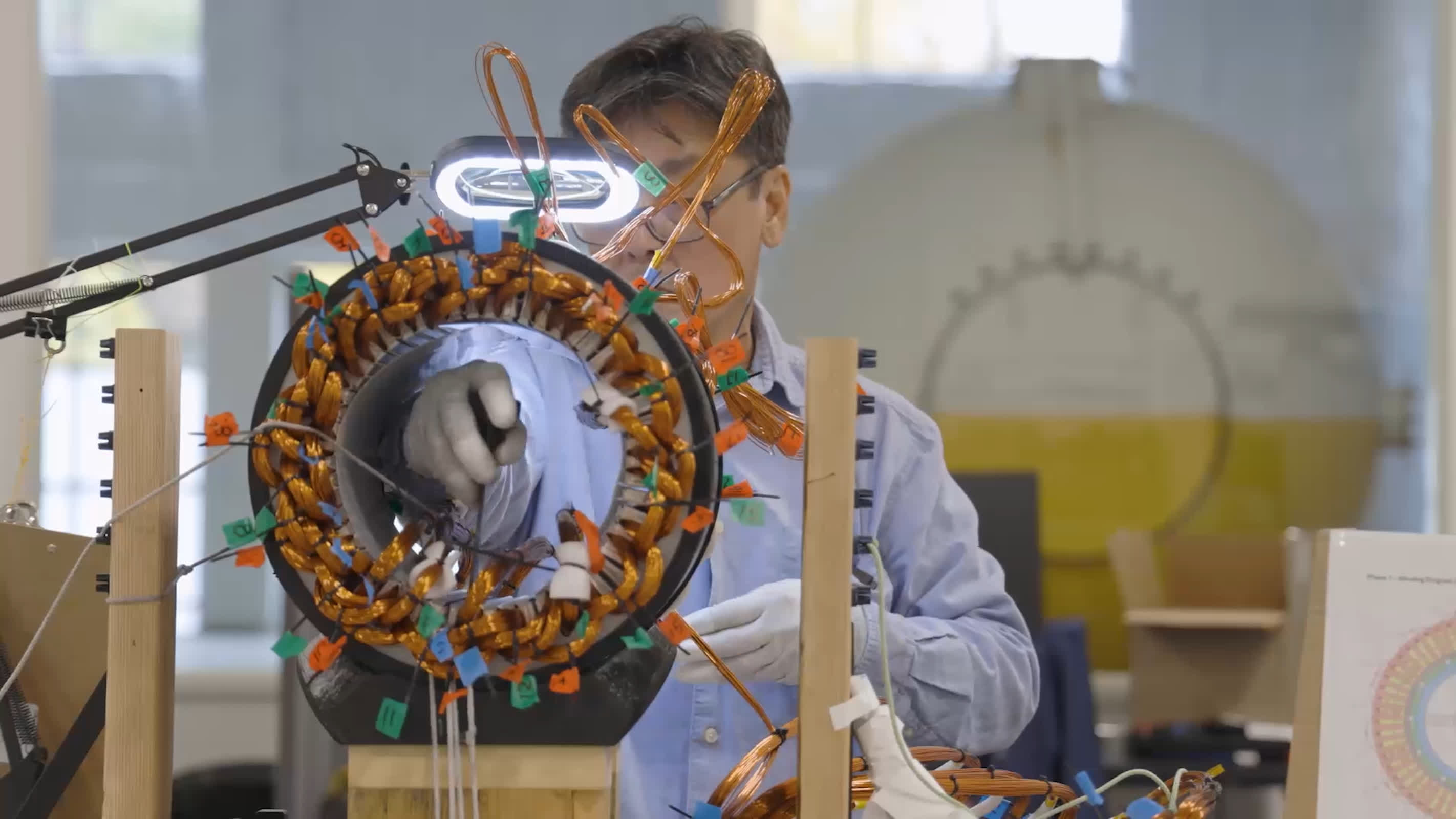
Panthalassa is using the new capital to complete a pilot manufacturing facility near Portland, Oregon, where it plans to build the first batch of large-scale nodes. The investor list includes Peter Thiel, who led the round through his personal fund, along with Marc Benioff's TIME Ventures, Max Levchin's SciFi Ventures and John Doerr, among others.
Sheldon-Coulson, a former AI and energy researcher, argues that wave and wind in the open ocean, alongside solar and nuclear, are among the few clean resources that can reach "tens of terawatts" of generation as AI workloads multiply.
He describes waves as a form of stored solar energy. "In our target regions . . . the waves are created by the wind and the wind is created by heat from the sun," he said. "So waves are twice-concentrated sunlight and they keep going even when the wind stops. The waves are like a battery for sunlight and we can be capturing from it 24/7." For now, Panthalassa's bet is that this "battery" can support a new class of distributed data centers that never touch the grid at all.
此内容由惯性聚合(RSS阅读器)自动聚合整理,仅供阅读参考。 原文来自 — 版权归原作者所有。