


Serving tech enthusiasts for over 25 years.
TechSpot means tech analysis and advice you can trust.
First look: Google is taking a different approach to wearables with the introduction of the Fitbit Air. The device removes the screen, focusing less on user interaction and more on quietly collecting health metrics in the background while software does the heavy lifting. In form and philosophy, it closely echoes the approach popularized by Whoop, the subscription-based fitness tracker.
The Fitbit Air is a compact module that fits into a range of bands, with its sensors pressed against the skin and no display on top. That means no notifications, no tapping, and no swiping – just passive tracking. With nothing to interact with, the device is easier to wear continuously, including overnight.
The design addresses a longstanding issue with smartwatches. While widely adopted, they haven't become essential for many users, partly because they require frequent charging and aren't always comfortable enough for continuous wear. Google says the Fitbit Air can last about a week on a single charge while still collecting data around the clock. It can also store up to a day's worth of data without needing to sync with a phone.
The sensor suite includes heart rate monitoring, motion tracking via an accelerometer and gyroscope, infrared SpO2, and skin temperature sensing. Google notes that the heart rate sensor isn't as advanced as the one in its Pixel Watch lineup, which could make a difference during more intense workouts. Beyond that, the hardware keeps things minimal, with only a vibration motor for alarms and no support for notifications. Notably, it also lacks onboard GPS and an altimeter – features found on the Whoop 5.0.

Rather than replacing the Pixel Watch, the Air is meant to sit alongside it. Users can pair both devices with the same phone and switch between them as needed. Google says this multi-device support will expand to other wearables, hinting at a broader ecosystem of devices that serve specific roles.
That platform is also changing. The Fitbit app is being reworked and renamed Google Health, with a redesigned interface and less emphasis on the Fitbit brand. Fitbit Premium is being folded into a new subscription tier called Google Health Premium.
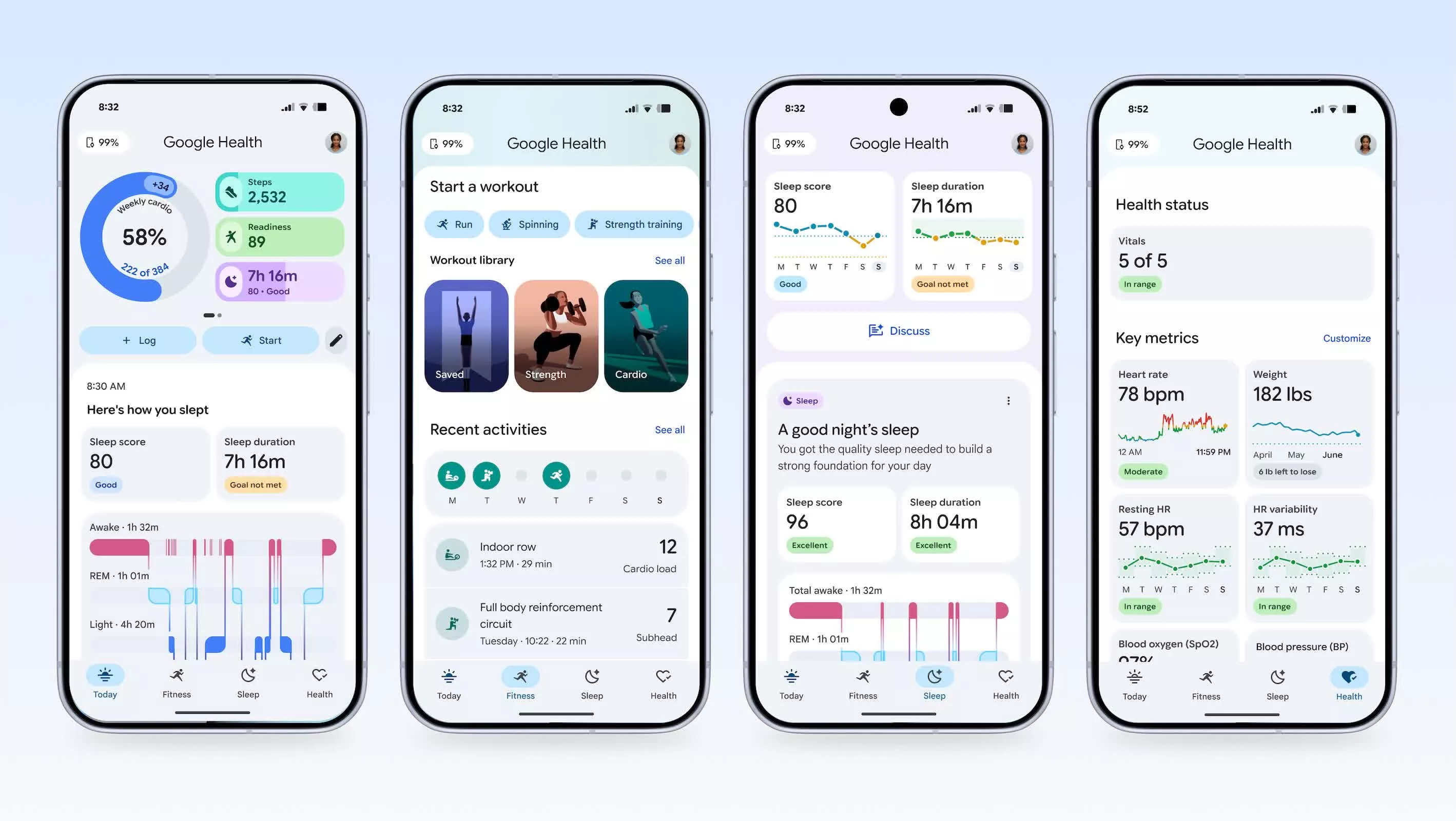
The core functionality – tracking activity, logging workouts, and visualizing health data – remains intact, but Google is placing greater emphasis on how that data is used. The biggest addition is an AI-powered Health Coach built on Gemini. It functions as a chatbot that can answer questions and generate recommendations based on a user's data.
Google says the model has been tuned specifically for health use cases, using input from medical experts and user studies. It can suggest workouts based on past activity, analyze sleep patterns, and even process images of food to log meals. How useful the system turns out to be will likely depend on how much data it has to work with – the more consistent the data, the more context the AI has.
The approach raises familiar privacy concerns. Google says it will not use health data for advertising and won't include it in AI training unless users explicitly opt in. There will be a setting to allow data sharing for training purposes, though it's unclear how many users will choose to enable it.
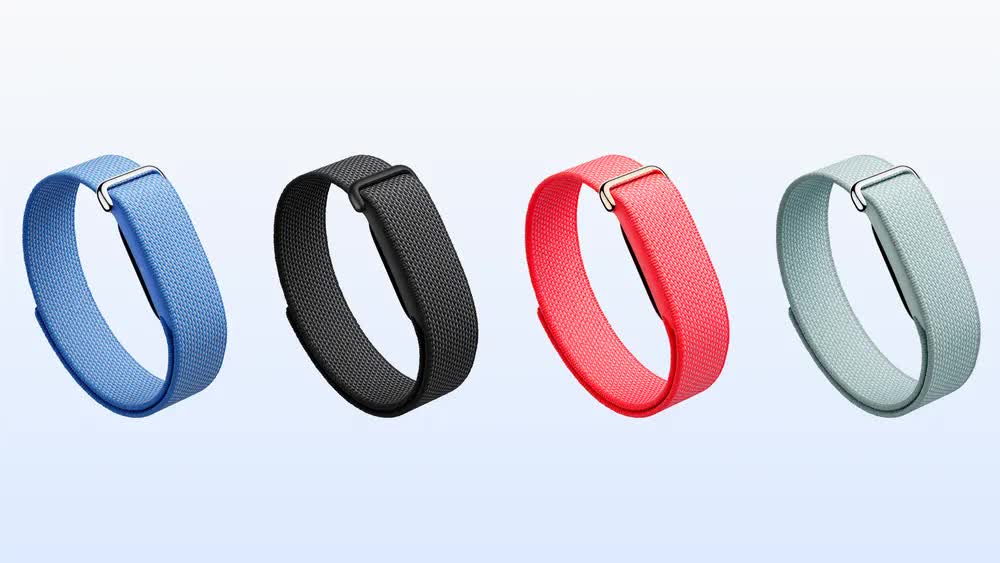
The Fitbit Air launches on May 26 at $99.99 and includes a standard band; additional styles are sold separately. Buyers also get three months of Google Health Premium, which will cost $10 per month or $100 per year afterward.
By comparison, Whoop's entry-level subscription costs $199 per year, with the hardware bundled in rather than sold separately. The Fitbit Air's model is notably more accessible: the device is purchased upfront for $100, and the core tracking features work without any subscription. Google Health Premium is optional and unlocks the Gemini AI coaching layer.
As part of the transition, Google Fit will be shut down later this year, with users expected to migrate their data into Google Health.
What emerges from all of this is a shift in priorities. Google appears less focused on competing feature-for-feature with traditional smartwatches and more interested in building a system where hardware fades into the background. The emphasis is on continuous data collection and the software layer that interprets it – particularly AI models that can turn raw metrics into actionable insights.
此内容由惯性聚合(RSS阅读器)自动聚合整理,仅供阅读参考。 原文来自 — 版权归原作者所有。