
惯性聚合 高效追踪和阅读你感兴趣的博客、新闻、科技资讯
阅读原文 在惯性聚合中打开

推荐订阅源

Vercel News
Vercel News
奇客Solidot–传递最新科技情报
奇客Solidot–传递最新科技情报
Apple Machine Learning Research
T
Tailwind CSS Blog
让小产品的独立变现更简单 - ezindie.com
人人都是产品经理
人人都是产品经理
V
V2EX
量子位
Last Week in AI
Last Week in AI
Jina AI
Jina AI
博客园 - 【当耐特】
爱范儿
爱范儿
宝玉的分享
宝玉的分享
OSCHINA 社区最新新闻
OSCHINA 社区最新新闻
Hugging Face - Blog
Hugging Face - Blog
博客园 - 三生石上(FineUI控件)
有赞技术团队
有赞技术团队
小众软件
小众软件
IT之家
IT之家
博客园_首页
博客园 - 聂微东
S
SegmentFault 最新的问题
阮一峰的网络日志
阮一峰的网络日志
博客园 - 叶小钗

Latest from Live Science

Naked mole rats wage bloody wars of succession to choose a new queen — but one colony did something scientists… Can the US be trusted with the moon? A law scholar raises concerns after Artemis II Lyrid meteor shower 2026: See spring's first rain of 'shooting stars' peak in moonless skies $3 million prize goes to duo whose research led to first sickle cell CRISPR therapy 700-year-old mummy from Bolivia contains earliest confirmed evidence of strep throat bacteria in the Americas New pain-relief opioid could be much less addictive than morphine, rodent study finds Experimental drug doubles one-year survival in pancreatic cancer Science news this week: Physicists witness faster-than-light darkness pinpricks, humans are still evolving, and some… Archaeologists discover perfectly circular ancient Egyptian temple that may have been used for sacred water rituals Some polar bears are adapting to their melting habitat. Will it be enough to save the iconic species? 2 supermassive black holes may collide 100 years from now ‪—‬ and Earth would feel it Anglo-Saxon burial holds an older sister cradling her little brother after they both died 1,400 years ago, possibly of… Colorado River may have pooled and spilled over to form the Grand Canyon, solving a long-standing mystery ‪—‬… 'We all screamed when it happened': Bright-green fireball meteor caught exploding over famous Viking raid site… Northern lights may be visible from several US states Friday and Saturday as giant hole opens up in sun Hackers used AI to steal hundreds of millions of Mexican government and private citizen records in one of the largest… The first black hole ever discovered is spewing 'dancing jets' at half the speed of light Stephen Hawking's black hole information paradox could be solved — if the universe has 7 dimensions 'Something's missing': Most thorough-ever study of the cosmos proves we still can't explain how the… 'Human evolution didn't slow down; we were just missing the signal': Large DNA study reveals natural selection led to more redheads and less male-pattern baldness Artemis II quiz: Is your knowledge of NASA New study confirms lobsters feel pain, driving scientists to call for a ban on boiling them alive This humanoid robot does all your housework for you ‪—‬ and its makers say it Ancient process that created rare earth elements discovered — and it could help us locate desperately needed deposits Strange mammal ancestor laid huge, leathery eggs —‬ and it was key to surviving the world 73 moon landings? NASA Diagnostic dilemma: A woman heard voices telling her she had a brain tumor ‪—‬ and scans confirmed she did Triassic croc relative from Ghost Ranch, New Mexico finally identified after nearly 80 years in museum basement There were Physicists witness pinpricks of darkness moving faster than the speed of light ‪—‬ without breaking the laws of relativity
Science history: Doctor autopsies the brain of a man who ...
Tia Ghose · 2026-04-18 · via Latest from Live Science
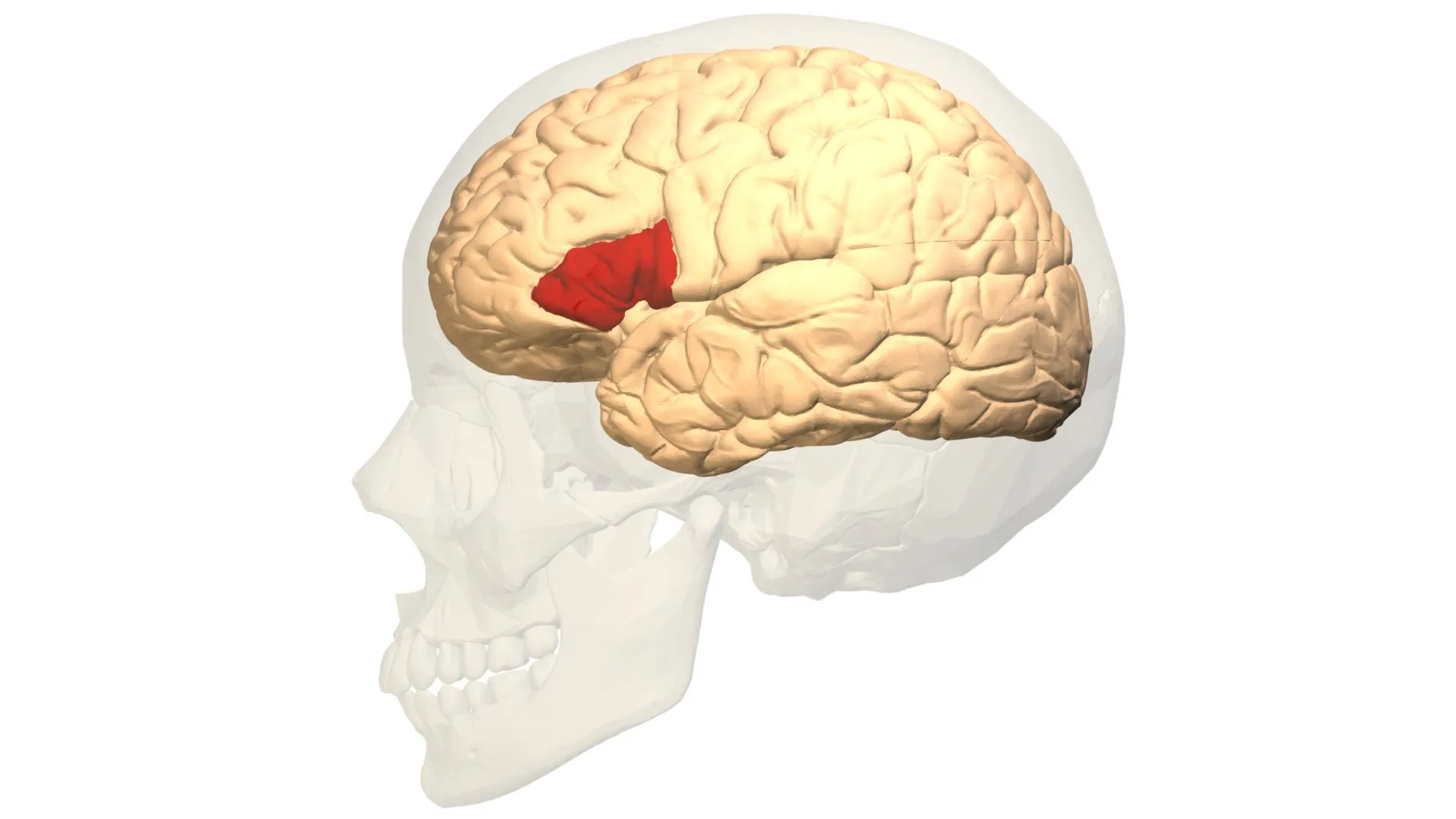
A transparent skull over a white background holds a tan brain with an area in the middle a deep red.
Broca's area of the brain (highlighted here) helps with speech processing. Dr. Paul Broca noted that damage to this general region of the brain was associated with aphasia after interacting with a patient nicknamed "Tan." (Image credit: Polygon data were generated by Database Center for Life Science(DBCLS), CC-BY-SA-2.1-jp)

QUICK FACTS

Milestone: Autopsy on famous patient "Tan"

Date: April 18, 1861

Where: Bicêtre Hospital, outside Paris

Who: Dr. Paul Broca

On April 18, 1861, a doctor in Paris cut open the brain of a patient who had died the day before — and unwittingly identified a brain region that's key to spoken language.

The patient, Louis Victor Leborgne, was nicknamed "Tan" by doctors at Bicêtre Hospital because it was one of the only words he could say. By the time he died at age 51, he had spent 21 years living in the psychiatric ward of the hospital.

Leborgne was reportedly healthy at birth but began having epileptic seizures in early childhood. At age 30, he lost his ability to speak. For a while, he avoided getting treatment, but he was eventually admitted to Bicêtre Hospital.

Article continues below

Doctors found that he could understand language well and he would use gestures to convey his needs. Rarely, he could utter a swear word.
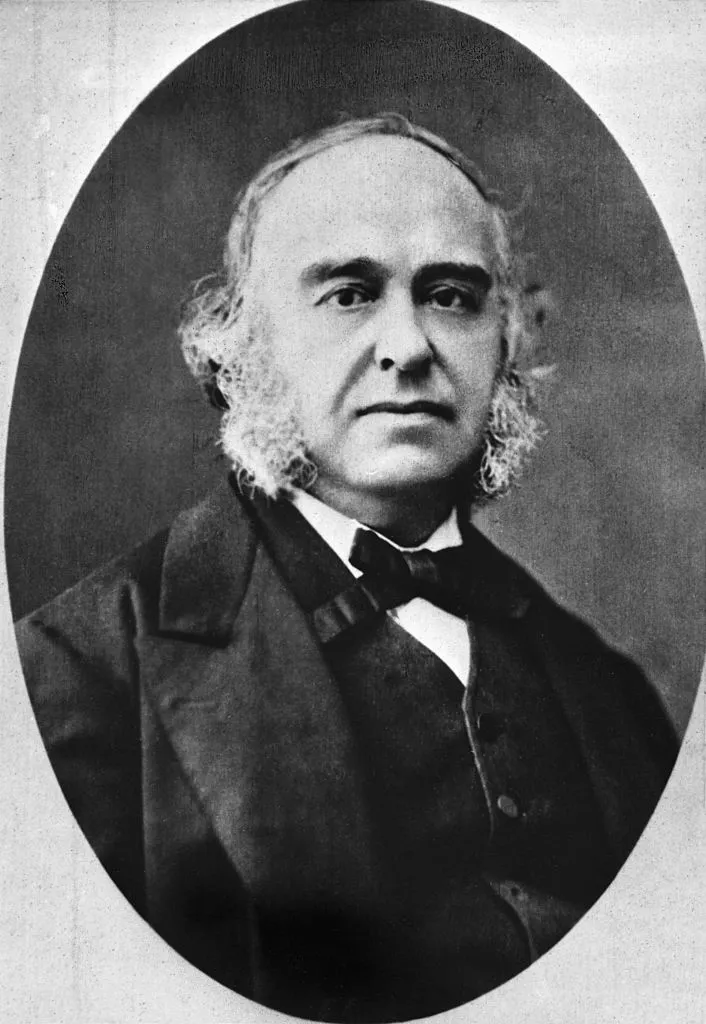
A black and white photo of a man with long hair and mutton chops wearing a black short bowtie and suit and vest.

Dr. Paul Broca was a French physician and anatomist who helped identify a key brain region involved in speech production. (Image credit: Hulton Deutsch via Getty Images)

A decade after he was admitted to the hospital, he began to experience right-sided paralysis that grew steadily worse, as well as mental difficulties. Eventually, he lost the ability to walk. He spent the last seven years of his life in bed.

During these last few years, Dr. Paul Broca, a surgeon at the hospital, began to see Leborgne as a patient.

"The numerical responses were the ones he made best, by opening or closing his fingers. He would indicate, without error, the time on a watch to the second. He knew exactly how many years he had been in Bicêtre, etc," Broca said of his patient, according to a translation.

Get the world’s most fascinating discoveries delivered straight to your inbox.

"However, many questions to which a man of normal intelligence would have found the means to respond by gesture, remained without intelligible response; other times the response was clear, but did not answer the question," Broca observed. "Undoubtedly, then, the intelligence of the patient had been affected to a great degree, but he maintained certainly more of it than was needed for talking."

On April 17, 1861, Leborgne died of gangrene — likely a result of a bedsore in his leg. The next day, Broca began an autopsy and noted a pocket of clear fluid about the size of a "chicken's egg" in the perisylvian region of the brain's left hemisphere; this region surrounds a deep groove called the lateral sulcus, which marks the upper boundary of the temporal lobe. Several areas surrounding the fluid exhibited a "softness." And there were other abnormalities: Leborgne's brain was lighter than normal, and several brain regions had a smaller volume than expected.

That same day, Broca presented his autopsy findings at the Anthropological Society Meeting in Paris. At the time, there was an ongoing debate between scientists who believed all of the brain's functions were diffused throughout the organ's tissues and those who believed certain regions performed specific functions.

Broca's autopsy was strong evidence for the latter idea.

"The principal home and the original seat of the softness is the middle part of the frontal lobe of the left hemisphere; it is there that one finds the most extensive lesions — the most advanced and the oldest," he said in his presentation.

This suggested that "in the present case, the lesion of the frontal lobe was the cause of the loss of speech," Broca added.

At the meeting, however, his peers didn't immediately recognize the finding's significance; most of the meeting was taken up with now-discredited race "science" focused on supposed links between skull measurements and intelligence. But by August 1861, Broca had studied the brains of multiple patients with what would later be termed aphasia. The research reinforced his conviction that speech was localized to the frontal lobe, and he would later narrow the region to the left frontal lobe.

Over the course of his life, Broca would not only identify the region tied to aphasia but also note that speech therapy could occasionally help patients regain speech.

Since Broca's time, researchers have confirmed that discrete brain regions perform specific cognitive functions and have zeroed in on a much more precise region of the brain that is key for speech than Broca identified. That area is now named Broca's area and is recognized as important to Broca's aphasia, in which patients can understand language but have trouble producing spoken, written or sign language.

We now know that other regions and networks beyond Broca's area play a big role in speech. For instance, damage to Wernicke's area, discovered in 1874, can trigger a form of aphasia in which patients speak in long, complete sentences that have little meaning.

For decades, Leborgne's intact brain, which Broca never cut into sections but only examined superficially, could be viewed at the Dupuytren Museum in Paris, which closed to the public in 2016.

Tia is the editor-in-chief (premium) and was formerly managing editor and senior writer for Live Science. Her work has appeared in Scientific American, Wired.com, Science News and other outlets. She holds a master's degree in bioengineering from the University of Washington, a graduate certificate in science writing from UC Santa Cruz and a bachelor's degree in mechanical engineering from the University of Texas at Austin. Tia was part of a team at the Milwaukee Journal Sentinel that published the Empty Cradles series on preterm births, which won multiple awards, including the 2012 Casey Medal for Meritorious Journalism.

You must confirm your public display name before commenting

Please logout and then login again, you will then be prompted to enter your display name.