


The recently released provisional estimates of national accounts pegged India’s economic growth at a higher-than-anticipated 7.7% in FY26. This comes as a welcome surprise to policymakers and market participants alike at a time of deep global uncertainty, heightened by the war in West Asia.
Private final consumption expenditure registered 7.7% growth, indicating robust domestic demand, and strong manufacturing sector expansion of 10.7% were reminders of the Indian economy’s resilience in recent years.
Yet, look beyond the headline numbers and a more sobering picture emerges. In the same fiscal year, India’s import bill rose to $776 billion on the back of higher shipments of not just crude oil, gold and silver but also a plethora of products used by end consumers and by companies as inputs and intermediate goods for manufacturing.
Officials and analysts say this points to India’s growing manufacturing capabilities and needs a burgeoning economy. A quick scan of top imports by HSN code, the universal categorisation of products, for FY26 indicates that is indeed the case. Some of India’s top purchases from abroad include items such as electronic components, like digital integrated circuits, microprocessors and semiconductor chips, laptops and computers, aircraft, crude palm oil, soyabean oil, lithium ion and photovoltaic batteries.
However, since the beginning of the West Asia conflict on February 28, the increase in prices of several of these items is making India pay a heavy price for its import dependence.
As the war escalated, hitting critical production facilities and leading to closure of the Strait of Hormuz, prices and supplies of not just crude oil but also crucial petrochemicals and raw materials that India imports also got hit.
The continuing surge in prices has widened India’s trade deficit and that is exerting pressure on the current account deficit. As a result, the dependence on imports has come under close scrutiny.
It even occasioned a rare exhortation by Prime Minister Narendra Modi for Indians to cut down on imports that result in an outgo of precious foreign exchange, postpone plans for foreign travel, reduce commute to limit petrol and diesel consumption, among other measures, to safeguard the country against vulnerabilities.
Indeed, India’s dependence, and consequent vulnerability, cuts across sectors. Some imports, such as crude oil, are structurally difficult to avoid. But others, including semiconductors, aircraft, computers, plastics, pharma APIs, edible oils, fertilisers, and arms highlight gaps in domestic capability, weak value addition and the inability to scale manufacturing.
In fact, dear reader, glance up from this article and take a quick look around you, you will easily identify goods of personal use that are either fully imported or partly made from imports. This includes pulses and pasta, fibre and ready-made goods, watch and smartphone components, laptops, printers, automobile parts, to name just a few.
Zoom out a little and recent headlines like India’s purchase of 114 Rafale jets from France for Rs 3.25 lakh crore, solar components that helped the country become the second largest market in 2025, and a fertiliser subsidy bill that is estimated to double this fiscal to over Rs 3 lakh crore, all show how deep the dependence on imports is.
What’s more troubling is India’s reliance on China as a major source of those imports. While a tenuous relationship plays out with the northern neighbour, the trade deficit with China more than doubled between FY20 and FY26 and it has become India’s top source of imports.
Evidence of that tenuous relationship were visible last year when China, the dominant exporter of critical minerals, stopped their exports. That triggered a shortage that hit India’s automotive and renewable energy sectors particularly hard.

It is normal for developing countries to import capital goods for growth requirements. But they have to work on increasing the efficiency of imports.
-Madhavi Arora,Chief Economist at Emkay Global Financial Services
Madhavi Arora, Chief Economist at Emkay Global Financial Services, says 40% of India’s capital goods are imported from China. “Even in electronic exports, where we are doing well, there is not much R&D and most of it is based on component assembly. Our net imports have risen,” she points out.
IMPORT PROFILE
Back of the envelope calculations show that India’s imports have risen by 7% or more annually in the past few years, barring FY24, when they contracted by 5.3%. A recent report by Exim Bank sums up the changing nature of India’s import requirements over the past decade. In 2015, India did not feature among the top 10 importing countries globally, but by 2024 it was the seventh largest importer, accounting for 2.9% of global imports.
A deeper dive into the data reveals that India’s import profile has undergone a significant transformation over the past decade. According to CMIE data, the country’s total import bill increased from $448.8 billion in FY14 to $776 billion in FY26, recording growth of around 73%. However, the rise in imports was not driven by petroleum, which historically accounted for a large share. Instead, the growth increasingly came from sectors such as electronics, engineering goods and other manufactured products.
Crude oil and petroleum products remained India’s largest import category, but growth in this segment was relatively limited. Petroleum imports increased only from $164.9 billion in FY14 to $173.6 billion in FY26, or just 5%. As a result, the share of petroleum in India’s import basket declined significantly from nearly 37% in FY14 to about 22% in FY26. This indicates that India’s imports have diversified gradually.
The strongest growth in the past decade came from non-oil categories. Electronic goods emerged as the fastest-growing import segment, rising from $35.8 billion in FY14 to $119.2 billion in FY26, recording a jump of 233%. This reflects rising demand for consumer electronics, smartphones and electronic components.
Engineering goods also more than doubled, increasing from $72.9 billion to $156.3 billion during the period, representing growth of 115%. Imports of chemicals and related products doubled from $36.1 billion to $73.9 billion, while other manufactured goods increased from $81.1 billion to $154.4 billion, a rise of around 90%.
Notably, imports of agricultural and allied products grew 155% from $15.8 billion to $40.3 billion. Ores and minerals imports rose from $24.5 billion to $42.4 billion, broadly in line with the overall trend.
Economists and policymakers agree that not all imports are bad. Indeed, for developing economies like India, imports are necessary, especially of technology and capital goods. The challenge arises during crises like the present one, when financing imports becomes costlier, and if domestic manufacturing capabilities do not scale up in the long run. India has been having trouble on both these fronts.
Arora of Emkay Global Financial Services says that there is nothing wrong with import dependence provided the economy can fund it. “It is normal for developing countries to import capital goods for their growth requirements,” she says. “But they have to work on increasing the efficiency of imports and ensure they lead to productive outcomes that would over the years result in higher exports,” she says.
India’s imports have not been a problem until last year when funding became a challenge as capital flows started drying up and there is now pressure on the current and capital accounts, says Arora. India’s trade deficit has been a matter of concern, but services was doing well and the country was able to manage balance of payments.

India’s challenge is greater as building new capacities of good quality requires large investments, including from the private sector.
-Amitendu Palit,Research Lead (Trade and Economics), Institute of South Asian Studies at the National University of Singapore
Amitendu Palit, Senior Research Fellow and Research Lead (Trade and Economics), Institute of South Asian Studies at the National University of Singapore, says that under normal circumstances, higher imports and trade deficit show greater absorption in an economy.
“This is usually normal for a large developing economy like India which is growing at a fast rate. However, persistently high imports of essential items can create other macroeconomic problems,” he warns. That could deplete foreign exchange and result in higher domestic costs of several items.
From a geoeconomic perspective, high imports also demonstrate a dependency on the rest of the world for several products, whose disruptions can cause shortages and generate strategic vulnerabilities, he says.
NOT MAKING ENOUGH IN INDIA?
India’s primary challenge lies in scaling up domestic manufacturing. Successive governments have looked to raise the share of manufacturing to 25% of GDP, but without success. As per the latest GDP data, in FY26, manufacturing accounted for just 16% of gross value added.
As recently as 2020, in the midst of the Covid-19 pandemic, PM Modi had issued a clarion call for aatmanirbharta or self-reliance. Before that, in 2014, he had launched the Make in India campaign to promote the country as a global manufacturing hub. Prior to that, the UPA government had set up the National Manufacturing Competitiveness Council and subsequently adopted the National Manufacturing Policy of 2011 to enhance the share of manufacturing in GDP to 25% within a decade and creating 100 million jobs. Both were fully ignored, points out Biswajit Dhar, development economist and former professor, Jawaharlal Nehru University.
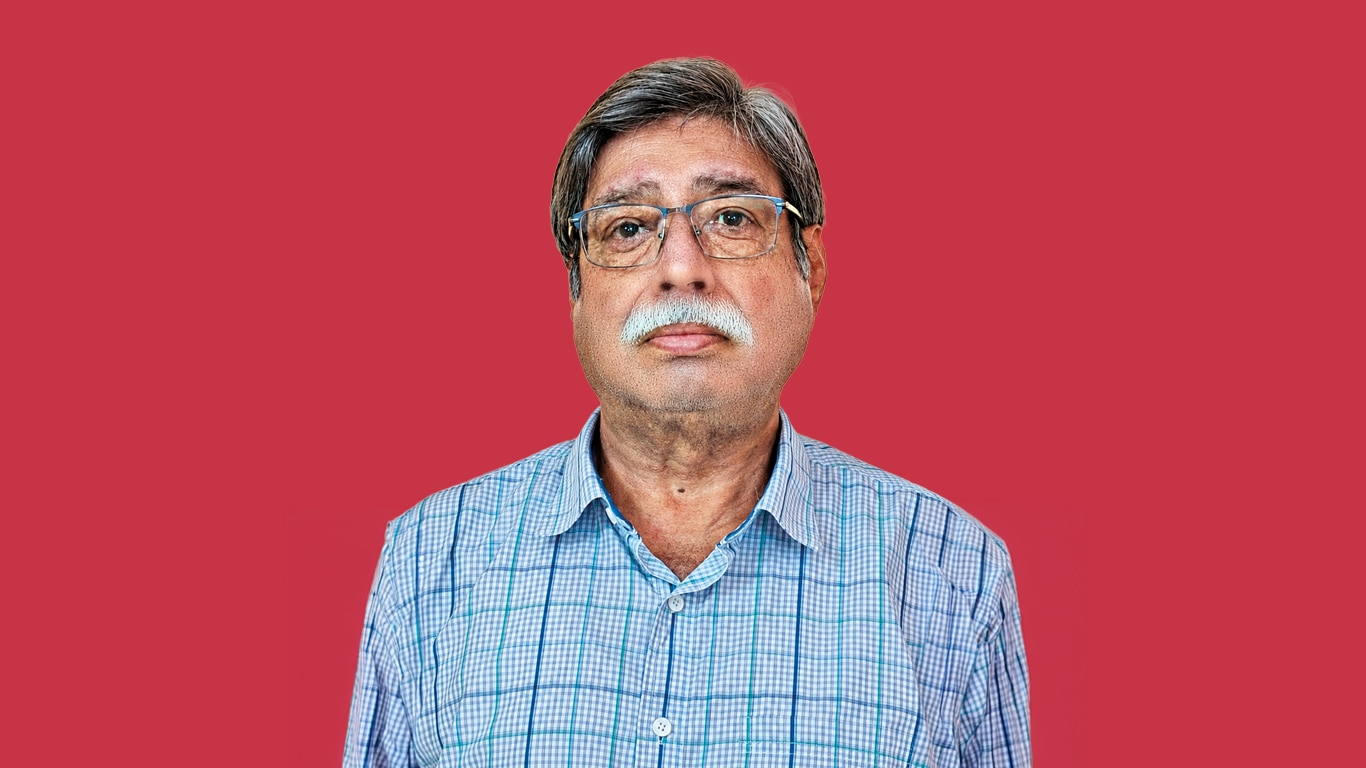
We did not give sufficient importance to strengthening our domestic capabilities across sectors, be it in manufacturing or agriculture.
-Biswajit Dhar,,Development Economist and Former Professor, Jawaharlal Nehru University.
Dhar traces India’s import dependency to the late 1980s, when India started liberalising. “We did not give sufficient importance to strengthening our domestic capabilities across sectors, be it in manufacturing or agriculture. In contrast, Southeast and East Asian countries followed a twin-track strategy, liberalising their economies while strengthening sectors where they wanted to build competitiveness. China was, in fact, very conservative about lowering tariffs and only reduced them in sectors where it needed to import,” he says.
The classic example, he says, is of the electronics sector, where India had good domestic capabilities and companies in the 1990s. But in 1997, India signed the Information Technology Agreement at the WTO and committed to eliminating tariffs on a large range of electronic products, effective from 2000, Dhar says. That impacted the domestic sector, which was rising and needed support.
“We did this across sectors, including edible oil, where we were self-sufficient until the late-1980s and then in the 1990s, the government decided to start importing palm oil,” he contends.
Similar instances exist across sectors, where the government did not first strengthen domestic capabilities. As a result, the country has a huge import dependency in such items now.
Over the past few years, manufacturing seems to have gained some priority, and the Production Linked Incentive (PLI) scheme has garnered interest and hard investments, albeit in a few sectors.
Senior government officials underlined that the scheme has had a fair amount of success in garnering investments, scaling domestic manufacturing and creating jobs. As a measure of success, they point out that several ministries and sectors have been clamouring for the incentives, which are at present limited to only 14 sectors.
The scheme was launched in 2020 with an incentive of Rs 1.91 lakh crore. A Right to Information application by BT reveals that by March 2026, as many as 892 applications were approved and investment of over Rs 2.4 lakh crore was reported across 14 schemes and over 1.42 million jobs were created. Production and sales of over Rs 22.66 lakh crore was reported. The top three sectors in terms of PLI investments were high-efficiency solar PV modules with Rs 64,873 crore of investment; pharmaceuticals drugs sector with Rs 45,158 crore; and automobile and auto components sector with Rs 44,326 crore.
The PLI for the Electronic Component Manufacturing Scheme, particularly smartphones, is also counted among the success stories as it has attracted major global players like Apple’s contract manufacturer Foxconn and South Korean giant Samsung and turned the country into a smartphone manufacturing hub, boosting jobs and exports and creating jobs.
However, scratch the surface and several concerns arise. The PLI scheme is seen to be riddled with loopholes and players are often seen to have taken unfair advantage of it, attracted primarily by the incentives on offer.
Experts also note that several of these schemes have in fact increased imports—be it in pharma or electronics. They question if India is just a component assembler without real manufacturing capabilities.
Dhar says PLI just provides budgetary support without fixing accountability. “The scheme was adopted to reduce the trade deficit with China, but between 2021-22 and 2025-26, this has actually increased by nearly 53%,” he says, calling for an appraisal of the scheme’s impact.
Apart from challenges in ease of doing business, tepid R&D investments is also seen to be a stumbling block in scaling up manufacturing capabilities. This was highlighted by a recent report by CareEdge Ratings. “Compared to Asian peers such as China, Japan, South Korea, and Vietnam, India’s manufacturing growth remains constrained by lower R&D intensity, limited technology absorption, and weaker innovation ecosystems,” it said.
India’s R&D expenditure remains low at about 0.6–0.7% of GDP, significantly below global innovation leaders such as the United States (3–3.5%), China (around 2.5%), and South Korea (4-5%). “While government initiatives such as PLI schemes and R&D funding programme provided a push to manufacturing scale, sustained competitiveness will require deeper integration of innovation and technology development,” it said.
Besides, the government had issued quality control orders that initially helped cut down on substandard imports and helped build domestic capabilities. However, those became hurdles for businesses subsequently; several have now been scrapped.
VOCAL FOR LOCAL
At least some measures for making more in India seem to have worked. A recent study by Bank of Baroda economists of a sample of 1,372 companies (excluding banks and financial companies) across sectors revealed that India Inc’s import to net sales ratio has remained flat broadly. However, sector specific ratios have fallen, especially where import dependency is higher. Significant reduction in the ratio was visible for chemicals, especially for carbon black, in which the import intensity used to be significantly higher, it revealed.
Doubling down on such efforts, the government has renewed focus on addressing import dependencies and boosting manufacturing over the past few months. Commerce and Industry Minister Piyush Goyal has held meetings with industry chambers asking them to review their imports and look for domestic substitutes. But the feedback seems to have been lukewarm so far.
The Department for Promotion of Industry and Internal Trade has also identified over 100 items that India imports in huge quantities and has formed six working groups to discuss how this can be reduced. The imports range from chemicals and petrochemicals to pharmaceuticals, textiles yarns and even consumer electronics. (See Lowering import dependencies)
The end of the West Asia war may help bring sustained peace to the region and normalise supplies over the next few months. But it has taught India a valuable lesson on the need for self reliance.
PLI schemes are also being reviewed, and nodal ministries are looking at greater local value addition and identifying gaps. There is expectation that the scheme will be expanded to more sectors. The Finance Ministry, which is faced with the final import bill, too has been in talks with industry and is looking at ways to further boost public procurement of domestically produced goods.
Experts and industry players say such measures will take time to succeed and require strong political will.

Businesses will only take a risk and produce new goods if they know there is demand for these. Public procurement conditions can be relaxed, enabling more firms to take part.
-Anil Bhardwaj,,Secretary General of the Federation of Indian Micro and Small and Medium Enterprises (FISME)
Anil Bhardwaj, Secretary General of the Federation of Indian Micro and Small and Medium Enterprises (FISME), says the government must identify imports and what is produced domestically and then look at the gaps and try to address these.
FISME recently conducted a study on Leveraging the Capabilities of MSMEs of Telangana to reduce the state’s import dependence. It identified 110 products for localisation in Telangana and narrowed it to 53 items imported into the state, including auto components like vehicle accessories, parts of semi-diesel engines; bulk drugs such as penicillin and rifampicin; goods in defence and aerospace, electronics and hardware, engineering goods, FMCG and domestic appliances, health and life sciences and plastics and polymers. The feedback from industry players included the poor state of industrial training institutes that lead to lack of skilled manpower as well as a dearth of testing labs.
Bhardwaj says for successful import substitution, the government will need to support domestic industry in the initial years. “Businesses will only take a risk and move to producing new goods like substitutes for imports if they know there is a market and demand for these. Public procurement conditions can be relaxed enabling more firms to take part in it and sell their goods,” he says. In India, the base of manufacturing remains very low and input costs high, factor markets are uncompetitive and the legal environment remains uncertain, he adds. This is a tricky terrain for firms to navigate.
Palit points out that India is not the only country working on import substitution. Even developed nations like the US and Japan are doing so. “India’s challenge is greater as building new capacities of good quality requires large investments, including from the private sector. Largescale domestic capacities in key areas of import dependency will take a long time to build,” he says.
Till then, he warns, sustaining such investments, especially government investments, may not be easy, as these resources also need to be deployed elsewhere.
Dhar emphasises that the problem is not high imports but low exports. “We are just not exporting enough. There needs to be value addition of imports, and products need to be exported in a price competitive manner.”
In this special issue, BT explores India’s import dependencies across sectors and whether a transition to greater domestic manufacturing is possible over the next few years. Experts weigh in on the pros and cons of this import dependence and possible solutions. Read on.
@surabhi_prasad | @PrinceInMedia
此内容由惯性聚合(RSS阅读器)自动聚合整理,仅供阅读参考。 原文来自 — 版权归原作者所有。