
惯性聚合 高效追踪和阅读你感兴趣的博客、新闻、科技资讯
阅读原文 在惯性聚合中打开

推荐订阅源

博客园_首页
J
Java Code Geeks
博客园 - 聂微东
量子位
C
Check Point Blog
T
The Blog of Author Tim Ferriss
T
Tailwind CSS Blog
G
Google Developers Blog
Google DeepMind News
B
Blog
罗磊的独立博客
腾讯CDC
GbyAI
GbyAI
博客园 - 【当耐特】
A
About on SuperTechFans
M
MIT News - Artificial intelligence
U
Unit 42
D
Docker
OSCHINA 社区最新新闻
OSCHINA 社区最新新闻
Y
Y Combinator Blog
大猫的无限游戏
大猫的无限游戏
小众软件
小众软件
S
SegmentFault 最新的问题
有赞技术团队
有赞技术团队

Futurism

Huge Survey Finds the Truth About What mRNA Vaccines Do to the Human Body Peptide That Makes You Tan Linked to Skin Cancer, Doctor Warns Giant Pickup Trucks Are Killing Pedestrians in Incredible Numbers We Are Extremely Skeptical of MidJourney's Weird Device That It Claims Submerges Your Entire Body and Scans It With Ultrasound Trending Surgical Procedure That Changes the Color of Your Eyes Alarms Scientists Parasite That Affects Cognition Has Quietly Infected Billions of People DuckDuckGo's AI Feature Is Telling Users That Trump Died of Rabies Earlier This Month It Sounds an Awful Lot Like They Gave Trump Early Access to an Incredibly Powerful Experimental Weight Loss Drug Research Suggests the Older You Get, the More Weed You Should Smoke TikTok Has Been Completely Taken Over by AI Slop We Are Admittedly a Bit Startled by This Medical Case Report About Giving an Elderly Woman With Advanced Alzheimer's a Gigantic Dose of Psychedelic Mushrooms Just to See What Would Happen Google's AI Overviews Feature Is Telling Users That SCP Horror Fiction Entities Are Real MAHA Furious as Kennedy Moves to Ban Their Medicine: Gas Station Heroin Clavicular's "Botched" Nose Job Illustrates the Dangers of Looksmaxxing Woman's Death Blamed on Hospital's AI System Massive Protests Erupt in the Streets of Kenya Due to the Trump Administration's Mysterious Ebola Facility GLP-1 Drugs Appear to Prevent Cancer, New Research Finds Working From Home Has a Grim Effect on Your Brain, Surprise Research Finds Scientists Concerned Latest Gene Editing of Human Embryos Could “Open the Floodgates” Doctors Inject Human Subjects With First Vaccine Designed by AI New York Accuses Company of Smuggling Injectable Substance Made From Cadavers Psychiatrists Investigating People Who Get Trapped Inside Vivid Daydreams It Turns Out Lookmaxxing Has Some Extremely Emasculating Side Effects Ebola Expert Fears Outbreak Is Heading Into “Nightmare Scenario” Plans Accelerated for Human Trials of Tooth Regeneration Startup Testing Drugs on Freshly Extracted Human Brains That Are Kept On Life Support Woman Alarmed When Her Trusted Therapist Starts Recording Her With AI Apocalyptic “Fungal Storms” Are Now Surging Across the US Kids Are Flying Into Lunatic Rages When Their iPads Are Taken Away Influential Tech Founder Says His Peers Are Suffering From Mass AI Psychosis
Scientists Say Test Subjects Were Able to Quit Smoking Af...
Krystle Vermes · 2026-05-16 · via Futurism

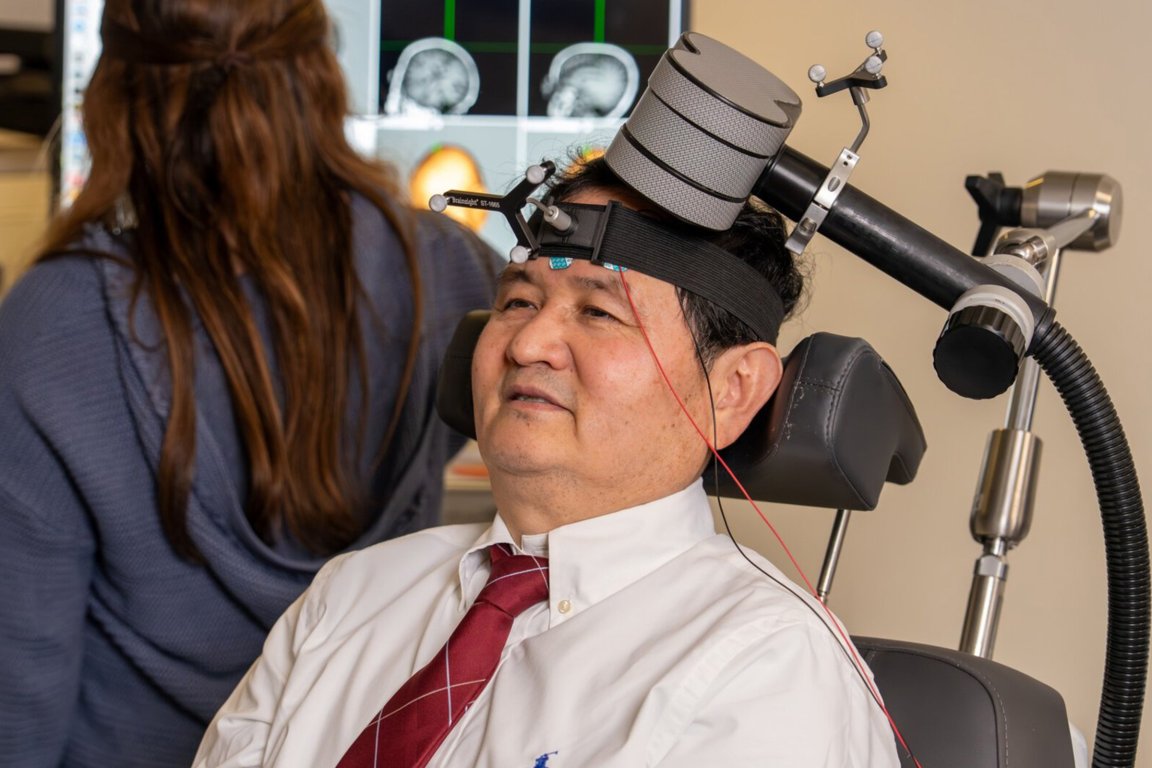
A man wearing a white shirt and red tie is seated with a head-mounted device attached to his forehead, connected to a large mechanical arm. In the background, a woman with long brown hair, wearing a blue sweater, is facing away from the camera. A computer screen displaying brain scans is visible behind them.

Clif Rhodes

Sign up to see the future, today

Can’t-miss innovations from the bleeding edge of science and tech

If you’ve ever tried to quit cigarettes, you know that nicotine addiction is ridiculously difficult to beat. A full two-thirds of adult smokers want to kick the habit, but only one in ten succeeds — while untold millions ultimately die from it.

We’ll believe it when we can try it ourselves, but scientists say a noninvasive brain stimulation technique known as repetitive transcranial magnetic stimulation (rTMS) — basically an electromagnetic blunderbuss that shoots powerful bursts directly into targeted areas of your brain to modulate neural activity — could offer new hope for addicts.

Treatment with rTMS has already shown promise for the treatment of depression, chronic pain, obsessive compulsive disorder, and more. Now, as outlined in a a new study in the Journal of Psychiatric Research, researchers are investigating whether the technique could help patients quit smoking as well.

As lead author and professor at the Medical University of South Carolina’s (MUSC) Hollings Cancer Center Xingbao Li explained in a press blurb, the idea is basically that addiction can alter the brain’s balance of cravings, control, and decision-making — and he’s convinced that he can restore that balance via magnetic pulses.

“In addiction, brain systems can get out of balance,” he said in the blurb. “One system, tied to reward and craving, becomes overactive. Another, responsible for control and decision-making, becomes weaker.”

Li’s team ran experiments on 45 smokers trying to quit, each of whom received 15 treatment sessions, and they said the results were undeniable. Participants who received high-frequency stimulation to the dorsolateral prefrontal cortex, a region of the brain associated with decision-making and self-control, reported fewer cravings and reduced their tobacco use by an average of about 11 cigarettes per day. In other participants, Li’s team targeted the medial orbitofrontal cortex, responsible for rewards and cravings, but that group only reduced its cig intake by about five. (Participants in the control group who received a sham treatment reduced their average cigarette use by six.)

“It’s a kind of precision medicine,” said Li, who’s also investigating whether the technique can help ditch meth and alcohol. “We’re tailoring the treatment to each person’s brain.”

More on nicotine: FDA Working to Remove the Stuff in Cigarettes That Feels Good