


https://gds.blog.gov.uk/2026/06/02/building-for-the-future-making-change-simple-on-gov-uk-pay/
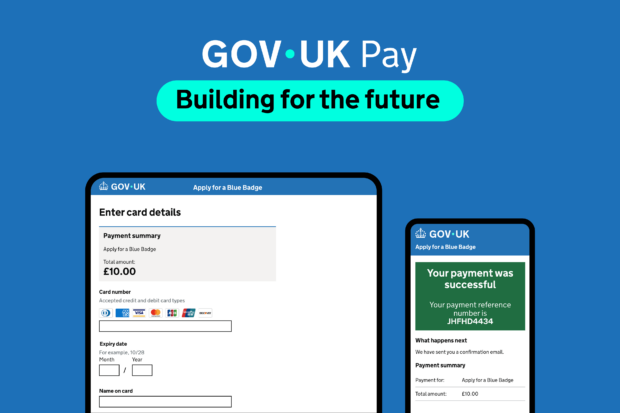
GOV.UK Pay has now processed over £9 billion through over 135 million transactions in its nearly 10 years processing payments for the public sector. Throughout that time, we’ve seen the number of services we support increase substantially and we're continually improving the service for them.
As part of the next stage of our journey we're pleased to announce Adyen as our new payment services provider (PSP) for non-Crown card payments and pay by bank, replacing Stripe.
The procurement covered non-Crown card payments and pay by bank with a specific requirement to at least maintain the current level of functionality offered to services. Suppliers were invited to bid in an open and fair tender process.
This change affects local authorities, armed forces, police forces and other organisations currently using GOV.UK Pay with Stripe as their provider. Central government, NHS and arm's length bodies will still use Worldpay for payment processing, with no change for them.
A core part of the proposition of GOV.UK Pay right from the start in 2015 is that service teams should have to do as little as possible to take payments. We are already saving government significant processing fees as well as countless hours and days of people's time by handling service provider relationships and doing the technical work to keep GOV.UK Pay safe, secure and accessible.
We will now begin migrating around 1,000 services to Adyen, while making sure people can continue to pay for government services with no interruptions.
We will make migration as straightforward as possible while complying with Know Your Customer legislation that protects everyone from fraud. Most importantly, there will be no discernible difference for paying users and no loss in functionality.
This supplier migration is also the next big step towards introducing new ways for people to pay for services. This includes pay by bank which will reduce fraud and lost payments, as well as saving significant money for government. For paying users, it saves typing in card details and is safer and easier than a typical bank transfer.
We have recently made a series of changes to prepare GOV.UK Pay to support other payment methods. For example, we've reorganised our settings section in the admin tool to make it easier to find what you need, and we've made it clearer when your service has gone live.
We've also upgraded our Web Application Firewall to make it easier to support in future while making sure GOV.UK Pay remains stable and secure.
You can find out more about what we've been up to and what we've got planned on our public roadmap.
If you are a current user of GOV.UK Pay, we will be in direct contact regularly and often to make sure you have all the information about the migration and any effect on your services (we expect this to be minimal).
If you’re a public sector organisation not currently using GOV.UK Pay, find out more or get in touch with us to see how we could help you improve the way you take payments from service users.
For any immediate questions, email us at govuk-pay-support@digital.cabinet-office.gov.uk.
此内容由惯性聚合(RSS阅读器)自动聚合整理,仅供阅读参考。 原文来自 — 版权归原作者所有。